The digital age has transformed how people communicate, work, shop, learn, and manage everyday activities. From online banking and cloud applications to social media and connected devices, enormous amounts of information are generated and exchanged every day. While this digital transformation creates convenience and new opportunities, it also introduces growing concerns about data privacy and security.
Data privacy and data security are closely connected, but they are not the same thing. Privacy focuses on how personal information is collected, used, shared, and retained, while security focuses on protecting that information from unauthorized access, loss, alteration, or theft. Understanding both is increasingly important for individuals, businesses, and organizations operating in a highly connected environment.
What Is Data Privacy?
Data privacy refers to the responsible handling of personal and sensitive information. It determines what information an organization collects, why it collects it, how long it keeps it, and who can access or receive it.
Personal data can include names, email addresses, phone numbers, location information, account details, online identifiers, financial information, and other information that can be connected to an individual.
Modern privacy practices increasingly emphasize transparency and user control. People should understand what information is being collected and, where applicable, have meaningful choices about how their information is used.
What Is Data Security?
Data security involves the technologies, processes, and policies used to protect information from unauthorized access, accidental loss, manipulation, or destruction.
Organizations commonly use measures such as:
- Encryption for data in transit and at rest
- Multi-factor authentication
- Strong identity and access management
- Secure backups
- Network monitoring
- Endpoint protection
- Vulnerability management
- Security awareness training
- Incident response procedures
A strong security strategy helps reduce the likelihood and impact of data breaches.
Data Privacy vs. Data Security
Although the terms are often used together, they address different questions.
Data privacy asks:
“Are we collecting and using personal information appropriately?”
Data security asks:
“How do we protect that information from unauthorized access or damage?”
For example, a company may have excellent encryption but still collect more customer information than it actually needs. In that situation, security may be strong while privacy practices could still be improved.
Why Data Privacy and Security Matter in 2026
Digital ecosystems are becoming more complex. Businesses increasingly rely on cloud platforms, artificial intelligence, connected devices, digital payments, APIs, analytics systems, and third-party services.
At the same time, cyber threats continue to evolve. Attackers may use phishing, credential theft, malware, social engineering, software vulnerabilities, and other techniques to obtain sensitive information.
Artificial intelligence is also changing the security landscape. AI can help security teams detect suspicious behavior and analyze large volumes of security data, but attackers can also use AI to create more convincing scams, automate certain attacks, and adapt their techniques.
This makes privacy and security an ongoing business responsibility rather than a one-time technical project.
Common Data Privacy and Security Risks
1. Phishing and Social Engineering
Attackers often manipulate people into revealing passwords, financial information, or other sensitive details. Phishing messages can appear to come from legitimate companies, colleagues, or service providers.
Organizations can reduce these risks through employee training, authentication controls, email security, and clear reporting procedures.
2. Weak or Reused Passwords
Using the same password across multiple services creates unnecessary risk. If one account is compromised, attackers may attempt to use the same credentials elsewhere.
Using unique passwords with a reputable password manager and enabling multi-factor authentication can significantly strengthen account protection.
3. Excessive Data Collection
Collecting unnecessary personal information increases privacy exposure. Organizations should consider whether every data field they collect has a legitimate business purpose.
A data minimization approach can reduce the amount of information that needs to be stored and protected.
4. Third-Party Risk
Companies frequently share information with cloud providers, analytics platforms, payment processors, marketing platforms, and other vendors.
A security weakness at a third party can potentially affect the organization and its customers. Vendor assessments, contractual safeguards, access controls, and ongoing monitoring can help manage this risk.
5. Misconfigured Cloud Services
Cloud platforms can provide strong security capabilities, but incorrect configurations may expose databases, storage systems, credentials, or applications.
Organizations should regularly review permissions, configurations, logging, encryption, and access policies.
6. Insider Threats
Security risks do not always originate outside an organization. Employees, contractors, or compromised internal accounts can accidentally or intentionally expose sensitive information.
Least-privilege access, monitoring, training, and appropriate access reviews can help reduce this risk.
The Role of Encryption
Encryption converts readable information into a protected format that cannot easily be understood without the appropriate key.
It is commonly used to protect:
- Online transactions
- Customer databases
- Cloud storage
- Email communications
- Mobile devices
- Website connections
- Backups
Encryption is particularly important when sensitive information travels across networks or is stored on systems that could potentially be accessed by unauthorized users.
Multi-Factor Authentication Adds an Extra Layer
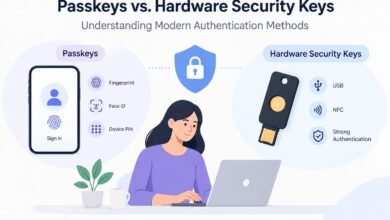
Passwords alone may not provide sufficient protection for important accounts. Multi-factor authentication (MFA) requires an additional verification factor, such as an authentication app, security key, or another approved method.
Even if a password is stolen, MFA can make unauthorized account access considerably more difficult.
For businesses, MFA should be prioritized for administrator accounts, remote access, cloud services, financial systems, and other high-value resources.
Privacy by Design
Privacy should not be treated as something added after a product or service is launched.
Privacy by design means considering privacy requirements during the planning, development, and implementation stages of a system.
Organizations can apply this approach by:
- Collecting only necessary information.
- Defining clear purposes for data collection.
- Limiting access to sensitive information.
- Applying appropriate retention periods.
- Building privacy controls into applications.
- Communicating privacy practices clearly.
- Reviewing privacy risks before launching new technologies.
Data Governance Is Becoming More Important
As organizations accumulate information from multiple sources, effective data governance becomes essential.
A data governance framework can define:
- Who owns particular datasets
- Who can access information
- How data should be classified
- How long information should be retained
- How sensitive information should be protected
- How data quality should be maintained
- How privacy requirements should be addressed
Good governance can help organizations balance business value with responsible data management.
Protecting Personal Data as an Individual
Individuals can take several practical steps to improve their digital privacy and security:
Use Strong, Unique Passwords
Avoid using the same password for multiple important accounts. A password manager can help generate and store unique credentials.
Enable MFA
Activate multi-factor authentication wherever it is available, especially for email, banking, cloud storage, social media, and work accounts.
Review App Permissions
Check which applications have access to your camera, microphone, contacts, location, files, and other information. Remove permissions that are unnecessary.
Keep Software Updated
Operating system, browser, application, and device updates often include security fixes. Delaying important updates can leave known vulnerabilities unpatched.
Be Careful With Links and Attachments
Do not automatically trust unexpected messages. Verify suspicious requests through an independent communication channel before providing credentials or sensitive information.
Limit Public Information
Avoid unnecessarily publishing personal details online. Information shared publicly can sometimes be combined with other data to support targeted scams or identity theft.
Building a Strong Data Security Strategy for Businesses
Businesses should approach security as a continuous process.
A practical strategy can include:
Identify: Understand what data exists, where it is stored, and who can access it.
Protect: Apply encryption, access controls, MFA, endpoint protection, and secure configurations.
Detect: Monitor systems and investigate unusual activity.
Respond: Establish clear procedures for containing and investigating security incidents.
Recover: Maintain reliable backups and recovery processes to restore important services.
Regular security assessments can help organizations identify weaknesses before attackers exploit them.
The Growing Importance of Zero Trust
Traditional security models often assumed that users or devices inside an organization’s network could be trusted. Modern environments are more distributed, with employees accessing applications from different locations and devices.
The Zero Trust approach operates on the principle of continuously verifying users, devices, applications, and access requests rather than automatically trusting them.
Important Zero Trust practices include:
- Strong identity verification
- Least-privilege access
- Device security
- Continuous monitoring
- Segmentation
- Application-level access controls
Zero Trust can be particularly useful for organizations operating across cloud, hybrid, and remote-work environments.
AI and the Future of Data Privacy
Artificial intelligence introduces both opportunities and privacy challenges.
AI systems may process large quantities of information, making data governance increasingly important. Organizations need to understand what information is being provided to AI systems, where it is stored, who can access it, and how it may be used.
Businesses adopting AI should establish clear policies around sensitive information, access permissions, data retention, third-party AI services, and employee usage.
AI can also support cybersecurity by helping identify anomalies, prioritize alerts, detect suspicious patterns, and automate certain security tasks. However, AI should complement—not replace—strong security processes and human oversight.
Privacy Regulations and Compliance
Data protection requirements vary by country and industry. Regulations can establish expectations around transparency, consent, access rights, data handling, security safeguards, and breach response.
Organizations operating internationally may need to consider multiple privacy frameworks depending on where their customers, employees, and operations are located.
Compliance should not be treated as the entire security strategy. Meeting regulatory requirements is important, but organizations should also focus on reducing real-world privacy and security risks.
A Practical Data Privacy Checklist
Organizations and individuals can use the following checklist as a starting point:
- Review what personal data is being collected.
- Remove unnecessary data collection.
- Use strong and unique passwords.
- Enable multi-factor authentication.
- Encrypt sensitive information.
- Keep applications and devices updated.
- Review user and application permissions.
- Maintain secure backups.
- Train employees to recognize phishing and social engineering.
- Assess third-party vendors.
- Monitor important systems for suspicious activity.
- Create an incident response plan.
- Review privacy and security practices regularly.
Conclusion
Data privacy and security have become fundamental parts of modern digital life. As organizations adopt cloud computing, artificial intelligence, connected devices, automation, and data-driven services, the volume and importance of digital information will continue to grow.
Protecting data requires more than installing security software. It involves responsible data collection, strong access controls, employee awareness, secure technology, effective governance, continuous monitoring, and a culture that treats privacy as a core responsibility.
For individuals, simple actions such as enabling MFA, using unique passwords, reviewing permissions, and staying alert to phishing can make a meaningful difference. For businesses, combining privacy-by-design principles with layered security and responsible data governance can create a stronger foundation for long-term digital trust.
In the digital age, data privacy and security are not optional features—they are essential components of responsible technology use.
Frequently Asked Questions (FAQ)
1. What is data privacy?
Data privacy refers to how personal information is collected, stored, used, shared, and managed. It focuses on giving individuals appropriate control and transparency over their information.
2. What is data security?
Data security involves protecting information from unauthorized access, theft, modification, accidental loss, or destruction. Common measures include encryption, authentication, access controls, and secure backups.
3. What is the difference between data privacy and data security?
Data privacy focuses on the responsible collection and use of personal information, while data security focuses on protecting that information from unauthorized access and other threats.
4. Why are data privacy and security important?
They help protect personal and business information, reduce the risk of data breaches, support regulatory compliance, and build trust between organizations and their customers.