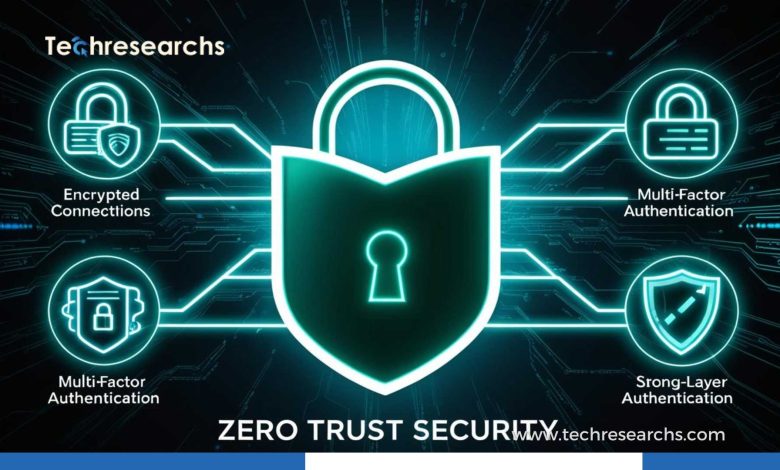
Why Zero Trust Security Matters Today
The digital landscape has changed dramatically. Organizations now rely on cloud platforms, remote workforces, and third-party applications. While this flexibility improves productivity, it also introduces serious security risks. Traditional security models were not designed for such complexity. This shift explains why Zero Trust Security has become essential. Instead of assuming trust based on location, this approach verifies every user and device continuously. As a result, businesses gain stronger protection against modern cyber threats.
Understanding the Core Idea Behind Zero Trust Security
At its foundation, Zero Trust Security operates on one guiding principle: never trust by default. Every access request must be validated, regardless of whether it comes from inside or outside the network.
Key principles include:
- Continuous identity verification
- Least-privilege access controls
- Network microsegmentation
- Real-time activity monitoring
Together, these principles reduce unnecessary exposure and limit attack paths.
Why Traditional Security Models Are Failing
Perimeter-based defenses were effective when data stayed inside corporate networks. However, modern environments no longer follow this structure.
Major weaknesses of legacy models
- Overreliance on firewalls
- Limited visibility into internal traffic
- Weak protection for cloud workloads
- Poor defense against stolen credentials
Because attackers often exploit trusted access, perimeter security alone is no longer enough.
How Zero Trust Security Minimizes Cyber Threats
Instead of granting broad access, this model restricts movement across systems. Even if attackers breach one layer, they face additional barriers.
Threat-reduction benefits
- Prevents lateral movement
- Detects abnormal behavior early
- Protects sensitive assets
- Reduces breach impact
Consequently, organizations can contain threats faster and more effectively.
Zero Trust Security and Identity-Driven Protection
In today’s environment, identity has replaced the network perimeter. Users access resources from multiple locations and devices.
Identity-focused safeguards
- Multi-factor authentication
- Device posture verification
- Role-based permissions
- Continuous session validation
These controls ensure that access adapts to real-time risk.
Enabling Secure Remote and Hybrid Work
Remote work is no longer temporary. Employees now expect secure access from anywhere.
Benefits for distributed teams
- Secure access without traditional VPNs
- Consistent security policies
- Improved user experience
- Reduced attack surface
As a result, organizations can support flexibility without sacrificing protection.
Zero Trust Security Across Modern Industries
Many industries rely on this approach to protect critical systems and data.
Common adoption areas
- Financial institutions securing transactions
- Healthcare providers protecting patient records
- Enterprises managing third-party access
- Government agencies defending infrastructure
Compliance and Regulatory Advantages
Organizations must meet strict data protection regulations. Access control plays a major role in compliance.
Compliance benefits
- Stronger data governance
- Improved audit visibility
- Support for GDPR and HIPAA
- Reduced regulatory penalties
Because access is tightly monitored, compliance becomes easier to manage.
Implementation Challenges to Consider
Despite its benefits, adoption requires careful planning and coordination.
Common challenges
- Integrating legacy systems
- Cultural resistance to change
- Initial deployment complexity
- Ongoing monitoring requirements
However, phased implementation helps organizations adapt gradually.
Best Practices for Adopting Zero Trust Security
Successful implementation focuses on strategy rather than tools alone.
Recommended steps
- Identify critical assets
- Strengthen identity controls
- Apply least-privilege access
- Monitor continuously
Over time, this approach builds a resilient security foundation.
The Future of Zero Trust Security
Cyber threats continue to evolve rapidly. Automation and AI-driven analytics are shaping the next phase of cybersecurity.
Comparison Table
| Feature | Traditional Security | Perimeter Security | Zero Trust Security |
|---|---|---|---|
| Trust Model | Implicit | Network-based | Continuous verification |
| Breach Containment | Low | Medium | High |
| Remote Work Support | Weak | Moderate | Strong |
| Cloud Compatibility | Limited | Moderate | High |
| Insider Threat Protection | Low | Medium | High |
Zero Trust Security is no longer optional in today’s digital world. By verifying every access request and limiting trust at every layer, organizations reduce risk and improve resilience. Businesses that adopt this model now will be better prepared for future cyber threats. Start with identity, scale gradually, and build security that adapts to change.
FAQs
1. What is Zero Trust Security in simple terms?
A. It is a security approach that verifies every user and device before granting access.
2. Is zero trust suitable for small businesses?
A. Yes, organizations of all sizes can implement it in phases.
3. Does zero trust replace firewalls?
A. No, it complements firewalls with continuous verification.
4. How long does implementation take?
A. It varies, but most organizations adopt it gradually over time.