Social media has become one of the most influential layers of the internet. People use social platforms to communicate, build communities, publish content, promote businesses, follow news, and develop professional networks. However, most traditional social networks operate through centralized infrastructure controlled by individual companies.
That model provides convenience and scale, but it also creates important questions about data ownership, platform control, privacy, content moderation, interoperability, and algorithmic decision-making.
Decentralized social networking offers a different approach.
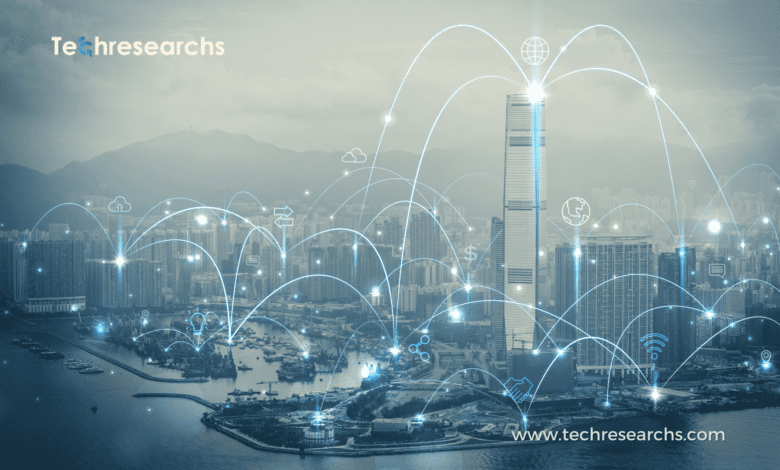
Instead of requiring users and communities to exist entirely inside one company’s platform, decentralized social networks can distribute identity, content, social connections, and moderation across multiple services or protocols.
The goal is not simply to put social media on a blockchain. The larger idea is to create social networks where users can have greater control over their identities and relationships while different services can communicate with one another.
As decentralized protocols mature, this model is becoming an important part of the broader conversation about the future of the social web.
What Is Decentralized Social Networking?
Decentralized social networking refers to social platforms or protocols where control over the network is distributed rather than concentrated in a single organization.
In a traditional social network, a company generally controls the infrastructure, user accounts, recommendation systems, content distribution, and platform policies.
A decentralized model can separate these responsibilities.
For example, a decentralized social ecosystem may allow:
- Users to maintain portable identities
- Different applications to connect to the same social network
- Communities to establish their own moderation policies
- Users to move between compatible services
- Data and social relationships to become less dependent on one platform
- Multiple organizations to participate in the network
This approach is closely related to the concept of the social web, where protocols and interoperability can matter as much as individual applications.
Why Is Decentralized Social Networking Important?
Centralized platforms have created enormous social networks, but their structure gives platform operators significant control.
A platform can decide:
- Which content receives visibility
- Which accounts can participate
- How recommendation algorithms work
- What data is collected
- Which APIs remain available
- How advertising is delivered
- What happens to an account when a user leaves
Decentralized social networking attempts to reduce this concentration of control.
Instead of asking users to choose one platform and remain inside its ecosystem, decentralized systems aim to make the underlying social graph more portable and interoperable.
This could lead to a social internet where users have more flexibility over how they communicate and which applications they use.
How Does Decentralized Social Networking Work?
There is no single architecture for decentralized social networks.
Different projects use different technical approaches, but several concepts appear repeatedly.
Decentralized Identity
In traditional social networks, your identity is usually tied to an account controlled by a specific company.
Decentralized systems can use portable identities that are less dependent on one application.
A user’s identity may be represented using cryptographic keys, decentralized identifiers, usernames, or protocol-specific accounts.
The important concept is that identity can potentially become more portable.
Distributed Infrastructure
Instead of relying entirely on one company’s servers, decentralized social networks can distribute infrastructure across multiple servers, operators, or nodes.
Some systems use federated servers, where independently operated communities communicate through a common protocol.
Others use different forms of peer-to-peer or distributed infrastructure.
This can reduce dependence on a single provider, although it does not automatically make every decentralized network fully censorship-resistant or completely independent.
Interoperability
Interoperability is one of the most important concepts in decentralized social networking.
A user should ideally be able to interact with people on other compatible services without creating completely separate social identities.
Protocols such as ActivityPub have helped demonstrate how independently operated social platforms can communicate through a shared protocol.
This changes the traditional social-media model from:
One company → One platform → One social graph
toward:
Multiple services → Shared protocol → Connected social ecosystem
User-Controlled Data
Decentralized social networks can give users more control over how their information is stored and accessed.
However, “decentralized” does not automatically mean that users control all their data.
Depending on the architecture, posts, media, metadata, and other information may still be stored by individual servers or service providers.
Therefore, users should understand the specific data architecture of a platform before assuming that it provides complete data ownership.
Decentralized Social Networks vs. Traditional Social Networks
The difference becomes easier to understand when the two models are compared.
| Feature | Traditional Social Networks | Decentralized Social Networks |
|---|---|---|
| Platform control | Usually centralized | Distributed across services or participants |
| Identity | Generally platform-specific | Can be more portable |
| Infrastructure | Controlled by platform operator | Can be federated or distributed |
| Interoperability | Often limited | A major design goal |
| Moderation | Usually centrally managed | Can be distributed or community-based |
| Data control | Primarily platform-managed | Potentially more user/service choice |
| Algorithms | Often platform-controlled | Can vary by application or community |
| Platform switching | Can involve losing social connections | Can be easier where portability exists |
The exact differences depend on the protocol and platform. Decentralization is not a single feature that every project implements in the same way.
The Role of Blockchain in Decentralized Social Networking
Blockchain technology is often associated with decentralized social networks, but blockchain is not required for every decentralized social platform.
Some blockchain-based systems use distributed ledgers for:
- Identity
- Ownership records
- Digital assets
- Token-based incentives
- Governance
- Reputation systems
However, putting every social interaction directly on a blockchain can create problems involving scalability, cost, privacy, and data permanence.
For this reason, many decentralized architectures use a combination of technologies rather than storing all social data directly on-chain.
The key question should therefore be:
What problem does decentralization solve in the social network’s architecture?
Blockchain can be useful for particular functions, but decentralization itself is broader than blockchain.
Benefits of Decentralized Social Networking
1. Greater User Control
Decentralized models can reduce dependence on a single platform and potentially give users more control over their identity and social relationships.
2. Improved Interoperability
Users may be able to interact across different services that support the same protocol.
This could make social networking more like email, where different providers can communicate without forcing everyone onto the same application.
3. Reduced Platform Lock-In
Traditional platforms can make switching difficult because users may lose followers, communities, content, or established connections.
Portable social identities and interoperable protocols can reduce this lock-in.
4. Community-Based Governance
Decentralized networks can allow communities or individual servers to establish their own rules and moderation policies.
This can support greater diversity in how online communities are governed.
5. Greater Choice
Instead of one company controlling the entire experience, users can potentially choose between different applications, interfaces, algorithms, and moderation approaches.
6. More Transparent Infrastructure
Some decentralized protocols are open and publicly documented, allowing developers to inspect how the underlying communication system works.
Open protocols can also encourage independent applications and innovation.
Major Challenges of Decentralized Social Networks
Decentralization has significant advantages, but it is not a perfect solution.
Content Moderation
Content moderation becomes more complicated when there is no single organization controlling the entire network.
A decentralized ecosystem may contain different communities with different rules.
This creates an important balance between:
- Free expression
- Community safety
- Abuse prevention
- Spam control
- Illegal content
- Harassment
- User autonomy
Distributed moderation can provide flexibility, but it can also make enforcement inconsistent.
Spam and Abuse
Open networks can attract bots, spam campaigns, impersonation, and coordinated abuse.
Decentralized platforms need effective systems for detecting malicious activity without undermining legitimate participation.
User Experience
Mainstream social networks have spent years optimizing onboarding, recommendations, messaging, search, video, notifications, and content discovery.
Decentralized platforms still need to make these experiences simple enough for ordinary users.
Technology can be decentralized while the user experience remains familiar.
Scalability
A social platform can generate enormous volumes of posts, media, interactions, and notifications.
Decentralized networks must efficiently synchronize information across multiple services without creating excessive infrastructure costs.
Privacy
Decentralization does not automatically guarantee privacy.
Public social activity can still reveal significant information about users.
Even when the content itself is protected, metadata such as interaction patterns, timestamps, relationships, and activity levels can potentially reveal sensitive information.
Privacy therefore needs to be designed into the architecture.
The Importance of Decentralized Identity
Identity could become one of the most important building blocks of future social networks.
Instead of treating identity as an account belonging to a particular platform, decentralized systems can allow users to establish identities that can potentially be used across multiple applications.
This could change the relationship between users and platforms.
Today:
Platform → owns account infrastructure → user participates
Potentially in a decentralized model:
User identity → connects to multiple applications → user chooses services
However, portable identity also creates new responsibilities.
Users may need to manage cryptographic credentials, recovery mechanisms, authentication methods, and account security.
Making these systems easy and safe for non-technical users remains an important challenge.
Decentralized Social Networking and AI
Artificial intelligence is becoming deeply integrated into online platforms, including recommendation systems, content creation, moderation, search, and personalization.
Decentralized social networks could create new approaches to AI-powered social experiences.
For example, users might be able to choose:
- Which recommendation system they use
- Which AI assistant accesses their social data
- How content is ranked
- Which moderation tools are applied
- How personalization works
This could reduce dependence on a single platform’s recommendation algorithm.
However, AI introduces new risks, including automated misinformation, deepfakes, bot networks, synthetic engagement, and large-scale spam.
Decentralized platforms will therefore need strong mechanisms for authenticity, reputation, moderation, and abuse prevention.
Decentralized Social Networking and Digital Ownership
Digital ownership is another area where decentralized technologies can influence social platforms.
Users may be able to associate digital assets, memberships, credentials, or community participation with their identity.
For example, a community could use digital credentials to provide access to particular groups or services.
However, ownership should not be confused with simply possessing a token.
Real digital ownership depends on the underlying technical design, legal rights, platform support, and ability to use an asset or identity across services.
Monetization in Decentralized Social Networks
Traditional social networks primarily rely on advertising, subscriptions, commerce, and creator monetization.
Decentralized networks can explore additional models, including:
- Direct creator payments
- Subscriptions
- Community memberships
- Digital goods
- Micropayments
- Token-based incentives
- Crowdfunding
- Decentralized marketplaces
The challenge is creating sustainable revenue without introducing excessive financial speculation or making the user experience unnecessarily complicated.
A successful decentralized social network will need an economic model that rewards creators and service providers while maintaining user trust.
Are Decentralized Social Networks Completely Censorship-Resistant?
Not necessarily.
This is an important misconception.
A decentralized network may reduce the ability of one company to control the entire network, but individual servers, applications, hosting providers, and communities can still moderate content.
For example, a federated network may allow one server to block another server or refuse certain users.
Therefore, decentralization generally changes where control exists rather than eliminating moderation altogether.
What Will the Future of Decentralized Social Networking Look Like?
The future may not be a simple replacement of centralized social media with fully decentralized platforms.
A more realistic possibility is a hybrid social internet.
Some platforms may remain centralized because users value convenience, performance, integrated services, and strong moderation.
At the same time, decentralized protocols can provide alternative infrastructure for identity, communication, publishing, communities, and social relationships.
The most successful systems may combine:
Simple applications + open protocols + portable identities + user choice
This could allow users to choose the application that provides the best experience without completely losing their social connections when they change services.
How Businesses Can Benefit
Decentralized social networking could also create opportunities for businesses.
Companies may use decentralized social ecosystems to:
- Build communities
- Develop direct relationships with customers
- Reduce dependence on individual platforms
- Create portable digital experiences
- Experiment with new loyalty models
- Develop open community ecosystems
- Connect digital identity with services
However, businesses should carefully evaluate the audience, technology, regulatory environment, and long-term viability of each decentralized platform before investing heavily.
What Users Should Consider Before Joining
Before joining a decentralized social network, users should evaluate:
- Who operates the service?
- Which protocol does it use?
- Can identity be transferred?
- Where is data stored?
- What happens if the service shuts down?
- How does moderation work?
- How are spam and abuse handled?
- What privacy controls are available?
- How are accounts recovered?
- What information is public?
- Can users export their data?
Understanding these questions is more important than simply choosing a platform because it describes itself as “decentralized.”
The Road Ahead
Decentralized social networking represents a broader shift in how people think about online communities.
The central question is no longer simply:
“Which social network should I use?”
It is increasingly becoming:
“Who should control my identity, relationships, content, and online experience?”
Decentralized technologies offer one possible answer: distribute control across users, communities, developers, and independent service providers rather than placing everything under one company.
But the future will depend on more than technical decentralization. These networks must solve real-world problems involving usability, moderation, privacy, scalability, security, governance, and sustainable business models.
Conclusion
Decentralized social networking has the potential to reshape the relationship between users and social platforms. By supporting interoperability, portable identity, community governance, and greater choice, decentralized architectures can challenge the traditional model of platform-controlled social networking.
However, decentralization is not a magic solution. It introduces its own challenges around moderation, privacy, scalability, security, user experience, and governance.
The most promising future may be an internet where centralized and decentralized services coexist, while open protocols give users more freedom to choose where and how they participate.
As decentralized identity, open social protocols, AI, and distributed infrastructure continue to evolve, social networking could gradually move from a collection of closed platforms toward a more interoperable, user-centered, and open social web.
Frequently Asked Questions
1. What is decentralized social networking?
Decentralized social networking is a model where social interactions, identity, content, or infrastructure are not controlled entirely by a single company. Instead, multiple services, communities, or network participants can operate and communicate through shared protocols.
2. How is decentralized social networking different from traditional social media?
Traditional social networks are generally controlled by a central platform that manages user accounts, data, algorithms, and moderation. Decentralized social networks can distribute these functions across multiple services and may provide greater interoperability and user choice.
3. Does decentralized social networking use blockchain?
Not always. Some decentralized social platforms use blockchain for identity, digital assets, governance, or other functions, while others use federated or distributed protocols without relying on a blockchain.
4. What are the main benefits of decentralized social networks?
Key benefits can include greater user control, improved interoperability, reduced platform lock-in, community-based governance, greater application choice, and potentially more portable digital identities.