The Powerful Intersection of Augmented Reality and Artificial Intelligence

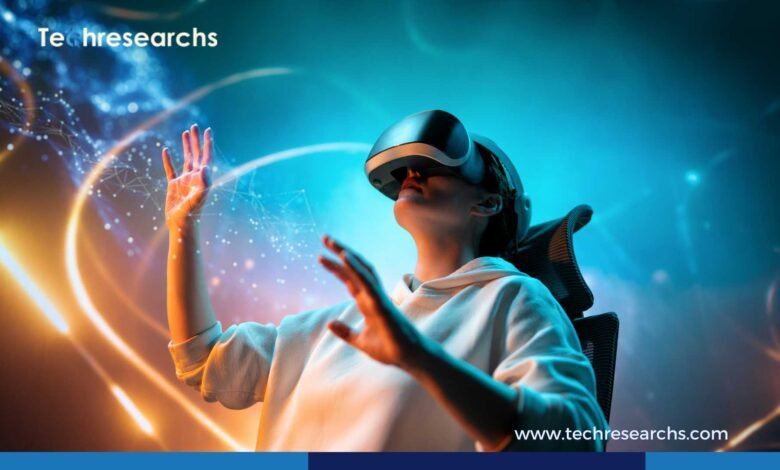
Augmented Reality has emerged as one of the most transformative technologies of the digital era. By blending virtual elements with the real world, it enhances how people perceive and interact with information. When paired with Artificial Intelligence, this technology becomes more adaptive, intelligent, and useful across industries.
Artificial Intelligence adds learning, prediction, and decision-making capabilities to immersive systems. As a result, experiences become personalized rather than static. From healthcare and retail to education and manufacturing, this powerful combination is redefining digital interaction.
This article explores how Augmented Reality and AI complement each other, their real-world applications, and why their convergence matters.
What Is Augmented Reality and How Does AI Fit In?
Augmented Reality overlays digital visuals, sounds, or data onto a real-world environment using devices such as smartphones, tablets, or smart glasses. Unlike virtual reality, it does not replace the physical world.
Artificial Intelligence enhances these overlays by analyzing environments, recognizing objects, and understanding user behavior. Consequently, AI-driven systems can adapt content in real time, making experiences more relevant and efficient.
Together, these technologies enable immersive solutions that respond intelligently to real-world conditions.
Key Benefits of Combining Immersive Technology and AI
The integration of immersive technology with AI delivers value beyond visual enhancement.
Some major advantages include:
- Smarter real-time interactions
- Personalized user experiences
- Improved accuracy and efficiency
- Reduced human error
Because AI processes vast amounts of data quickly, immersive systems can deliver insights instantly. This makes solutions more practical for professional and enterprise use.
Industry Applications Driving Adoption
Healthcare and Medical Innovation
In healthcare, immersive visualization tools help professionals better understand complex medical data. Surgeons can view anatomical structures in three dimensions, while AI analyzes patient records and imaging data.
As a result, doctors benefit from:
- Improved surgical planning
- Safer training simulations
- Enhanced diagnostic accuracy
This combination supports better patient outcomes and more efficient workflows.
Retail, Shopping, and Customer Experience
Retailers increasingly rely on immersive tools to engage customers. Virtual try-ons, interactive product demos, and spatial previews help shoppers make informed decisions.
AI improves these experiences by:
- Recommending products based on behavior
- Adjusting displays to room size and lighting
- Predicting customer preferences
Consequently, brands see higher engagement and conversion rates.
Learning, Education, and Workforce Training
Education is another sector benefiting from immersive learning environments. Complex concepts become easier to understand when visualized interactively.
AI-powered systems further enhance learning by:
- Adapting lessons to individual skill levels
- Providing instant feedback
- Tracking learner progress
This approach improves retention and engagement for students and professionals alike.
How Artificial Intelligence Enhances Immersive Experiences
AI acts as the intelligence layer behind modern immersive systems. It allows applications to understand surroundings and respond dynamically.
Core AI technologies used include:
- Computer vision
- Machine learning
- Natural language processing
Thanks to these capabilities, systems can recognize objects, interpret gestures, and respond to voice commands. This creates smoother and more intuitive interactions.
Challenges Slowing Widespread Adoption
Despite rapid growth, immersive and AI-powered solutions face challenges.
Common issues include:
- High development and hardware costs
- Data privacy and security concerns
- Performance limitations on older devices
However, cloud computing and edge processing are addressing many of these problems. Over time, these technologies will become more accessible and scalable.
Future Trends Shaping Intelligent Experiences
The future of Augmented Reality lies in deeper integration with AI and everyday devices. Wearable displays, spatial computing, and AI assistants will soon become more common.
Experts predict that immersive systems will:
- Replace traditional screens in some tasks
- Enable more effective remote collaboration
- Improve real-time decision-making
According to technology analysts, this convergence will drive long-term digital innovation and economic growth.
Comparison Table
| Feature | Immersive Tech Without AI | AI-Enhanced Immersive Tech |
|---|---|---|
| User Interaction | Limited | Context-aware |
| Personalization | Minimal | Highly personalized |
| Object Recognition | Manual setup | Automated |
| Adaptability | Low | High |
| Business Value | Moderate | Significant |
The convergence of Augmented Reality and Artificial Intelligence marks a turning point in how people interact with digital content. By combining immersive visuals with intelligent systems, organizations can deliver more meaningful and efficient experiences.
As technology continues to mature, businesses that embrace this integration early will stay ahead of the curve. Now is the ideal time to explore practical use cases and begin innovating.
FAQs About Augmented Reality
1. What role does AI play in immersive systems?
A. AI enables recognition, personalization, and real-time decision-making within immersive environments.
2. Which industries benefit most from immersive technology?
A. Healthcare, retail, education, manufacturing, and real estate see the highest impact.
3. Is immersive technology expensive to implement?
A. Costs vary, but cloud platforms and scalable AI tools are lowering entry barriers.
4. What is the future outlook for this technology?
A. Growth will accelerate as hardware improves and AI becomes more accessible.