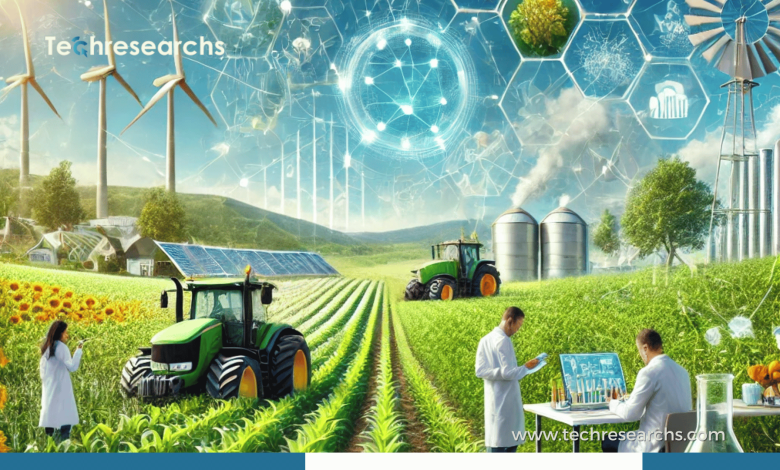
Agriculture has always depended on nature, but modern farming is facing challenges that are becoming harder to ignore. Unpredictable weather, declining soil quality, water shortages, crop diseases, and the growing demand for food are forcing farmers and researchers to rethink traditional approaches.
This is where biotechnology in agriculture is becoming increasingly important.
Agricultural biotechnology combines biological science with modern technology to improve crops, soil management, pest control, and farming efficiency. It is not about replacing farmers or traditional agriculture. Instead, it gives farmers new tools that can help them produce food more efficiently while using natural resources more responsibly.
What Is Biotechnology in Agriculture?
Agricultural biotechnology refers to the use of biological knowledge and technologies to improve agricultural production. It can involve microorganisms, plant genetics, tissue culture, genetic engineering, and newer techniques such as gene editing.
Some applications are highly advanced, while others are already familiar to farmers. For example, using beneficial microorganisms to support plant growth is a biotechnology-based approach, while developing crops with specific genetic traits represents a more advanced application.
The main idea is simple: use biology more intelligently to solve agricultural problems.
Why Does Agriculture Need Biotechnology?
Traditional farming methods remain essential, but they face growing pressure.
Farmers need to produce more food while dealing with:
- Increasing climate uncertainty
- Water scarcity
- Soil degradation
- Crop diseases and pests
- Rising agricultural costs
- Limited availability of fertile land
- Pressure to reduce environmental damage
Biotechnology cannot solve all these problems by itself. However, it can provide additional tools that make farming more adaptable and resource-efficient.
1. Creating Crops That Can Handle Tougher Conditions
Weather conditions are becoming less predictable in many agricultural regions. A crop that performs well during a normal growing season may struggle when temperatures rise or rainfall becomes irregular.
Researchers are working on crop varieties that can tolerate conditions such as drought, heat, salinity, and certain diseases.
For farmers, this could mean more reliable harvests under challenging conditions.
Climate-resilient crops are particularly valuable because they can help agriculture adapt instead of simply reacting to environmental problems after they occur.
2. Reducing Dependence on Chemical Inputs
Pesticides and fertilizers have an important role in modern agriculture, but excessive or poorly managed use can create environmental problems.
Biotechnology can offer alternatives or complementary approaches.
For example, researchers can develop biological pest-control products containing microorganisms that target specific agricultural pests. Similarly, microbial biofertilizers can help improve nutrient availability for plants.
The goal is not necessarily to eliminate every conventional agricultural input. A more realistic approach is to use the right input, at the right time, and in the right quantity.
3. Supporting Healthier Soil
Soil is more than just a surface where plants grow. It is a living ecosystem containing microorganisms, organic matter, minerals, and countless biological interactions.
Biotechnology is helping researchers understand and use these biological processes more effectively.
Beneficial bacteria and fungi can support nutrient cycling and plant growth. Some microbial solutions may also help plants tolerate environmental stress.
When combined with practices such as crop rotation, composting, reduced soil disturbance, and cover cropping, biological technologies can contribute to long-term soil health.
4. Making Better Use of Water
Water is one of agriculture’s most valuable resources.
In water-stressed regions, farmers cannot always depend on abundant irrigation. Biotechnology can help by supporting the development of crops that maintain productivity with less water.
But the best results come from combining crop improvements with smarter irrigation.
For example, a farmer could use a water-efficient crop together with soil-moisture sensors and precision irrigation. Instead of watering an entire field equally, irrigation can be adjusted according to actual crop and soil conditions.
This is where biotechnology and digital agriculture can complement each other.
5. Improving Resistance to Pests and Diseases
Crop diseases and insect pests can destroy significant portions of agricultural production.
Biotechnology can help researchers develop plants with improved resistance to specific threats. This can potentially reduce crop losses and, in some situations, decrease the need for repeated pesticide applications.
However, resistance should not be treated as a permanent solution. Pests and pathogens can evolve over time.
That is why crop diversity, monitoring, crop rotation, integrated pest management, and responsible use of resistant varieties remain important.
6. Gene Editing Is Opening New Possibilities
One of the most talked-about developments in agricultural biotechnology is gene editing.
Technologies such as CRISPR allow researchers to make targeted changes to genetic material. Scientists are investigating how gene editing could be used to improve characteristics such as disease resistance, nutritional quality, environmental tolerance, and crop performance.
What makes gene editing particularly interesting is its ability to target specific genetic traits.
However, technological capability does not automatically mean every application should be adopted. Safety assessments, environmental considerations, regulation, transparency, and public trust are all important parts of responsible innovation.
7. Biotechnology Can Help Reduce Agricultural Waste
A sustainable farm should consider what happens to agricultural waste after harvesting.
Crop residues, food-processing waste, and other organic materials can potentially be converted into useful products through biological processes.
Depending on the material and technology involved, agricultural waste can be used to produce:
- Biofertilizers
- Biogas
- Biofuels
- Composting products
- Bio-based materials
- Industrial biological products
This supports the idea of a circular agricultural economy, where waste is treated as a potential resource rather than simply something to dispose of.
Biotechnology and Precision Agriculture
Biotechnology becomes even more powerful when combined with digital farming technologies.
Modern farms can use drones, satellites, sensors, artificial intelligence, and farm-management software to collect information about crops and soil.
Imagine a farm where:
- Sensors identify areas with low soil moisture.
- AI analyzes crop and environmental data.
- Precision irrigation supplies water where it is needed.
- Biotechnology provides crops better suited to dry conditions.
- Farmers monitor the results and adjust their practices.
Instead of relying on one technology, farmers can combine several tools to make better decisions.
Benefits of Agricultural Biotechnology
When appropriately developed and implemented, agricultural biotechnology can provide several potential benefits:
- Better crop resilience
- Improved resistance to certain pests and diseases
- More efficient resource use
- Potential reduction in some chemical inputs
- Improved nutritional characteristics
- Better soil-management opportunities
- More efficient water use
- Reduced agricultural waste
- Greater adaptability to climate-related challenges
- Potentially more consistent agricultural production
The actual benefits depend on the technology, crop, farming system, and local conditions.
Challenges That Should Not Be Ignored
Biotechnology has considerable potential, but it also comes with questions that deserve serious attention.
Environmental Concerns
Introducing new biological traits into agricultural systems requires careful environmental assessment. Researchers need to consider potential effects on ecosystems, beneficial organisms, biodiversity, and surrounding crops.
Accessibility for Farmers
Advanced agricultural technologies can be expensive. If biotechnology is available only to large commercial farms, its benefits may not reach many small and medium-sized farmers.
Affordable technologies, farmer education, local research, and accessible support systems will therefore be important.
Regulation and Public Trust
Biotechnology can generate strong public opinions, particularly around genetically modified and gene-edited crops.
Clear regulations and transparent communication can help people understand both the benefits and limitations of these technologies.
Protecting Agricultural Diversity
Technology should not encourage farmers to depend on only a small number of crop varieties.
Maintaining genetic diversity is important because different varieties can provide protection against changing pests, diseases, and environmental conditions.
What Does the Future Look Like?
The future of agriculture is unlikely to belong to biotechnology alone.
Instead, farming is likely to become increasingly integrated.
Farmers may combine:
Biotechnology + AI + Sensors + Robotics + Precision Agriculture + Sustainable Farming Practices
This combination could allow farmers to make more informed decisions while reducing unnecessary use of water, fertilizers, pesticides, energy, and land.
For example, biotechnology may help create a crop that performs better during drought, while AI predicts weather conditions and sensors determine exactly when the crop needs water.
That is the real opportunity: not simply creating new agricultural technologies, but connecting them in ways that solve practical problems.
Conclusion
Biotechnology is changing the conversation around sustainable agriculture. It offers new ways to develop resilient crops, support soil health, manage pests, improve resource efficiency, and make better use of agricultural waste.
But technology alone will not create eco-friendly farming.
The most sustainable future will come from combining biotechnology with responsible farming practices, scientific research, environmental protection, farmer knowledge, and smart digital tools.
As agriculture faces increasing pressure from climate change and resource limitations, biotechnology could become one of the tools that helps farmers produce more food while taking better care of the land and resources they depend on.
Eco-friendly farming is not about choosing technology over nature. It is about using technology to work more intelligently with nature.
Frequently Asked Questions
What is biotechnology in agriculture?
Biotechnology in agriculture uses biological science and modern techniques to improve crops, soil health, pest management, and farming efficiency. It can help farmers produce food while making better use of natural resources.
How does biotechnology support eco-friendly farming?
Biotechnology can help farmers develop crops that tolerate drought, resist certain pests and diseases, and use nutrients more efficiently. It can also support biological fertilizers and other approaches that reduce pressure on the environment.
Can biotechnology reduce the use of pesticides?
Yes, certain biotechnology applications can reduce the need for some pesticide treatments. Pest-resistant crops and biological pest-control methods can help manage specific threats, especially when combined with responsible integrated pest management.
What is the future of biotechnology in agriculture?
The future of agricultural biotechnology is likely to involve technologies such as gene editing, beneficial microorganisms, AI, sensors, and precision farming working together. This combination could help make agriculture more productive, resilient, and resource-efficient.