How Edge AI Enhances Privacy, Security, and Low-Latency Processing

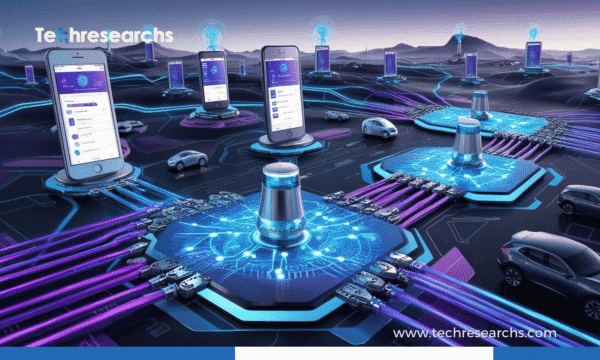
Artificial intelligence is no longer limited to large cloud data centers. Today, AI can run directly on smartphones, cameras, vehicles, industrial machines, and other connected devices. This approach is known as Edge AI, and it is changing how organizations handle data and make real-time decisions.
The biggest advantage of Edge AI is simple: instead of sending every piece of information to the cloud, devices can process much of that information locally. This can make applications faster while reducing unnecessary data transfers.
But speed is only part of the story. Edge AI can also support stronger privacy and security when it is designed correctly.
What Is Edge AI?
Edge AI refers to artificial intelligence that runs on or close to the device where data is generated.
In a traditional AI setup, a device might collect information, send it to a cloud server, wait for the server to process it, and then receive the result.
With Edge AI, much of that work happens closer to the source.
For example, imagine a smart security camera in an office. Instead of continuously sending video footage to the cloud, the camera can use an AI model to identify activity locally. It might send an alert only when something important happens.
This simple change can reduce network traffic, improve response times, and limit how much raw information leaves the device.
Why Edge AI Matters
The amount of data generated by connected devices is growing rapidly. Cameras, sensors, smartphones, vehicles, machines, and wearable devices can produce enormous amounts of information every day.
Sending all of that data to centralized servers is not always practical.
Edge AI provides another option. Devices can analyze information locally and send only useful results to a central system.
This makes Edge AI particularly valuable for applications where speed, privacy, reliability, and bandwidth efficiency matter.
How Edge AI Improves Privacy
Privacy has become a major concern as organizations collect more personal and business information.
Traditional cloud-based AI may require large amounts of data to be transferred to remote servers. The more data that moves between devices and servers, the more opportunities there are for that information to be exposed.
Edge AI can reduce this problem by keeping more data close to its source.
Less Raw Data Needs to Be Transmitted
One of the clearest privacy benefits of Edge AI is data minimization.
Consider a smartphone application that analyzes a user’s voice. Instead of sending every audio recording to a remote server, an on-device AI model could process the voice locally and return the required result.
The same principle can apply to:
- Smart cameras
- Wearable devices
- Voice assistants
- Healthcare equipment
- Industrial sensors
- Connected vehicles
The device can process the raw information and transmit only the result when necessary.
This does not make the application automatically private or secure, but it can significantly reduce unnecessary data movement.
Better Control Over Sensitive Information
Organizations dealing with sensitive information may prefer to keep certain data within a local environment.
For example, a manufacturing company may not want detailed operational data continuously sent outside its facilities. An edge-based system can analyze equipment information locally while sending only selected insights to a central platform.
This gives organizations more control over what information is shared and where it is stored.
Edge AI and Privacy-Preserving Techniques
Edge AI can also work alongside privacy-enhancing technologies such as federated learning, encryption, and differential privacy.
For example, federated learning can allow devices to contribute to model improvement without necessarily sending their raw training data to a central server.
The combination of local processing and privacy-focused techniques can create a stronger foundation for responsible AI deployment.
How Edge AI Strengthens Security
Edge AI can also play an important role in cybersecurity and physical security.
Because AI processing happens close to the source, devices can identify unusual activity and react without always depending on a remote server.
Faster Detection of Suspicious Activity
Imagine a security camera that detects an unexpected person entering a restricted area.
A cloud-dependent system might need to upload the video, wait for analysis, and then return a result.
An edge-enabled camera can analyze the scene locally and trigger an alert almost immediately.
The same idea can be used for detecting:
- Unusual network behavior
- Equipment abnormalities
- Unauthorized access
- Suspicious movement
- Fraud indicators
- Safety problems
The faster a system recognizes an unusual event, the faster an organization can respond.
Better Resilience During Network Problems
Internet connectivity is not always reliable.
A remote factory, vehicle, construction site, or industrial facility may experience slow or interrupted connections. If an AI application depends entirely on the cloud, its performance could suffer.
An edge system can continue performing important local tasks even when connectivity to the cloud is limited.
This does not eliminate the need for a network, but it can make critical applications less dependent on continuous connectivity.
Low-Latency Processing: One of Edge AI’s Biggest Advantages
Latency is the time it takes for information to travel through a system and produce a response.
For many AI applications, even a small delay can affect performance.
Cloud-based processing often involves several steps:
Device → Network → Cloud → AI Processing → Network → Device
Edge AI can shorten this process:
Device → Local AI Processing → Response
Because the data does not always need to travel to a distant server, the system can respond much faster.
Where Low Latency Makes a Difference
Autonomous Vehicles
Vehicles need to process information from cameras, radar, lidar, and other sensors quickly. Decisions such as detecting obstacles or recognizing road conditions cannot always wait for a remote cloud response.
Edge AI allows important processing to happen inside the vehicle or nearby computing hardware.
Smart Manufacturing
Factories use sensors and cameras to monitor machines and production lines.
An edge AI system can identify unusual vibrations, temperature changes, or visual defects as they happen. Operators can then respond before a small problem becomes a costly failure.
Healthcare Devices
Some healthcare and wearable applications require quick analysis of sensor information.
Local AI processing can provide faster feedback while reducing the need to constantly transfer sensitive information to external servers.
Smart Security Systems
Security cameras, access-control systems, and monitoring devices can use local AI to recognize unusual activity and generate alerts quickly.
Robotics
Robots often operate in environments where decisions need to happen immediately.
An edge AI system can help a robot recognize objects, understand its surroundings, and react without depending on a distant cloud service for every decision.
Edge AI Can Reduce Bandwidth Usage
Another practical benefit is lower network consumption.
A camera recording high-resolution video can generate a huge amount of data. Sending every frame to the cloud may consume significant bandwidth and increase storage requirements.
Instead, an edge AI system can analyze the footage locally.
For example:
Traditional approach:
Camera → Continuous video → Cloud
Edge approach:
Camera → Local AI analysis → Important event → Cloud
If the camera detects nothing unusual, there may be no reason to send the entire video stream.
This can reduce network usage and potentially lower cloud processing and storage costs.
Edge AI vs. Cloud AI
Edge AI and cloud AI are not necessarily competitors. In many real-world systems, they work together.
| Factor | Edge AI | Cloud AI |
|---|---|---|
| Processing location | Device or nearby edge infrastructure | Centralized cloud servers |
| Response time | Usually very fast | Depends partly on network conditions |
| Data transfer | Can be minimized | Often requires more data movement |
| Connectivity | Can support local operation | Usually more dependent on connectivity |
| Computing resources | More limited | Highly scalable |
| Privacy | More data can stay local | More data may leave the device |
| Best use | Real-time decisions | Large-scale processing and analytics |
A hybrid model can often provide the best balance.
For instance, an edge device can handle immediate decisions while the cloud manages long-term storage, reporting, model training, and deeper analytics.
Is Edge AI Completely Secure?
No technology is automatically secure.
Moving AI to the edge can reduce certain risks, but it also creates new security responsibilities.
Instead of protecting only centralized servers, organizations may have hundreds or thousands of distributed devices to manage.
These devices can become targets for attackers.
Common concerns include:
- Compromised devices
- Unauthorized access
- Malicious firmware
- AI model tampering
- Stolen credentials
- Physical attacks
- Outdated software
- Poorly configured networks
This is why Edge AI needs security at multiple levels.
Best Practices for Securing Edge AI
Protect Every Device
Each edge device should have a unique identity and appropriate authentication controls.
Organizations should avoid treating every device as automatically trusted.
Keep Software Updated
Outdated firmware and software can leave edge devices exposed to known vulnerabilities.
Secure and controlled update mechanisms should be part of the deployment from the beginning.
Encrypt Sensitive Data
Encryption should be considered for both stored information and data moving between edge devices, gateways, and cloud platforms.
Protect AI Models
AI models running on edge hardware may contain valuable intellectual property or sensitive capabilities.
Organizations should consider techniques that make unauthorized access, extraction, or modification more difficult.
Monitor the Edge Environment
Security teams should monitor edge devices for unusual behavior.
A device suddenly communicating with an unfamiliar system, changing its configuration, or generating unexpected traffic could indicate a security problem.
Follow Data-Minimization Principles
Organizations should collect and transmit only the information they actually need.
This reduces unnecessary exposure and can make privacy management easier.
Challenges of Edge AI
Despite its benefits, Edge AI is not perfect.
Limited Hardware Resources
Edge devices usually have less computing power, memory, and storage than large cloud servers.
Developers often need to optimize AI models so they can run efficiently on smaller hardware.
Device Management
Managing a few devices is relatively easy. Managing thousands of devices across different locations is much harder.
Organizations need systems for monitoring, updating, authenticating, and maintaining their edge infrastructure.
Physical Exposure
Some edge devices operate outside controlled data centers.
A device installed on a street, inside a vehicle, or on a factory floor may be physically accessible to unauthorized people.
Model Updates
AI models can become outdated as environments and threats change. Updating models securely across a large edge deployment can be challenging.
The Future of Edge AI
Edge AI is likely to become more important as organizations connect more devices to AI-powered systems.
The combination of AI chips, smaller machine learning models, faster networks, and better edge hardware is making local intelligence increasingly practical.
Future applications could include smarter vehicles, autonomous robots, intelligent factories, privacy-focused consumer devices, advanced healthcare systems, and responsive smart-city infrastructure.
The most successful systems will likely combine edge and cloud computing rather than relying exclusively on one approach.
The edge can handle immediate decisions, while the cloud can provide large-scale analytics and centralized management.
Final Thoughts
Edge AI brings intelligence closer to the place where data is created.
That simple shift can have a major impact. By processing information locally, organizations can reduce unnecessary data transfers, improve response times, reduce bandwidth requirements, and support stronger privacy practices.
At the same time, Edge AI introduces new security challenges. Every device becomes part of the organization’s technology environment and must be protected accordingly.
The goal is not simply to move AI away from the cloud. It is to use the right processing location for the right job.
When edge devices handle time-sensitive and privacy-sensitive workloads while cloud platforms provide scalable computing and centralized analytics, organizations can build AI systems that are faster, more efficient, and better suited to modern digital environments.
Frequently Asked Questions
1. What is Edge AI?
Edge AI is the use of artificial intelligence directly on devices or nearby edge infrastructure instead of sending all data to a remote cloud server. This allows applications to process information closer to where it is generated.
2. How does Edge AI improve privacy?
Edge AI can improve privacy by processing sensitive information locally. Instead of sending raw data such as images, audio, or sensor readings to the cloud, a device can analyze the information and transmit only the necessary results.
3. Why does Edge AI provide low-latency processing?
Edge AI reduces latency because data can be analyzed near its source. The device does not always need to send information to a distant cloud server and wait for a response, which makes real-time applications faster.
4. Is Edge AI more secure than cloud AI?
Edge AI can reduce certain security and privacy risks by limiting data transfers, but it is not automatically more secure. Edge devices still need strong authentication, encryption, software updates, access controls, monitoring, and protection against physical and cyber attacks.