Imagine having something important to say but being unable to speak or move your hands. You know exactly what you want to communicate, but expressing even a simple sentence becomes difficult. For people living with certain neurological conditions, this is a daily reality.
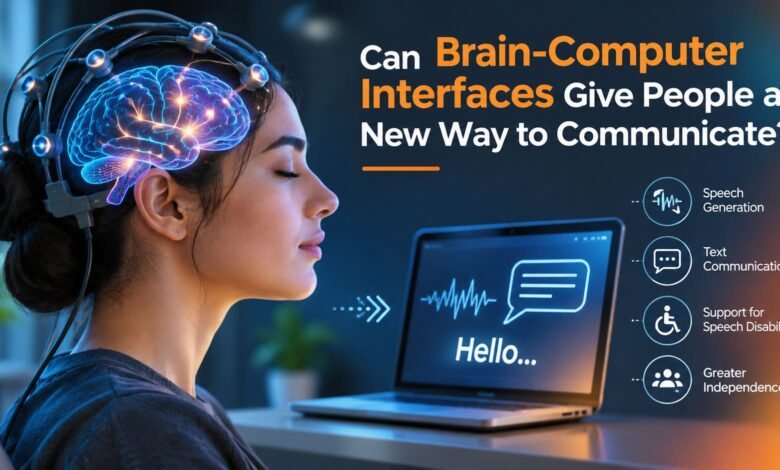
Technology is beginning to explore a different way to overcome this challenge. Brain-Computer Interfaces (BCIs) are emerging systems that can translate specific patterns of brain activity into commands, text, or computer-generated speech.
The idea is fascinating: instead of depending entirely on speaking, typing, or physical movement, people may be able to communicate through signals produced by their brains.
But this technology is about much more than connecting the human brain to a computer. It is about giving people who have lost their ability to communicate through traditional methods another opportunity to express themselves.
What Are Brain-Computer Interfaces?
A Brain-Computer Interface is a technology that establishes a direct communication pathway between the human brain and an external device.
Our brains continuously produce electrical activity. When we think about moving, recognise something, or attempt to speak, different patterns of brain activity occur. BCI systems use specialised sensors to capture these signals and software to interpret selected patterns.
The recognised information can then be converted into digital commands, written messages, or artificial speech.
For example, a person who understands language but cannot physically speak may use an experimental BCI system to communicate through computer-generated words. The system attempts to interpret brain activity associated with their intended speech and translate it into understandable output.
Some BCI systems use sensors placed on the scalp, while others use implanted electrodes to capture brain activity more directly.
It is important to understand that these systems do not simply read every thought inside someone’s mind. They are designed to recognise specific patterns associated with trained tasks or intended communication.
How Can Brain-Computer Interfaces Change the Way People Communicate?
For most people, communication happens naturally throughout the day. We ask questions, share opinions, express emotions, and interact with others without thinking about the physical effort involved.
However, individuals affected by conditions such as ALS, certain strokes, or severe neurological injuries may experience difficulties speaking or controlling their movements.
BCI technology could provide another communication option for people facing these challenges.
1. Turning Intended Speech Into Words
One of the most promising areas of BCI research is speech restoration.
Researchers are developing systems that can identify brain activity associated with attempted speech and convert it into text or computer-generated voices.
This could help people who have lost the physical ability to speak communicate their thoughts without depending entirely on conventional speech.
2. Making Everyday Communication Easier
Communication is not always about complicated conversations. Sometimes, it simply means asking for water, choosing a meal, or telling someone that something feels uncomfortable.
For individuals with severe movement limitations, these everyday interactions can become difficult.
BCI-based communication systems could help users express these needs through interpreted brain signals, making certain daily activities easier.
3. Supporting Personal Independence
Being able to express personal choices is an important part of independence.
People who depend on caregivers may sometimes struggle to communicate their preferences or needs. A reliable BCI system could help them make requests, communicate decisions, and participate more actively in everyday activities.
Although this technology cannot remove every limitation, it could provide individuals with greater control over how they communicate.
4. Helping People Stay Connected
Losing the ability to communicate normally can affect personal relationships. Conversations may become slower, and expressing emotions may require additional effort.
More advanced BCI systems could help individuals participate in conversations with their family members, friends, and healthcare professionals.
Sometimes, the ability to communicate a simple message can make a meaningful difference in someone’s life.
How Does Brain-Computer Interface Technology Work?
Although the science behind BCI systems is complex, the basic process can be explained through four stages.
1. Brain Signal Collection: Specialised sensors detect electrical activity produced by the brain. Depending on the system, these sensors may be placed on the scalp or implanted through medical procedures.
2. Signal Processing: The collected signals are filtered and prepared for analysis to identify useful patterns.
3. Signal Interpretation: Software and machine learning algorithms analyse the patterns and attempt to recognise the user’s intended action or communication.
4. Communication Output: The recognised information is converted into text, computer-generated speech, or commands that control external devices.
The system may require individual training and calibration to recognise a user’s signals accurately.
Real-World Applications of Brain-Computer Interfaces
Brain-computer interfaces are moving beyond theoretical discussions. Researchers and technology developers are exploring their potential across several fields.
Healthcare and Patient Support: BCI technology is being studied to support people with neurological conditions and communication difficulties.
Speech Restoration: Experimental systems are exploring ways to convert attempted speech-related brain activity into understandable words.
Assistive Communication: These systems may provide alternative ways for individuals to interact with computers and communication devices.
Computer Interaction: Certain BCI systems allow users to control cursors and interact with digital interfaces through recognised brain activity.
Rehabilitation: Researchers are investigating how brain signals can support rehabilitation and interaction with external devices.
These applications demonstrate how BCI technology could become an important part of future healthcare and assistive communication solutions.
Challenges and Limitations of Brain-Computer Interfaces
Despite their potential, brain-computer interfaces still face several challenges. Making this technology reliable, affordable, and accessible requires continued research.
Accuracy and Reliability
Brain signals are complex and can vary between individuals. Systems must recognise intended communication accurately to avoid misunderstandings.
High Development Costs
Advanced BCI systems may require specialised equipment, medical procedures, and ongoing technical support. These expenses can make the technology difficult to access.
Brain Data Privacy
Brain activity is highly personal information. Protecting neural data from unauthorised access and misuse must remain a priority.
Medical Safety
Implanted BCI systems involve surgical procedures and long-term medical considerations. Their safety, durability, and performance require careful evaluation.
Individual Differences
Every person has different communication needs and brain-signal patterns. BCI systems may require personalised training and adjustments to work effectively.
What Does the Future of Brain-Computer Interfaces Look Like?
The future of brain-computer interfaces will depend on developments in neuroscience, artificial intelligence, and advanced computing.
As researchers improve signal interpretation and communication methods, BCI systems may become faster, more accurate, and easier to use.
Some potential developments include:
- More natural computer-generated speech.
- Faster communication for people with severe speech disabilities.
- Smaller and more comfortable brain-signal monitoring devices.
- Improved integration with computers and smartphones.
- Personalised communication systems that adapt to individual users.
However, technological progress should not be measured only by speed or accuracy. The real success of these systems will depend on whether people can use them comfortably and reliably in their everyday lives.
Conclusion
Brain-computer interfaces are introducing a new way to think about human communication. They demonstrate how brain activity could become another pathway for people to express their thoughts when traditional communication methods are difficult or impossible.
For someone who has lost the ability to speak, communicating even a simple sentence could make a meaningful difference. It could help them share their feelings, express their preferences, and maintain connections with the people around them.
There are still important challenges involving accuracy, affordability, privacy, and medical safety. However, ongoing research is creating new possibilities for assistive communication.
Ultimately, the value of this technology is not simply its ability to connect the brain with a computer. It is the opportunity to help more people communicate, participate, and feel understood.
Frequently Asked Questions (FAQs)
1. What is a Brain-Computer Interface (BCI)?
A Brain-Computer Interface is a technology that connects the human brain with an external device by detecting and interpreting brain signals. It can convert brain activity into digital commands, text, or speech.
2. Can Brain-Computer Interfaces help people who cannot speak?
Yes. Experimental BCI systems can help people with severe speech disabilities communicate by translating brain signals associated with attempted speech into text or computer-generated voices.
3. Are Brain-Computer Interfaces safe for humans?
Safety depends on the technology. Non-invasive systems use external sensors, while implanted systems involve surgery and require medical monitoring.
4. What is the future of Brain-Computer Interface technology?
Future developments may include faster speech generation, improved communication accuracy, smaller devices, and better integration with computers and assistive technologies.