The internet has made it easier than ever to shop, learn, communicate, and manage everyday activities. With just a few clicks, people can purchase products, access important services, or share information with businesses around the world.
However, this convenience has also created opportunities for online scammers. Fake websites are no longer limited to poorly designed pages with spelling mistakes and suspicious advertisements. Many now look surprisingly similar to genuine websites, making it difficult for ordinary users to recognize when something is wrong.
A website may have a professional design, familiar branding, product images, customer reviews, and even a secure connection. Yet behind that appearance, it could be designed to collect personal information, steal payment details, or convince visitors to make purchases that never arrive.
As online scams continue to become more sophisticated, understanding how fake websites operate has become an important part of staying safe online.
The Growing Problem of Fake Websites
Fake websites have existed for many years, but their appearance and methods have changed significantly.
Earlier, fraudulent websites often contained obvious warning signs. Visitors might notice unusual layouts, broken links, poor-quality images, or strange language. These mistakes made it easier to question whether a website could be trusted.
Today, creating a convincing website requires far less technical knowledge. Ready-made website templates, online design tools, and automated content creation systems allow scammers to build professional-looking pages quickly.
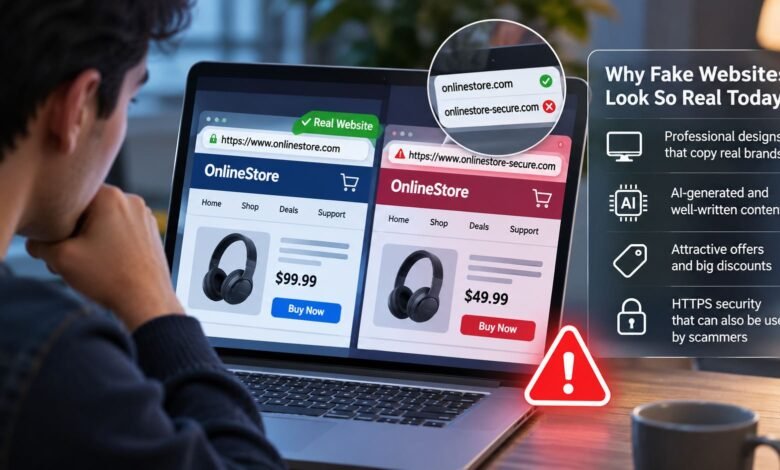
Some fraudulent websites even copy the appearance of established brands. They may use similar colors, logos, product descriptions, and page layouts to make visitors feel comfortable.
This creates a serious challenge: people can no longer depend only on how a website looks to decide whether it is genuine.
Why Fake Websites Look More Realistic Today
1. Professional Website Designs Are Easy to Create
A convincing website does not necessarily require a large development team or an expensive design process.
Many website-building platforms offer ready-made templates that can be customized within a short time. Scammers can use these tools to create pages that look similar to online stores, banking websites, service platforms, or popular business websites.
The design may appear clean and professional, with working navigation menus, attractive images, and properly arranged content.
Because genuine businesses also use similar templates, visitors may find it difficult to distinguish between an authentic website and a fraudulent copy.
2. Fake Websites Can Copy Trusted Brands
One common technique involves creating a website that closely resembles a familiar company.
Scammers may copy the company’s logo, website structure, product images, and written content. They might also use a domain name that looks almost identical to the original.
For example, a fraudulent shopping website could use a slightly different spelling of a well-known brand name. A visitor who does not carefully check the address may believe they are browsing the official store.
These small differences can be easy to overlook, especially when someone is accessing a website through a search result, advertisement, or message.
3. Artificial Intelligence Can Make Scam Content More Convincing
Artificial intelligence has made it easier to generate website content, product descriptions, customer support messages, and promotional material.
This can help legitimate businesses communicate more effectively. Unfortunately, scammers can also use these tools to create convincing fraudulent content.
Fake websites may now contain well-written descriptions, realistic-looking customer testimonials, and professional communication that does not immediately raise suspicion.
The absence of spelling mistakes or awkward sentences is no longer a reliable sign that a website is trustworthy.
Why People Often Trust Fake Websites
Even when warning signs are present, people may overlook them because of how they use the internet.
Familiarity Creates a False Sense of Security
When a website looks similar to a company people already know, they may assume it is genuine without checking the address carefully.
Familiar logos, brand colors, and product images can create a feeling of trust. Scammers understand this and often use familiar visual elements to make visitors less cautious.
Attractive Offers Encourage Quick Decisions
Fraudulent websites frequently advertise unusually low prices, limited-time discounts, or exclusive deals.
These offers can encourage visitors to make quick decisions before checking the website properly.
When people believe they might miss a valuable opportunity, they may pay less attention to details such as the domain name, payment methods, or return policy.
Mobile Browsing Makes Details Easier to Miss
Many people browse websites using smartphones. Smaller screens can make it harder to inspect long website addresses or notice subtle differences in domain names.
Some mobile browsers also display shortened addresses, which means users may not immediately see the complete website URL.
This does not make mobile browsing unsafe by itself, but it can make careful website verification more important.
The Warning Signs People Should Not Ignore
Although fake websites are becoming more convincing, several warning signs can still help visitors identify suspicious activity.
Unusual website addresses: Check for unexpected spelling changes, extra words, strange characters, or unfamiliar domain extensions.
Unrealistic offers: Extremely low prices or guaranteed rewards that seem too good to be true deserve additional attention.
Missing business information: Genuine businesses usually provide ways to contact them, along with relevant company details, policies, and service information.
Suspicious payment requests: Be cautious when a website insists on unusual payment methods or requests unnecessary personal information.
Inconsistent website details: A website may have professional product pages but incomplete policies, broken contact links, or inconsistent company information.
No single warning sign proves that a website is fraudulent. However, several suspicious details together should encourage visitors to stop and verify the website before continuing.
Does HTTPS Mean a Website Is Safe?
One of the most common misunderstandings about website security is the belief that a website with HTTPS must be trustworthy.
HTTPS helps protect information exchanged between a browser and a website through encryption. It can reduce the risk of someone intercepting data during transmission.
However, HTTPS does not confirm that the website belongs to a legitimate business.
Fraudulent websites can also obtain HTTPS certificates. This means a fake shopping website may display a padlock icon and still attempt to steal payment information.
The padlock indicates that the connection is encrypted. It does not guarantee that the website itself is honest.
Visitors should therefore consider HTTPS as one part of website security rather than proof of authenticity.
How People Can Protect Themselves From Fake Websites
Staying safe online does not require advanced technical knowledge. A few simple habits can help reduce the risk of falling for fraudulent websites.
Check the Website Address Carefully
Before entering personal information or making a payment, examine the complete domain name.
If a website claims to represent a familiar company, visit the company’s official website through a trusted bookmark or independently verified search result instead of relying on a suspicious link.
Research the Business Before Making a Purchase
Look for reliable information about the company, including its official contact details, business history, and customer experiences.
Be careful with reviews displayed only on the website itself. Independent sources can provide a more balanced understanding of whether a business is legitimate.
Avoid Sharing Unnecessary Information
A website should not need excessive personal information to provide a basic service.
If a page requests sensitive details that do not appear relevant to the transaction, consider whether the request is necessary before submitting anything.
Use Secure Payment Methods
Whenever possible, choose payment methods that offer transaction protection or a clear dispute process.
Avoid making payments through unfamiliar methods simply because a website claims that the offer is available for a limited time.
Take a Moment Before Clicking
Unexpected links in emails, text messages, advertisements, and social media posts should be treated carefully.
Instead of clicking immediately, check where the link leads and whether the message comes from a reliable source.
Taking a few extra seconds to verify a website can prevent much more serious problems later.
The Future of Website Verification
As website design and online scams continue to evolve, identifying fake websites may require more than visual inspection.
Browsers, security software, payment providers, and online platforms can help users identify suspicious domains and potentially dangerous pages.
However, technology alone cannot prevent every scam. Fraudulent websites may appear quickly, change their addresses, or imitate legitimate businesses before security systems recognize the problem.
This makes digital awareness an important part of online safety.
People need to understand that a professional appearance does not automatically establish trust. The real question is whether the website can be independently verified and whether its behavior matches the claims it makes.
Conclusion
Fake websites are becoming more difficult to identify because scammers have learned how to create convincing digital experiences. Professional designs, copied branding, realistic content, and attractive offers can make fraudulent websites appear legitimate.
The challenge is not simply about recognizing poor website design anymore. It is about checking the information behind the design.
By examining website addresses, verifying businesses, questioning unrealistic offers, and avoiding unnecessary information sharing, users can make safer decisions online.
As the internet continues to become part of everyday life, learning how to recognize suspicious websites is no longer just a technical skill. It is an essential habit for anyone who shops, communicates, or manages personal information online.
Frequently Asked Questions
1. Why are fake websites becoming more difficult to identify?
Fake websites are becoming harder to identify because scammers use professional designs, copied brand logos, realistic content, and AI-generated text. These techniques help fraudulent websites look similar to genuine businesses and online stores.
2. How can I identify a fake website before making a purchase?
Check the website address carefully, verify the company’s contact details, read independent customer reviews, and examine its return and refund policies. Be cautious of unusually low prices and suspicious payment requests.
3. Can a fake website have HTTPS and still be unsafe?
Yes. Fake websites can use HTTPS to encrypt information exchanged with visitors. However, HTTPS does not confirm that a website belongs to a genuine business. Always verify the website’s identity before sharing sensitive information.
4. What should I do if I accidentally share personal information on a fake website?
Change any affected passwords immediately and contact your bank if you shared payment or banking details. Monitor your accounts for suspicious activity and report the fraudulent website to the appropriate cybersecurity authorities.