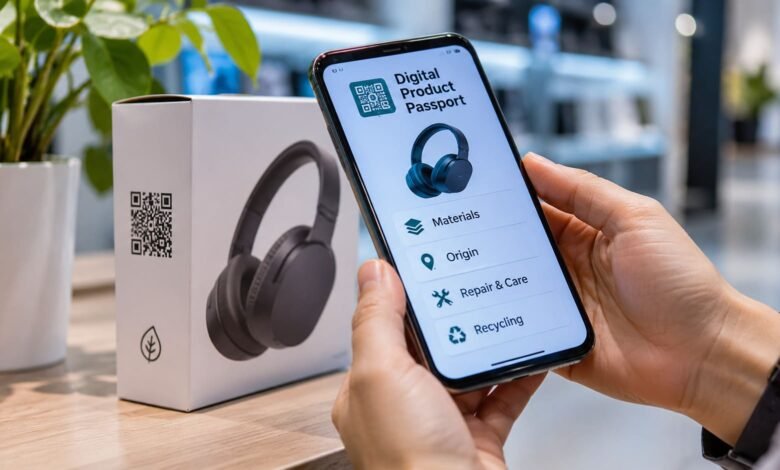
Think about the last time you purchased a smartphone, a new pair of shoes, a kitchen appliance, or even a simple piece of furniture. What influenced your decision? Most likely, you considered the price, brand reputation, appearance, customer reviews, and product features. These are the details that usually attract our attention when we shop online or visit a physical store.
But there are several other questions that rarely come to mind before making a purchase. Where were the materials sourced? How was the product manufactured? Can it be repaired if something stops working? Are replacement parts available? What happens to it when it reaches the end of its useful life?
Most consumers do not have easy access to these answers. Product packaging and online descriptions generally provide basic information, but they do not always explain the complete story behind an item.
This situation could gradually change with the introduction of Digital Product Passports.
Imagine standing in an electronics store and scanning a QR code attached to a smartphone. Within seconds, you could access information about its materials, battery, components, repair options, and recycling instructions. Similarly, when purchasing a jacket, you might be able to explore its fabric composition, care requirements, and other available product details.
This is the idea behind Digital Product Passports. They could make product information more accessible and help consumers understand what they are purchasing beyond the advertisements and descriptions provided by manufacturers.
As businesses move towards more transparent product information systems, this technology could influence how people compare products, evaluate quality, maintain their purchases, and make everyday shopping decisions.
What Are Digital Product Passports and Why Are They Becoming Important?
A Digital Product Passport (DPP) is a digital record associated with a physical product. It provides access to relevant information about that product, potentially including its materials, components, manufacturing details, durability, repairability, maintenance, and recycling information.
Depending on the product category and applicable requirements, this information may be accessed through a QR code, digital identifier, or another supported identification method.
The concept is simple: instead of relying entirely on printed labels or limited product descriptions, customers and other authorised stakeholders can access more detailed information through a digital record.
For example, consider purchasing a refrigerator. Its packaging may tell you the brand, capacity, energy rating, and available features. However, a Digital Product Passport could potentially provide additional information about its components, maintenance requirements, repair options, and responsible disposal.
This additional information could be useful at different stages of ownership.
A customer might use it before purchasing a product, a technician might refer to it during repairs, and a recycling organisation might use relevant information when processing the product at the end of its life.
Digital Product Passports are becoming important because consumers, manufacturers, retailers, and regulators are increasingly interested in product transparency and responsible resource management.
They also represent a shift towards managing product information throughout its lifecycle rather than treating the sale as the end of the manufacturer’s responsibility.
Why Traditional Product Labels May No Longer Be Enough
Product labels have served an important purpose for many years. They help customers identify materials, understand basic specifications, check safety information, and follow usage instructions.
However, traditional labels have certain limitations.
A small label cannot explain every detail about a product. Manufacturers also have limited space to communicate information about complicated supply chains, component origins, repair options, and recycling procedures.
Online shopping has created another challenge. Customers often make purchasing decisions based on photographs, short descriptions, promotional messages, and customer reviews. These sources may not provide enough information to evaluate a product beyond its appearance and advertised features.
Consider two office chairs that look almost identical. One may have replaceable components and accessible repair support, while the other may be difficult to maintain. Without additional product information, customers might not discover this difference until something breaks.
Digital Product Passports could help address this information gap by providing a more detailed digital record.
Instead of trying to fit everything onto a small product label, businesses could make relevant information available through a digital platform.
This would not eliminate traditional labels. Rather, it could complement them by giving interested consumers access to additional details whenever they need them.
1. Consumers Could Make More Informed Purchasing Decisions
One of the biggest potential benefits of Digital Product Passports is that customers could have more information before spending their money.
Today, many purchasing decisions are influenced by advertisements and product descriptions. While these details are useful, they do not always provide a complete picture of product quality, materials, maintenance, or long-term usability.
A digital record could give consumers additional information to consider.
For example, someone planning to purchase a laptop might compare two models with similar prices. Both may offer similar processing power, memory, and storage capacity. However, one model might provide better battery replacement options and more accessible repair information.
These differences could become important when evaluating the overall value of a purchase.
Similarly, someone purchasing a wooden dining table might want to understand the materials used, available maintenance instructions, and whether replacement components can be obtained.
Having access to relevant product information could help consumers move beyond appearance and price when comparing alternatives.
The objective is not to make every customer study a technical document before shopping. It is to make useful information available when someone wants to understand a product more carefully.
2. Product Quality Could Become More Important Than the Initial Price
Price is one of the strongest factors influencing everyday shopping decisions. Many people naturally prefer products that offer the features they need at a lower cost.
However, the cheapest option is not necessarily the most economical choice over time.
A product that frequently breaks, requires expensive repairs, or becomes difficult to maintain may eventually cost more than a slightly more expensive alternative.
Digital Product Passports could make certain details about product maintenance, repairability, and available components easier to discover.
Imagine buying a washing machine.
One model is inexpensive, but information about replacement parts and repairs is difficult to find. Another model costs slightly more but provides clear maintenance guidance and accessible repair information.
If these details are available through digital product records, customers may be able to evaluate the long-term usefulness of both products before purchasing.
This could encourage manufacturers to focus more on durability and maintainability.
It could also gradually influence how customers define product value. Instead of considering only the amount paid at checkout, people may begin paying more attention to how long a product can remain useful.
3. Repairing Everyday Products Could Become Easier
Many products are replaced earlier than necessary because consumers cannot find suitable repair information or replacement components.
A smartphone with a damaged battery, a washing machine with a faulty component, or a laptop with a malfunctioning keyboard may still have several useful years remaining.
However, when repair information is difficult to access, replacing the entire product can sometimes appear easier.
Digital Product Passports could help reduce this difficulty by providing relevant information about product components, maintenance requirements, repair instructions, and spare parts where available.
For example, imagine that your laptop battery is no longer holding a charge.
By accessing its digital product information, you might be able to identify the battery specifications, understand replacement requirements, and locate relevant repair support.
The same idea could apply to household appliances, furniture, and other products with replaceable components.
Of course, a Digital Product Passport does not automatically make every product repairable. Actual repair options will still depend on product design, spare-part availability, manufacturer support, and applicable regulations.
Nevertheless, making repair-related information easier to access could help consumers make better decisions about maintaining their purchases.
4. Shopping for Clothing Could Become More Transparent
The fashion industry provides an interesting example of how Digital Product Passports could influence everyday purchasing behaviour.
When buying clothes, customers usually focus on design, colour, comfort, size, and price. However, information about fabric composition, manufacturing, and product care can also influence how long a garment remains useful.
For instance, two jackets may look almost identical but use different materials and have different care requirements.
A Digital Product Passport could provide additional details about fabric composition, material information, manufacturing records, and care instructions.
Customers could scan a product identifier to explore the information available about a particular garment.
This could be particularly useful for people who want to understand the materials used in their clothing or learn how to maintain garments properly.
It may also help consumers make more informed comparisons between different products rather than relying entirely on brand messaging.
Over time, better access to product information could encourage fashion businesses to improve transparency and pay closer attention to the materials and processes involved in manufacturing their products.
5. Electronic Products Could Become Easier to Maintain and Recycle
Electronic devices contain different components and materials that require careful handling during maintenance and disposal.
Smartphones, televisions, laptops, refrigerators, and other electronic appliances may contain valuable materials that can potentially be recovered through appropriate recycling processes.
However, consumers do not always know how to dispose of these products responsibly.
Some people keep unused electronics at home because they are unsure where to send them. Others discard old devices without understanding the available recycling options.
Digital Product Passports could help make relevant information easier to access.
For example, someone replacing an old smartphone might be able to check information about its battery, components, repair options, and suitable end-of-life handling.
A recycling organisation could also use relevant product information to understand the materials and components involved in processing a device.
This could support better product management and encourage consumers to think about what happens after a product is no longer needed.
The technology itself will not solve electronic waste problems, but it could improve access to information that supports more responsible disposal and resource recovery.
6. Furniture and Household Products Could Have Longer Useful Lives
Furniture is generally purchased with the expectation that it will remain useful for several years.
Whether it is a study table, office chair, wardrobe, sofa, or dining table, consumers often want products that can withstand regular use.
However, finding information about materials, maintenance, replacement parts, and assembly can become difficult after the original purchase.
Digital Product Passports could provide a more convenient way to access these details.
Imagine purchasing an office chair and discovering that one of its components needs replacement after two years.
Instead of searching through old documents or contacting multiple customer support channels, you could access the product’s digital record to find available maintenance information and relevant component details.
A similar approach could help customers maintain wardrobes, tables, and other household products.
This may encourage people to repair or maintain furniture rather than replacing an entire item because of one damaged component.
For manufacturers, making product information accessible could also improve the ownership experience and strengthen relationships with customers after the sale.
7. Digital Product Passports Could Change How Customers Evaluate Brand Trust
Brand reputation plays an important role in purchasing decisions. Consumers often choose familiar brands because they believe those companies provide dependable products and reliable customer support.
However, brand popularity alone does not always tell customers everything they want to know about a product.
People increasingly want meaningful information behind product claims.
For example, when a company describes an item as environmentally responsible or made using recycled materials, customers may want to understand what supports that statement.
Digital Product Passports could make relevant product information and supporting records more accessible.
This could give consumers additional ways to evaluate what businesses communicate about their products.
However, it is important to understand that a Digital Product Passport does not automatically prove that every statement is accurate.
The reliability of the information depends on the quality of the underlying data, the processes used to verify it, and the responsibility of the organisations providing it.
Companies that maintain accurate and useful product records could potentially build stronger customer confidence.
Those that provide incomplete or confusing information may find it harder to meet growing expectations for transparency.
8. Online Shopping Could Become More Informative
Online shopping has made it easier to purchase products from almost anywhere. Consumers can compare prices, read reviews, check specifications, and place orders without visiting a physical store.
However, online shopping also creates a gap between customers and the actual products they are purchasing.
A customer cannot physically inspect the materials, examine internal components, or check the construction quality of an item before placing an order.
Digital Product Passports could help make online product information more detailed.
For example, while comparing two refrigerators on an e-commerce website, customers might access their digital product records to explore additional details about components, maintenance, and available repair support.
Someone buying a pair of shoes could check fabric and material information before deciding which option better suits their requirements.
This could make online product comparisons more meaningful.
Instead of depending only on product photographs and promotional descriptions, consumers could have access to another source of structured information.
For e-commerce businesses, integrating accessible product information could also become a way to improve the shopping experience and help customers make more confident decisions.
9. How Digital Product Passports Could Support Sustainable Consumption
Sustainable consumption is not simply about purchasing products labelled as environmentally friendly. It also involves understanding how products are manufactured, maintained, used, and eventually disposed of.
Many everyday products contain materials that require energy and resources to produce.
When consumers replace products frequently or dispose of them without considering available repair and recycling options, useful resources may be wasted.
Digital Product Passports could support more informed decisions by providing information about product materials, repairability, maintenance, and end-of-life options.
For example, a customer considering two household appliances might find that one offers more accessible repair information and clearer recycling guidance.
These details could influence the purchasing decision.
Similarly, someone buying furniture may discover that a particular product has replaceable components, making future maintenance easier.
The broader idea is to encourage consumers and manufacturers to consider a product’s entire lifecycle rather than focusing only on its initial sale.
However, access to information alone cannot guarantee sustainable behaviour. Affordable repair services, suitable recycling infrastructure, responsible manufacturing, and consumer participation will remain equally important.
10. The Technologies That Make Digital Product Passports Possible
Digital Product Passports depend on more than a QR code. Several digital technologies and information systems can work together to make product records accessible and useful.
QR Codes and Digital Identifiers
QR codes provide a convenient way to connect a physical product with its digital information.
Customers can scan the code using a smartphone and access the relevant product record.
Digital identifiers also help distinguish one product or product model from another, depending on the identification system being used.
Cloud Computing
Manufacturers and other organisations may need to store and manage large amounts of product information.
Cloud-based platforms can support data storage, information access, and communication between different systems.
They can also make it easier to update relevant records when product information changes.
Artificial Intelligence
Artificial intelligence could help businesses organise large product datasets, identify missing information, and analyse inconsistencies.
For example, AI-based tools might help manufacturers review product records and identify areas where important information needs to be updated.
However, AI should support data management rather than replace the verification of important product information.
Blockchain Technology
Blockchain is sometimes discussed as a possible technology for improving the traceability of product information.
It can provide records that are difficult to alter without leaving a trace, depending on how the system is designed.
However, blockchain is not a mandatory requirement for every Digital Product Passport. Different organisations may use different technical approaches to manage and exchange product information.
Data Exchange and Interoperability
Products often pass through several organisations, including manufacturers, suppliers, distributors, retailers, repair providers, and recycling companies.
These organisations may use different software platforms and information systems.
For Digital Product Passports to work effectively, relevant systems need to exchange information in compatible formats while maintaining suitable access controls.
This is one of the important technical challenges involved in implementing the technology across different industries.
11. What Challenges Could Prevent Digital Product Passports From Becoming Widely Used?
Although Digital Product Passports offer several possibilities, implementing them across different industries will require careful planning.
Maintaining Accurate Product Information
The usefulness of a Digital Product Passport depends on the information it contains.
If manufacturers provide incomplete details or fail to update records when product components change, consumers may receive misleading or outdated information.
Businesses will need reliable processes for collecting, checking, and maintaining product data.
Implementation Costs for Businesses
Introducing Digital Product Passports may require investment in software, digital identification systems, data management platforms, and employee training.
Large organisations may have the resources to manage these changes more easily.
Smaller manufacturers could face greater difficulties, particularly when they work with multiple suppliers or lack advanced digital infrastructure.
Protecting Sensitive Business Information
Not every detail involved in manufacturing should be publicly accessible.
Companies may need to protect confidential supplier information, commercial processes, and other sensitive business data.
The challenge is to make useful product information available to consumers while maintaining appropriate access restrictions for confidential records.
Making the Experience Simple for Consumers
Technology is useful only when people can understand and use it.
If accessing a Digital Product Passport involves complicated registration processes, confusing technical language, or multiple steps, many customers may ignore it.
The information should be easy to find, simple to understand, and accessible across different devices.
Different Requirements Across Industries
A smartphone, a pair of shoes, and a refrigerator do not require the same type of product information.
Each industry has different materials, manufacturing processes, maintenance requirements, and recycling considerations.
Developing suitable information standards and implementation processes for different product categories will therefore be important.
12. What Is the European Union Doing About Digital Product Passports?
Digital Product Passports are receiving increasing attention because of the European Union’s efforts to improve product sustainability, transparency, and circular resource use.
The Ecodesign for Sustainable Products Regulation (ESPR) establishes a framework for introducing product-specific requirements, including Digital Product Passports.
The regulation does not mean that every product must immediately carry a Digital Product Passport. Requirements are being introduced progressively for selected product categories through relevant regulatory measures.
The European Commission is also developing the digital infrastructure needed to support implementation.
In July 2026, the European Commission launched its Digital Product Passport Registry, an important development in the implementation process.
The broader objective is to make relevant product information more accessible to consumers, businesses, authorities, and other stakeholders.
For manufacturers and businesses operating in regulated markets, understanding these developments is becoming increasingly important.
Companies will need to monitor the specific requirements that apply to their products, including the information they must provide and the technical arrangements needed to support digital records.
13. What Could Digital Product Passports Mean for Businesses Outside Europe?
Digital Product Passports may also influence manufacturers and suppliers located outside the European Union.
For example, an Indian manufacturer exporting clothing, electronics, furniture, or other regulated products to European markets may need to understand the relevant product information and compliance requirements.
This could encourage businesses to improve how they collect and manage information about materials, components, suppliers, and manufacturing processes.
Companies that already maintain organised digital records may find it easier to prepare for future requirements than those relying heavily on disconnected spreadsheets and manual documentation.
Digital Product Passports could also encourage manufacturers to improve communication with suppliers and develop better systems for tracking product information.
For Indian businesses involved in international supply chains, this is an opportunity to strengthen digital readiness and understand how product transparency expectations are changing.
However, the exact obligations will depend on the applicable product-specific rules, market, and role of the business in the supply chain.
14. Will Consumers Actually Use Digital Product Passports?
One important question remains: will ordinary consumers take the time to scan a product and explore its digital information?
The answer will depend largely on the usefulness of the experience.
People already scan QR codes to access restaurant menus, payment systems, event details, and other digital services. This behaviour suggests that scanning a product identifier could become familiar when it provides clear value.
For example, customers may be more interested in scanning a smartphone if they can quickly check battery replacement information or repair options.
Someone purchasing a jacket may want to understand its fabric composition and care requirements.
A person buying a refrigerator may find maintenance and servicing details particularly useful.
These examples show that customers are more likely to use digital product information when it answers a practical question.
Manufacturers should therefore avoid treating Digital Product Passports as another marketing feature. Their value will come from providing accurate, relevant, and understandable information at the right moment.
15. How Digital Product Passports Could Influence Future Consumer Behaviour
The introduction of Digital Product Passports could gradually change the questions people ask before making purchases.
Today, customers often ask:
- Is this product affordable?
- Does this brand offer good quality?
- Does it have the features I need?
- Are customer reviews positive?
In the future, they may also ask:
- What materials were used to manufacture it?
- Can I repair it if something breaks?
- Are replacement parts available?
- How should I maintain it?
- Can its materials be recycled?
- Is there reliable information supporting the manufacturer’s claims?
These additional questions could influence how products are designed, marketed, and evaluated.
Manufacturers may need to pay greater attention to product durability, repair options, material information, and data accuracy.
Retailers may find new ways to present product information to customers.
Consumers, meanwhile, could gain more opportunities to compare products using details that are not always visible during a typical shopping experience.
The change may happen gradually, but it could influence the relationship between businesses and the people purchasing their products.
Conclusion
Digital Product Passports could change everyday shopping by making important product information easier to access and understand.
From smartphones and clothing to furniture and household appliances, the technology has the potential to provide consumers with more information about materials, components, maintenance, repair options, and recycling.
This could influence how people compare products, evaluate long-term value, and decide what is worth purchasing.
However, successful implementation will require more than placing QR codes on packaging. Businesses will need accurate product data, reliable digital infrastructure, suitable security measures, and clear information that consumers can easily understand.
Regulatory developments, including the European Union’s Ecodesign for Sustainable Products Regulation, are helping move the concept towards practical implementation.
For consumers, the biggest advantage could be having more information before making everyday purchasing decisions. For manufacturers, it could create a stronger need to understand and manage product information throughout the entire product lifecycle.
In the future, checking a product’s digital record could become a normal part of shopping, just like comparing prices or reading customer reviews today.
The real transformation will happen when consumers no longer need to rely only on what a product looks like or what a brand claims, but can also explore the information behind the product itself.
Frequently Asked Questions
1. What is a Digital Product Passport?
A Digital Product Passport is a digital record that provides information about a product, including its materials, components, manufacturing, and recycling details.
2. How do Digital Product Passports help consumers?
They help consumers make better purchasing decisions by providing useful information about product quality, materials, maintenance, and repair options.
3. Which everyday products can use Digital Product Passports?
Smartphones, laptops, clothing, furniture, refrigerators, and other household appliances can use Digital Product Passports.
4. How can customers access a Digital Product Passport?
Customers can access product information by scanning a QR code or using another digital identification method connected to the product.