Artificial Intelligence is changing the way people work, communicate, learn, and solve everyday problems. From generating written content and designing graphics to analysing information and developing software, AI tools can now complete tasks that once required considerable human effort. What previously took hours can sometimes be accomplished in just a few minutes.
As these technologies become more advanced, an important question is emerging: If machines can create content, generate ideas, and produce designs, what makes human creativity valuable?
The answer lies in something that technology cannot fully reproduce: the human ability to connect experiences, emotions, imagination, curiosity, and personal understanding to create something meaningful.
AI can generate impressive results using existing information and learned patterns. However, creativity is not simply about producing something new. It also involves understanding why an idea matters, recognising emotions, questioning familiar approaches, and imagining possibilities that have not yet been explored.
Rather than making human creativity unnecessary, the growing influence of AI makes original human thinking more important than ever.
1. Human Creativity Begins With Personal Experiences
Every person sees the world differently. Childhood memories, professional experiences, personal challenges, cultural influences, and everyday observations shape how individuals understand situations.
These experiences often become the starting point for creative ideas.
For example, a writer who has experienced a difficult career transition may communicate the challenges of professional growth in a way that feels genuine to readers. A designer who understands how people interact with a product may develop an interface that considers their actual frustrations rather than focusing only on appearance.
AI can generate content based on information about these experiences, but it does not personally live through them.
Human creativity brings an individual perspective into the process. It allows people to transform ordinary observations into meaningful ideas that connect with others.
This personal connection is one reason original human contributions remain valuable across industries.
2. AI Can Generate Ideas, but Humans Give Them Meaning
AI tools can produce hundreds of suggestions within seconds. They can recommend headlines, create marketing concepts, generate images, and organise information into different formats.
However, having more ideas does not automatically lead to better decisions.
Consider a business preparing a campaign for a new product. An AI tool might suggest several promotional messages based on customer data and previous campaign patterns. These suggestions can provide a useful starting point.
But a human marketing professional must decide which message reflects the company’s values, understands the audience’s concerns, and communicates the product’s actual benefits.
That decision requires more than generating possibilities. It requires judgement, context, and an understanding of the intended outcome.
AI can support the creative process by expanding the range of available ideas. Humans determine which ideas deserve attention and how they should be developed.
3. Emotional Understanding Makes Human Creativity Different
Creativity is closely connected to human emotions.
A photograph can remind someone of a meaningful memory. A story can help readers understand another person’s struggles. A piece of music can communicate feelings that are difficult to express through ordinary conversation.
These experiences demonstrate that creative work is not judged only by its technical quality. Its emotional impact also matters.
AI can analyse emotional language, identify patterns in customer feedback, and generate messages with different tones. These capabilities can be useful when developing communication materials.
However, understanding how an emotion is described is different from personally experiencing it.
Human creators can draw upon empathy, relationships, memories, and social understanding when developing ideas. This helps them create work that feels relevant to real situations.
In fields such as storytelling, advertising, education, entertainment, and communication, emotional understanding continues to play an important role.
4. Original Thinking Goes Beyond Existing Patterns
AI systems are trained using information from existing data. They identify relationships, recognise patterns, and generate outputs based on what they have learned.
This makes them useful for solving many problems and exploring familiar subjects from different angles.
However, some important creative developments begin when people question the assumptions behind existing approaches.
Think about how many everyday products were developed because someone noticed a problem that others had accepted as normal. The idea did not necessarily come from combining existing information. It came from observing an inconvenience and imagining a different possibility.
Human beings can challenge established practices, question accepted ideas, and explore directions that may initially appear impractical.
This willingness to experiment is essential for innovation.
AI can help evaluate possible solutions, but human curiosity often determines which questions should be explored in the first place.
5. Creativity Requires Critical Thinking and Decision-Making
A creative idea may sound impressive but still be unsuitable for its intended purpose.
A business campaign might have an attractive design but communicate the wrong message. An article might contain well-organised information but fail to address the reader’s actual concerns. A product feature might look innovative but create unnecessary complications for customers.
This is where critical thinking becomes essential.
Human creators evaluate ideas by considering their purpose, relevance, limitations, and possible consequences.
AI-generated suggestions also require careful review. Information may be inaccurate, examples may lack context, and generated recommendations may not match the situation.
People need to question the output instead of accepting it simply because it appears professional.
Creativity becomes more effective when imagination is combined with reasoning. The ability to recognise what works, identify what needs improvement, and reject unsuitable ideas makes human involvement valuable throughout the creative process.
6. AI Is Changing Creative Professions, Not Eliminating the Need for Creativity
Many industries are introducing AI into their daily operations. Writers use it for research assistance, designers explore visual concepts with generative tools, developers use coding assistants, and marketers analyse customer behaviour through automated systems.
These changes are influencing how creative professionals approach their responsibilities.
Instead of spending all their time on repetitive activities, professionals can use AI to explore ideas, organise information, and speed up certain stages of production.
For example:
- Content writers: Can use AI to organise research while contributing original perspectives, examples, and meaningful explanations.
- Graphic designers: Can explore visual directions quickly while making decisions about composition, identity, and audience appeal.
- Marketing professionals: Can analyse campaign information while developing messages that reflect customer needs and brand values.
- Product developers: Can use AI-assisted research while identifying problems and designing solutions based on user experiences.
- Educators: Can prepare learning resources more efficiently while using their experience to explain difficult concepts and support students.
The nature of creative work is changing. Professionals who combine their knowledge with appropriate AI tools may find new ways to improve the quality and efficiency of their work.
7. Human Imagination Encourages New Possibilities
Some of the most important ideas begin with a simple question: What if things could work differently?
This type of thinking encourages people to move beyond immediate requirements and explore possibilities that do not yet have clear solutions.
An entrepreneur might imagine a service that makes an everyday task easier. An architect might rethink how limited spaces can be used. A scientist might investigate an unusual observation that challenges an existing explanation.
These ideas often require patience, experimentation, and the willingness to explore uncertainty.
AI can assist with simulations, comparisons, research, and idea development. It can also help people understand whether a proposed direction is technically possible.
However, human imagination remains important in deciding what is worth exploring and why it matters.
The future is not shaped only by improving existing systems. It also depends on people’s ability to imagine alternatives.
8. The Best Results Come From Human and AI Collaboration
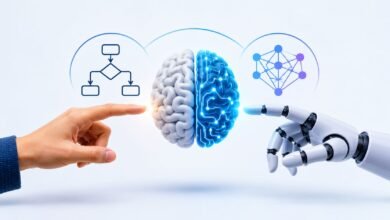
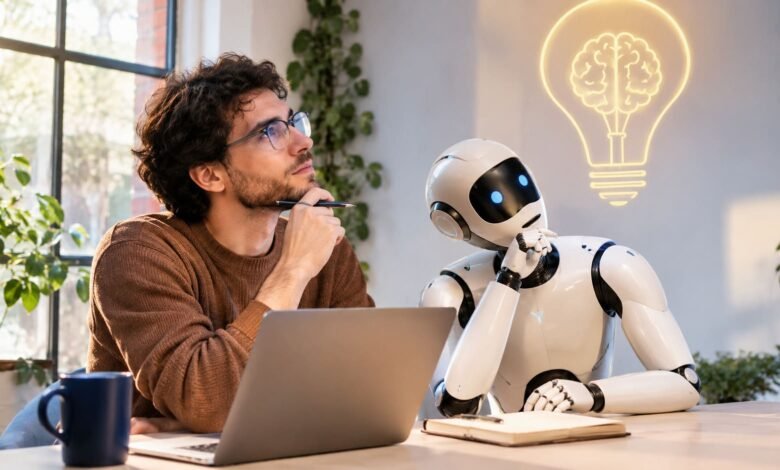
Human creativity and Artificial Intelligence do not need to compete with each other. Their capabilities can complement one another when they are used thoughtfully.
AI offers speed, information processing, automation, and the ability to generate multiple possibilities. Humans contribute experience, judgement, empathy, originality, and an understanding of real-world situations.
Consider the process of creating an informative article.
An AI tool can help organise research, suggest an outline, and identify areas that need further explanation. A human writer can then add original observations, verify important information, improve the flow, and make the content more useful to readers.
The result can be more efficient without sacrificing the value of human involvement.
The important factor is how the technology is used. Relying entirely on automated output can make creative work feel predictable. Using AI as an assistant while maintaining independent thinking can create opportunities for better results.
Technology becomes more useful when people remain responsible for the ideas, decisions, and final outcomes.
9. Why Developing Human Creativity Will Become More Important
As AI becomes part of everyday professional life, technical familiarity alone may not be enough to distinguish individuals and businesses.
The ability to think independently, communicate clearly, understand people, and approach problems from different perspectives will continue to be valuable.
People can strengthen these abilities through simple everyday practices:
- Stay curious: Explore unfamiliar subjects and ask questions beyond the information immediately available.
- Observe everyday situations: Pay attention to common problems, customer experiences, and changes in people’s behaviour.
- Experiment with different approaches: Avoid depending on the same methods when solving every problem.
- Learn beyond technology: Develop communication, research, problem-solving, and decision-making skills.
- Use AI thoughtfully: Treat generated suggestions as starting points rather than unquestionable answers.
- Develop personal perspectives: Connect new information with your own observations and professional experiences.
Creativity is not limited to artists, writers, or designers. It is an ability that supports problem-solving, business development, scientific discovery, education, and everyday decision-making.
Developing it can help people adapt as technology continues to evolve.
Conclusion
Artificial Intelligence is opening new opportunities across almost every industry. It is making many creative tasks faster, providing access to new tools, and changing how people develop and communicate ideas.
However, technological progress does not make human imagination less valuable.
The ability to understand experiences, recognise emotions, challenge familiar thinking, and give ideas meaningful direction remains an important part of human creativity.
AI can help people explore possibilities and complete tasks more efficiently, but the value of an idea also depends on the thinking, purpose, and understanding behind it.
The future of creativity will not necessarily belong to those who use the most advanced tools. It will belong to those who know how to combine technology with original thinking.
Frequently Asked Questions
1. Why is human creativity important in an AI-driven world?
Human creativity is important because it brings imagination, personal experiences, emotional understanding, and original thinking into the process of developing ideas. AI can generate suggestions, but people provide the purpose and judgement that make creative work meaningful.
2. Can Artificial Intelligence replace human creativity?
Artificial Intelligence can assist with writing, designing, brainstorming, and generating content. However, it cannot fully replace the personal experiences, independent perspectives, and emotional understanding that influence human creativity.
3. How can humans and AI work together creatively?
Humans can use AI tools to explore ideas, organise information, and complete repetitive tasks more efficiently. They can then apply their knowledge, critical thinking, and imagination to improve the results and make them more relevant.
4. What skills will help people remain creative as AI develops?
Independent thinking, problem-solving, communication, curiosity, emotional understanding, and adaptability will help people maintain their creative abilities. Learning to use AI responsibly can also improve how individuals approach new challenges.