Think about how many times you reach for your smartphone during the day. You check messages, search for directions, look up information, take photographs, and sometimes unlock your phone without even remembering why. Digital technology has become such a normal part of everyday life that most people barely notice how often they interact with it.
But what if accessing information did not always require looking at a screen?
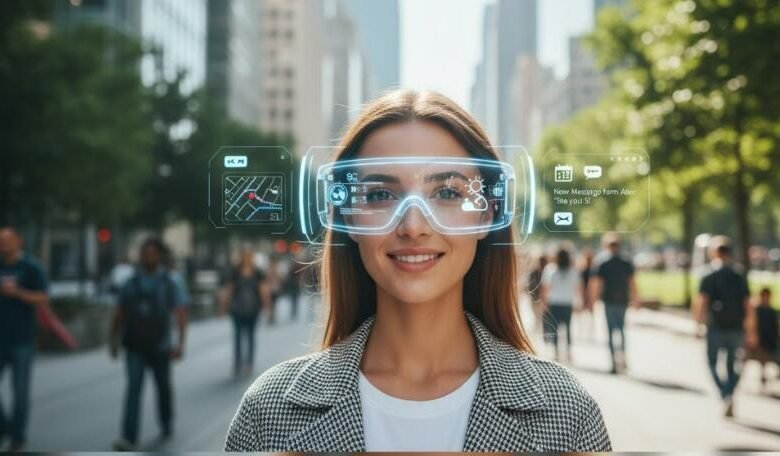
This is where smart glasses are beginning to attract attention. What looks like an ordinary pair of glasses can now include cameras, microphones, speakers, internet connectivity, and artificial intelligence features. Some advanced models can even display digital information directly within the user’s field of vision.
The interesting part is not simply that glasses can perform digital tasks. It is the possibility of making technology available without interrupting what people are doing.
From helping travellers understand unfamiliar languages to supporting employees with practical instructions, smart glasses could gradually introduce a different way of experiencing the digital world.
What Are Smart Glasses and Why Are They Becoming Popular?
Smart glasses are wearable electronic devices designed to combine traditional eyewear with digital functions. Depending on the product, they can allow users to capture photographs, listen to music, answer calls, access voice assistants, and interact with connected applications.
Some devices focus mainly on audio and camera features, while more advanced versions use augmented reality to display digital information in front of the wearer.
Their growing appeal comes from a simple idea: people want technology to be useful without requiring constant attention.
For example, someone walking through an unfamiliar location might prefer hearing directions rather than repeatedly checking a smartphone. Similarly, a person working with their hands may find voice-based assistance more convenient than stopping to operate a separate device.
Smart glasses are still evolving, but their development suggests that wearable technology could become an important part of future digital experiences.
1. A Different Way to Access Everyday Information
Smartphones have made information available almost everywhere, but accessing it often means looking away from whatever we are doing.
Consider a person preparing a meal while following an online recipe. Every time they need to check the next instruction, they may have to touch their phone with wet or dirty hands. With compatible smart glasses, certain instructions could potentially be accessed through voice commands or audio responses.
The same idea could be useful while travelling, exercising, or performing everyday activities.
Rather than replacing smartphones, smart glasses could handle smaller interactions that do not require a full screen. This could make technology feel more accessible and less disruptive.
2. Artificial Intelligence Could Make Glasses More Useful
Artificial intelligence could become one of the most interesting additions to smart glasses.
Imagine visiting a historical location and wondering about the story behind a particular building. Instead of opening a search engine, you could ask a voice assistant for an explanation.
Depending on the device’s capabilities, AI could analyse camera input, respond to questions, recognise certain objects, and provide relevant information.
This could also help with everyday activities. Someone shopping might ask for product information, while a traveller could request assistance understanding nearby surroundings.
However, AI-powered assistance still has limitations. It can misunderstand questions, provide inaccurate information, or struggle with unfamiliar environments. Its usefulness will depend on the quality of the technology and how responsibly it is developed.
3. Connecting the Physical World With Augmented Reality
Augmented reality (AR) could bring one of the biggest changes to the way people use smart glasses.
Traditional digital devices display information on separate screens. AR takes a different approach by placing digital elements alongside the physical environment.
Imagine walking through a large shopping centre and receiving directions to a particular store without constantly checking a map. A student studying engineering could potentially view a digital model while examining a physical machine.
This technology could also support training, education, product demonstrations, and technical work.
The advantage is that information becomes connected to the environment where it is actually needed.
However, creating a smooth AR experience requires accurate sensors, suitable displays, processing power, and careful design. These challenges still influence how practical advanced AR glasses can become.
4. Making Conversations Across Languages Easier
Language differences can make travelling and international communication challenging.
Even a simple conversation can become difficult when two people do not understand each other’s language. Smart glasses with compatible translation technology could help reduce this problem.
For example, someone travelling abroad might be able to hear translated speech through their glasses or view translated words on a supported display.
This could be useful in hotels, airports, international workplaces, and everyday conversations.
Of course, automatic translation is not always accurate. Regional accents, background noise, expressions, and cultural differences can affect how well a sentence is understood.
Still, combining translation with wearable technology could make communication easier in situations where using a smartphone is inconvenient.
5. Bringing New Possibilities to Education
Learning is not always easy when students have to understand complicated subjects through written explanations alone.
Smart glasses could offer another way to explore information by combining physical experiences with digital content.
For instance, students studying science might interact with digital models of complex structures. Engineering learners could follow visual instructions while practising technical tasks. History students could explore additional information about important locations.
Teachers may also find opportunities to make practical lessons more interactive.
The real benefit would come from helping students understand concepts rather than simply giving them another screen to look at.
However, educational institutions would need to consider affordability, accessibility, student privacy, and whether smart glasses genuinely improve learning.
6. Supporting People Who Need Accessibility Assistance
Technology has an important role in making everyday activities more accessible.
For people with visual or hearing difficulties, smart glasses could offer additional ways to understand their surroundings and communicate with others.
Certain AI-powered devices may describe nearby objects or provide spoken information. Other compatible models could display captions during conversations, helping users follow spoken communication.
These features could be useful in public places, workplaces, educational environments, and everyday social situations.
It is important to understand that smart glasses cannot replace every specialised accessibility tool. Their effectiveness depends on the features available and how accurately those features work.
Nevertheless, wearable technology could provide additional support and give people more options for managing everyday activities.
7. Changing How Work Gets Done
Smart glasses could also become useful in workplaces where employees need information while keeping their hands free.
Consider a technician repairing an industrial machine. Instead of repeatedly checking a printed manual or another screen, the technician could potentially access digital instructions through compatible wearable technology.
A warehouse employee might use voice commands to retrieve product information, while a field engineer could receive remote guidance from an experienced colleague.
These applications could be particularly useful in manufacturing, logistics, engineering, and equipment maintenance.
However, businesses would need to consider employee safety, device reliability, workplace privacy, and training before introducing smart glasses into their operations.
8. Privacy Could Become a Serious Concern
As smart glasses become more advanced, privacy will become an increasingly important part of the discussion.
Some devices include cameras and microphones within frames that look similar to ordinary eyewear. This can create situations where people nearby may not realise that a photograph, video, or audio recording is taking place.
There are also questions about how personal information is collected, processed, and stored.
Manufacturers need to provide clear recording indicators, secure data storage, transparent permissions, and understandable privacy settings.
Users should also know when their devices are accessing cameras, microphones, or location information.
Without responsible data practices, people may become uncomfortable wearing smart glasses in public places.
9. The Practical Challenges Smart Glasses Still Need to Overcome
Despite their potential, smart glasses have several practical limitations.
Battery life is one of the biggest concerns. Cameras, wireless connections, sensors, and AI features all require energy. Users will expect a device that can comfortably last through their daily activities.
Comfort is equally important. Glasses should be lightweight and suitable for extended use. Adding too many electronic components can make the frames heavier or less convenient.
Price is another important factor. If smart glasses remain expensive, many consumers may not consider them a necessary purchase.
There is also the question of everyday usefulness. People are unlikely to adopt another wearable device simply because it contains advanced technology. It needs to solve genuine problems and provide benefits that justify its cost.
10. What Does the Future Hold for Smart Glasses?
The future of smart glasses will depend on how effectively manufacturers improve their existing technology.
Developments in artificial intelligence, battery design, augmented reality, and wearable computing could make these devices more comfortable and useful.
Over time, smart glasses may become more common in travelling, education, professional environments, communication, and accessibility applications.
However, their growth will not happen simply because technology becomes more advanced. Consumers will want devices that are affordable, reliable, comfortable, and respectful of their privacy.
Smart glasses may eventually become another everyday digital device, working alongside smartphones, laptops, and other connected products.
Conclusion
Smart glasses are changing the way people think about wearable technology. They offer the possibility of accessing information, communicating, and receiving digital assistance without always depending on a traditional screen.
Their potential applications extend across education, travel, accessibility, communication, and professional work. At the same time, challenges involving privacy, battery life, comfort, and affordability still need attention.
The real opportunity is not about putting more technology into a pair of glasses. It is about making technology fit naturally into people’s everyday lives.
Perhaps the next major change in digital experiences will not come from another screen. It could come from technology that allows people to stay connected while keeping their attention on the world around them.
Frequently Asked Questions
1. What are smart glasses and how do they work?
Smart glasses are wearable devices that combine traditional eyewear with digital features such as cameras, microphones, speakers, AI assistants, and augmented reality displays. They help users access information and interact with technology hands-free.
2. How could smart glasses change everyday life?
Smart glasses could make everyday activities easier by offering hands-free navigation, voice assistance, real-time translation, photography, and quick access to digital information without constantly using a smartphone.
3. Can smart glasses use artificial intelligence?
Yes, many smart glasses support AI-powered features. Depending on the device, users may be able to ask questions, identify objects, receive information about their surroundings, and access voice-based assistance.
4. What are the biggest challenges of smart glasses?
The main challenges include limited battery life, high prices, device comfort, data privacy, and technical limitations. Manufacturers need to address these issues before smart glasses become widely adopted.