Every time we use an online service, we share some amount of personal information. It could be our email address, phone number, financial details, identity documents, or login credentials. Most digital platforms require users to provide information before allowing them to access their services. However, sharing more personal data than necessary can create privacy risks.
This is where Zero-Knowledge Proofs (ZKPs) are becoming an interesting development in digital security. They offer a different approach to verifying information without requiring users to reveal the actual details behind it.
Imagine proving that you are over 18 without sharing your date of birth or confirming that you have enough money in your account without displaying your balance. These situations may sound complicated, but zero-knowledge proofs make this type of verification possible.
As concerns about data privacy, identity theft, and unauthorized access continue to grow, this technology could change how organizations handle sensitive digital information.
What Are Zero-Knowledge Proofs?
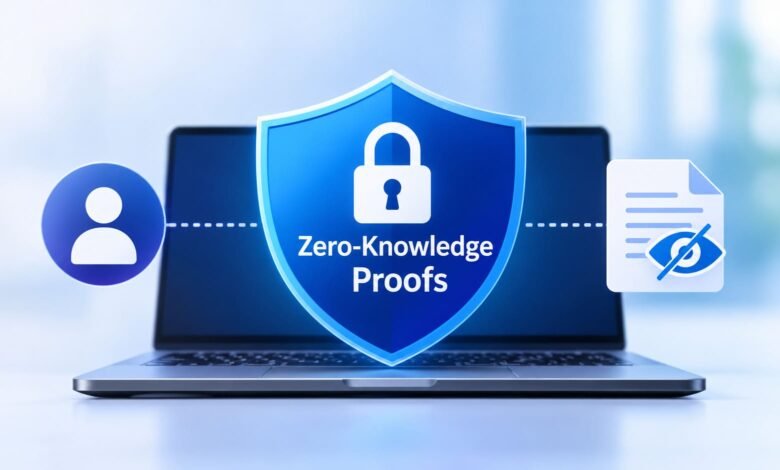
A Zero-Knowledge Proof is a cryptographic method that allows one person or system to prove that a particular statement is true without revealing the private information used to prove it.
In simple terms, it allows someone to demonstrate that they know something without actually sharing what they know.
For example, imagine you want to access an age-restricted online platform. Traditionally, you might need to upload an identity document containing your full name, date of birth, address, and other personal details.
With a zero-knowledge proof, the platform could verify that you meet the required age limit without receiving your complete identity information.
This approach reduces unnecessary data sharing and gives individuals greater control over their personal information.
How Do Zero-Knowledge Proofs Work?
Zero-knowledge proofs work through a mathematical verification process involving two main participants: the prover and the verifier.
- Prover: The individual or system that has private information and wants to prove something about it.
- Verifier: The person or system that checks whether the claim is valid without accessing the original private information.
The prover generates a cryptographic proof using the information they want to keep private. The verifier then checks that proof using a verification process.
A properly designed zero-knowledge proof follows three important principles:
1. Completeness
If a statement is true and the prover follows the correct process, an honest verifier should accept the proof.
This ensures that legitimate users can successfully demonstrate what they need to prove.
2. Soundness
A person should not be able to convince the verifier that a false statement is true, except with a very small probability.
This principle helps prevent fraudulent claims and misleading verification attempts.
3. Zero-Knowledge
The verifier learns nothing meaningful about the private information beyond the fact that the statement being proved is valid.
This is the main privacy advantage of the technology.
Together, these principles allow systems to verify information while minimizing the exposure of sensitive data.
Why Are Zero-Knowledge Proofs Important for Digital Privacy?
Many online services collect personal information because they need to verify user identities, confirm eligibility, or authorize transactions. However, storing unnecessary information can increase the impact of a security breach.
For example, if a company stores thousands of identity documents and its database becomes compromised, attackers may gain access to information that users never needed to share in the first place.
Zero-knowledge proofs introduce a more privacy-conscious approach. Instead of collecting and storing every detail, organizations can verify specific information through cryptographic proofs.
Here are some ways this technology can improve digital privacy.
1. Protecting Personal Identity Information
Identity verification is common across banking platforms, financial applications, online marketplaces, and digital services.
However, traditional verification methods often require users to share more personal information than the service actually needs.
Zero-knowledge proofs can help verify specific identity-related claims without exposing complete identity records.
For example, a service could confirm that a person meets an age requirement without receiving their exact birth date.
This reduces the amount of personal information organizations need to handle.
2. Improving Financial Transaction Privacy
Financial transactions involve sensitive information, including account balances, payment details, and transaction histories.
In some situations, individuals and organizations need to prove that they meet certain financial conditions without revealing their complete financial records.
Zero-knowledge proofs can support this process.
For example, a borrower could prove that their financial information meets a particular eligibility requirement without exposing every detail of their account history.
Some privacy-focused blockchain systems also use zero-knowledge cryptography to verify transactions while limiting the information visible to other participants.
3. Securing Passwordless Authentication
Online accounts remain attractive targets for cybercriminals. Stolen passwords, phishing attacks, and credential leaks can allow unauthorized individuals to access sensitive accounts.
Zero-knowledge techniques can support authentication systems that verify knowledge of a secret without transmitting the secret itself.
For instance, a user may prove that they possess the correct authentication information without directly revealing it to the server.
However, zero-knowledge proofs are not a complete replacement for every authentication method. Their effectiveness depends on how the authentication system is designed and implemented.
4. Supporting Private Healthcare Data Verification
Healthcare organizations manage highly sensitive information, including medical histories, test results, and patient records.
There are situations where a patient needs to prove a particular medical condition or eligibility requirement without sharing their complete health record.
Zero-knowledge proofs could help verify selected medical information while limiting unnecessary exposure.
For example, a patient might prove that they meet a specific eligibility condition for a healthcare service without revealing unrelated medical details.
Such applications require careful privacy, security, and regulatory considerations, especially when handling real patient information.
5. Reducing Unnecessary Data Collection
One of the biggest advantages of zero-knowledge proofs is their potential to reduce the amount of information organizations collect.
Companies often request personal details simply because their existing verification systems depend on them.
With privacy-preserving verification, organizations may be able to confirm specific requirements without collecting complete records.
This can reduce the volume of sensitive information stored in databases and potentially limit the impact of data breaches.
Real-World Applications of Zero-Knowledge Proofs
Zero-knowledge proofs are not limited to theoretical cryptography. They are already being explored and used in several areas of digital technology.
Some important applications include:
Digital Identity Verification
Digital identity platforms can use zero-knowledge proofs to confirm selected identity attributes without exposing complete personal records.
This could make online verification more privacy-friendly for users accessing government services, financial platforms, and other digital applications.
Blockchain and Cryptocurrency
Blockchain networks generally make transaction information visible to network participants. Although transparency supports verification, it can create privacy concerns.
Zero-knowledge proofs can help blockchain systems verify transactions without revealing all transaction details.
Technologies such as zk-SNARKs and zk-STARKs are examples of cryptographic proof systems used in this area.
Decentralized Applications
Decentralized applications can use zero-knowledge proofs to verify user actions and eligibility while reducing the need to disclose personal information.
This can be particularly useful for applications that operate across distributed networks.
Private Business Verification
Organizations sometimes need to demonstrate that they meet specific requirements without disclosing confidential business information.
For example, a company could potentially prove that it satisfies a financial threshold or compliance condition without making its complete internal records public.
These applications can help businesses balance transparency with confidentiality.
Benefits of Using Zero-Knowledge Proofs
The growing interest in zero-knowledge technology comes from its ability to address several digital privacy challenges.
Some important benefits include:
- Better data privacy: Sensitive information does not need to be directly revealed during certain verification processes.
- Reduced data exposure: Organizations can potentially collect and store fewer personal details.
- Stronger verification: Cryptographic proofs allow systems to verify claims through mathematical methods.
- Improved user control: Individuals can prove specific information without unnecessarily sharing their complete identity.
- Support for digital security: Properly implemented systems can reduce the exposure of sensitive information during verification.
- Greater confidentiality: Businesses can demonstrate selected facts without revealing confidential records.
Although these advantages are promising, the actual level of protection depends on the cryptographic system and its implementation.
Challenges and Limitations of Zero-Knowledge Proofs
Despite their privacy benefits, zero-knowledge proofs are not a perfect solution for every digital security problem.
Organizations need to understand several challenges before adopting this technology.
1. Technical Complexity
Developing zero-knowledge proof systems requires advanced mathematical and cryptographic knowledge.
Implementing these systems incorrectly can introduce security weaknesses that affect the entire verification process.
2. Computational Requirements
Some zero-knowledge proof systems require significant computing resources to generate or verify proofs.
Although newer approaches are improving efficiency, performance can still be a concern for applications that need to process large numbers of transactions.
3. Implementation Costs
Organizations may need specialized developers, infrastructure, and security testing before introducing zero-knowledge technology.
For smaller businesses, these requirements can make adoption difficult.
4. Privacy Is Not Guaranteed by the Technology Alone
Zero-knowledge proofs protect specific information involved in a verification process. They do not automatically secure an entire application or database.
For example, an organization may still expose personal information through weak access controls, insecure storage, or poor system design.
5. Limited Awareness and Adoption
Many organizations are still becoming familiar with zero-knowledge technology.
A lack of technical expertise, established implementation practices, and awareness can slow its adoption across different industries.
The Future of Zero-Knowledge Proofs in Digital Security
As more activities move online, protecting personal and business information will become increasingly important.
Organizations are looking for ways to verify information without creating unnecessary privacy risks. Zero-knowledge proofs offer one possible approach by separating verification from direct information sharing.
In the coming years, this technology could become more common in digital identity platforms, financial services, blockchain networks, healthcare applications, and privacy-focused authentication systems.
Advancements in cryptographic research may also make proof generation faster and more practical for everyday applications.
However, wider adoption will depend on more than technological improvements. Businesses will need reliable implementation methods, skilled professionals, and clear security standards.
The real opportunity is not simply to collect less information. It is to build digital systems where people can prove what is necessary without giving away everything else.
Conclusion
Zero-knowledge proofs represent an important development in the way digital information can be verified and protected. Instead of requiring users to reveal complete personal or financial details, this technology makes it possible to confirm specific claims through cryptographic methods.
From identity verification and financial privacy to blockchain applications and healthcare data protection, zero-knowledge proofs have the potential to make digital interactions more privacy-conscious.
Although challenges involving complexity, performance, and implementation remain, the underlying idea is valuable: people should not have to expose unnecessary personal information just to prove something is true.
As digital privacy becomes a greater priority, zero-knowledge proofs could play an important role in building a more secure and trustworthy online environment.
Frequently Asked Questions
1. What are Zero-Knowledge Proofs in cybersecurity?
Zero-Knowledge Proofs are cryptographic techniques that allow someone to prove information is true without revealing the actual private data. They help improve privacy during digital verification.
2. How do Zero-Knowledge Proofs protect sensitive information?
They protect sensitive information by allowing systems to verify specific details without accessing complete personal records. This reduces unnecessary data sharing and helps limit privacy risks.
3. Where are Zero-Knowledge Proofs commonly used?
Zero-Knowledge Proofs are used in blockchain technology, cryptocurrency transactions, digital identity verification, privacy-focused authentication, and certain financial applications.
4. Are Zero-Knowledge Proofs completely secure?
Zero-Knowledge Proofs offer strong cryptographic privacy protections when implemented correctly. However, they cannot prevent every cyberattack or protect an entire system from vulnerabilities.