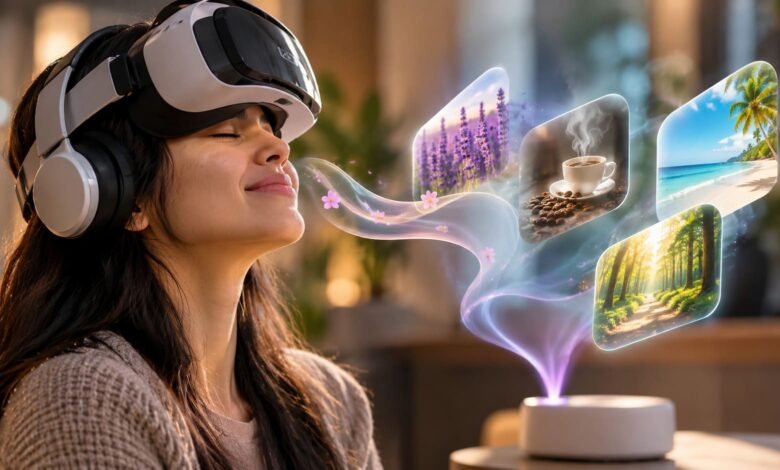
Technology has changed the way people interact with the digital world. Today, we can watch movies in high definition, listen to realistic sounds, explore virtual environments, and even interact with digital objects. However, one important part of the human experience is still missing from most digital platforms: the sense of smell.
Think about watching a cooking video and being able to smell freshly prepared food, exploring a virtual garden and experiencing the fragrance of flowers, or visiting a digital beach and sensing the fresh ocean air. These experiences may sound like something from the future, but digital smell technology is bringing new possibilities to the world of virtual experiences.
Digital smell technology is an emerging innovation that aims to introduce fragrances into digital environments. By combining electronic devices, scent generators, artificial intelligence, and virtual reality, developers are exploring ways to make digital experiences feel more natural and realistic.
Although this technology is still developing, it could change how people experience entertainment, online shopping, education, healthcare, and virtual travel.
What Is Digital Smell Technology?
Digital smell technology is an innovative approach that allows electronic devices to release selected fragrances during digital experiences. It aims to reproduce the sense of smell in a controlled environment, allowing users to experience more than just visual and audio content.
For example, imagine exploring a virtual forest through a VR headset. As you move through the digital environment, a connected scent device could release a fragrance resembling fresh leaves or trees. Similarly, while exploring a virtual coffee shop, the device could introduce the aroma of freshly brewed coffee.
These experiences are created through specialised scent-delivery systems that use fragrance materials and controlled release mechanisms.
The main idea behind digital smell technology is simple: if digital platforms can reproduce images and sounds, they may also be able to introduce selected smells to make virtual environments more immersive.
How Does Digital Smell Technology Work?
Digital smell technology combines hardware and software to deliver fragrances at specific moments. The exact working process depends on the device, but most systems follow a similar approach.
1. Identifying the Required Fragrance
The system first identifies the smell associated with a particular digital activity. It could be a floral fragrance, coffee aroma, fresh grass, or the smell of rain.
2. Releasing the Scent
A specialised device uses fragrance cartridges or other scent-generation mechanisms to release a controlled amount of fragrance into the surrounding air.
3. Connecting With Digital Content
The scent device communicates with the software controlling the virtual environment. When a user enters a particular scene, the system can trigger the corresponding fragrance.
4. Controlling the Fragrance
The system manages how much fragrance is released and how long it remains active. This is important because different smells can remain in the air and mix with one another.
5. Synchronising the Experience
Finally, scent delivery is coordinated with the visual and audio elements of the experience. This helps create a more connected and realistic virtual environment.
Why Is Digital Smell Technology Becoming Important?
Most digital experiences depend on what people can see and hear. While modern screens, speakers, and virtual reality devices have improved considerably, they still cannot reproduce every part of a real-world experience.
Smell has a unique connection with human emotions and memories. A particular fragrance can remind someone of a favourite place, a childhood memory, a family meal, or a memorable holiday.
This emotional connection makes digital smell technology particularly interesting.
Instead of simply watching a virtual environment, users could experience additional sensory details associated with that environment. Businesses, educators, and entertainment developers could explore new ways of making digital interactions more engaging.
Applications of Digital Smell Technology Across Different Industries
Digital smell technology could become useful in several industries. Although many applications are still experimental, the technology offers interesting possibilities for the future.
1. Virtual Reality and Gaming
Gaming is one of the most interesting areas where digital smell technology could make a difference.
Today, players can explore realistic virtual worlds using advanced graphics, surround sound, and motion-sensitive controllers. Adding scent could introduce another layer of immersion.
For example, when a player enters a forest, the system could release a fragrance resembling trees and fresh vegetation. During a virtual cooking game, players could experience aromas associated with different ingredients.
These additions could help make gaming environments feel more connected to the activities taking place on screen.
2. Online Shopping and Digital Retail
Online shopping has made it easier to discover and purchase products. However, customers cannot physically experience certain product qualities before making a purchase.
Perfumes, scented candles, room fresheners, and personal care products are good examples.
Digital smell technology could introduce fragrance experiences into virtual shopping platforms. Customers might explore a digital perfume store and experience selected aromas through a connected scent device.
This could help online retailers create more interactive product demonstrations and give customers another way to understand what they are purchasing.
3. Education and Virtual Learning
Learning is often more effective when students can connect information with practical experiences.
Imagine a student attending a virtual biology lesson and exploring a digital garden filled with different plants. Along with seeing the plants, students could experience selected floral fragrances through a connected device.
Similarly, virtual science lessons could introduce scent-based activities to help students understand different materials and environments.
This approach could make certain educational experiences more interactive and memorable.
4. Healthcare and Therapeutic Experiences
Digital smell technology could also support research and development in healthcare.
For example, people experiencing a reduced sense of smell may benefit from structured smell-training exercises. Specialised scent-delivery devices could introduce selected fragrances as part of these activities.
Researchers are also exploring the combination of virtual reality and sensory stimulation for relaxation and therapeutic applications.
However, these technologies require further research and clinical evaluation before their benefits can be established for specific medical conditions.
5. Virtual Tourism and Travel
Virtual tourism allows people to explore destinations without physically travelling to them.
Imagine visiting a virtual beach, watching the waves, listening to the sound of the ocean, and experiencing a fragrance designed to resemble the seaside environment.
A virtual visit to a flower garden could include floral aromas, while a digital forest experience could introduce earthy or woody fragrances.
By combining visuals, sound, and scent, virtual tourism platforms could offer more engaging experiences to people who want to explore destinations from home.
The Role of Artificial Intelligence in Digital Smell Technology
Artificial intelligence could play an important role in making digital smell technology more intelligent and responsive.
Releasing a fragrance at the correct moment requires coordination between digital content and scent-delivery hardware. AI could help analyse virtual scenes, recognise specific activities, and determine when a particular fragrance should be released.
For example, during a virtual cooking experience, an intelligent system could recognise when a particular dish reaches a specific cooking stage and trigger an associated aroma.
AI could also help personalise scent experiences by considering user preferences and adjusting fragrance delivery accordingly.
Researchers are already exploring intelligent wearable olfactory systems that combine AI algorithms with miniature scent generators. These developments could help make digital scent experiences more practical in the future.
Challenges That Digital Smell Technology Needs to Overcome
Despite its potential, digital smell technology still faces several challenges before it can become a regular part of everyday digital experiences.
Limited Fragrance Reproduction: Creating a wide range of accurate and recognisable fragrances is difficult. Some natural smells are complex combinations of different chemical compounds.
Lingering Fragrances: Unlike images and sounds, smells do not disappear immediately. A fragrance released during one scene may remain in the environment when the user moves to another scene.
Device Design: Scent-producing devices need to become smaller, lighter, and easier to use. Large or complicated devices may reduce user comfort.
Health and Safety: Some people may be sensitive to particular fragrances. Future devices will need appropriate safety controls and options to avoid unwanted scents.
Development Costs: Producing reliable scent-generation devices and maintaining fragrance cartridges could increase the overall cost of virtual reality equipment.
Addressing these challenges will be important if digital smell technology is expected to reach a wider audience.
What Does the Future Hold for Digital Smell Technology?
The future of digital smell technology will depend on improvements in wearable devices, fragrance delivery systems, artificial intelligence, and virtual reality platforms.
As research continues, developers may find better ways to produce multiple fragrances, control scent intensity, and synchronise smells with digital activities.
In the coming years, we could see new applications such as scent-enabled virtual meetings, interactive digital entertainment, immersive product demonstrations, and more realistic virtual learning environments.
However, it is important to understand that digital smell technology is still an emerging field. Its success will depend on whether developers can create affordable, comfortable, and reliable devices that people actually want to use.
Conclusion
Digital smell technology could introduce a completely new way of experiencing the digital world. By bringing fragrances into virtual environments, it may help connect digital activities with the sensory experiences people encounter in everyday life.
From gaming and online shopping to education, healthcare, and virtual tourism, the possibilities are interesting and continue to develop.
Although technical limitations still need to be addressed, ongoing research into wearable scent devices and intelligent fragrance systems shows that this field has significant potential.
The future of digital experiences may not be limited to what people can see and hear. It could also include what they can smell, making virtual environments feel more natural, engaging, and connected to the real world.
Frequently Asked Questions
1. What is digital smell technology?
Digital smell technology uses electronic devices and specialised scent delivery systems to release controlled fragrances, allowing users to experience smells in virtual and digital environments.
2. How does digital smell technology work in virtual reality?
Digital smell technology connects scent-generating devices with virtual reality software. When a user enters a particular scene, the system releases a matching fragrance to make the experience more immersive.
3. Which industries can benefit from digital smell technology?
Gaming, online shopping, education, healthcare, entertainment, and virtual tourism could benefit from digital smell technology by introducing additional sensory experiences into digital environments.
4. What challenges does digital smell technology face?
Major challenges include limited fragrance options, lingering smells, device size, user sensitivity, safety concerns, and the cost of developing reliable scent delivery systems.