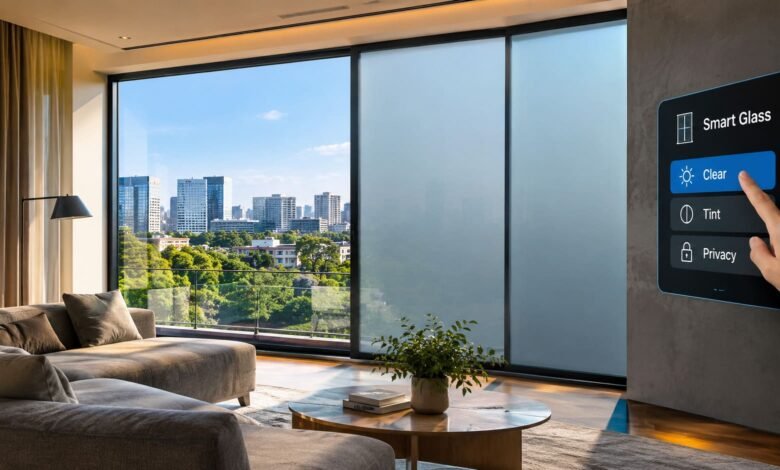
Imagine waking up in the morning and watching sunlight enter your bedroom through a large window. Instead of reaching for curtains, you simply adjust the glass with a switch. The window gradually becomes darker, reducing the brightness and heat coming into the room.
Later, when you want more natural light, the glass becomes clear again.
This may sound like something from a futuristic movie, but smart glass technology is already making this kind of experience possible.
As modern homes become more connected and energy-conscious, smart glass is attracting attention as a technology that could change the way people interact with their windows, manage sunlight and create comfortable living spaces.
What Is Smart Glass?
Smart glass, sometimes called switchable glass or intelligent glass, is a type of glass that can change its appearance or properties in response to electricity, temperature or light.
Unlike traditional windows, which remain transparent throughout the day, smart glass can adjust how much light passes through it or how much privacy it provides.
Depending on the technology used, the glass may become darker, turn translucent or change its ability to control sunlight.
Some smart glass systems can be operated using a wall switch, remote control or connected home automation system. Others respond automatically to changing environmental conditions.
The main idea is simple: instead of relying entirely on curtains, blinds or external shades, the window itself can help manage the indoor environment.
How Smart Glass Works in Everyday Homes
Different types of smart glass work in different ways.
Electrochromic Glass
Electrochromic glass changes its tint when a small electrical voltage is applied. This allows the window to become darker or lighter depending on the selected setting.
Homeowners can use it to reduce glare during bright afternoons while allowing more daylight into the room at other times.
Because the glass can control sunlight, it may also help reduce the need for artificial lighting and cooling in suitable conditions.
Privacy Glass
Some smart glass uses a technology called polymer-dispersed liquid crystal, commonly known as PDLC.
When electricity is applied, the glass can become transparent. When the power is switched off, it typically becomes cloudy or translucent.
This technology can be useful in bathrooms, bedrooms, home offices and glass partitions where privacy is important.
For example, a glass partition between a bedroom and an attached bathroom could provide an open appearance during the day and greater privacy when needed.
Thermochromic Glass
Thermochromic glass responds to temperature changes.
As the glass becomes warmer, its optical properties can change, helping to reduce the amount of sunlight entering a building under certain conditions.
This type of glass can operate without the same kind of electrical control used in some other smart glass systems.
How Smart Glass Could Make Modern Homes More Comfortable
1. Better Control Over Natural Light
Natural light can make a home feel brighter, more welcoming and more connected to the outdoors. However, too much direct sunlight can create uncomfortable glare.
Smart glass could help homeowners balance these two needs.
A living room with large windows may receive beautiful morning sunlight but become too bright in the afternoon. Adjustable glass can help manage this changing light throughout the day.
Instead of constantly adjusting curtains, residents could control the window itself.
2. A More Comfortable Indoor Temperature
Sunlight entering through windows can increase indoor temperatures, particularly during hot weather.
Smart glass designed to control solar heat can reduce the amount of unwanted heat entering a home. This may help air conditioning systems work less in some situations.
The actual energy savings depend on several factors, including the climate, window direction, glass specification, insulation and how the home is used.
Smart glass is not a complete replacement for good insulation or efficient cooling systems, but it could become one useful part of a more energy-efficient home.
3. More Privacy Without Traditional Curtains
Privacy is an important part of comfortable living.
In many homes, windows facing roads, neighboring buildings or shared spaces require curtains or blinds.
Switchable privacy glass could offer another option. A homeowner could change a transparent glass panel into a translucent surface whenever privacy is needed.
This could be especially useful in modern homes that use large windows, glass doors or open-plan interiors.
However, privacy glass does not necessarily block every view in every condition. The level of privacy depends on the specific technology and lighting on each side of the glass.
4. A Cleaner and More Modern Interior
Large glass windows are popular in contemporary architecture because they create a sense of openness.
Traditional curtains can sometimes cover these windows and reduce the clean appearance of the interior.
Smart glass could allow homeowners to maintain a minimal design while still controlling sunlight and privacy.
It may also reduce the need for some movable window coverings, although many people will still prefer curtains for decoration, nighttime privacy or additional light control.
Smart Glass and the Future of Home Automation
Smart glass could become more useful when connected with other smart home technologies.
Imagine a home where windows respond to indoor temperature, sunlight levels and the homeowner’s preferences.
During a hot afternoon, the system could automatically tint selected windows. In the evening, privacy glass in a home office could become translucent when a meeting begins.
A connected system could also coordinate smart glass with lighting, air conditioning and temperature sensors.
This would allow different parts of the home to respond to changing conditions without requiring constant manual adjustments.
However, these features depend on compatible equipment, reliable controls and proper installation. Not every smart glass product supports automatic home automation.
Could Smart Glass Help Reduce Energy Consumption?
Windows are an important part of a building’s energy performance.
Traditional glass can allow significant solar heat to enter a room, especially when large windows face direct sunlight. This can increase the demand for cooling during warmer months.
Smart glass that adjusts its tint or solar heat transmission could help reduce this problem.
In some buildings, better control of daylight may also reduce the need for artificial lighting.
The benefits are not identical for every home. In colder climates, sunlight can sometimes provide useful warmth during winter. Darkening windows too much could reduce that benefit.
For this reason, smart glass systems need to be selected according to the home’s location, orientation and energy requirements.
What Challenges Could Prevent Smart Glass From Becoming Common?
Although smart glass offers interesting possibilities, it still has some practical limitations.
Higher installation costs: Smart glass can cost considerably more than conventional windows, particularly when large panels or advanced control systems are required.
Electrical requirements: Some technologies need wiring, power supplies and control equipment. This can make installation more complicated in existing homes.
Maintenance and replacement: If a smart glass panel develops a fault, repairing or replacing it may be more expensive than replacing a traditional window.
Technology selection: Different smart glass types offer different benefits. Privacy glass may not provide the same solar heat control as electrochromic glass.
Long-term performance: Homeowners need to consider product warranties, durability, switching performance and the availability of replacement components.
These challenges mean smart glass may not be necessary for every room or every home. In many cases, using it selectively in areas with strong sunlight or specific privacy needs could be a more practical approach.
Will Smart Glass Become a Normal Part of Modern Homes?
Smart glass is unlikely to replace every traditional window overnight.
However, as building technology continues to improve, it could become an increasingly useful feature in homes that prioritize comfort, energy efficiency and modern design.
Its greatest value may come from giving people more control over their surroundings without requiring constant adjustments.
A window has traditionally been a fixed part of a home. Smart glass introduces the possibility of making that window responsive to the needs of the people living inside.
The future of smart glass is not simply about creating windows that look advanced. It is about making homes more adaptable, comfortable and efficient in ways that people can experience every day.
As the technology becomes more accessible, smart glass could help turn ordinary windows into an intelligent part of the modern living environment.
Conclusion
Smart glass represents an interesting step forward in residential building technology. By changing how windows manage light, privacy and solar heat, it could improve the way people experience their homes.
While cost and installation challenges remain, the technology offers practical possibilities for modern architecture and connected living.
In the future, the window may become more than a way to look outside. It could become an active part of how a home responds to sunlight, temperature and everyday human needs.
Frequently Asked Questions
1. What is smart glass?
Smart glass is an advanced type of glass that can change its transparency or tint using electricity, temperature or sunlight. It helps improve privacy, natural lighting and indoor comfort in modern homes.
2. How does smart glass work in modern homes?
Smart glass uses technologies such as electrochromic or liquid crystal systems to control light and privacy. Some types can be operated using switches, remote controls or smart home automation systems.
3. Can smart glass help reduce energy consumption?
Yes, certain types of smart glass can reduce unwanted sunlight and solar heat entering a home. This may help lower cooling requirements and improve energy efficiency, depending on the climate and window design.
4. Is smart glass suitable for every home?
Smart glass can be useful in homes that need better sunlight control, privacy or modern window designs. However, its higher cost and installation requirements may make traditional windows a more practical choice for some homeowners.