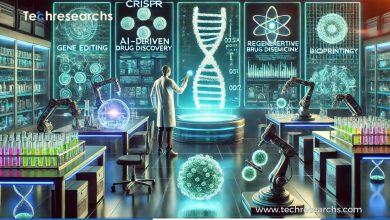
ML in Biotechnology is reshaping how scientists understand living systems. It improves research speed, cuts costs, and boosts accuracy. While many know its role in drug discovery, several benefits remain less discussed.
Today, machine learning in biotech, AI in healthcare, and bioinformatics tools are driving innovation. Let’s explore the hidden advantages that make this technology essential.
What Is ML in Biotechnology?
ML in Biotechnology involves using algorithms to study biological data. These systems learn patterns and make predictions without constant human input.
For instance, researchers analyze DNA sequences and protein structures using ML models. As a result, they gain faster and more accurate insights.
Why This Technology Matters in Modern Biotech
Biotechnology produces large volumes of data daily. Traditional methods struggle to keep up. However, machine learning offers efficient data processing and smart analysis.
Key benefits include:
- Faster data interpretation
- Reduced human errors
- Improved decision-making
- Enhanced research productivity
Hidden Benefits of ML in Biotechnology
1. Improves Early Disease Detection
Early diagnosis often determines treatment success. However, identifying diseases at an early stage can be difficult.
With advanced algorithms, systems analyze patient records and detect unusual patterns. Therefore, conditions like cancer can be identified sooner.
Moreover, these models improve continuously with more data.
2. Reduces Research Costs
Biotech experiments are expensive and time-consuming. Failed trials increase overall costs.
Machine learning minimizes these risks by predicting outcomes before testing. As a result, researchers avoid unnecessary experiments.
This leads to:
- Better resource allocation
- Lower operational costs
- Faster project completion
3. Accelerates Drug Discovery
Drug development often takes years. It also involves significant uncertainty.
Using ML tools, researchers can:
- Identify promising compounds quickly
- Simulate drug interactions
- Predict side effects early
Consequently, development timelines become shorter and more efficient.
4. Supports Precision Medicine
Every patient responds differently to treatment. Personalized care is becoming essential.
Machine learning analyzes genetic and lifestyle data. Then, it suggests tailored treatment plans.
Benefits include:
- Higher treatment success rates
- Fewer adverse reactions
- Improved patient care
5. Boosts Agricultural Biotechnology
Biotech also plays a key role in agriculture. Farmers need better yields and disease-resistant crops.
ML helps scientists:
- Predict crop diseases
- Improve genetic traits
- Optimize farming conditions
Therefore, food production becomes more sustainable.
6. Enhances Protein Structure Prediction
Protein structures are complex and vital for research. Predicting them manually takes time.
Machine learning simplifies this process. It analyzes sequences and predicts 3D structures with high accuracy.
This supports:
- Drug design
- Disease understanding
- Enzyme development
Comparison Table: Traditional vs Machine Learning-Based Biotech
| Feature | Traditional Biotechnology | ML-Based Biotechnology |
|---|---|---|
| Data Processing | Manual & slow | Automated & fast |
| Accuracy | Moderate | High |
| Cost | Expensive | Cost-efficient |
| Time Required | Long cycles | Short cycles |
| Scalability | Limited | Highly scalable |
| Decision Making | Human-driven | Data-driven |
Challenges in ML-Based Biotechnology
Despite its benefits, this technology faces some challenges.
Data Quality
Poor-quality data can affect accuracy. Clean datasets are essential.
High Setup Costs
Initial investment in tools and expertise can be high.
Ethical Concerns
Data privacy and responsible use remain important issues.
However, ongoing research is addressing these concerns.
Future Scope of ML in Biotechnology
The future of ML in Biotechnology looks promising. Innovations will continue to expand its applications.
Emerging trends include:
- Integration with genomics
- Real-time health monitoring
- AI-driven clinical trials
- Advanced bioinformatics systems
Additionally, collaborations between tech and biotech sectors will drive growth.
ML in Biotechnology is transforming industries beyond expectations. It improves research efficiency, supports personalized medicine, and reduces costs.
If you want to stay competitive in tech, start exploring ML in Biotechnology today. The future of innovation depends on it.
FAQs
1. What is ML in Biotechnology?
A. It refers to using machine learning techniques to analyse biological data and improve research outcomes.
2. How does machine learning help in biotech?
A. It speeds up research, improves accuracy, and reduces costs in areas like drug discovery.
3. Is this technology expensive to implement?
A. Initial costs can be high, but it saves money in the long run.
4. What industries benefit from it?
A. Healthcare, agriculture, pharmaceuticals, and research sectors benefit the most.