Cyber Threats in Education and Healthcare: Why Strong Defences Are Vital

Education and healthcare remain among the most targeted industries for cybercriminals. Schools, universities, hospitals, and healthcare providers store massive amounts of sensitive personal information, making them attractive targets for ransomware, phishing campaigns, AI-powered cyberattacks, and data theft.
In recent years, attackers have become more sophisticated by using artificial intelligence, automated malware, deepfake phishing, and supply chain attacks. As digital transformation accelerates across classrooms and healthcare facilities, organizations must strengthen their cybersecurity strategies to protect critical infrastructure, maintain public trust, and ensure uninterrupted services.
This article explores the latest cyber threats facing education and healthcare and explains why modern security frameworks are essential.
Why Education and Healthcare Are Prime Targets
Educational institutions and healthcare organizations generate enormous volumes of confidential data.
These include:
- Student records
- Medical histories
- Financial information
- Research data
- Identity documents
- Employee information
Unlike many industries, these sectors often operate with limited cybersecurity budgets while supporting thousands of connected devices, making them vulnerable entry points for attackers.
AI Is Changing the Cyber Threat Landscape
Artificial intelligence has transformed both cybersecurity and cybercrime.
Modern attackers now use AI to:
- Create convincing phishing emails
- Generate fake voices for impersonation attacks
- Automate vulnerability discovery
- Launch adaptive malware
- Bypass traditional security filters
At the same time, cybersecurity teams are using AI for:
- Real-time threat detection
- Automated incident response
- User behavior analytics
- Network anomaly detection
- Predictive security monitoring
Organizations that fail to adopt AI-powered defense systems may struggle to keep pace with rapidly evolving attacks.
Ransomware Continues to Disrupt Critical Services
Ransomware remains one of the biggest threats to hospitals and educational institutions.
Healthcare organizations are particularly vulnerable because patient care depends on uninterrupted access to medical records and connected devices.
Recent ransomware attacks have resulted in:
- Cancelled medical procedures
- Delayed emergency services
- Locked patient databases
- Interrupted online learning platforms
- Significant financial losses
Modern ransomware groups increasingly steal sensitive data before encrypting systems, creating additional pressure through double-extortion tactics.
Cloud Security Challenges
Schools and hospitals increasingly rely on cloud platforms for collaboration, remote learning, telemedicine, and electronic health records.
However, cloud adoption introduces new risks, including:
- Misconfigured storage
- Weak identity management
- Insecure APIs
- Unauthorized access
- Third-party vulnerabilities
Organizations should implement continuous cloud security monitoring alongside strong identity and access controls.
Identity-Based Attacks Are Increasing
Cybercriminals are shifting their focus from network attacks to identity theft.
Compromised user accounts allow attackers to move laterally across systems without triggering traditional security tools.
Best practices include:
- Multi-factor authentication (MFA)
- Passwordless authentication
- Conditional access policies
- Identity threat detection
- Least-privilege access
Identity security has become one of the most effective defenses against modern cyber threats.
Medical Devices and IoT Security Risks
Healthcare environments rely on thousands of connected devices, including:
- Patient monitors
- Smart infusion pumps
- Imaging equipment
- Wearable health devices
- Laboratory systems
Many IoT devices receive infrequent updates, making them attractive targets for attackers.
Healthcare organizations should segment medical device networks, continuously monitor connected assets, and maintain regular firmware updates.
Zero Trust Is Becoming the New Security Standard
Traditional perimeter security is no longer sufficient.
Zero Trust follows a simple principle:
Never trust, always verify.
Key Zero Trust practices include:
- Continuous authentication
- Device verification
- Micro-segmentation
- Risk-based access
- Continuous monitoring
- Least-privilege permissions
Many educational institutions and healthcare providers are adopting Zero Trust to reduce the impact of compromised accounts.
Employee Awareness Remains Essential
Technology alone cannot stop cyberattacks.
Human error continues to cause many security incidents.
Organizations should provide regular training on:
- Recognizing phishing emails
- Secure password practices
- Safe file sharing
- Data privacy
- Mobile device security
- Social engineering awareness
Building a cybersecurity culture significantly reduces organizational risk.
Compliance and Data Privacy
Education and healthcare organizations must comply with increasingly strict privacy regulations.
Depending on their location, these may include:
- HIPAA
- FERPA
- GDPR
- NIS2
- National cybersecurity frameworks
Strong governance, regular audits, encryption, and access controls help organizations remain compliant while protecting sensitive information.
Future Cybersecurity Trends
Several technologies will shape cybersecurity over the coming years:
AI-driven Security Operations
Security platforms will increasingly automate threat detection and response.
Extended Detection and Response (XDR)
XDR provides centralized visibility across endpoints, cloud services, email, and networks.
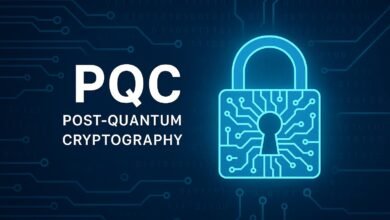
Quantum-Resistant Cryptography
Organizations are beginning to prepare for future encryption challenges posed by quantum computing.
Secure-by-Design Software
Developers are integrating security throughout the software development lifecycle rather than adding protections later.
Cyber Resilience
The focus is shifting from preventing every attack to maintaining operations and recovering quickly after incidents.
Best Practices for Strong Cyber Defenses
Organizations should prioritize:
- Enable Multi-Factor Authentication across all accounts.
- Deploy AI-powered threat detection solutions.
- Regularly patch systems and software.
- Implement Zero Trust architecture.
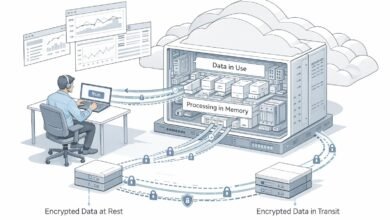
- Encrypt sensitive data at rest and in transit.
- Conduct continuous employee cybersecurity training.
- Back up critical systems using immutable storage.
- Monitor cloud environments continuously.
- Secure connected medical and educational devices.
- Develop and test incident response and disaster recovery plans.
Conclusion
Cyber threats targeting education and healthcare continue to evolve, fueled by artificial intelligence, ransomware, identity attacks, and increasingly sophisticated cybercriminal organizations. As digital transformation expands across schools, universities, hospitals, and healthcare providers, robust cybersecurity is no longer optional—it is a strategic necessity.
Organizations that invest in Zero Trust architecture, AI-driven security, employee awareness, cloud protection, and cyber resilience will be better equipped to safeguard sensitive information, maintain uninterrupted services, and build trust in an increasingly connected world.
By adopting proactive security measures today, education and healthcare institutions can strengthen their defenses against tomorrow’s cyber threats while ensuring the safety of students, patients, and critical digital infrastructure.
Frequently Asked Questions (FAQs)
1. Why are education and healthcare sectors major targets for cyberattacks?
Education and healthcare organizations store highly sensitive information, including student records, patient data, financial details, and research. Their large digital infrastructures and often limited cybersecurity resources make them attractive targets for cybercriminals.
2. What are the most common cyber threats facing schools and hospitals?
The most common threats include ransomware attacks, phishing emails, data breaches, malware, insider threats, credential theft, distributed denial-of-service (DDoS) attacks, and AI-powered social engineering scams.
3. How does ransomware impact healthcare and educational institutions?
Ransomware can encrypt critical systems, disrupt patient care, delay medical procedures, interrupt online learning, and expose confidential data. Recovery often requires significant financial and operational resources.
4. What is Zero Trust security, and why is it important?
Zero Trust is a cybersecurity model that requires continuous verification of every user, device, and application before granting access. It helps reduce unauthorized access and limits the spread of cyberattacks within an organization.