The Internet of Things (IoT) has moved far beyond connecting everyday devices to the internet. In 2026, IoT is becoming increasingly intelligent, autonomous, secure, and capable of making decisions closer to where data is generated.
From AI-powered industrial equipment and connected healthcare systems to smart cities, autonomous machines, and real-time digital twins, the next generation of IoT is creating a more responsive digital environment.
The biggest shift is the combination of IoT, artificial intelligence, edge computing, advanced connectivity, cybersecurity, and automation. Instead of simply collecting data, modern IoT systems can analyze information, identify patterns, predict events, and trigger actions with limited human intervention.
What Is Next-Generation IoT?
Next-generation IoT refers to the evolution of connected devices and systems into intelligent, distributed, and increasingly autonomous networks.
Traditional IoT generally follows a simple model:
Device → Data Collection → Cloud → Analysis → Human Decision
Modern IoT is moving toward:
Device → Edge AI → Real-Time Decision → Automated Action → Continuous Learning
This evolution allows organizations to reduce latency, improve operational efficiency, respond to events faster, and make better use of large volumes of sensor data.
Next-gen IoT combines technologies such as:
- Artificial intelligence and machine learning
- Edge computing
- 5G and emerging 6G technologies
- Digital twins
- Industrial IoT
- IoT cybersecurity
- Computer vision
- Robotics and autonomous systems
- Low-power connected devices
- Satellite connectivity
- Advanced analytics
- Cloud-native IoT platforms
1. AI-Native IoT Is Becoming a Major Trend
One of the most important developments in IoT is the integration of AI directly into connected devices and edge systems.
Instead of sending every piece of sensor data to a centralized cloud platform, AI-enabled devices can process information locally.
For example, a manufacturing machine equipped with sensors and an AI model could identify unusual vibration patterns and predict a potential equipment failure before production is interrupted.
AI-powered IoT can support:
- Predictive maintenance
- Anomaly detection
- Intelligent automation
- Demand forecasting
- Computer vision
- Real-time decision-making
- Energy optimization
- Personalized services
The result is a shift from connected devices to intelligent systems.
2. Edge Computing Will Make IoT More Responsive
IoT generates enormous amounts of data. Sending all of that information to centralized cloud infrastructure can create latency, bandwidth, and privacy challenges.
Edge computing addresses this problem by processing data closer to the source.
For example, an autonomous vehicle cannot always wait for a distant cloud server before responding to an obstacle. Edge processing allows the vehicle to analyze sensor information locally and react almost immediately.
Edge IoT is particularly valuable for:
- Autonomous vehicles
- Smart factories
- Healthcare monitoring
- Security systems
- Robotics
- Industrial automation
- Smart infrastructure
Cloud computing will remain important, but more IoT workloads will be distributed between devices, edge infrastructure, and cloud platforms.
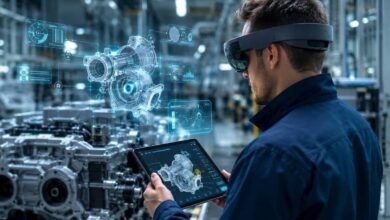
3. Digital Twins Will Become More Practical
Digital twins create virtual representations of physical assets, systems, or environments.
A digital twin can combine information from sensors, operational systems, simulations, and analytics to provide a continuously updated view of a physical object or process.
For example, a factory can create a digital representation of a production line and use it to:
- Monitor equipment
- Detect abnormal behavior
- Simulate changes
- Predict maintenance requirements
- Optimize production
- Test operational scenarios
The combination of IoT sensor data, AI, and digital twins can help organizations move from reactive management toward predictive and simulation-driven operations.
4. Industrial IoT Will Drive Automation
Industrial IoT (IIoT) is becoming increasingly important as manufacturers modernize their operations.
Connected machines can continuously monitor temperature, pressure, vibration, energy consumption, production quality, and other operational parameters.
When combined with AI, these systems can automatically identify potential problems and recommend or initiate corrective actions.
Key applications include:
- Predictive maintenance
- Smart manufacturing
- Automated quality inspection
- Asset tracking
- Supply-chain monitoring
- Energy management
- Production optimization
The future factory will increasingly operate as a connected ecosystem rather than a collection of isolated machines.
5. IoT Security Will Become a Core Requirement
As the number of connected devices increases, the attack surface also expands.
An unsecured sensor, camera, gateway, or industrial controller can potentially become an entry point into a larger network.
IoT security therefore needs to be integrated throughout the device lifecycle.
Important practices include:
- Secure device identity
- Strong authentication
- Encryption
- Secure boot
- Firmware protection
- Regular security updates
- Network segmentation
- Device monitoring
- Zero-trust security principles
- Vulnerability management
Organizations should also maintain visibility into which devices are connected to their networks and what data those devices are accessing.
Security cannot be treated as an optional feature after an IoT deployment. It needs to be part of the architecture from the beginning.
6. 5G and Emerging 6G Capabilities Will Expand IoT
Advanced cellular connectivity is opening new possibilities for connected systems.
5G can support IoT applications requiring higher bandwidth, lower latency, and large numbers of connected devices.
Potential applications include:
- Connected factories
- Autonomous transportation
- Smart cities
- Remote monitoring
- Augmented and extended reality
- Connected healthcare
- Large-scale sensor networks
Research and development around 6G is also exploring future communication systems with greater intelligence, sensing capabilities, and integration with AI.
While widespread 6G deployment is still a longer-term development, organizations should consider how future connectivity could affect their IoT strategies.
7. IoT and Robotics Are Converging
The combination of IoT, AI, robotics, computer vision, and edge computing is creating increasingly autonomous machines.
Connected robots can receive information from sensors, understand their environment, communicate with other systems, and adjust their behavior based on real-time data.
Examples include:
- Warehouse robots
- Agricultural robots
- Inspection robots
- Autonomous mobile robots
- Industrial robotic systems
- Delivery systems
This convergence is transforming IoT from a technology primarily focused on monitoring into a platform for physical-world automation.
8. Smart Cities Will Become More Data-Driven
Smart city initiatives are increasingly using connected sensors and intelligent platforms to improve urban services.
IoT systems can help monitor:
- Traffic
- Public transportation
- Air quality
- Water infrastructure
- Waste collection
- Street lighting
- Energy consumption
- Parking
- Public infrastructure
For example, connected lighting systems can adjust operation based on environmental conditions or usage patterns, while intelligent traffic systems can analyze transportation data to improve traffic management.
The challenge is ensuring that smart-city systems are designed with strong privacy, security, interoperability, and governance standards.
9. IoT in Healthcare Will Continue to Expand
Connected healthcare devices can provide continuous data that supports remote monitoring and more personalized care.
Examples include:
- Wearable devices
- Remote patient monitoring systems
- Connected medical equipment
- Smart hospital infrastructure
- Medication-management systems
- Environmental monitoring devices
AI can help analyze large volumes of device-generated information and identify patterns that may require attention.
However, healthcare IoT requires especially strong safeguards because connected medical systems can involve sensitive information and safety-critical operations.
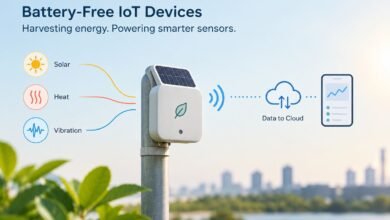
10. Low-Power IoT and Sustainable Connectivity Will Grow
Not every IoT device needs high-speed connectivity.
Many sensors need to operate for long periods using very little power. This has increased interest in low-power connectivity technologies and energy-efficient device design.
Low-power IoT is useful for:
- Agriculture
- Environmental monitoring
- Asset tracking
- Smart buildings
- Utilities
- Industrial sensors
Sustainability is also becoming an important consideration. Organizations are increasingly looking at device lifespan, energy consumption, repairability, data-center efficiency, and responsible hardware disposal when designing IoT deployments.
11. Satellite Connectivity Will Expand IoT Coverage
Traditional terrestrial networks cannot reach every location.
Satellite connectivity can help extend IoT deployments into remote areas such as:
- Agriculture
- Maritime operations
- Mining
- Oil and gas
- Environmental monitoring
- Logistics
- Remote infrastructure
As satellite connectivity becomes more integrated with terrestrial networks, organizations may be able to deploy connected sensors in locations where traditional connectivity is limited or unavailable.
12. IoT Data Platforms Will Become More Intelligent
The value of IoT does not come simply from collecting data. Organizations need systems capable of turning that data into useful insights.
Modern IoT platforms increasingly integrate:
Sensors + Edge Computing + Cloud + AI + Analytics + Automation
This allows organizations to create closed-loop workflows.
For example:
- A sensor detects abnormal equipment behavior.
- Edge software analyzes the signal.
- AI identifies a potential failure.
- The system generates an alert.
- Maintenance software creates a work order.
- The organization repairs the equipment before a major breakdown.
This is a major step toward autonomous operations.
13. Interoperability Will Become More Important
IoT environments often contain devices from many different vendors.
Without interoperability, organizations can end up with isolated systems that cannot easily share information.
Open standards, APIs, common data models, and interoperable communication protocols can help address this problem.
Future IoT deployments will increasingly need to consider interoperability from the planning stage rather than attempting to connect incompatible systems later.
14. IoT and Generative AI Will Create New Interfaces
Generative AI is also changing how people interact with complex IoT environments.
Instead of navigating multiple dashboards, an operations team could use natural-language interfaces to ask questions such as:
- Which machines are showing unusual behavior?
- What caused yesterday’s production slowdown?
- Which assets require maintenance this week?
- Where are energy costs increasing?
- What could happen if this machine is taken offline?
AI assistants can potentially make large IoT datasets easier for employees to understand and act upon.
The key requirement will be ensuring that AI-generated insights are grounded in trustworthy operational data and appropriate access controls.
15. Autonomous IoT Will Become the Long-Term Goal
The biggest evolution of IoT is moving from connected systems toward autonomous systems.
Traditional IoT tells organizations what is happening.
Advanced IoT can explain why it is happening.
Autonomous IoT aims to determine what should happen next and take appropriate action.
This could result in systems capable of continuously:
- Monitoring
- Analyzing
- Predicting
- Deciding
- Acting
- Learning
Human oversight will remain important, particularly in critical infrastructure, healthcare, transportation, and industrial environments.
Challenges Organizations Need to Address
Despite its potential, next-generation IoT comes with significant challenges.
Security Risks
More connected devices mean more potential attack surfaces. Weak authentication, outdated firmware, and poorly protected APIs can create vulnerabilities.
Data Management
IoT systems can generate huge amounts of information. Organizations need effective data architectures to determine what should be processed locally, stored, analyzed, or discarded.
Interoperability
Different vendors and technologies may use different protocols and data structures, making integration difficult.
Cost and Complexity
Large-scale IoT deployments require investment in devices, connectivity, cloud or edge infrastructure, software, maintenance, and cybersecurity.
Privacy
Connected cameras, wearables, vehicles, and smart environments can collect highly sensitive information. Organizations need clear data governance and privacy controls.
Skills Gap
Successful IoT initiatives require expertise across networking, cloud computing, cybersecurity, AI, data engineering, embedded systems, and automation.
How Businesses Can Prepare for Next-Generation IoT
Organizations planning their next IoT initiative should focus on business outcomes rather than simply deploying more connected devices.
A practical approach includes:
1. Identify a Clear Business Problem
Start with a measurable objective such as reducing downtime, improving asset utilization, lowering energy consumption, or improving customer experience.
2. Select the Right Connectivity
Choose connectivity based on bandwidth, range, latency, power requirements, reliability, and deployment environment.
3. Use Edge Processing Where Necessary
Process time-sensitive information close to the device when low latency or data privacy is important.
4. Build Security Into the Architecture
Use secure identities, encryption, access controls, monitoring, updates, and network segmentation.
5. Prepare for AI Integration
Design data pipelines that can support machine learning and AI applications as the IoT deployment matures.
6. Plan for Scalability
A pilot involving 100 devices can behave very differently when expanded to thousands or millions of devices. Architecture should account for future growth.
7. Measure Results
Track metrics such as operational efficiency, downtime, energy savings, maintenance costs, response times, and return on investment.
The Future of IoT
The next phase of IoT will not simply be about connecting more devices. It will be about making connected environments intelligent, adaptive, secure, and increasingly autonomous.
AI will help IoT systems understand data. Edge computing will enable faster decisions. Digital twins will connect physical and virtual environments. Advanced connectivity will expand where devices can operate, while cybersecurity will become essential to maintaining trust.
Over time, these technologies will converge into intelligent ecosystems in which machines, infrastructure, software, and people continuously exchange information and respond to changing conditions.
Conclusion
Next-generation IoT is evolving from a network of connected devices into an intelligent infrastructure for the physical world.
The most important developments to watch in 2026 and beyond include AI-native IoT, edge intelligence, digital twins, industrial automation, advanced connectivity, IoT cybersecurity, robotics, satellite connectivity, sustainable devices, and autonomous operations.
Businesses that approach IoT strategically can use these technologies to improve efficiency, predict problems, automate processes, and create new digital experiences.
The future of IoT will ultimately be defined not by how many devices are connected, but by how intelligently those devices can work together and create meaningful outcomes.
Frequently Asked Questions (FAQs)
1. What is next-generation IoT?
Next-generation IoT refers to advanced connected systems that combine IoT with artificial intelligence, edge computing, advanced connectivity, automation, digital twins, and cybersecurity. These systems can analyze data, make decisions, and automate actions with less human intervention.
2. What are the biggest IoT trends in 2026?
The major IoT trends in 2026 include AI-powered IoT, edge computing, digital twins, Industrial IoT, IoT cybersecurity, 5G connectivity, emerging 6G research, robotics, satellite IoT, sustainable connected devices, and autonomous IoT systems.
3. How is AI changing IoT?
AI enables IoT devices and platforms to analyze large volumes of sensor data, detect anomalies, predict equipment failures, recognize patterns, and automate decisions. This is helping organizations move from basic monitoring toward predictive and autonomous operations.
4. What is the role of edge computing in IoT?
Edge computing processes data closer to where it is generated instead of sending everything to a centralized cloud. This can reduce latency, improve response times, lower bandwidth requirements, and support real-time IoT applications.