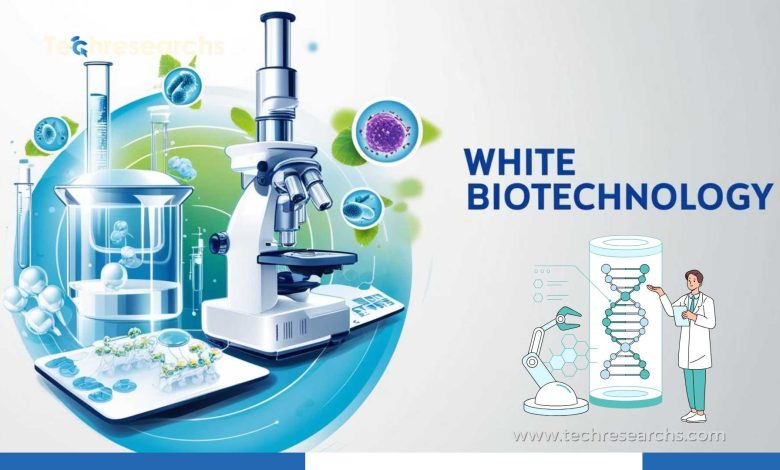
What if the factories producing the products we use every day could become cleaner, smarter, and less dependent on fossil fuels?
That is one of the ideas behind white biotechnology. Also called industrial biotechnology, it uses living organisms, microorganisms, enzymes, and biological processes to make useful products on an industrial scale.
From biofuels and biodegradable materials to detergents and sustainable chemicals, white biotechnology is quietly becoming an important part of modern manufacturing.
But what makes it different from traditional industrial processes, and why are businesses paying more attention to it? Let’s explore.
What Is White Biotechnology?
White biotechnology is the use of biological science to improve industrial manufacturing.
Instead of relying entirely on conventional chemical reactions and petroleum-based raw materials, manufacturers can use microorganisms or enzymes to produce specific materials and chemicals.
Think of enzymes as tiny biological helpers. They can speed up particular reactions and, in some situations, allow manufacturers to work at lower temperatures or with fewer harsh chemicals.
Microorganisms such as bacteria, yeast, and fungi can also be used as miniature production systems. Under carefully controlled conditions, they can produce compounds that are useful in food, chemicals, fuels, materials, and other industries.
The technology isn’t about replacing traditional manufacturing overnight. Instead, it provides another set of tools for making production more efficient and potentially more sustainable.
Why Is White Biotechnology Becoming Important?
Industries are under increasing pressure to use resources more efficiently while reducing waste and environmental impact.
At the same time, manufacturers need to keep products affordable and production reliable. Finding that balance isn’t easy.
White biotechnology offers one possible approach.
Biological processes can use renewable resources as feedstocks, including certain agricultural residues and other biomass. In suitable applications, they can also reduce the energy or chemical inputs needed for production.
This makes industrial biotechnology particularly interesting as companies explore cleaner manufacturing and circular production models.
Major Benefits of White Biotechnology
1. It Can Make Manufacturing More Resource-Efficient
Some biological reactions can take place under conditions that are less energy-intensive than conventional chemical processes.
For example, certain enzymes work effectively at relatively low temperatures. When a manufacturing process can operate with less heating or cooling, there may be opportunities to reduce energy consumption.
The actual savings depend on the specific process, but this is one reason enzymes have become useful across several industries.
2. It Can Reduce Reliance on Fossil-Based Raw Materials
Petroleum isn’t only used for fuel. It is also an important source of raw materials for producing many chemicals and plastics.
White biotechnology opens the door to using biological feedstocks for selected products.
Plant materials, agricultural by-products, sugars, and other renewable resources can be transformed through biological processes into useful chemicals and materials.
This doesn’t mean fossil resources will disappear, but it gives manufacturers more options.
3. It Supports the Development of Bio-Based Products
Consumers are increasingly interested in products made with renewable or lower-impact materials.
White biotechnology can contribute to the development of:
- Bio-based chemicals
- Renewable fuels
- Bioplastics
- Enzyme-based cleaning products
- Bio-based ingredients
- Sustainable materials
The important point is that being “bio-based” doesn’t automatically mean a product is environmentally superior. Its complete lifecycle still needs to be considered.
4. It Can Help Turn Waste Into Something Valuable
Waste doesn’t always have to be the end of the story.
Some biological processes can convert organic waste and agricultural residues into useful compounds, fuels, or materials.
For manufacturers, this creates an interesting possibility: instead of simply paying to dispose of certain waste streams, they may be able to recover some of their value.
This approach fits naturally with the principles of the circular economy, where resources are kept in use for longer rather than being discarded after one use.
5. Enzymes Can Simplify Certain Industrial Processes
Enzymes are already part of many products and processes that people encounter every day.
Laundry detergents, for example, may contain enzymes designed to break down different types of stains.
The food and beverage industry also uses enzymes for processes such as baking, brewing, and food processing.
In manufacturing, enzymes can provide highly specific reactions. Their ability to target particular molecules is one of the reasons they are so useful.
6. White Biotechnology Can Support Renewable Fuel Production
Biofuels are another major area where industrial biotechnology has an important role.
Biological materials can be processed or fermented to produce fuels such as ethanol and other renewable fuel products.
Researchers are also investigating advanced biofuel technologies that can use non-food biomass and waste materials.
However, not every biofuel has the same environmental profile. Land use, water requirements, transportation, processing energy, and feedstock selection all matter when evaluating sustainability.
7. It Can Contribute to Cleaner Chemical Production
The chemical industry produces a huge variety of materials used in everything from packaging to electronics.
Biotechnology can provide biological routes for producing some chemicals that have traditionally been manufactured through conventional petrochemical processes.
Microorganisms can be engineered or optimized to produce specific compounds through fermentation.
As biological engineering becomes more sophisticated, the range of possible applications continues to expand.
Where Is White Biotechnology Used?
White biotechnology isn’t limited to one industry. Its applications are surprisingly broad.
Food and Beverage
Enzymes and microorganisms have been used in food production for centuries. Modern biotechnology builds on these techniques to make fermentation and processing more controlled and efficient.
Detergents
Enzymes can help detergents remove protein, starch, and fat-based stains. Some enzyme-based products can perform effectively at lower washing temperatures.
Textiles
Enzymes can be used during different stages of textile processing, including fabric preparation and finishing. They can sometimes reduce the need for certain chemical treatments.
Biofuels
Microorganisms and fermentation technologies can convert suitable biomass into renewable fuels.
Bioplastics and Materials
Researchers and manufacturers are exploring biological routes for producing polymers and other materials that could reduce dependence on conventional fossil-based feedstocks.
Waste Treatment
Microorganisms play an important role in biological wastewater treatment. They help break down organic matter and support processes designed to clean contaminated water.
White Biotechnology and the Circular Economy
One of the most exciting connections is between white biotechnology and the circular economy.
Traditional manufacturing often follows a simple pattern:
Raw materials → Production → Product → Waste
A circular model tries to create more loops:
Renewable resources → Production → Product → Recovery → New production
Biotechnology can help create those additional loops.
For example, agricultural residues that might otherwise be discarded could potentially become feedstock for producing chemicals or fuels.
This doesn’t mean every waste stream can be economically recycled. But advances in biotechnology are expanding the number of materials that researchers can investigate as potential resources.
What Are the Challenges?
White biotechnology has plenty of potential, but it isn’t without limitations.
High Development Costs
Developing a biological manufacturing process can require significant investment in research, testing, equipment, and process optimization.
Scaling Can Be Difficult
A process that works beautifully in a laboratory doesn’t always behave the same way inside a large industrial facility.
Large-scale fermentation requires careful control of factors such as temperature, nutrients, oxygen, acidity, and microbial growth.
Raw Materials Matter
A bio-based process isn’t automatically sustainable.
If producing the required feedstock consumes excessive land, water, or energy, some of the environmental advantages may disappear.
Infrastructure Is Still Important
Biological production often requires specialized equipment and carefully controlled environments. Companies may need to modify existing manufacturing facilities before adopting new biotechnology-based processes.
Sustainability Must Be Measured
It’s easy to describe a product as “green” or “bio-based,” but meaningful sustainability requires evidence.
Companies need to look at the entire lifecycle, from sourcing raw materials to manufacturing, transportation, use, and disposal.
The Future of White Biotechnology
The next stage of industrial biotechnology could be even more interesting.
Technologies such as synthetic biology, metabolic engineering, precision fermentation, automation, and artificial intelligence are making it easier to design and optimize biological production systems.
Scientists can now modify microorganisms to produce specific compounds with increasing precision.
AI can also help researchers analyze biological data, identify promising pathways, and improve experimental planning.
Another major opportunity is combining biotechnology with waste recovery. Instead of treating agricultural residues and organic waste solely as disposal problems, industries could explore ways to convert them into valuable feedstocks.
The result could be manufacturing systems that are not only more efficient but also more circular.
Is White Biotechnology the Future of Sustainable Manufacturing?
It could become an important part of it, but it isn’t a magic solution.
The most promising results will likely come from combining biotechnology with renewable energy, responsible sourcing, efficient manufacturing, recycling, and better waste management.
White biotechnology works best when its environmental benefits are measured honestly rather than assumed simply because a biological process is involved.
As technology improves and costs become more competitive, more industries may find practical ways to incorporate biological processes into their existing production systems.
Final Thoughts
White biotechnology is changing the conversation around industrial manufacturing.
Instead of asking only how quickly or cheaply a product can be made, companies are increasingly asking how they can make it while using fewer resources and creating less waste.
Biological systems offer some interesting answers.
From enzymes in everyday detergents to microorganisms used to produce chemicals and fuels, biotechnology is already part of modern industry. Future advances in synthetic biology, fermentation, and bio-based materials could expand that role even further.
The real opportunity isn’t simply replacing one technology with another. It’s building manufacturing systems that use resources more intelligently.
And that is where white biotechnology could make its biggest contribution to the modern world.
Frequently Asked Questions
What is white biotechnology?
White biotechnology, also called industrial biotechnology, uses microorganisms, enzymes, and biological processes to create chemicals, fuels, materials, and other industrial products.
What are the main benefits of white biotechnology?
White biotechnology can support efficient manufacturing, reduce dependence on fossil-based resources, encourage renewable feedstocks, and help convert certain waste materials into useful products.
Where is white biotechnology used?
White biotechnology is used in industries such as food and beverages, chemicals, detergents, textiles, biofuels, materials manufacturing, and wastewater treatment.
What is the future of white biotechnology?
The future of white biotechnology is connected to synthetic biology, precision fermentation, metabolic engineering, artificial intelligence, and circular manufacturing, which could expand sustainable industrial production.