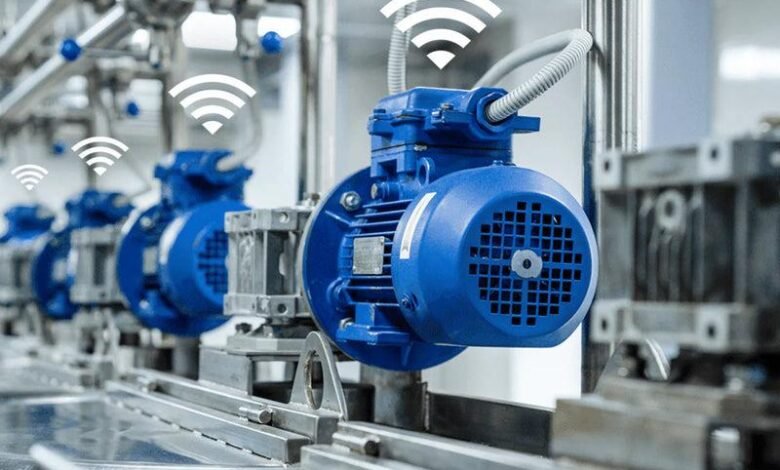
In modern factories, timing can be just as important as the data itself. A robotic arm must receive movement instructions at the right moment, a production machine needs accurate sensor readings, and an automated vehicle must respond quickly to signals from its surroundings. Even a small delay in communication can affect production quality, equipment coordination, or workplace safety.
Traditional industrial networks are designed to transfer information between machines, controllers, and monitoring systems. However, as factories become more connected, they face a growing challenge: ensuring that critical information reaches its destination within a predictable period.
This is where Time-Sensitive Networking (TSN) becomes important. TSN is a collection of Ethernet networking standards designed to make data delivery more predictable and time-controlled. It helps connected industrial devices communicate with greater precision, making it useful for applications where delays and inconsistent timing can create problems.
What Is Time-Sensitive Networking?
Time-Sensitive Networking, commonly known as TSN, is a set of standards developed by the IEEE 802.1 working group. It extends standard Ethernet networking with mechanisms that help control when data is transmitted and how network traffic is handled.
In an ordinary network, data packets may experience different delays because several devices are sharing the same communication path. This variation, known as jitter, can be problematic when machines need to coordinate their actions precisely.
TSN addresses this challenge through features such as time synchronization, traffic scheduling, and mechanisms for handling certain network failures. These capabilities help ensure that important data flows receive the timing and delivery characteristics required by their applications.
Rather than replacing Ethernet entirely, TSN adds capabilities that make Ethernet better suited to time-critical communication.
Why Timing Matters in Industrial Automation
Industrial environments rely on many devices working together. Sensors measure temperature, pressure, speed, and position, while controllers use that information to determine what machines should do next.
When communication becomes unpredictable, several issues may arise:
- Production delays: A controller may receive information later than expected, disrupting coordinated operations.
- Reduced precision: Robots and motion-control systems may struggle to maintain synchronized movements.
- Equipment inefficiency: Machines may need to wait for information before continuing their tasks.
- Limited system integration: Devices using different communication requirements can be difficult to manage over a shared network.
These challenges become more significant when factories combine robotics, industrial IoT devices, machine vision, and real-time monitoring systems.
TSN helps address network timing challenges by making communication more predictable. However, overall system performance also depends on device response times, control software, network configuration, and the application itself.
How Time-Sensitive Networking Works
TSN combines several networking mechanisms. Each one addresses a different part of the challenge of delivering industrial data on time.
1. Precise Time Synchronization
Connected devices need a shared understanding of time to coordinate their activities. TSN supports synchronization mechanisms, including IEEE 802.1AS, which allow compatible network devices to align their clocks.
For example, two robotic systems working on the same assembly line may need to perform movements in a coordinated sequence. Shared timing helps them interpret scheduled actions consistently.
2. Scheduled Network Traffic
Some industrial messages must be delivered within a defined time window. IEEE 802.1Qbv provides time-aware scheduling, allowing network switches to control when selected traffic classes can be transmitted.
Imagine a production line where a controller sends movement instructions to multiple machines. By scheduling critical traffic, the network can reduce interference from less time-sensitive data, such as routine monitoring information.
3. Traffic Prioritization and Management
Not all industrial data has the same urgency. An emergency-related control message, a robot movement command, and a routine equipment report may have different communication requirements.
TSN includes mechanisms that help manage these differences. For instance, IEEE 802.1Qbu and IEEE 802.3br support frame preemption, which can allow certain higher-priority frames to interrupt the transmission of eligible lower-priority frames.
The goal is to reduce avoidable delays for important messages while allowing other network traffic to continue operating.
4. Reliability and Redundancy
Industrial networks must also account for communication failures. IEEE 802.1CB supports frame replication and elimination for reliability, enabling redundant copies of selected traffic to travel through the network and duplicate frames to be removed at the destination.
This can help maintain communication when a supported network path experiences a failure. The effectiveness of redundancy depends on the network design, device support, and configuration.
Key Industrial Applications of TSN
Robotics and Motion Control
Industrial robots often perform repeated movements that must remain coordinated with conveyors, sensors, and other machines. Predictable network timing can help controllers exchange commands and feedback within defined time constraints.
This is especially valuable in production environments where several machines work together on a single manufacturing process.
Smart Manufacturing and Industrial IoT
Connected factories collect data from equipment to monitor performance, identify unusual operating conditions, and improve production planning.
TSN can help time-critical control traffic share Ethernet infrastructure with other industrial data flows. This can simplify network integration when the system is properly engineered to meet the needs of each application.
Machine Vision and Automated Inspection
Machine vision systems inspect products for defects, measure dimensions, and verify assembly quality. Their data may need to be coordinated with conveyor movement, robotic handling, or production-control systems.
TSN can support predictable communication between compatible devices, helping different parts of the inspection process operate in coordination. It does not, by itself, make image processing faster or guarantee that every inspection result arrives on time.
Industrial Transportation Systems
Automated guided vehicles and autonomous mobile robots rely on information from sensors, controllers, and fleet-management systems. Predictable communication can be useful when these systems coordinate movement with other equipment.
TSN may support parts of the communication infrastructure, but safe navigation also requires suitable control systems, sensing, and safety engineering.
Benefits of Time-Sensitive Networking
Adopting TSN can provide several advantages when industrial applications have demanding communication requirements.
- More predictable communication: Traffic scheduling and synchronization help control delays and timing variations.
- Better coordination: Machines can use a common time reference to align supported operations.
- Converged networking: Different types of traffic may share a suitably engineered Ethernet infrastructure.
- Improved resilience: Supported redundancy mechanisms can help maintain communication during certain network failures.
- Greater flexibility: A standards-based approach can help organizations build networks around interoperable equipment, provided the selected devices support the required TSN features.
These benefits depend on the application, network architecture, device capabilities, and quality of implementation. TSN is a networking foundation, not an automatic guarantee of improved productivity.
Challenges of Implementing TSN
Although TSN offers important capabilities, introducing it into an industrial environment requires careful planning.
Compatibility Between Devices
Not every Ethernet device supports every TSN feature. Organizations need to confirm that switches, controllers, network interfaces, and end devices support the standards and functions required for their applications.
Network Configuration
Time-sensitive communication depends on correct scheduling, traffic classification, synchronization, and network design. Poor configuration can prevent the network from meeting its intended timing requirements.
Integration With Existing Equipment
Factories often operate equipment from different vendors and generations. Integrating TSN may require network upgrades, compatible gateways, engineering changes, or a phased migration strategy.
Testing and Skills
Teams need to validate timing performance under realistic traffic loads and failure conditions. Engineers may also require additional training in TSN standards, network scheduling, and industrial communication design.
TSN and the Future of Smart Factories
As manufacturing systems become more connected, factories need communication networks that can support both large volumes of data and time-critical machine interactions.
Time-Sensitive Networking can help bridge the gap between conventional Ethernet communication and industrial applications that require predictable timing. It offers a standards-based way to manage traffic, synchronize devices, and support selected reliability mechanisms across compatible networks.
However, successful deployment requires more than enabling a feature on a network switch. Manufacturers must identify which communications are time-critical, define their timing requirements, select compatible equipment, and verify that the complete system performs as expected.
Conclusion
Time-Sensitive Networking is an important development in industrial Ethernet because it helps make communication more predictable for applications that depend on accurate timing. From robotic assembly lines to connected production equipment, TSN can help machines exchange critical information in a more coordinated way.
As smart factories continue to evolve, understanding TSN will help industrial teams make better decisions about network design, interoperability, and real-time automation. Its greatest value comes when the networking technology is matched carefully to the actual needs of the industrial process.
Frequently Asked Questions
1. What is Time-Sensitive Networking (TSN)?
Time-Sensitive Networking (TSN) is a set of IEEE Ethernet standards that helps deliver data with predictable timing, supporting industrial applications that require reliable and coordinated communication.
2. How does TSN improve industrial automation?
TSN uses time synchronization, traffic scheduling, and other networking mechanisms to reduce unpredictable delays and help industrial machines exchange time-critical information more consistently.
3. What are the main applications of Time-Sensitive Networking?
TSN can support industrial robotics, motion control, smart manufacturing, machine vision, and Industrial IoT systems where predictable communication is important.
4. What challenges can businesses face when implementing TSN?
Common challenges include device compatibility, network configuration, integration with existing equipment, implementation costs, and the need to test timing performance under real operating conditions.