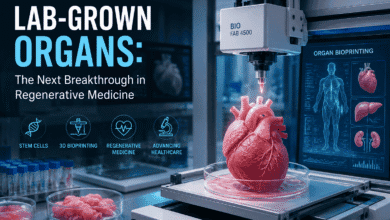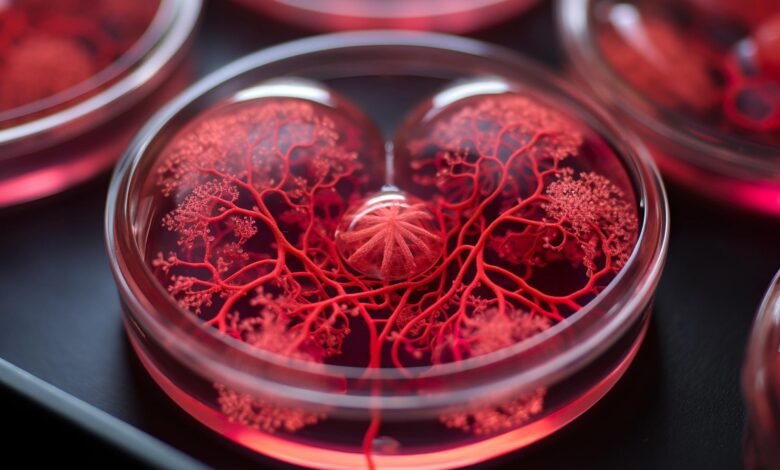
What if scientists could study how a human organ works without relying entirely on animal experiments or traditional laboratory methods? Organoid technology is helping researchers explore this possibility by growing small, three-dimensional structures that imitate certain features of human organs.
These structures, known as organoids, are created from stem cells or other suitable cells under carefully controlled laboratory conditions. They can develop some of the cell types and tissue arrangements found in organs such as the brain, liver, intestine, and kidneys. Although organoids are not complete organs, they offer researchers a valuable way to investigate human biology.
As medical research becomes more focused on understanding individual diseases and developing more targeted treatments, organoid technology is attracting growing scientific interest.
What Is Organoid Technology?
Organoid technology is a laboratory technique used to grow miniature, three-dimensional models of human organs. Researchers guide cells to multiply, organize, and develop into structures that reproduce selected characteristics of real tissues.
Unlike traditional two-dimensional cell cultures, where cells grow in a flat layer, organoids can form more complex arrangements. This three-dimensional environment allows scientists to study how cells interact, respond to changes, and behave within a tissue-like structure.
Organoids may be developed using pluripotent stem cells or adult stem cells taken from specific tissues. Scientists provide the nutrients, growth signals, and environmental conditions needed for the cells to develop.
The final result depends on the cell source, laboratory method, and organ being modeled. Some organoids reproduce certain functions of an organ, while others are mainly useful for studying how tissues develop or how diseases affect cells.
How Are Organoids Grown in the Laboratory?
Growing an organoid involves several carefully controlled stages. The process can vary depending on the research objective, but it generally follows a few important steps.
1. Selecting the Right Cells
Researchers begin by choosing an appropriate cell source. These may include pluripotent stem cells, which can develop into many cell types, or adult stem cells obtained from particular tissues.
The choice depends on the organ being studied and the question researchers want to answer.
2. Providing the Right Growth Conditions
The selected cells are placed in a suitable culture environment containing nutrients and specific growth signals. In many methods, a supportive material helps the cells grow in three dimensions.
Researchers adjust these conditions to encourage the cells to develop into the desired tissue structure.
3. Allowing Cells to Organize
As the cells grow, they may begin forming clusters and structures resembling certain features of an organ. Scientists monitor this development and adjust laboratory conditions when necessary.
Not every cell culture produces a successful organoid, and the resulting structures can vary in size, organization, and function.
4. Testing and Studying the Organoids
Once organoids have developed, researchers examine their structure and behavior. Depending on the project, they may study gene activity, observe responses to medicines, introduce disease-related changes, or compare results with healthy tissue.
These observations help scientists understand biological processes that can be difficult to investigate using conventional laboratory models alone.
Types of Organoids Used in Medical Research
Different organoids help researchers investigate different aspects of human health.
Brain Organoids
Brain organoids are used to investigate aspects of brain development, neurological conditions, and interactions between brain cells. They may help researchers study disorders such as microcephaly and certain neurodevelopmental diseases.
However, current brain organoids do not reproduce the full structure, complexity, or functioning of a human brain.
Intestinal Organoids
Intestinal organoids can reproduce selected features of the intestinal lining. Researchers use them to study nutrient absorption, tissue repair, intestinal diseases, and interactions between cells and microorganisms.
They can also support investigations into how intestinal tissues respond to particular medicines or harmful substances.
Liver Organoids
Liver organoids help scientists investigate liver development, disease processes, and the effects of potential medicines on liver cells. They may be useful when studying conditions that affect liver tissue or evaluating certain aspects of drug toxicity.
Their usefulness depends on how closely the model reproduces the specific liver functions under investigation.
Kidney Organoids
Kidney organoids allow researchers to study aspects of kidney development, tissue organization, and disease. They may help scientists investigate how certain genetic changes or chemical exposures affect kidney cells.
Although promising, these models do not yet replicate every function of a fully developed human kidney.
Lung Organoids
Lung organoids can help researchers examine respiratory tissue development and investigate how infections, environmental exposures, or diseases affect lung cells.
They may also contribute to studies of potential treatments for respiratory conditions.
Applications of Organoid Technology
Organoid technology has applications across several areas of biomedical research.
Understanding Human Diseases
Scientists can use organoids to investigate how diseases develop and how changes in cells affect tissue behavior. By comparing healthy and diseased models, researchers may identify biological mechanisms that contribute to illness.
This approach can be especially valuable when studying diseases that are difficult to reproduce accurately in conventional laboratory systems.
Drug Discovery and Testing
Developing a new medicine can require years of research. Organoids provide another experimental model for examining how selected human tissues respond to potential treatments.
Researchers can compare different compounds, investigate possible toxic effects, and identify promising candidates for further testing. However, organoid results alone cannot establish whether a medicine is safe or effective in people.
Personalized Medicine
Patient-derived organoids may help researchers investigate how an individual’s cells respond to different treatments. For example, cancer organoids grown from a patient’s tumor can be used to explore the effects of selected anticancer drugs in laboratory conditions.
This approach could eventually support more individualized treatment decisions, although clinical usefulness depends on the disease, testing method, and available evidence.
Cancer Research
Cancer organoids can preserve some characteristics of the original tumor, making them useful for studying tumor biology and treatment responses.
Researchers can use these models to investigate why certain cancer cells resist treatment and to explore new therapeutic approaches. They remain one part of a wider research process that includes clinical evidence and other experimental models.
Reducing Dependence on Animal Models
Organoids can provide human-cell-based evidence that complements findings from animal studies. They may help scientists investigate some biological questions using human tissue models.
However, organoids do not eliminate the need for every animal experiment because they cannot yet reproduce all the functions and interactions of an entire living organism.
Benefits of Organoid Technology
One important benefit of organoids is that they offer a more realistic three-dimensional environment than many conventional cell cultures. This can help researchers study cell behavior and tissue organization in greater detail.
Other potential benefits include:
- Human-relevant research: Organoids can reproduce selected features of human tissues.
- Improved disease modeling: Researchers can investigate specific biological changes under controlled conditions.
- More focused drug screening: Multiple treatments may be compared using suitable organoid models.
- Support for personalized research: Patient-derived organoids can help explore individual treatment responses.
- New scientific insights: Organoids may reveal processes that are difficult to observe in simpler cell cultures.
These advantages depend on the quality of the model and how well it represents the biological process being studied.
Challenges and Limitations
Despite their promise, organoids still face important scientific and practical challenges.
Incomplete Organ Function
An organoid usually represents only selected aspects of an organ. Many lack the full range of blood vessels, immune interactions, nerves, and supporting tissues found in the human body.
As a result, their behavior may differ from that of a complete organ.
Differences Between Samples
Organoids can vary between batches, even when researchers use similar methods. Differences in cell sources and laboratory conditions may affect their size, structure, and performance.
This variability makes standardized production and reliable comparisons important.
Cost and Technical Complexity
Growing and maintaining organoids can require specialized equipment, skilled researchers, suitable culture materials, and careful monitoring. These requirements may limit access for some laboratories.
Limits in Predicting Human Responses
A promising result in an organoid does not guarantee that the same response will occur in a patient. Medicines interact with multiple organs and biological systems, many of which cannot be represented in a single organoid model.
Further testing is therefore essential before clinical decisions can be made.
Ethical Considerations
Some organoid research, particularly research involving human stem cells and complex brain models, raises ethical questions. Scientists must consider the source of cells, consent, responsible use of research materials, and appropriate oversight as the technology advances.
What Is the Future of Organoid Technology?
The future of organoid research may involve combining these models with other technologies. For example, organoids can be integrated with microfluidic devices, sometimes called organ-on-a-chip systems, to study how fluids and controlled environments influence tissue behavior.
Researchers are also investigating ways to improve reproducibility, introduce immune or vascular components, and connect different tissue models. Such developments could help scientists examine interactions that cannot be captured by a single organoid.
Artificial intelligence may also support the analysis of microscope images, identification of cellular patterns, and comparison of experimental results. These tools could help researchers process complex data more efficiently, although their conclusions still require scientific validation.
In the longer term, organoid technology may contribute to more precise disease models, improved drug discovery, and better understanding of individual treatment responses. Turning these possibilities into routine medical practice will require further research, validation, and careful clinical evaluation.
Conclusion
Organoid technology is creating new opportunities to study human biology through miniature, three-dimensional tissue models. From investigating brain development to exploring cancer treatments, organoids give scientists another way to examine diseases and test research ideas in human-derived cells.
The technology still has limitations, including incomplete organ function, variation between samples, and difficulties predicting how a whole person will respond to treatment. Nevertheless, continued progress in stem cell research, laboratory engineering, and data analysis may make organoids increasingly useful in biomedical science.
Rather than replacing every existing research method, organoid technology is best understood as a valuable addition to the scientific toolkit—one that may help researchers ask better questions and develop stronger evidence for future medical advances.
Frequently Asked Questions
1. What is organoid technology?
Organoid technology grows miniature, three-dimensional tissue models that reproduce selected features of human organs for scientific research.
2. How are organoids created?
Organoids are grown from stem cells or other suitable cells using controlled laboratory conditions, nutrients, and specific growth signals.
3. What are organoids used for?
Researchers use organoids to study diseases, investigate drug responses, understand organ development, and explore personalized medicine.
4. Can organoids replace animal testing?
Organoids may reduce the need for some animal experiments, but they cannot yet reproduce every function of a complete living organism.