Food is something we all depend on, but producing enough of it for a growing population is becoming more complicated. Farmers are dealing with unpredictable weather, water shortages, declining soil quality, rising costs, and increasing pressure to reduce environmental damage.
This is where sustainable food technology comes into the picture.
From AI-powered farming and vertical agriculture to alternative proteins and smarter food packaging, new technologies are changing how food is grown, produced, stored, and delivered. These innovations are not just about making agriculture more modern. They are about finding practical ways to produce food while using fewer resources.
Let’s explore some of the technologies that could shape the future of food.
What Is Sustainable Food Technology?
Sustainable food technology is a broad term for technologies that help make the food system more efficient and environmentally responsible.
That can mean using less water to grow crops, reducing food waste, producing protein with fewer resources, improving crop resilience, or finding better ways to package and transport food.
The idea is simple: produce enough nutritious food for people without putting unnecessary pressure on the planet.
There isn’t one technology that can accomplish this on its own. The biggest changes will likely come from combining several innovations.
1. Artificial Intelligence Is Making Farming Smarter
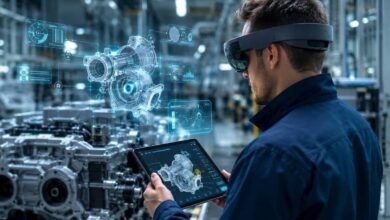
Farming has always depended on experience and observation. Today, farmers can add another powerful tool to that knowledge: artificial intelligence.
AI can process information from satellites, drones, cameras, weather stations, and field sensors. Instead of treating an entire field identically, farmers can use this information to understand what different parts of a field actually need.
For example, an AI system may identify an area that is becoming too dry or detect early signs of plant disease. Farmers can then respond before the problem spreads.
This can help reduce unnecessary irrigation, fertilizer, and pesticide use while making farming more precise.
The important point is that AI isn’t replacing farmers. In many cases, it is giving them better information to make decisions.
2. Vertical Farming Could Change Where Food Is Grown
Imagine growing lettuce, herbs, or other crops inside a building rather than across a large field.
That’s the basic idea behind vertical farming.
Plants are grown in stacked layers, often using hydroponic or aeroponic systems. Temperature, humidity, lighting, and nutrients can be carefully controlled.
One major advantage is space. A vertical farm can produce crops in a relatively small footprint, which could be useful in densely populated areas.
There are challenges, particularly the cost of electricity and climate-control systems. But as renewable energy and farming technology improve, indoor agriculture could become increasingly practical.
3. Alternative Proteins Are Expanding Food Choices
Meat is an important source of protein for millions of people, but conventional livestock farming requires large amounts of land, feed, and water.
Alternative proteins are offering consumers more choices.
Plant-based foods made from ingredients such as peas, soy, beans, and other crops can provide protein without relying on traditional livestock production.
Another area gaining attention is fermentation-based protein, where microorganisms are used to produce useful food ingredients.
The goal isn’t necessarily to eliminate traditional foods. Instead, alternative proteins can add more options to the food system and potentially reduce pressure on certain agricultural resources.
4. Cultivated Meat Is Moving Food Production Into the Lab
Cultivated meat sounds futuristic, but the basic concept is surprisingly straightforward.
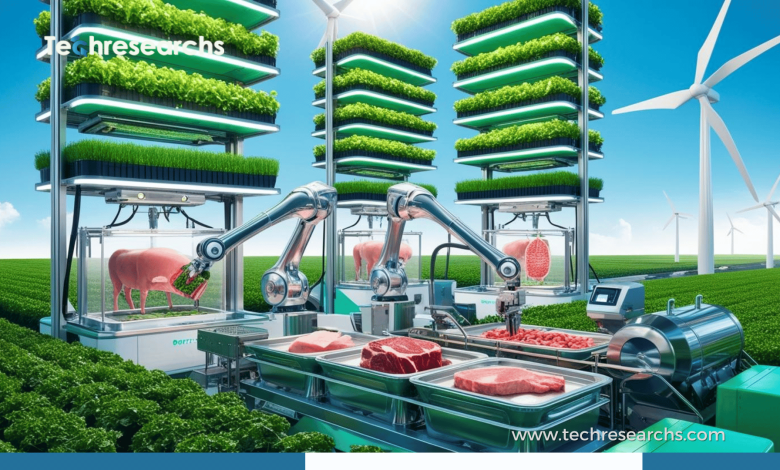
Instead of raising an entire animal, researchers take animal cells and grow them in controlled environments. The resulting cells can potentially be developed into meat products.
The technology is still evolving. Companies and researchers are working on improving taste, texture, production efficiency, affordability, and scalability.
There are also questions around regulation, energy use, and whether consumers will want to buy cultivated meat.
Even with those challenges, cellular agriculture could eventually provide another way of producing animal-based foods.
5. Agricultural Robots Are Taking on Repetitive Jobs
Farming involves many tasks that are physically demanding and repetitive. Robotics could make some of these jobs easier.
Modern agricultural robots are being developed for tasks such as:
- Removing weeds
- Monitoring crops
- Planting seeds
- Picking produce
- Sorting agricultural products
- Applying treatments precisely
For example, a robot equipped with cameras could identify individual weeds and target them instead of treating an entire field.
That kind of precision could reduce chemical use while helping farmers manage large areas more efficiently.
6. Smart Irrigation Can Help Save Water
Water is one of agriculture’s most important resources, and in many regions it is becoming increasingly difficult to manage.
Traditional irrigation can sometimes provide more water than plants actually need.
Smart irrigation systems take a different approach. Sensors can measure soil moisture, while weather data can help predict rainfall and evaporation. Automated systems can then adjust irrigation based on actual conditions.
This means farmers don’t have to rely entirely on fixed watering schedules.
Saving water isn’t only good for the environment. It can also reduce operating costs for farmers.
7. Technology Can Help Reduce Food Waste
Producing food takes land, water, energy, labor, and transportation. When food is thrown away, all of those resources are wasted too.
Technology can help reduce this problem.
Businesses can use AI and data analytics to forecast demand more accurately. Better forecasting means supermarkets, restaurants, and food manufacturers may be less likely to order more products than they can sell.
Temperature sensors and digital tracking systems can also help monitor food during transportation and storage.
Even small improvements across the supply chain could make a meaningful difference when applied at a large scale.
8. Packaging Is Becoming Smarter and More Sustainable
Food packaging has an important job: it protects food and helps keep it fresh. But packaging waste is a growing environmental concern.
Researchers are exploring materials that are recyclable, biodegradable, compostable, or made from agricultural waste.
There is also growing interest in smart packaging.
Some smart packaging technologies can provide information about freshness or storage conditions. This could help consumers and businesses make better decisions about whether food is still usable.
The challenge is finding packaging that balances sustainability, cost, durability, food safety, and shelf life.
9. Biotechnology Could Help Crops Handle Climate Change
Climate conditions are becoming harder for farmers to predict.
Droughts, heat waves, changing rainfall patterns, and new pest pressures can all affect crop production.
Biotechnology can help researchers develop crops with characteristics that make them better suited to difficult conditions.
For example, scientists are studying ways to improve drought tolerance, disease resistance, and other useful crop traits.
Gene-editing technologies are also being explored because they can allow researchers to make targeted changes to specific characteristics.
These approaches could become increasingly important as agriculture adapts to a changing climate.
10. Fermentation Is Getting a High-Tech Upgrade
Fermentation isn’t new. Humans have used it for thousands of years to make foods such as bread, yogurt, cheese, and fermented vegetables.
What’s changing is the level of control scientists now have over the process.
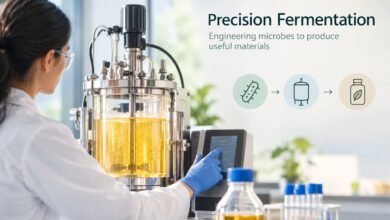
Modern fermentation technologies can use microorganisms to produce specific proteins, enzymes, flavors, and other ingredients.
This is sometimes called precision fermentation.
One interesting application is the production of proteins that can be used in food without requiring traditional animal agriculture. As the technology develops, it could create new possibilities for producing familiar food ingredients in different ways.
11. Digital Technology Is Improving the Food Supply Chain
Food can pass through many hands before it reaches the consumer.
It may travel from a farm to a processor, then to a warehouse, distributor, retailer, and finally a customer’s kitchen.
Digital systems can make this journey easier to monitor.
Cloud platforms, sensors, tracking technologies, and data analytics can help companies understand where products are, how they have been stored, and where problems are occurring.
Better visibility can lead to fewer delays, less spoilage, and more efficient transportation.
It can also give consumers greater insight into where their food comes from.
Why Sustainable Food Technology Matters
The real value of these technologies isn’t simply that they are innovative. Their importance comes from the problems they could help solve.
Less Pressure on Natural Resources
Precision agriculture and smart irrigation can help reduce unnecessary consumption of water, fertilizers, and other inputs.
More Efficient Food Production
Automation, controlled environments, and data-driven farming can help producers make better use of available resources.
Reduced Waste
Better storage, packaging, forecasting, and transportation can help keep more food from being lost or thrown away.
Greater Climate Resilience
Technology can help farmers respond to difficult weather conditions and changing growing environments.
More Food Choices
Alternative proteins and cellular agriculture could give consumers additional options beyond conventional food production.
But Technology Isn’t a Magic Solution
It’s easy to look at a new technology and assume it will automatically make the food system sustainable. Reality is more complicated.
Some technologies require significant amounts of electricity, expensive infrastructure, or specialized equipment. A vertical farm, for instance, may use much less land but still require considerable energy for lighting and climate control.
Cost is another issue. If sustainable technologies are too expensive, small farmers and lower-income communities may struggle to benefit from them.
Consumer trust also matters. People want to know how new foods are made, whether they are safe, and whether they actually deliver environmental benefits.
For that reason, sustainability needs to be measured across the entire life cycle of a technology rather than judged by one feature alone.
What Could the Future Food System Look Like?
The future probably won’t belong to a single breakthrough technology.
Instead, different technologies could work together.
A farm might use AI to monitor crops, sensors to manage irrigation, autonomous machines to handle repetitive work, and improved crop varieties to cope with drought.
Food manufacturers could combine alternative proteins, precision fermentation, efficient processing, and improved packaging.
Consumers could use digital tools to learn more about ingredients, sourcing, freshness, and environmental impact.
In other words, the future of food may be less about replacing the entire existing system and more about making each part of it smarter and more efficient.
Final Thoughts
Sustainable food technology is changing the conversation around how we feed the world.
AI, robotics, vertical farming, biotechnology, alternative proteins, smart packaging, and precision fermentation all offer different ways to address problems facing today’s food system.
But innovation alone isn’t enough. These technologies need to be affordable, practical, safe, environmentally responsible, and accessible to the people who need them.
The most promising future is one where technology works alongside farmers, food producers, scientists, and consumers—not one where technology simply tries to replace them.
If these innovations continue to mature responsibly, they could help create a food system that produces nutritious food while using resources more wisely and leaving a healthier planet for future generations.
Frequently Asked Questions
1. What is sustainable food technology?
Sustainable food technology uses modern methods to produce and distribute food while reducing waste and conserving water, energy, land, and other resources.
2. How can AI make food production more sustainable?
AI can analyze soil, weather, crop, and irrigation data to help farmers use resources more efficiently and identify potential crop problems earlier.
3. What are some examples of sustainable food technology?
Examples include vertical farming, smart irrigation, agricultural robots, alternative proteins, cultivated meat, precision fermentation, and sustainable packaging.
4. Can sustainable food technology help reduce food waste?
Yes. AI forecasting, smart packaging, better storage, and digital supply-chain systems can help prevent spoilage and reduce unnecessary food waste.