Neuromorphic Computing: How Brain-Inspired Chips Could Change Technology

Modern computers can process enormous amounts of information, but they still face challenges when handling tasks that require continuous learning, quick responses, and efficient energy use. As artificial intelligence becomes more advanced, researchers are exploring a different approach to computing—one inspired by the human brain.
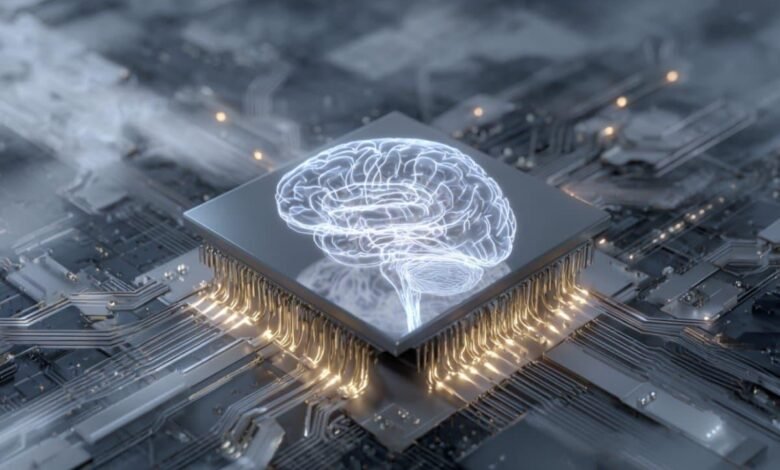
This approach is known as neuromorphic computing. Instead of relying entirely on traditional computer architectures, neuromorphic systems use specialized hardware designed to imitate certain features of biological neurons and synapses. The goal is to process information more efficiently, particularly in applications involving sensors, robotics, and artificial intelligence.
Although this technology is still developing, it could change how future devices recognize patterns, respond to their surroundings, and perform intelligent tasks without depending on powerful cloud-based systems for every decision.
What Is Neuromorphic Computing?
Neuromorphic computing is a computing approach that takes inspiration from the structure and behavior of the human nervous system. It uses electronic circuits and specialized chips to reproduce selected characteristics of neurons, synapses, and communication between them.
Traditional computers generally separate processing from memory. Information moves between these components as programs execute instructions. This arrangement works extremely well for many applications, but moving large amounts of data can consume considerable time and energy.
Neuromorphic hardware takes a different approach. It can combine processing and memory-like functions more closely, while using networks of artificial neurons that communicate through signals. Some designs process information only when events occur rather than continuously performing calculations.
The result is a computing architecture that may be especially useful for tasks involving changing inputs, real-time responses, and energy-sensitive environments.
However, neuromorphic computing does not recreate the entire human brain. It borrows selected principles from neuroscience and applies them to electronic systems.
How Do Brain-Inspired Chips Work?
To understand neuromorphic computing, it helps to look at how its main components operate.
1. Artificial Neurons Process Signals
In the human brain, neurons receive signals from other neurons and respond when certain conditions are met. Neuromorphic chips use electronic or computational models of neurons to perform a comparable role.
These artificial neurons receive inputs, process signals according to their design, and may generate an output when a particular threshold is reached. This makes them useful for systems that need to recognize changes or respond to incoming information.
2. Artificial Synapses Connect Information
Biological synapses help neurons communicate with one another. In neuromorphic systems, artificial synapses represent connections between artificial neurons and may store information about the strength of those connections.
Depending on the architecture, these connections can be adjusted through learning mechanisms or programmed values. This can support pattern recognition and certain forms of adaptive processing.
3. Event-Based Processing Reduces Unnecessary Work
Many conventional computing systems repeatedly process data at fixed intervals. Some neuromorphic architectures instead use event-driven communication, where activity occurs when a relevant signal or change is detected.
For example, a motion-sensing system could focus on changes within a scene rather than repeatedly analyzing every pixel in every frame. This approach can reduce unnecessary computation in suitable applications.
4. Hardware Design Supports Parallel Activity
Neuromorphic chips can contain many interconnected processing elements that operate in parallel. Instead of handling every operation through a single sequence of steps, these systems distribute activity across networks of artificial neurons.
This design may help certain workloads respond quickly while using less energy. Actual performance depends on the chip, the software, and the specific task being performed.
Why Is Neuromorphic Computing Important?
The demand for artificial intelligence continues to increase, bringing new challenges involving electricity consumption, processing speed, and the movement of large datasets.
Neuromorphic computing offers a potential alternative for workloads where conventional processors are not always the most efficient choice.
One major advantage is the possibility of lower energy consumption. Some neuromorphic designs use sparse, event-driven activity, which can reduce unnecessary operations. This is particularly relevant for small devices that must operate for long periods on limited battery power.
Another benefit is real-time processing. Devices that interact with their surroundings often need to recognize changes and respond immediately. Brain-inspired hardware could help support these applications without sending every piece of information to a remote server.
Neuromorphic systems may also offer new ways to process temporal information—data that changes over time. This matters in applications involving movement, sound, touch, and other continuous signals.
Nevertheless, these advantages are not automatic. Conventional CPUs, GPUs, and other specialized accelerators remain more suitable for many workloads, and neuromorphic systems can require different programming methods and development tools.
Real-World Applications of Neuromorphic Computing
The potential value of neuromorphic computing becomes clearer when we consider where it could be used.
1. Robotics and Autonomous Machines
Robots often operate in environments where conditions change unexpectedly. They may need to recognize obstacles, respond to movement, or adjust their behavior while using limited onboard power.
Neuromorphic processors could help robots process sensor signals and react to changing surroundings. For example, a small mobile robot might use event-based vision to detect movement while avoiding the cost of processing every frame in the same way.
This could be particularly useful in industrial robotics, autonomous inspection systems, and small devices that need to operate away from a constant power supply.
2. Smart Sensors and Internet of Things Devices
Smart sensors are increasingly used in factories, homes, agricultural systems, and connected infrastructure. Many of these devices collect information continuously but have limited computing resources.
Brain-inspired chips could allow selected sensors to identify meaningful events locally. A machine-monitoring device, for instance, might detect an unusual vibration pattern and send an alert only when the signal suggests a possible problem.
Local processing could reduce unnecessary data transmission and improve response times. Whether it reduces total energy consumption depends on the complete system, including the sensor, processor, and communication hardware.
3. Artificial Intelligence at the Edge
Edge AI allows devices to process information close to where it is collected instead of relying entirely on cloud computing.
Neuromorphic hardware could support certain edge AI applications, including event-based image processing, acoustic monitoring, and gesture recognition. Its potential is particularly interesting when a device must operate with limited electricity or respond with very low latency.
For example, a wearable device could monitor movement patterns locally and identify specific events without continuously sending raw sensor data to an external server.
Such systems may improve privacy by keeping more information on the device, although privacy still depends on how the device stores, uses, and shares data.
4. Healthcare and Assistive Technology
Healthcare technologies increasingly rely on compact devices that monitor movement, physiological signals, and environmental conditions. Neuromorphic computing may eventually help selected devices analyze changing signals efficiently.
Researchers are also exploring connections between brain-inspired electronics and neuroprosthetic systems. In the longer term, specialized hardware could contribute to responsive assistive devices that interpret signals and adjust their behavior.
These applications require careful validation, reliability testing, and appropriate clinical evaluation. Neuromorphic computing is not a replacement for established medical systems, and its usefulness will depend on the specific device and medical purpose.
5. Industrial Automation and Predictive Maintenance
Manufacturing facilities use sensors to monitor motors, equipment, production lines, and operating conditions. Identifying unusual behavior early can help organizations investigate problems before they cause costly interruptions.
A neuromorphic system could potentially analyze time-dependent sensor signals and recognize patterns associated with abnormal operation. If deployed effectively, this could support faster monitoring and more efficient use of computing resources.
However, the technology must demonstrate dependable performance under real factory conditions before it can be considered a practical replacement for existing monitoring solutions.
Neuromorphic Computing vs. Traditional Computing
Neuromorphic computing is not designed to replace every conventional computer. The two approaches are built around different priorities.
| Feature | Traditional Computing | Neuromorphic Computing |
|---|---|---|
| Architecture | Commonly separates processing and memory | Often uses interconnected neuron-like processing elements |
| Processing style | Frequently instruction-driven | Can use event-driven, neuron-inspired activity |
| Energy efficiency | Varies by processor and workload | May be highly efficient for suitable sparse workloads |
| AI applications | Widely used for training and inference | Promising for selected real-time and sensor-based tasks |
| Programming | Established languages, frameworks, and tools | Often requires specialized models and development tools |
| Current adoption | Broad commercial use | More limited and application-specific |
The best choice depends on the workload. Traditional processors are excellent for general-purpose software, data management, and many AI tasks. Neuromorphic systems may provide an advantage when the task benefits from event-driven processing, temporal signals, or low-power operation.
In some future systems, both approaches may work together rather than compete directly.
Challenges Facing Neuromorphic Computing
Despite its promise, neuromorphic computing faces several challenges that must be addressed before it becomes widely adopted.
Limited Software Compatibility
Most developers are familiar with conventional computing environments and established AI frameworks. Neuromorphic hardware may require specialized programming techniques, neuron models, simulation tools, and software platforms.
This creates an additional learning curve for teams interested in experimenting with the technology.
Difficult Performance Comparisons
It is not always straightforward to compare a neuromorphic processor with a CPU or GPU. Results depend on the task, the model, the accuracy requirements, the measurement method, and the energy consumed by the complete system.
A chip that performs exceptionally well on one specialized workload may offer little advantage on another.
Hardware and Manufacturing Complexity
Building circuits that reproduce neuron-like behavior can introduce design and manufacturing challenges. Researchers must balance the number of processing elements, communication efficiency, memory requirements, reliability, and production costs.
Wider commercial adoption will depend partly on whether manufacturers can deliver dependable hardware at a competitive price.
A Developing Ecosystem
Neuromorphic computing still has a smaller ecosystem than conventional computing. Organizations need suitable hardware, developer tools, technical expertise, benchmarks, and long-term support before they can confidently deploy it at scale.
Progress in these areas will be important for turning research demonstrations into useful commercial products.
What Does the Future Hold for Neuromorphic Computing?
The future of neuromorphic computing will depend on how effectively researchers and technology companies solve these practical challenges.
One promising direction is combining brain-inspired processors with conventional CPUs, GPUs, and edge AI accelerators. Each type of hardware could handle the tasks it performs best. A traditional processor might manage general software, while a neuromorphic chip handles selected streams of changing sensor data.
Another opportunity lies in event-based sensing. Cameras and other sensors designed to capture changes efficiently could work alongside neuromorphic processors to support responsive machines, smart infrastructure, and autonomous systems.
Researchers are also investigating how learning methods can be implemented efficiently on specialized hardware. Progress could make certain adaptive applications more practical, although the performance and reliability of these approaches will need to be demonstrated for each use case.
For businesses, the most realistic near-term strategy is to monitor developments and identify workloads where low power consumption, low latency, and continuous sensor processing are important. Testing specific applications will be more useful than assuming that brain-inspired chips are automatically better than existing processors.
Conclusion
Neuromorphic computing represents a different way of thinking about computer hardware. By taking inspiration from neurons, synapses, and event-driven communication, it aims to make selected computing tasks more efficient and responsive.
Its potential applications range from robotics and smart sensors to edge AI, industrial monitoring, and assistive technology. At the same time, software compatibility, hardware complexity, benchmarking, and commercial availability remain important obstacles.
The technology is unlikely to replace traditional computing across the board. Instead, its greatest contribution may come from specialized applications where conventional architectures struggle to balance responsiveness and energy consumption.
As research continues, neuromorphic computing could become an important part of a broader technology landscape in which different types of processors work together to solve different problems.
Frequently Asked Questions
1. What is neuromorphic computing?
Neuromorphic computing is a technology that designs computer chips inspired by the human brain. It uses artificial neurons and interconnected processing elements to handle certain tasks efficiently, particularly those involving sensors and real-time data.
2. How do neuromorphic chips work?
Neuromorphic chips use electronic circuits that imitate selected functions of biological neurons and synapses. Some systems process information through event-driven signals, helping them perform specific computing tasks with potentially lower energy consumption.
3. What are the main applications of neuromorphic computing?
Potential applications include robotics, smart sensors, edge artificial intelligence, industrial automation, event-based vision, and assistive technology. These chips are particularly promising for applications that require quick responses and efficient processing.
4. Can neuromorphic computing replace traditional computers?
Neuromorphic computing is unlikely to replace traditional computers completely. Instead, it may complement CPUs and GPUs by handling specialized tasks that benefit from brain-inspired processing, event-driven communication, and low-power operation.