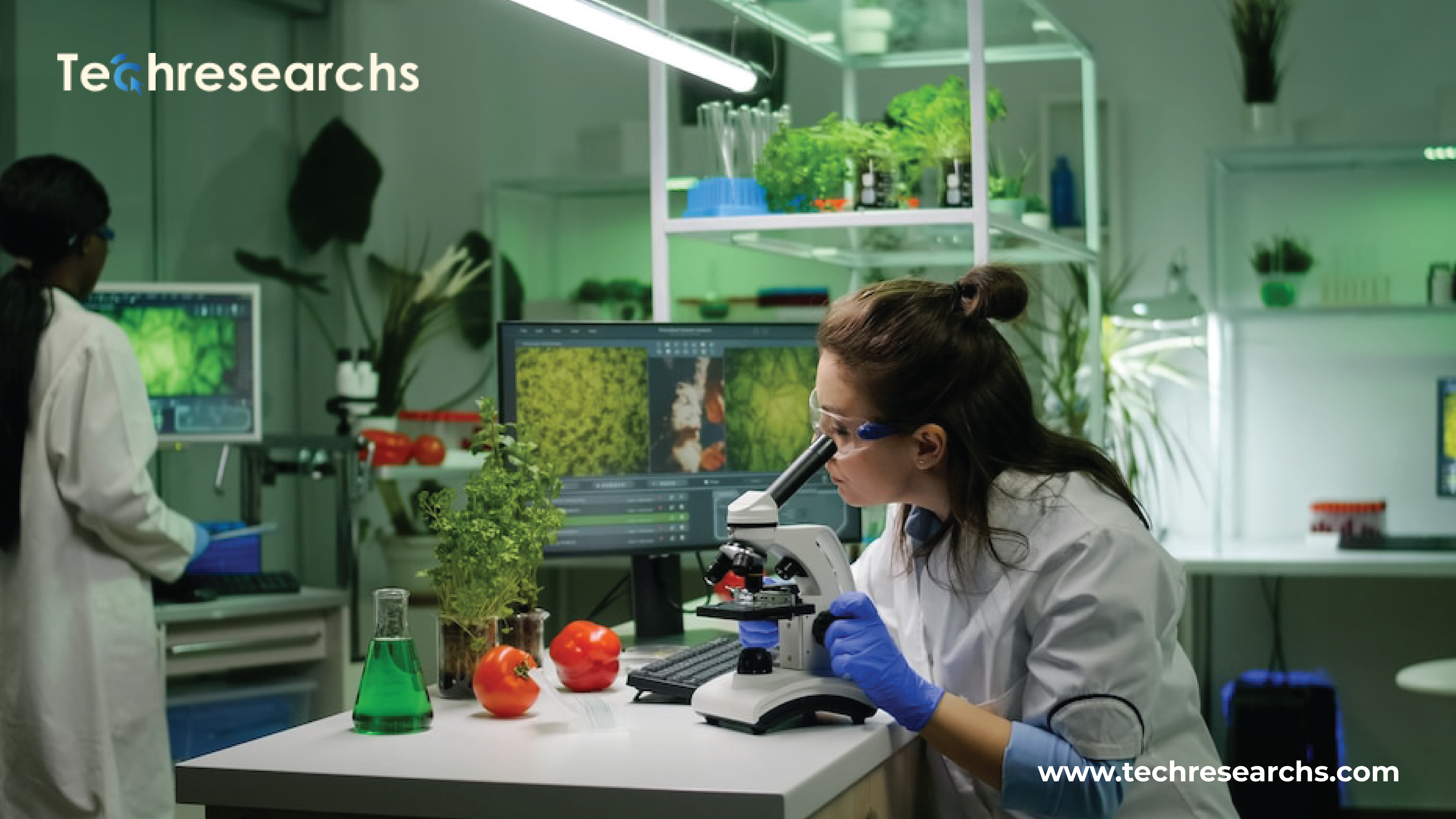
Industrial biotechnology has evolved significantly over the past few years. What was once viewed as an alternative manufacturing approach has become a key driver of sustainable production, circular economy initiatives, and low-carbon industrial transformation. As governments introduce stricter environmental regulations and industries pursue net-zero goals, biotechnology is enabling manufacturers to replace petroleum-based processes with renewable biological solutions.
From bio-based chemicals and sustainable fuels to precision fermentation and AI-powered bioprocess optimization, industrial biotechnology is transforming manufacturing across multiple sectors. This updated guide explores the latest trends, technologies, applications, challenges, and future opportunities shaping industrial biotechnology in 2026.
What Is Industrial Biotechnology?
Industrial biotechnology (also called white biotechnology) is the application of biological systems, microorganisms, enzymes, and genetically engineered organisms to manufacture industrial products more efficiently and sustainably.
Instead of relying on fossil fuels and harsh chemical reactions, industrial biotechnology uses renewable feedstocks such as:
- Agricultural waste
- Plant biomass
- Sugar crops
- Algae
- Industrial carbon emissions
- Organic waste
These biological resources are converted into valuable products while reducing pollution and greenhouse gas emissions.
Why Industrial Biotechnology Matters More Than Ever
The manufacturing sector contributes a significant share of global carbon emissions. Companies worldwide are now investing heavily in biotechnology to reduce environmental impact while improving efficiency.
Major factors driving adoption include:
- Net-zero emission commitments
- Circular economy strategies
- Sustainable supply chain initiatives
- Rising fossil fuel costs
- Advances in synthetic biology
- AI-driven biomanufacturing
- Government incentives for green manufacturing
Industrial biotechnology helps manufacturers produce more while consuming fewer natural resources.
Latest Trends in Industrial Biotechnology (2026)
1. AI-Powered Bioprocess Optimization
Artificial Intelligence is revolutionizing industrial biotechnology by monitoring fermentation conditions, predicting enzyme performance, and optimizing production yields.
AI helps manufacturers:
- Reduce production time
- Improve product quality
- Lower energy consumption
- Predict equipment failures
- Optimize microbial growth
The combination of biotechnology and machine learning is creating smarter, more efficient manufacturing facilities.
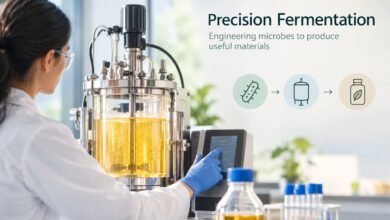
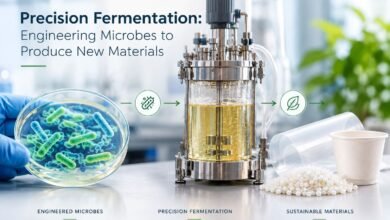
2. Precision Fermentation
Precision fermentation has become one of the fastest-growing areas of industrial biotechnology.
Instead of traditional chemical synthesis, specially engineered microorganisms produce:
- Food proteins
- Dairy alternatives
- Industrial enzymes
- Cosmetic ingredients
- Pharmaceutical compounds
- Specialty chemicals
This technology significantly reduces environmental impact while maintaining high product quality.
3. Bio-Based Chemicals Replacing Petrochemicals
Many industries are replacing petroleum-derived chemicals with renewable alternatives.
Examples include:
- Bio-based solvents
- Organic acids
- Bio-plastics
- Bio-lubricants
- Green surfactants
- Renewable polymers
These alternatives reduce dependency on fossil fuels while supporting sustainable manufacturing.
4. Carbon Capture Through Biotechnology
Modern biotechnology is helping industries convert captured carbon dioxide into useful products.
Researchers are developing microorganisms capable of converting CO₂ into:
- Biofuels
- Industrial chemicals
- Bioplastics
- Sustainable aviation fuels
- Building materials
This approach supports carbon recycling instead of carbon release.
5. Waste-to-Value Manufacturing
Industrial biotechnology is enabling manufacturers to convert waste into profitable products.
Common waste sources include:
- Agricultural residue
- Food waste
- Forestry waste
- Municipal organic waste
- Industrial wastewater
These materials are transformed into bioenergy, chemicals, fertilizers, and biomaterials.
Major Applications of Industrial Biotechnology
Chemical Manufacturing
Biotechnology enables cleaner production of:
- Organic acids
- Alcohols
- Industrial enzymes
- Solvents
- Polymers
These processes typically consume less energy than conventional chemical manufacturing.
Biofuel Production
Modern biotechnology supports the production of:
- Bioethanol
- Biodiesel
- Sustainable aviation fuel
- Renewable natural gas
- Advanced biofuels
These fuels help reduce greenhouse gas emissions while supporting energy security.
Textile Industry
Biotechnology is making textile production more sustainable through:
- Enzyme-based fabric treatment
- Eco-friendly dyeing
- Reduced water usage
- Biodegradable textile materials
This minimizes pollution while improving production efficiency.
Food and Beverage Industry
Industrial biotechnology improves food manufacturing through:
- Natural preservatives
- Fermentation technologies
- Plant-based proteins
- Sustainable ingredients
- Food waste recycling
These innovations help meet growing consumer demand for environmentally friendly products.
Pharmaceutical Manufacturing
Biotechnology enables efficient production of:
- Vaccines
- Therapeutic proteins
- Antibiotics
- Enzymes
- Biopharmaceutical ingredients
Advanced biomanufacturing techniques reduce production costs while improving quality.
Synthetic Biology Is Accelerating Innovation
Synthetic biology has become a major force behind industrial biotechnology.
Scientists can now design microorganisms that:
- Produce specialty chemicals
- Generate biodegradable plastics
- Capture carbon dioxide
- Manufacture sustainable fuels
- Produce rare pharmaceutical compounds
Gene editing technologies continue to improve manufacturing precision and scalability.
Benefits of Industrial Biotechnology
Lower Carbon Emissions
Biological manufacturing processes generally emit fewer greenhouse gases compared to traditional industrial methods.
Reduced Energy Consumption
Many bioprocesses operate under moderate temperatures and pressures, reducing overall energy requirements.
Renewable Raw Materials
Industrial biotechnology replaces finite fossil resources with renewable biological feedstocks.
Waste Reduction
Many industrial processes now recycle waste streams into valuable commercial products.
Improved Resource Efficiency
Modern biomanufacturing minimizes water usage, chemical waste, and environmental pollution.
Challenges Facing Industrial Biotechnology
Despite rapid progress, several challenges remain.
High Initial Investment
Biomanufacturing facilities require significant capital investment.
Scaling Production
Laboratory success does not always translate into commercial-scale manufacturing.
Feedstock Availability
Reliable supplies of renewable biomass remain essential.
Regulatory Compliance
Companies must comply with evolving environmental, safety, and biotechnology regulations.
Skilled Workforce
The industry requires expertise in biology, engineering, AI, and automation.
The Role of AI and Digital Twins
Digital twins are becoming common in industrial biotechnology.
These virtual manufacturing models help companies:
- Simulate fermentation processes
- Predict production outcomes
- Optimize manufacturing conditions
- Reduce operational risks
- Improve product consistency
Combined with AI, digital twins are enabling intelligent biomanufacturing.
Future Outlook
The future of industrial biotechnology is expected to focus on:
- Autonomous biomanufacturing
- AI-assisted enzyme engineering
- Carbon-negative manufacturing
- Sustainable aviation fuel production
- Bio-based electronics materials
- Circular bioeconomy systems
- Smart microbial factories
- Climate-resilient manufacturing
As global sustainability goals become more ambitious, industrial biotechnology will play a central role in transforming manufacturing into a cleaner, more resource-efficient industry.
Conclusion
Industrial biotechnology is no longer an emerging technology—it is becoming the foundation of sustainable manufacturing. Advances in synthetic biology, precision fermentation, AI-driven bioprocess optimization, and carbon recycling are enabling industries to produce high-value products with lower environmental impact.
Organizations that invest in industrial biotechnology today will be better positioned to meet future regulatory requirements, reduce operational costs, and contribute to a greener global economy. As innovation continues, biotechnology will remain a key enabler of resilient, low-carbon, and circular manufacturing systems.
FAQs
1. What is industrial biotechnology?
Industrial biotechnology uses biological systems, microorganisms, and enzymes to manufacture products more sustainably and efficiently than traditional chemical processes.
2. How does industrial biotechnology support sustainability?
It reduces carbon emissions, lowers energy consumption, uses renewable raw materials, and minimizes industrial waste.
3. What is precision fermentation?
Precision fermentation uses engineered microorganisms to produce valuable ingredients such as proteins, enzymes, and specialty chemicals with high efficiency.
4. How is AI used in industrial biotechnology?
AI optimizes fermentation, predicts equipment maintenance, improves production efficiency, and enhances product quality.