Augmented Reality in Healthcare: Pioneering a New Era of Medicine

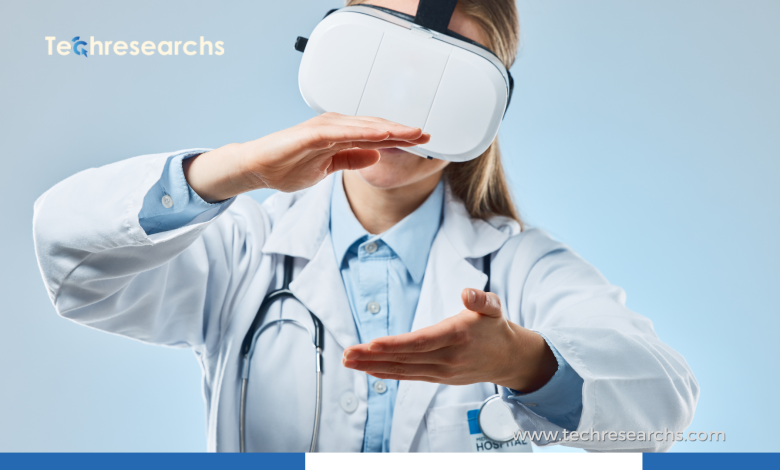
Healthcare has always depended on technology to improve the way doctors diagnose, treat, and care for patients. From digital medical records to robotic surgery, technology has steadily changed the way modern medicine works. Now, Augmented Reality (AR) is becoming another important part of that transformation.
AR brings digital information into the real world. Instead of completely replacing what a person sees, as Virtual Reality does, it adds useful digital elements to the existing environment. In healthcare, that could mean viewing a 3D model of an organ, studying anatomy from different angles, or accessing visual guidance while preparing for a procedure.
The technology is still developing, but its applications are becoming increasingly practical. In 2026, researchers and healthcare professionals are exploring AR for surgical education, medical training, preoperative planning, anatomy visualization, procedural guidance, and patient communication.
What makes AR particularly interesting is its ability to connect digital information with the physical world. For doctors and medical students, that could make complex information easier to understand and use.
What Is Augmented Reality in Healthcare?
Augmented Reality in healthcare involves using AR-enabled devices and software to display digital information over the user’s view of the physical environment.
A medical student, for example, could use an AR headset to examine a three-dimensional heart and explore its different structures. A surgeon could potentially use an AR system to view patient-specific anatomical information while preparing for a procedure.
Unlike Virtual Reality, AR does not require the user to enter a completely simulated environment. The real world remains visible, while digital content is added to it.
Healthcare AR systems may use several technologies together, including:
- AR glasses and head-mounted displays
- Cameras and motion sensors
- Medical imaging
- 3D anatomical models
- Computer vision
- Spatial mapping
- Artificial intelligence
- Real-time tracking
The combination of these technologies gives healthcare professionals a new way to interact with medical information.
Why Is AR Becoming Important in Healthcare?
Doctors and other healthcare professionals deal with enormous amounts of information every day. Medical images, anatomical structures, patient records, surgical plans, and clinical instructions often need to be understood quickly and accurately.
Traditional computer monitors remain essential, but they are not always the most intuitive way to understand three-dimensional information.
This is where AR could make a difference.
Imagine a medical student trying to understand the relationship between several organs using a textbook illustration. Now imagine being able to see those structures as a 3D model and examine them from different angles. The information becomes more interactive and easier to explore.
The same principle applies to surgical education and planning.
Research published in 2026 has provided encouraging evidence for AR-based surgical training. A systematic review found that most of the included studies reported improvement in at least one objective technical performance measure, including areas such as error reduction and learning efficiency.
That does not mean AR is ready to replace traditional medical training. Instead, it suggests that AR could become a useful additional tool for teaching and practicing specific skills.
How Is Augmented Reality Being Used in Healthcare?
AR has applications across several areas of medicine. Some are already being explored in real healthcare environments, while others remain at the research or pilot stage.
1. Medical Education and Surgical Training
Medical education is one of the most natural applications for AR.
Learning anatomy from textbooks and two-dimensional images can be challenging. The human body is three-dimensional, and understanding how organs, bones, blood vessels, and other structures relate to one another requires strong spatial awareness.
AR can give students a more interactive way to study these structures.
Instead of simply looking at an illustration, students may be able to rotate, enlarge, and examine a digital anatomical model. This can make lessons more engaging and provide another way to understand difficult concepts.
Surgical trainees can also use AR-based simulations to practice certain procedures before working with patients.
A 2026 systematic review covering studies across multiple surgical specialties found promising results for AR-assisted training, particularly for learners who were developing basic technical and visuospatial skills.
The important point is that AR works best as a supplement to medical education, not as a replacement for experienced instructors and hands-on training.
2. Preoperative Planning
Before performing complex surgery, doctors need a detailed understanding of the patient’s anatomy.
CT and MRI scans provide valuable information, but clinicians typically examine these images on conventional screens. Converting that information into a three-dimensional visualization can provide a different perspective.
AR may allow healthcare teams to examine patient-specific anatomical models before a procedure.
For example, a surgeon could study the location of a tumor or the relationship between blood vessels and surrounding tissue using a 3D representation.
Recent research into head-mounted AR and mixed-reality systems has examined their potential in areas such as surgical education, preoperative planning, and intraoperative navigation.
This does not mean every operation will use AR. The value of the technology depends on the procedure, the quality of the underlying data, and the reliability of the AR system.
3. Surgical Navigation and Procedural Guidance
During surgery, precision matters.
In some procedures, surgeons need to interpret imaging information while simultaneously working within a physical surgical environment. AR has the potential to bring selected digital information into the surgeon’s field of view.
Depending on the system and procedure, this could include:
- Anatomical landmarks
- Patient-specific 3D models
- Surgical pathways
- Imaging information
- Navigation markers
- Procedural instructions
The potential benefit is straightforward: important information could be available without requiring the user to constantly look away at another display.
However, this is also one of the areas where accuracy becomes especially important. If digital information is incorrectly aligned with the patient’s anatomy, the system could become a liability rather than an advantage.
For that reason, clinical AR systems require careful testing and validation.
4. Anatomy and 3D Visualization
AR offers an interesting alternative to conventional anatomy education.
Students can explore digital representations of the heart, brain, skeletal system, muscles, organs, and blood vessels. Structures can potentially be viewed individually or together, making it easier to understand how different parts of the body interact.
This type of visualization could be particularly helpful when explaining complicated anatomical relationships.
It may also allow instructors to demonstrate concepts in a more interactive way rather than relying entirely on diagrams or physical models.
5. Patient Education
Healthcare can sometimes feel confusing for patients.
Doctors may explain a procedure using medical terminology that is perfectly clear to them but difficult for someone without a medical background. AR could provide another way to communicate these ideas.
For example, instead of simply explaining where a particular structure is located, a healthcare professional could use a visual model to show the patient.
This could make discussions about anatomy, procedures, and treatment options easier to follow.
AR should not replace the conversation between a doctor and patient, but it could become a useful visual aid during that conversation.
6. Remote Training and Collaboration
Another potential use for AR is connecting healthcare professionals who are not in the same location.
An experienced specialist could potentially guide a trainee remotely using shared visual information. This could be useful for education, procedural training, equipment support, or specialist consultation.
Research into AR-based remote procedural instruction is also emerging, showing that the technology may have applications beyond the operating room itself.
For hospitals and healthcare facilities with limited access to specialists, remote collaboration could become an important area of development.
Key Benefits of Augmented Reality in Healthcare
The potential value of AR comes from more than simply making medical information look more advanced.
Improved Visualization
Three-dimensional information can be easier to understand when users can view it from different angles and interact with it directly.
More Interactive Medical Education
Students can learn anatomy and procedures through interactive experiences instead of depending entirely on static images.
Support for Surgical Training
AR-based simulation can provide trainees with opportunities to practice certain technical skills in a controlled environment.
Better Access to Contextual Information
AR could allow relevant information to appear within the user’s field of view instead of requiring constant switching between different screens.
Patient-Friendly Explanations
Visual models may make complicated medical concepts easier for patients to understand.
Collaboration Across Locations
AR may support remote training and communication between healthcare professionals.
What Are the Challenges of AR in Healthcare?
The potential is significant, but healthcare is a demanding environment. Technology that works well in a demonstration may not automatically be suitable for clinical use.
Cost
High-quality AR hardware, specialized software, system integration, maintenance, and staff training can be expensive.
Healthcare organizations need to consider whether the technology provides enough practical value to justify the investment.
Accuracy
Accuracy is one of the biggest concerns.
When AR is used for medical visualization or surgical guidance, digital information needs to line up correctly with the physical environment. Tracking, calibration, and registration errors can affect the reliability of the system.
Privacy and Security
AR healthcare applications may handle sensitive patient information. Any system connected to medical data therefore needs appropriate security measures and privacy protections.
Learning Curve
Healthcare professionals already work with complex equipment and software. An AR system that is difficult to operate could add unnecessary complexity.
For AR to become widely useful, interfaces need to be intuitive and fit naturally into existing clinical workflows.
Limited Long-Term Evidence
This is another important consideration.
AR research has produced encouraging findings, particularly in education and simulation, but many studies are relatively small. More research is needed to understand whether improvements seen in simulated environments consistently translate into better performance in real clinical settings.
The Role of Artificial Intelligence in AR Healthcare
The combination of Artificial Intelligence and Augmented Reality could make future healthcare applications considerably more sophisticated.
AI can analyze information, while AR can provide a visual interface through which that information is presented.
For example, a future healthcare system could potentially combine medical imaging, AI analysis, AR visualization, and real-time sensor data.
Such a system might help doctors access relevant patient information or visualize anatomical structures in a more contextual way.
However, these possibilities should not be confused with established clinical capabilities. AI-assisted AR systems still require extensive testing, validation, regulatory oversight, and human supervision before they can be trusted for important medical decisions.
What Does the Future of AR in Healthcare Look Like?
The future of healthcare AR will probably be less about impressive demonstrations and more about solving specific medical problems.
Future systems are likely to focus on:
- More comfortable AR glasses
- Improved visual accuracy
- Better medical imaging integration
- Faster and more reliable tracking
- Easier-to-use interfaces
- Greater interoperability with healthcare systems
- AI-assisted visualization
- Lower hardware costs
Another important area will be evidence.
Healthcare providers need to know not only whether an AR system works technically, but whether it actually improves training, efficiency, decision-making, or patient outcomes.
That distinction will play an important role in determining which AR applications become widely adopted.
Is Augmented Reality the Future of Medicine?
It would be too early to say that AR will completely transform every area of medicine. Healthcare is too complex for a single technology to solve every problem.
However, AR has already demonstrated meaningful potential in areas where visualization and spatial understanding are important.
Surgical education is one example. Preoperative planning, anatomy visualization, patient education, and selected forms of procedural guidance are other areas receiving growing attention.
The most realistic future is not one in which AR replaces healthcare professionals. Instead, it is likely to become another tool that helps doctors, surgeons, students, and patients interact with medical information.
Conclusion
Augmented Reality is gradually moving from the world of experimental technology into practical healthcare applications.
Its ability to combine digital information with the physical environment makes it particularly interesting for medical education, surgical training, anatomy visualization, preoperative planning, and patient communication.
There are still significant challenges to overcome. Cost, accuracy, privacy, integration, usability, and limited long-term evidence all need to be addressed before AR becomes routine across healthcare.
Even so, the direction is clear. As AR hardware improves and researchers gather stronger clinical evidence, the technology could become an increasingly useful part of modern healthcare.
The real success of Augmented Reality in healthcare will not be measured by how futuristic it looks. It will be measured by whether it helps healthcare professionals work more effectively, helps students learn more confidently, and ultimately contributes to better patient care.
Frequently Asked Questions
How is augmented reality used in healthcare?
Augmented reality is used in healthcare for medical education, surgical training, preoperative planning, anatomy visualization, patient education, and selected forms of surgical navigation. It allows digital information and 3D models to be displayed alongside the real-world environment.
What are the benefits of augmented reality in healthcare?
The main benefits include improved visualization of complex anatomy, more interactive medical education, support for surgical training, easier patient explanations, and potential assistance with planning and procedural guidance.
What are the challenges of using augmented reality in healthcare?
Key challenges include the cost of AR hardware and software, accuracy and calibration requirements, patient data privacy, cybersecurity, integration with existing healthcare systems, staff training, and limited long-term clinical evidence for some applications.
What is the future of augmented reality in healthcare?
The future of AR in healthcare is expected to focus on better medical imaging integration, surgical education, 3D visualization, AI-assisted applications, remote collaboration, and more practical clinical workflows. Wider adoption will depend on stronger clinical evidence, improved hardware, affordability, and regulatory approval.