Digital Biology: Everything You Need to Know About AI in Biological Research

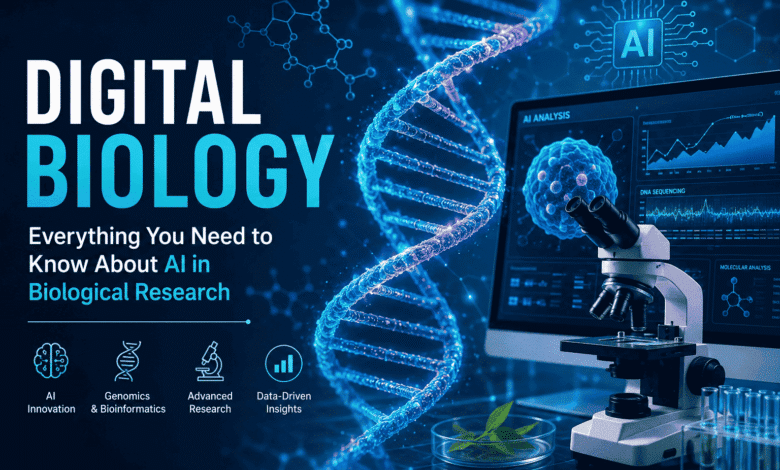
Biology has always been a field driven by observation, experimentation, and discovery. For decades, scientists relied on laboratory experiments, manual data analysis, and years of research to understand living organisms. Today, that process is changing dramatically with the rise of Artificial Intelligence (AI). By combining biology with advanced computing, researchers can analyse enormous amounts of biological data, predict complex biological processes, and accelerate scientific breakthroughs faster than ever before.
This new era of innovation is known as Digital Biology. It integrates AI, machine learning, bioinformatics, cloud computing, and big data analytics to create smarter, faster, and more accurate approaches to biological research. From discovering life-saving drugs to decoding the human genome and developing personalised treatments, Digital Biology is transforming healthcare, biotechnology, agriculture, and environmental science.
In this article, we’ll explore what Digital Biology is, how AI is reshaping biological research, its real-world applications, benefits, challenges, and what the future holds for this rapidly evolving field.
What Is Digital Biology?
Digital Biology is the use of digital technologies to understand, analyse, and model biological systems. Instead of relying solely on laboratory experiments, scientists use AI-powered software, computational models, and biological databases to simulate complex biological processes and make data-driven predictions.
Digital Biology combines multiple technologies, including:
- Artificial Intelligence (AI)
- Machine Learning (ML)
- Bioinformatics
- Genomics
- Cloud Computing
- Data Analytics
- High-Performance Computing
These technologies help researchers analyse billions of biological data points quickly, identify hidden patterns, and generate insights that would be difficult or impossible to achieve using traditional research methods alone.
Why AI Is Transforming Biological Research
Modern biological research generates an enormous volume of data every day. DNA sequencing, medical imaging, laboratory experiments, protein structures, and clinical records create datasets that are too large and complex for manual analysis.
Artificial Intelligence solves this challenge by processing vast amounts of information in a fraction of the time required by traditional methods.
AI enables researchers to:
- Analyse genomic data rapidly
- Detect disease-causing genetic mutations
- Predict protein structures
- Identify potential drug candidates
- Automate laboratory experiments
- Improve research accuracy
- Reduce research costs
Instead of spending months analysing biological data manually, AI algorithms can perform similar tasks in hours or even minutes, allowing scientists to focus on innovation rather than repetitive analysis.
How Digital Biology Works
Digital Biology relies on advanced computational techniques to convert biological information into digital data that can be analysed by AI.
The typical workflow includes:
1. Data Collection
Researchers gather information from:
- DNA sequencing
- Medical imaging
- Laboratory experiments
- Electronic health records
- Protein databases
- Clinical trials
2. Data Processing
The collected biological data is cleaned, organised, and prepared for analysis.
3. AI Analysis
Machine learning models identify hidden relationships, recognise patterns, and generate predictions from the data.
4. Biological Validation
Scientists verify AI-generated insights through laboratory experiments and clinical research.
This combination of computational intelligence and experimental validation makes biological research more efficient and reliable.
Major Applications of AI in Digital Biology
1. Drug Discovery
Developing a new medicine traditionally takes more than a decade and requires billions of dollars in investment. AI is significantly reducing this timeline.
AI helps pharmaceutical researchers by:
- Screening millions of chemical compounds
- Predicting drug-target interactions
- Identifying promising drug candidates
- Reducing failed experiments
- Improving clinical trial design
This accelerates the development of safer and more effective medicines while lowering research costs.
2. Genomics and Precision Medicine
The human genome contains billions of DNA base pairs, making manual analysis extremely difficult.
AI helps researchers:
- Detect genetic mutations
- Identify inherited diseases
- Predict disease risk
- Develop personalised treatments
- Improve genetic counselling
Precision medicine uses these insights to tailor treatments according to each patient’s unique genetic profile, leading to better healthcare outcomes.
3. Protein Structure Prediction
Proteins are essential molecules responsible for nearly every biological process in the human body.
Understanding their three-dimensional structure is crucial for:
- Drug development
- Disease research
- Vaccine design
- Enzyme engineering
AI models can accurately predict protein structures, enabling researchers to accelerate biomedical discoveries and better understand disease mechanisms.
4. Disease Diagnosis
Artificial Intelligence is improving disease diagnosis by analysing medical images, pathology slides, and patient data.
AI supports healthcare professionals by:
- Detecting cancer at earlier stages
- Identifying rare diseases
- Improving diagnostic accuracy
- Reducing human error
- Supporting faster clinical decisions
These advancements are helping doctors provide more accurate and timely treatment.
5. Laboratory Automation
Modern research laboratories increasingly rely on AI-powered robotics to automate repetitive scientific tasks.
Automated laboratories can:
- Prepare biological samples
- Perform experiments
- Analyse laboratory results
- Optimise research protocols
- Operate continuously with minimal supervision
This allows researchers to spend more time interpreting results and developing new scientific ideas.
6. Synthetic Biology
Synthetic biology involves designing and engineering biological systems for useful purposes.
AI assists scientists by:
- Designing genetic circuits
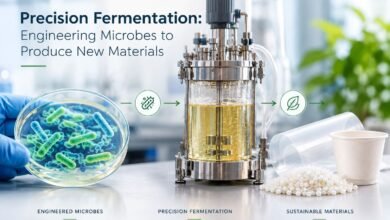
- Engineering microorganisms
- Producing sustainable biofuels
- Developing biodegradable materials
- Creating next-generation vaccines
The combination of AI and synthetic biology is opening new possibilities for healthcare, agriculture, and environmental sustainability.
Benefits of Digital Biology
Digital Biology offers numerous advantages over traditional biological research.
Faster Scientific Discoveries
AI dramatically reduces the time required to analyse biological datasets, helping researchers reach conclusions more quickly.
Improved Accuracy
Machine learning algorithms detect complex biological patterns that may be overlooked during manual analysis.
Lower Research Costs
Simulation and predictive modelling reduce the number of costly laboratory experiments required.
Personalised Healthcare
AI enables customised treatments based on an individual’s genetics, lifestyle, and medical history.
Better Disease Prediction
Predictive analytics helps identify health risks before symptoms develop, allowing earlier intervention.
Increased Research Productivity
Automation allows scientists to focus on innovation rather than repetitive laboratory work.
Industries Benefiting from Digital Biology
Digital Biology is transforming multiple industries, including:
- Biotechnology
- Pharmaceuticals
- Healthcare
- Agriculture
- Food Science
- Environmental Research
- Synthetic Biology
- Genomics
- Biomedical Engineering
- Public Health
These industries use AI to improve efficiency, reduce costs, and accelerate innovation.
Challenges of Digital Biology
Despite its tremendous potential, Digital Biology also faces several challenges.
Data Privacy
Genetic and medical information must be securely stored and protected from unauthorised access.
Ethical Concerns
Researchers must ensure responsible use of AI in areas such as gene editing, patient privacy, and automated decision-making.
Data Quality
AI systems require accurate, diverse, and high-quality biological data to produce reliable results.
Regulatory Compliance
Healthcare applications must meet strict regulatory standards before they can be safely used in clinical practice.
Human Oversight
AI is a powerful research tool, but human scientists remain essential for validating results, interpreting findings, and making ethical decisions.
The Future of Digital Biology
The future of Digital Biology is incredibly promising. As AI technologies continue to evolve, biological research will become even more data-driven, precise, and collaborative.
Future developments may include:
- AI-designed medicines
- Digital twins of human organs
- Fully automated research laboratories
- Predictive disease prevention
- Real-time genomic analysis
- AI-powered personalised healthcare
- Advanced synthetic biology
- Faster vaccine development
These innovations have the potential to revolutionise medicine, improve global health, and address some of the world’s most pressing biological challenges.
Conclusion
Digital Biology represents one of the most exciting advancements in modern science. By combining artificial intelligence with biological research, scientists can analyse complex biological systems faster, improve the accuracy of discoveries, and accelerate innovations across healthcare, biotechnology, agriculture, and environmental science.
From drug discovery and precision medicine to genomics and laboratory automation, AI is reshaping the way researchers understand life itself. While challenges such as data privacy, ethics, and regulation remain, the future of Digital Biology is filled with opportunities to improve human health, develop sustainable technologies, and unlock new scientific breakthroughs.
As AI continues to evolve, Digital Biology will play a critical role in driving the next generation of biological research and transforming the future of life sciences.
Frequently Asked Questions (FAQs)
1. What is Digital Biology?
Digital Biology combines biology with AI, machine learning, bioinformatics, and data analytics to study and understand biological systems more efficiently.
2. How is AI changing biological research?
AI accelerates biological research by analysing massive datasets, predicting protein structures, automating laboratory tasks, and supporting faster scientific discoveries.
3. What are the applications of Digital Biology?
Applications include drug discovery, genomics, precision medicine, disease diagnosis, synthetic biology, laboratory automation, and protein structure prediction.
4. How does AI improve drug discovery?
AI identifies promising drug candidates, predicts molecular interactions, and reduces the time and cost of developing new medicines.