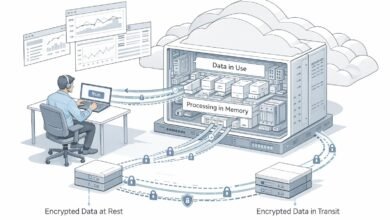
The Internet of Things (IoT) has become an important part of modern life and business. Smart cameras, wearable devices, connected appliances, industrial sensors, smart locks, medical equipment, vehicles, and other connected technologies can collect, process, and exchange information automatically.
While IoT provides greater convenience, automation, and operational efficiency, it also creates new cybersecurity challenges. Every connected device can potentially become an entry point for attackers if it is poorly configured, outdated, or inadequately protected.
The challenge becomes even greater when organizations manage hundreds or thousands of connected devices across different locations. A single vulnerable device can potentially expose a larger network if appropriate security controls are not in place.
For this reason, IoT cybersecurity should not be treated as a one-time configuration task. It should be considered throughout the entire lifecycle of a device, from procurement and deployment to maintenance and secure retirement.
What Is IoT Cybersecurity?
IoT cybersecurity is the practice of protecting connected devices, networks, applications, cloud platforms, and the data exchanged between them from unauthorized access, attacks, manipulation, and disruption.
Unlike traditional computers, IoT devices often have different hardware capabilities, operating systems, communication protocols, and update mechanisms. Some devices may remain deployed for many years, making long-term vulnerability management particularly important.
Effective IoT cybersecurity therefore requires a broader approach that includes:
- Device security
- Network security
- Identity and access management
- Firmware and software security
- Data protection
- Cloud and API security
- Vulnerability management
- Continuous monitoring
- Incident response
- Secure device decommissioning
Security agencies such as ENISA emphasize that IoT security should cover the entire product and service lifecycle rather than focusing only on the finished device.
Why IoT Devices Need Stronger Cybersecurity
IoT devices are increasingly connected to business networks, cloud applications, mobile applications, and other systems. This interconnected environment can create multiple paths for attackers.
For example, imagine a company using connected cameras, smart access-control systems, environmental sensors, and industrial monitoring equipment. If one poorly secured device is compromised, an attacker may attempt to use it as a stepping stone toward other systems.
IoT attacks can result in:
- Unauthorized access to devices
- Theft of sensitive information
- Privacy violations
- Network intrusion
- Malware infections
- Distributed denial-of-service attacks
- Service disruption
- Manipulation of connected equipment
- Financial losses
- Reputational damage
The risk is particularly significant in industrial environments where compromised connected equipment can affect physical operations as well as digital systems.
Common IoT Security Vulnerabilities
Weak or Default Passwords
One of the most common IoT security problems is the continued use of weak or default credentials.
If a device is deployed with a factory-set password and that password is never changed, an attacker may be able to gain access using publicly known or easily guessed credentials.
Organizations should replace default credentials before devices are placed into production and use strong, unique authentication wherever supported.
Outdated Firmware
IoT devices depend on firmware to control their functionality. If a manufacturer discovers a vulnerability and releases a security update, devices that remain unpatched may continue to be exposed.
Firmware management should therefore be part of an organization’s regular cybersecurity program.
Poor Network Configuration
A connected device does not necessarily need access to every system on a network.
When IoT devices are placed on the same network as sensitive applications, databases, or employee systems, a compromised device can create additional opportunities for lateral movement.
Unsecured Communication
IoT devices constantly exchange information with gateways, applications, cloud platforms, and other devices.
If communication is not properly protected, attackers may attempt to intercept, manipulate, or exploit transmitted information.
Insecure APIs
Many modern IoT solutions rely on APIs to communicate with mobile applications and cloud platforms.
Weak authentication, excessive permissions, poor input validation, or improperly protected API endpoints can expose connected systems.
Lack of Device Visibility
Organizations cannot effectively secure devices they do not know about.
Unapproved smart devices, forgotten sensors, outdated equipment, and shadow IoT deployments can create security gaps.
How to Improve IoT Device Cybersecurity
1. Maintain a Complete IoT Inventory
The first step toward better IoT security is knowing what devices exist.
Create and maintain an inventory containing information such as:
- Device manufacturer
- Model
- Serial number
- Firmware version
- Location
- Network address
- Device owner
- Connected applications
- Security status
- Support and end-of-life information
The inventory should be updated whenever devices are added, removed, replaced, or upgraded.
This gives security teams better visibility and makes vulnerability management more effective.
2. Change Default Credentials
Never assume that factory-default credentials are safe.
Change default passwords before deploying devices and avoid reusing the same password across multiple devices.
Where supported, organizations should also consider stronger authentication mechanisms, including certificates, cryptographic keys, or centralized identity controls.
3. Use Network Segmentation
Network segmentation can reduce the potential impact of a compromised IoT device.
Instead of allowing IoT devices to communicate freely with an entire corporate network, place them into appropriately controlled network segments.
For example:
IoT Devices → Dedicated IoT Network → Security Controls → Approved Applications
Firewall rules and access policies can then restrict which systems each device is allowed to communicate with.
This approach can make it more difficult for attackers to move from a compromised IoT device into sensitive parts of the network.
4. Follow the Principle of Least Privilege
IoT devices should receive only the access they actually require.
A temperature sensor, for example, may need to send data to a monitoring platform but should not need access to employee databases.
Applying least privilege reduces unnecessary exposure and limits the potential consequences of a compromised device.
5. Keep Firmware and Software Updated
Regular updates are essential for addressing known vulnerabilities.
Organizations should establish a structured patch-management process that includes:
- Monitoring vendor security announcements
- Identifying affected devices
- Testing updates when necessary
- Deploying security patches
- Verifying successful installation
- Tracking devices that cannot be updated
ENISA’s IoT guidance specifically highlights software and firmware updates as an important part of IoT security practices.
Devices that no longer receive security updates should be reviewed and, where appropriate, replaced or isolated.
6. Encrypt IoT Communications
Sensitive information should be protected while it travels between devices, applications, gateways, and cloud platforms.
Encryption helps reduce the risk of unauthorized parties accessing information during transmission.
Organizations should also protect encryption keys appropriately and avoid relying on outdated or insecure communication mechanisms.
7. Disable Unnecessary Features
Many IoT devices include services and features that may not be required in a particular environment.
Unused services can increase the attack surface.
Security teams should review device configurations and disable unnecessary:
- Network services
- Remote-access functions
- User accounts
- Ports
- Protocols
- Debugging interfaces
- Administrative features
A smaller attack surface is generally easier to monitor and protect.
8. Implement Strong Device Identity
Organizations should be able to determine which devices are connecting to their environment.
Strong device identity can help distinguish authorized devices from unauthorized ones.
Depending on the technology and environment, organizations can use:
- Digital certificates
- Cryptographic credentials
- Hardware-backed identities
- Secure elements
- Device authentication systems
Device identity becomes especially important in large IoT deployments where manually managing individual devices is difficult.
9. Monitor IoT Devices Continuously
IoT security should continue after deployment.
Security teams should monitor device activity and investigate unusual behavior such as:
- Unexpected outbound connections
- Large increases in network traffic
- Repeated failed authentication attempts
- Communication with unknown destinations
- Unexpected configuration changes
- Attempts to access unauthorized systems
- Unusual device activity
Continuous monitoring can help security teams identify compromised devices more quickly.
10. Secure IoT APIs and Cloud Platforms
Modern IoT systems rarely operate in isolation. Devices often communicate with cloud platforms through APIs.
Therefore, protecting the physical device alone is not enough.
Organizations should also secure:
- API authentication
- API authorization
- Cloud accounts
- Application interfaces
- Data storage
- Administrative dashboards
- Access tokens
- Integration points
A weakness in an IoT cloud platform can potentially affect a large number of connected devices.
IoT Security Should Start Before Purchase
Cybersecurity should be considered before an organization purchases an IoT product.
Instead of choosing devices based only on price and functionality, organizations should evaluate the vendor’s security capabilities.
Important questions include:
- Does the device receive security updates?
- How long will the manufacturer provide support?
- Does the device support secure firmware updates?
- Can default credentials be changed?
- Does it support encryption?
- How is the device authenticated?
- Does the vendor have a vulnerability disclosure process?
- What happens when the device reaches end of support?
- Can the device be securely reset or decommissioned?
Security-by-design is particularly important because vulnerabilities can become difficult and expensive to address after large-scale deployment. ENISA recommends considering security across requirements, design, development, maintenance, and disposal rather than treating security as an end-stage activity.
Protect the IoT Supply Chain
IoT security does not depend solely on the device manufacturer.
Modern connected products may contain third-party software, hardware components, libraries, cloud services, and external integrations.
This creates supply-chain risks.
Organizations should therefore evaluate vendors and suppliers based on:
- Security practices
- Vulnerability management
- Software update policies
- Component security
- Incident-response capabilities
- Product support periods
- Security documentation
ENISA has specifically identified third-party components and vulnerability management as important IoT supply-chain considerations.
Secure IoT Devices in Smart Homes
Consumers can also take practical steps to improve the security of smart devices.
For example:
- Change the device’s default password.
- Use strong Wi-Fi security.
- Install available updates.
- Disable unnecessary remote-access features.
- Review privacy settings.
- Place smart devices on a separate network when possible.
- Remove devices that are no longer supported.
- Use different passwords for different online services.
ENISA’s consumer guidance similarly recommends changing default credentials, installing updates, disabling unnecessary features, reviewing privacy settings, and separating smart devices from other systems where possible.
Securing Industrial IoT
Industrial IoT requires additional attention because connected devices may interact with machinery and physical processes.
Factories, warehouses, energy facilities, transportation systems, and other industrial environments can contain large numbers of connected sensors and control systems.
A cybersecurity incident could potentially cause:
- Production downtime
- Equipment damage
- Safety problems
- Data loss
- Operational disruption
- Financial losses
Industrial organizations should therefore combine IT security with operational technology security.
Important measures include network segmentation, controlled remote access, asset inventory, continuous monitoring, vulnerability management, and tested incident-response procedures.
What Role Does AI Play in IoT Security?
Artificial intelligence is becoming increasingly useful for analyzing large volumes of IoT security data.
A security platform can use machine-learning techniques to identify unusual patterns that may be difficult to detect manually.
For example, an IoT monitoring system might flag a device that suddenly:
- Communicates with an unfamiliar server
- Generates unusually high traffic
- Attempts repeated logins
- Changes its normal communication pattern
- Accesses systems it normally does not contact
However, AI should complement—not replace—security professionals. Automated systems can produce false positives or miss unusual attacks, so human investigation and well-designed security processes remain important.
Create an IoT Incident Response Plan
Even strong security controls cannot guarantee that an IoT device will never be compromised.
Organizations should prepare for incidents before they occur.
An IoT incident-response plan should define:
Identify: Determine which device or system is affected.
Isolate: Restrict the compromised device’s network access.
Investigate: Examine logs, traffic, configurations, and other evidence.
Remediate: Patch, reset, rebuild, or replace the affected device.
Review: Determine whether other devices are affected.
Improve: Update security controls based on lessons learned.
Having a predefined response process can reduce confusion and shorten recovery time during an incident.
Secure IoT Devices Throughout Their Lifecycle
IoT security should follow the device from its initial purchase to its eventual retirement.
A practical lifecycle looks like this:
Plan → Purchase → Deploy → Authenticate → Monitor → Update → Assess → Retire
At the planning stage, security requirements should be defined.
During deployment, devices should be securely configured and authenticated.
During operation, they should be monitored and updated.
At the end of their useful life, credentials, certificates, keys, and sensitive information should be removed appropriately before the device is retired.
This lifecycle approach is consistent with ENISA’s emphasis on security throughout IoT development, deployment, maintenance, and disposal.
IoT Cybersecurity Checklist
Before deploying or reviewing an IoT environment, ask:
- Do we know every connected device on the network?
- Have default credentials been removed?
- Are devices strongly authenticated?
- Are IoT devices separated from sensitive systems?
- Is unnecessary network access blocked?
- Are firmware updates regularly applied?
- Is sensitive communication encrypted?
- Are APIs properly secured?
- Are devices continuously monitored?
- Do vendors provide security support?
- Are unsupported devices identified?
- Is there an IoT incident-response plan?
- Can devices be securely decommissioned?
If the answer to several of these questions is no, the organization should prioritize an IoT security review.
Conclusion
IoT technology can deliver significant benefits, but every connected device also introduces potential cybersecurity risks. Protecting IoT environments requires more than installing antivirus software or changing a password once.
Organizations need a comprehensive approach that combines strong authentication, network segmentation, least-privilege access, secure communications, firmware management, continuous monitoring, supply-chain security, and lifecycle management.
The most effective strategy is to build security into IoT deployments from the beginning. By evaluating devices before purchase, configuring them securely, monitoring them throughout their operational life, and properly retiring unsupported equipment, organizations can reduce their attack surface and build a more resilient connected environment.
As IoT adoption continues to expand, cybersecurity will become an essential part of how connected technologies are designed, deployed, and managed. A secure IoT ecosystem is not simply about protecting individual devices—it is about protecting the entire network of devices, applications, people, data, and services that make connected technology possible.
Frequently Asked Questions
1. What is IoT cybersecurity?
IoT cybersecurity is the practice of protecting connected devices, networks, applications, and data from unauthorized access, malware, attacks, and other security threats. It includes device authentication, encryption, firmware updates, network segmentation, monitoring, and access control.
2. Why is IoT security important?
IoT security is important because connected devices can become entry points for cyberattacks. A compromised IoT device may expose sensitive information, provide access to other systems, disrupt operations, or be used as part of a larger cyberattack.
3. How can I secure my IoT devices?
You can improve IoT security by changing default passwords, keeping firmware updated, enabling encryption, using strong authentication, disabling unnecessary services, separating IoT devices from sensitive networks, and monitoring unusual device activity.
4. What are the most common IoT security threats?
Common IoT security threats include weak passwords, outdated firmware, insecure network connections, malware, unauthorized access, vulnerable APIs, data interception, device hijacking, and denial-of-service attacks.