Making the right decision is not always easy, especially when a business is dealing with complex machines, large facilities, changing customer needs, or constantly moving data. A decision that looks good on paper can sometimes create unexpected problems once it is put into practice.
This is where digital twin technology is becoming increasingly useful.
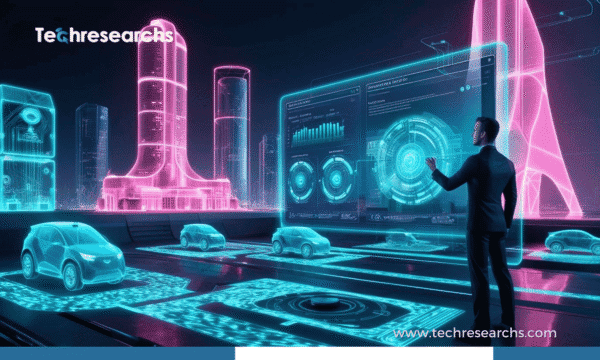
A digital twin creates a virtual representation of a real-world object, system, or environment and connects it with relevant data. Instead of simply looking at what happened in the past, organizations can use digital twins to understand what is happening now, test possible changes, and explore what might happen next. IBM describes digital twins as virtual representations that can use real-time data to reflect the behavior and condition of their physical counterparts.
From manufacturing plants to smart buildings and energy networks, digital twins are giving businesses a new way to approach complex decisions.
What Is a Digital Twin?
Think of a digital twin as a living digital version of something that exists in the physical world.
For example, imagine a factory with hundreds of machines. Sensors attached to those machines can collect information such as temperature, vibration, pressure, energy consumption, and operating speed. That information can feed a digital model of the factory.
The virtual model can then help managers understand how the equipment is performing and how changes to one part of the factory could affect another.
Modern digital-twin platforms can connect IoT devices and business systems with digital models, allowing organizations to work with live information rather than relying entirely on static reports.
Why Digital Twins Matter for Decision-Making
Businesses make decisions every day about production, maintenance, investments, staffing, energy usage, logistics, and product development.
The challenge is that many of these decisions involve uncertainty.
Digital twins help reduce some of that uncertainty by allowing teams to examine real-world conditions through a digital environment.
Instead of asking:
“What do we think will happen?”
Teams can begin asking:
“What could happen if we make this change?”
That difference can have a major impact on business planning.
1. Making Decisions With Real-Time Data
One of the biggest advantages of digital twins is visibility.
Traditional reports may tell a manager what happened yesterday or last month. A connected digital twin can provide a much more current view of an asset or environment.
For instance, if a machine begins operating at an unusual temperature, the change can be detected through incoming sensor data. Teams can investigate the issue before it develops into a larger operational problem.
This allows decision-makers to respond based on current conditions instead of assumptions.
2. Predicting Problems Before They Become Expensive
Equipment failure can be costly.
A broken machine can stop production, delay deliveries, increase repair costs, and affect customers. Digital twins can help organizations monitor equipment behavior and identify patterns that may indicate developing problems.
When combined with analytics and AI, digital twins can support predictive maintenance by helping teams estimate when equipment may require attention.
The goal is simple: fix the right problem at the right time instead of waiting for something to break.
3. Testing Ideas Without Risking the Physical System
Imagine a factory manager wants to increase production speed.
Changing the real production line immediately could be risky. It might create bottlenecks, increase equipment stress, or reduce product quality.
A digital twin provides another option.
The manager can test different scenarios in the virtual environment first. Manufacturing organizations can use digital twins and simulation to evaluate product designs, factory layouts, and process changes before committing physical resources.
This makes experimentation safer and can help teams compare several options before choosing one.
4. Improving Product Development
Digital twins can also be useful long before a product reaches customers.
Engineers can create digital representations of products and test how they may behave under different conditions. This can help identify weaknesses earlier in the development process.
Instead of repeatedly building physical prototypes for every possible idea, teams can use digital models to explore more possibilities before moving to physical testing.
This can save time while giving engineers more room to experiment.
5. Managing Energy and Resources More Efficiently
Energy efficiency has become an important business priority.
A digital twin can help organizations understand how energy is being used across a building, factory, or other connected environment.
For example, a smart-building model could combine information about occupancy, temperature, equipment performance, and energy consumption. Managers could then evaluate different operating strategies and identify opportunities to reduce unnecessary energy use.
The same approach can be applied to water, materials, equipment utilization, and other resources.
6. Supporting Smarter Supply Chains
Supply chains are affected by many moving parts.
A delay at one location can create problems somewhere else. Digital twins can help organizations model relationships between assets, facilities, transportation, inventory, and other operational elements.
By bringing information together, businesses can better understand how changes in one area may affect the wider system.
This can be particularly useful when companies need to compare different logistics or inventory strategies.
The Role of AI in Digital Twins
Digital twins become even more powerful when artificial intelligence is added to the picture.
A digital twin can collect and organize large amounts of information. AI can help analyze that information, detect patterns, identify unusual behavior, and generate predictions.
For example, AI could help answer questions such as:
- Which machine is showing signs of declining performance?
- What could happen if production increases?
- Which maintenance task should be prioritized?
- How might a change in energy usage affect operating costs?
- What could happen if a component fails?
- Which operating scenario is likely to be more efficient?
IBM notes that newer digital-twin approaches increasingly combine AI and analytics for predictive analysis, decision optimization, anomaly detection, and increasingly autonomous operations.
Still, AI should support decision-making rather than automatically replace human judgment in every situation.
Digital Twins Across Different Industries
Digital twin technology is flexible enough to be used across many industries.
Manufacturing
Manufacturers can create digital representations of machines, production lines, and entire factories. These models can support maintenance, production planning, product development, and process optimization.
Healthcare
Digital-twin concepts are being explored for medical devices, facilities, research, and personalized healthcare applications. The technology has potential to help professionals examine complex scenarios while maintaining appropriate human oversight.
Energy
Energy organizations can use digital twins to monitor assets and study how systems respond to changing operating conditions.
Transportation
Digital twins can represent vehicles, infrastructure, logistics networks, and transportation environments. This can help organizations examine maintenance requirements and operational changes.
Smart Cities
Cities are particularly complex environments because buildings, roads, transportation, utilities, weather, and people interact continuously. Digital twins can bring different data sources together to help planners understand these relationships.
Digital Twins and IoT: How They Work Together
The Internet of Things is an important part of many digital-twin systems.
Sensors collect information from physical equipment or environments. That information is transferred through connected systems and used to update the digital representation.
A simplified version looks like this:
Physical World → Sensors → Data → Digital Twin → Analytics/AI → Business Decision
The process can continue as new information becomes available.
This creates a feedback loop where the digital model becomes a useful source of information for understanding and improving the physical environment.
Digital Twin vs. Simulation
Digital twins and simulations are related, but they are not exactly the same.
A simulation generally creates a model to study how a system might behave under particular conditions.
A digital twin usually goes a step further by maintaining a connection with the real-world asset or environment through data.
In simple terms:
Simulation: “What might happen under these conditions?”
Digital twin: “What is happening now, and what could happen if we change something?”
Organizations can use both technologies together. Digital-twin data can provide real-world context, while simulation can help explore possible future scenarios.
Challenges Businesses Need to Consider
Digital twins offer significant opportunities, but they also come with challenges.
Data Quality
Poor-quality data can lead to poor conclusions. Sensors, databases, and connected systems need to provide reliable information.
Integration
A business may already use multiple software platforms, machines, databases, and legacy systems. Connecting all of them can require considerable technical work.
Cybersecurity
Because digital twins can connect to operational technology and IoT systems, security needs to be considered from the beginning. Unauthorized access or manipulated data could potentially affect important decisions.
Cost
Building a sophisticated digital twin can require investment in sensors, software, cloud infrastructure, data engineering, and skilled professionals.
That is why companies should avoid trying to create an enormous digital twin immediately. Starting with one valuable use case is often more practical.
How Businesses Can Start Using Digital Twins
A successful digital-twin project does not necessarily begin with the most complicated technology.
It begins with a useful question.
For example:
“Why is this machine experiencing unexpected downtime?”
Or:
“How can we reduce energy consumption in this facility?”
Once the business problem is clear, the organization can identify the data required to answer it.
A practical approach is:
- Identify a specific business problem.
- Choose the asset, process, or environment to model.
- Determine what data is already available.
- Connect relevant sensors and systems.
- Build and test the digital model.
- Add analytics or AI where they provide genuine value.
- Compare predictions with real-world results.
- Expand the system after proving its usefulness.
What the Future Looks Like
Digital twins are moving beyond simple monitoring.
As AI, IoT, cloud computing, edge computing, and simulation technologies continue to develop, digital twins can become increasingly useful for predicting events and recommending actions.
The next stage could involve more intelligent systems that continuously evaluate conditions, identify risks, compare possible responses, and recommend the most suitable action.
Some advanced digital-twin systems may eventually support more autonomous operations, particularly in controlled industrial and infrastructure environments.
However, greater automation also makes responsible data management, cybersecurity, validation, and human oversight more important.
Final Thoughts
Digital twins are more than impressive 3D models.
Their real value comes from connecting the digital world with what is actually happening in the physical world. When reliable data, analytics, AI, and simulation work together, organizations can gain a clearer understanding of their operations and make decisions with greater confidence.
Whether the goal is reducing machine downtime, improving product design, managing energy, optimizing a factory, or planning a smarter city, digital twins can provide a practical way to explore possibilities before making costly real-world changes.
The companies that get the most value from this technology will not necessarily be the ones with the biggest digital-twin projects. They will be the ones that start with meaningful problems, use trustworthy data, and turn digital insights into better decisions.
Frequently Asked Questions
What is a digital twin?
A digital twin is a virtual model of a real-world object, system, or process that uses data to monitor and understand its physical counterpart.
How do digital twins improve decision-making?
Digital twins help businesses analyze real-time data, test different scenarios, identify potential issues, and make more informed decisions.
Which industries use digital twin technology?
Digital twins are used in industries such as manufacturing, healthcare, energy, transportation, construction, and smart-city development.
What role does AI play in digital twins?
AI can analyze digital-twin data to identify patterns, predict equipment problems, detect unusual activity, and provide insights for better decisions.