Technical support has traditionally depended on phone calls, emails, screenshots, and video meetings. While these methods still work for many problems, they can become frustrating when someone needs help fixing a physical device, machine, network system, or piece of equipment.
This is where mixed reality (MR) is creating a new opportunity.
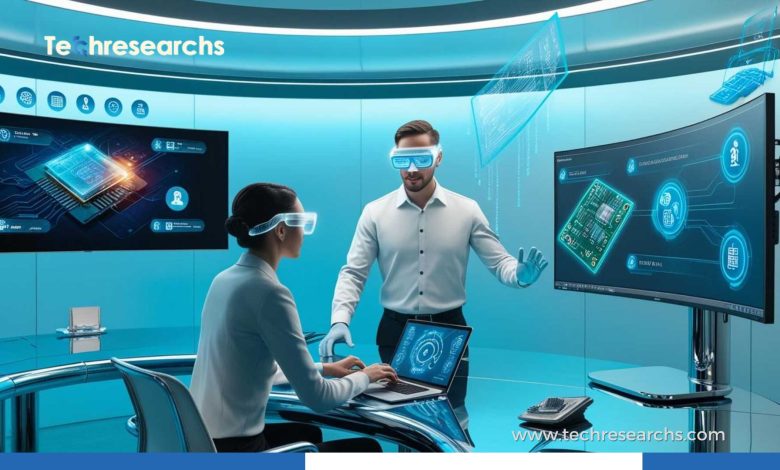
Mixed reality allows digital information to interact with the physical world. When used for remote assistance, it can help a technician see what is happening at another location and guide the person on-site through a problem using visual instructions.
Instead of saying, “Check the cable next to the panel,” a remote expert can point to the exact cable through a shared digital view. That simple change can make technical support much easier to understand.
What Is Mixed Reality Remote Assistance?
Mixed reality remote assistance combines real-world environments with digital information and remote communication.
An employee or customer at a physical location can use a smartphone, tablet, smart glasses, or an MR headset to show the problem to a remote expert. Depending on the platform and hardware, the expert may be able to add digital markers, arrows, diagrams, or other visual instructions to the user’s view.
The idea is straightforward: bring remote expertise to the location where the problem is happening.
This can be particularly useful when the person requesting help does not have advanced technical knowledge.
Why Traditional Remote Support Can Fall Short
Imagine a field worker trying to repair an unfamiliar machine.
A support technician might ask:
“Can you see the control box?”
“Yes.”
“Now look for the second connector.”
“Which one?”
This kind of conversation can take several minutes—or much longer—because both people may describe the same object differently.
A screenshot or video call can improve the situation, but the technician still has to explain exactly what the worker should look at.
MR can reduce this communication gap by allowing the expert to provide visual guidance directly within the worker’s environment.
That means less guessing and more direct instruction.
How Mixed Reality Makes Remote Support Different
The value of MR is not simply that it provides another way to make a video call. Its real advantage comes from combining communication with spatial information.
During an MR support session, a technician may be able to:
- See equipment through the worker’s camera.
- Highlight a particular component.
- Place digital arrows or markers in the user’s field of view.
- Display repair instructions.
- Share technical diagrams or 3D models.
- Explain procedures while watching the worker perform them.
- Collaborate with another specialist remotely.
This creates a more interactive support experience than a conventional phone or video conversation.
Where MR Remote Assistance Is Being Used
The technology can support many industries, especially those involving physical equipment and on-site workers.
Manufacturing
Manufacturing environments often contain complex machinery that requires regular inspection and maintenance.
A technician at a central support location can assist a worker on the factory floor without traveling to the facility. Visual guidance can help identify components, explain maintenance steps, or support troubleshooting.
This can be especially valuable when a company has experienced specialists but only a small number of them.
Construction
Construction projects involve constant coordination between workers, engineers, architects, and contractors.
MR can help remote specialists understand what is happening at a construction site. Workers may also use digital information alongside the physical structure to make certain tasks easier to understand.
Telecommunications
Field technicians working with networking and telecommunications equipment often need specialist assistance.
Instead of waiting for an expert to arrive, a field worker can potentially connect with a remote specialist and receive visual guidance while working on the equipment.
Automotive Services
Vehicle diagnostics and repairs can sometimes involve complicated systems.
MR can help experienced technicians guide others through inspection and maintenance tasks, particularly when a specialist is not available at the service location.
Energy and Utilities
Power facilities, renewable-energy installations, and utility infrastructure can be difficult and expensive to access.
Remote assistance can allow specialists to support field employees while reducing unnecessary travel to distant locations.
Healthcare
Healthcare organizations can explore MR for remote collaboration, training, and specialist support. However, medical applications require strict attention to patient privacy, cybersecurity, safety, and applicable regulations.
The Growing Role of AI
Mixed reality becomes even more interesting when combined with artificial intelligence.
AI can help interpret information captured through cameras and sensors. Depending on the system, it may assist with identifying equipment, finding relevant documentation, recognizing potential issues, or recommending troubleshooting steps.
For example, a field worker could show a machine to an AI-enabled support system. The system might recognize the equipment and retrieve the appropriate maintenance information.
A human technician can then review the information and provide the final guidance.
This combination could eventually make technical support more proactive rather than purely reactive.
Benefits of Mixed Reality for Tech Support
The biggest benefit of MR is better communication between the person experiencing the problem and the person trying to solve it.
Faster Problem Resolution
When experts can see the problem and provide visual instructions, technicians may spend less time trying to understand what the user is describing.
Fewer Site Visits
A specialist does not necessarily need to travel every time an employee encounters a technical issue. Remote guidance can sometimes solve the problem without an additional visit.
Better Knowledge Transfer
Experienced employees can share their knowledge with newer workers while watching them perform tasks remotely.
Over time, this can help organizations preserve valuable technical knowledge.
More Effective Training
MR can also be used as a training tool. New employees can learn how equipment works while receiving instructions from experienced technicians.
Reduced Downtime
For businesses that depend on machinery and infrastructure, every hour of downtime can be expensive. Faster access to technical expertise may help organizations restore operations sooner.
What Are the Challenges?
MR is promising, but it is not a magic solution.
Hardware Costs
Professional MR headsets and supporting equipment can require a significant investment. Businesses need to consider whether the expected operational savings justify the cost.
Internet Reliability
Remote assistance depends heavily on connectivity. A poor connection can introduce delays, reduce video quality, and make real-time collaboration difficult.
Security and Privacy
A remote support session may capture sensitive information about a company’s facilities, products, customers, or employees.
Organizations should therefore establish appropriate security controls, user permissions, encryption practices, and data-retention policies.
Employee Adoption
New technology can take time to become part of everyday work.
If an MR system is complicated or uncomfortable, employees may avoid using it. Successful implementations need simple interfaces, appropriate training, and clear business benefits.
Integration With Existing Systems
MR should ideally work with the tools a business already uses. Connecting it with help-desk software, asset-management systems, technical documentation, CRM platforms, or enterprise systems can make the technology much more useful.
MR vs. Video Calls for Technical Support
A normal video call is useful when a technician simply needs to see a problem.
MR goes one step further by adding spatial interaction.
With a video call, the technician might say:
“Move the camera closer to the panel.”
With MR, the technician may be able to place a digital indicator on the relevant area.
That difference becomes important when instructions involve specific physical locations.
However, MR will not replace traditional video support in every situation. For simple questions, a phone call or video meeting may still be faster and cheaper.
The right technology depends on the complexity of the problem.
What the Future of MR Remote Assistance Could Look Like
The next stage of remote assistance is likely to combine MR with AI, computer vision, cloud platforms, and real-time data.
A future support system could potentially recognize a machine, access its service history, identify the relevant component, and recommend a troubleshooting procedure before a human expert joins the session.
Remote experts could also work with 3D representations of equipment, making collaboration more detailed and interactive.
As wearable devices become smaller and easier to use, MR may become less of a specialized technology and more of a normal tool for field service teams.
How Businesses Can Start Using MR
Companies do not need to transform their entire support operation immediately.
A better approach is to start with one clear use case.
For example, a business could choose a maintenance task that frequently requires an expert to travel to another location. It could then test whether MR allows the expert to solve some of those cases remotely.
Businesses should measure practical results such as:
- Time required to resolve an issue
- Number of unnecessary site visits
- Equipment downtime
- First-time repair success
- Employee satisfaction
- Training time
- Overall support costs
If the pilot produces measurable improvements, the company can gradually expand the technology.
Final Thoughts
Mixed reality is giving technical support a more visual and collaborative approach.
Its biggest strength is simple: the expert does not always need to be physically present to help someone solve a physical problem.
By combining live communication with digital instructions and spatial information, MR can make troubleshooting easier to understand and potentially reduce delays, travel, and downtime.
The technology still has hurdles to overcome, particularly around cost, hardware, connectivity, security, and user adoption. But as MR and AI continue to develop, remote assistance could become an important part of how companies maintain equipment, train employees, and deliver technical support.
For businesses dealing with complex field-service challenges, mixed reality is no longer just a futuristic concept. It is becoming a practical technology worth testing.
Frequently Asked Questions
1. What is mixed reality remote assistance?
Mixed reality remote assistance allows a remote technician to guide someone through a technical problem using live video, digital annotations, 3D information, and spatial tools.
2. How does mixed reality improve technical support?
It makes troubleshooting more visual by allowing experts to point out components, provide digital instructions, and guide workers through physical tasks in real time.
3. Which industries can use mixed reality for remote assistance?
Manufacturing, construction, telecommunications, automotive services, energy, utilities, and some healthcare applications can benefit from mixed reality remote assistance.
4. What are the main challenges of using mixed reality for remote support?
Common challenges include hardware costs, reliable internet connectivity, cybersecurity and privacy concerns, employee training, and integration with existing business systems.