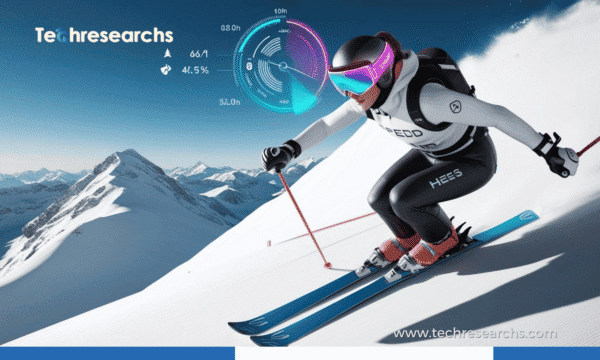
Skiing has always been about the experience—fresh snow, fast runs, mountain views, and that feeling you get when everything comes together on the slope. But technology is starting to change the way we experience skiing too.
One of the most interesting developments is augmented reality (AR) eyewear.
Instead of stopping to check your phone or looking down at your watch, AR technology can put selected information right in front of your eyes. Depending on the device, that could include speed, distance, workout data, navigation information, or other useful stats.
But there is a catch: AR ski goggles are still an emerging category in 2026. Not every product advertised as “smart” is a true AR ski goggle, and some products work more like lightweight sports displays that need to be paired with another device.
So, if you’re planning a ski trip this season, what should you actually look for?
Let’s break it down.
What Are AR Ski Goggles?
At their simplest, augmented reality ski goggles combine normal vision with digital information.
Imagine skiing down a run while seeing your speed or other performance information without reaching into your pocket. That’s the basic idea behind AR eyewear.
The technology can be particularly useful for people who enjoy tracking their performance. Instead of constantly checking a smartwatch, the information can be available within your field of view.
However, AR shouldn’t become a distraction.
When you’re skiing, you need to pay attention to the terrain, other people, trees, signs, and changing conditions. A good AR system should provide useful information quietly rather than covering your vision with notifications.
That’s probably the biggest difference between useful AR and technology that simply looks impressive.
Are AR Ski Goggles Worth Buying in 2026?
For some skiers, yes. For everyone else, probably not yet.
If you enjoy technology and regularly track your skiing performance, AR eyewear can be genuinely interesting. It can make information easier to access and may help you stay focused on your activity.
But if you’re a casual skier who mainly wants clear vision and protection from wind and snow, you may get more value from a high-quality traditional ski goggle.
And that’s important because the best ski goggle isn’t necessarily the one with the most technology.
A great lens, comfortable fit, good ventilation, and reliable anti-fog performance can make a much bigger difference during a long day on the mountain.
Some of the Most Interesting AR Options for 2026
The AR ski-goggle market is still relatively small, so it’s better to think of these products as AR and smart sports eyewear options rather than a huge collection of dedicated AR ski goggles.
ENGO 3: A Strong Choice for Performance Tracking
ENGO 3 is one of the more interesting products for athletes who want information available without constantly checking another screen.
It uses ActiveLook’s heads-up display technology to put selected information within the user’s field of view. The design focuses heavily on keeping the hardware lightweight, which is important when you’re already wearing a helmet and other winter equipment.
For someone who spends a lot of time training, that can be a real advantage.
You can concentrate on your activity instead of repeatedly looking down at a watch.
Best suited for: Skiers and athletes who care about performance data and lightweight wearable technology.
One thing to remember: ENGO 3 is sports AR eyewear rather than a traditional ski goggle, so you’ll need to think about how it fits into your existing ski setup.
ENGO 2: Still Worth Considering
ENGO 2 is another option from the ActiveLook ecosystem and follows the same basic idea: provide useful information while keeping the display lightweight and relatively unobtrusive.
It can make sense for skiers who already use compatible fitness watches or connected training devices.
The main thing to check before buying is compatibility. You don’t want to purchase an AR device and discover afterward that it doesn’t work properly with the equipment you already use.
Best suited for: Athletes who want a relatively simple way to experiment with AR sports technology.
Don’t Confuse Smart Goggles With AR Goggles
This is one of the easiest mistakes to make when shopping.
The words smart, connected, and AR are sometimes used interchangeably, but they don’t necessarily mean the same thing.
A smart ski product might connect to your phone or track activity. An AR system can actually place digital information within your visual field.
The technology is developing quickly, but dedicated AR ski goggles are still not a mainstream replacement for traditional ski goggles.
For many people, the more realistic setup in 2026 is a combination of:
Quality ski goggles + helmet + smartwatch/GPS + compatible AR eyewear.
That may sound less futuristic than a single pair of all-in-one goggles, but it can be much more practical.
What Should You Look for Before Buying?
If you’re considering AR eyewear for your next ski trip, don’t get carried away by the technology alone.
Here are the features that really deserve your attention.
1. A Display You Can Actually See
The display needs to remain readable in different conditions.
Bright sunlight, cloudy weather, snowfall, and changing light can all affect visibility. If you have to concentrate just to read the information, the technology isn’t helping much.
2. Battery Life
Cold weather and batteries aren’t always the best combination.
If you’re planning full-day skiing sessions, battery life matters. The last thing you want is for your fancy wearable to stop working halfway through the day.
Check the manufacturer’s real-world battery claims and consider how frequently you’ll need to recharge it.
3. Comfort
This might sound obvious, but comfort is easy to underestimate.
You’ll potentially be wearing the device for several hours at a time. Add a helmet, traditional goggles, layers, and other equipment, and even a small pressure point can become annoying.
Lightweight designs are therefore a major advantage.
4. Helmet and Goggle Compatibility
Before buying, make sure the AR device works with your existing setup.
Check the shape, mounting system, straps, and spacing between your helmet and goggles. A product can have excellent technology and still be a poor choice if it doesn’t fit comfortably.
5. Weather Protection
Ski equipment gets exposed to snow, moisture, wind, and temperature changes.
Don’t assume that ordinary smart glasses are automatically suitable for skiing. Look for products specifically designed or rated for the conditions in which you plan to use them.
6. Device Compatibility
Some AR eyewear depends on a smartphone, smartwatch, GPS computer, or fitness platform.
Before spending money, check whether the product works with your existing devices.
This is especially important if your skiing data is already stored in a particular fitness or training ecosystem.
7. Optical Quality
Here’s the part that shouldn’t be forgotten.
AR features don’t matter much if you can’t see the mountain clearly.
Look for good optical quality, suitable lens technology, anti-fog performance, and a field of view that works for your skiing conditions.
For many skiers, these features should come before digital extras.
AR Ski Goggles vs. Traditional Ski Goggles
| Feature | AR/Smart Eyewear | Traditional Ski Goggles |
|---|---|---|
| Digital information | Available on compatible systems | Usually unavailable |
| Performance tracking | Yes, depending on setup | No |
| Navigation | Possible with compatible devices | No |
| Battery | Usually required | Not required |
| Optical protection | Depends on the product | Primary purpose |
| Simplicity | More complicated | Very simple |
| Maintenance | More technology to manage | Generally easier |
| Best for | Tech enthusiasts and athletes | Most recreational skiers |
Who Should Buy AR Ski Eyewear?
AR technology makes the most sense if you fall into one of these groups:
Performance-focused skiers: If you track speed, distance, heart rate, or training data, heads-up information can be useful.
Technology enthusiasts: If you’re interested in wearable technology, skiing is an interesting environment in which to experiment with AR.
Frequent skiers: People who spend many days on the mountain may get more value from connected features than someone who skis once or twice a year.
Data-driven athletes: If you already use a smartwatch or fitness platform to analyze your workouts, AR eyewear can complement that setup.
On the other hand, if you mainly ski for fun and don’t care about performance data, you probably don’t need AR.
And that’s perfectly fine.
What Could AR Skiing Look Like in the Future?
This is where things get really interesting.
Today’s systems can provide relatively simple information, but future AR technology could potentially offer much more.
Imagine skiing into an unfamiliar resort and seeing navigation information without pulling out your phone. Or receiving information about a trail, weather conditions, distance, or performance while continuing to ski.
There’s also potential for better integration with smartwatches, GPS systems, fitness platforms, and other wearable devices.
But there’s a balance to maintain.
Skiing isn’t the same as sitting at a desk. Too much information could become dangerous rather than helpful.
The best future AR systems will probably be the ones that give you just enough information at exactly the right moment.
Final Thoughts
AR ski technology is exciting, but it’s still finding its place in the market.
For the 2026 ski season, don’t feel pressured to buy an AR device simply because it sounds futuristic. Start with the basics: good visibility, comfortable fit, anti-fog performance, weather resistance, and reliable construction.
If those boxes are already checked, AR features can add another layer of convenience.
For athletes and technology enthusiasts, products such as ENGO 3 make the idea of hands-free performance information particularly interesting. For casual skiers, however, a traditional premium ski goggle may still be the better investment.
In the end, the best ski technology is the technology that helps you enjoy the mountain without taking your attention away from it.
Frequently Asked Questions
Are augmented reality ski goggles worth buying in 2026?
They can be useful for skiers who want hands-free access to performance data, navigation, and other connected features. Casual skiers may prefer traditional goggles.
Can AR ski goggles show speed and other ski data?
Yes. Compatible AR systems can display information such as speed, distance, workout metrics, and other data when paired with supported devices or apps.
Do AR ski goggles replace regular ski goggles?
Not always. Many AR products are designed as smart sports eyewear rather than complete ski goggles, so checking helmet and goggle compatibility is important.
What should I check before buying AR ski goggles?
Look at display visibility, battery life, comfort, weather resistance, device compatibility, helmet fit, and lens quality before making your decision.