Technology transfer used to follow a fairly simple path. A university or research organization would develop an idea, protect it with intellectual property, and then license it to a company that could turn it into a commercial product.
That approach still works, but technology is moving much differently today.
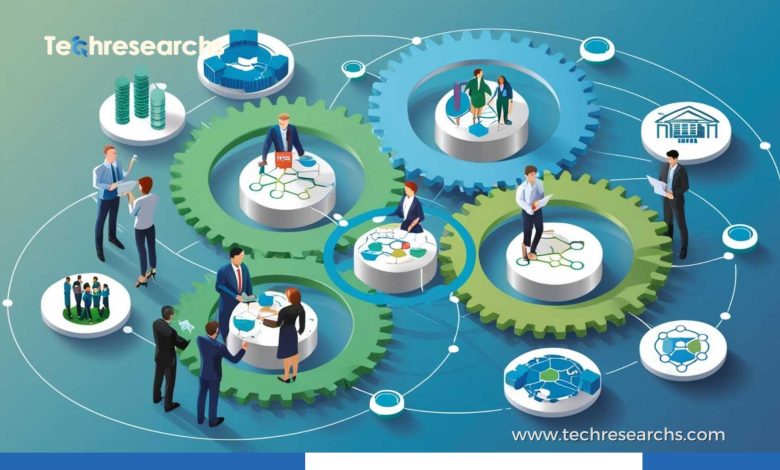
Artificial intelligence, open-source software, cloud computing, biotechnology, advanced manufacturing, and startup ecosystems have changed how knowledge and innovation travel from one organization to another. Instead of a single handoff from a laboratory to a company, technology development is increasingly happening through networks of researchers, startups, corporations, investors, governments, and communities.
This shift is creating a new generation of technology transfer models—models that focus as much on collaboration and shared innovation as they do on patents and licensing.
What Does Technology Transfer Actually Mean?
At its core, technology transfer is about turning knowledge into something useful.
It can involve moving a scientific discovery from a university into a business, sharing a technology between companies, commercializing research through a startup, or making technical knowledge available through an open-source project.
For example, a university research team might develop a new medical technology. Instead of simply selling or licensing the patent, the researchers could partner with a startup, receive government funding, work with a pharmaceutical company, and collaborate with other researchers.
The result is no longer a simple transfer. It becomes a shared development process.
Why Is the Old Technology Transfer Model Changing?
Technology is developing at a pace that traditional processes sometimes struggle to match.
A technology can move from experimental research to widespread commercial use within a few years—or even faster. Companies therefore need ways to access new capabilities without waiting for lengthy development cycles.
Several changes are driving this transformation.
Innovation Is Moving Faster
Cloud infrastructure, APIs, AI development platforms, open-source frameworks, and automated tools have reduced the time needed to test new ideas.
A small company can now access technologies that previously required large research teams and expensive infrastructure.
Collaboration Is Becoming Essential
Some of today’s biggest technological challenges are too complicated for one organization to solve alone.
Healthcare, climate technology, AI safety, semiconductor development, robotics, and biotechnology often require knowledge from several fields. Collaboration allows organizations to combine expertise rather than attempting to build everything internally.
Startups Are Connecting Research With Markets
Research institutions are excellent at discovering new possibilities, but turning those discoveries into products requires a different set of skills.
Startups can fill that gap.
They can take promising research, build a product around it, test it with customers, raise funding, and adjust the technology according to market requirements.
Digital Communities Are Changing Knowledge Sharing
Technical knowledge is no longer confined to laboratories, universities, or corporate research centers.
Developers and researchers can share software, datasets, research papers, documentation, and technical ideas with people around the world.
That makes the movement of technology faster and far less dependent on traditional organizational boundaries.
Emerging Technology Transfer Models
The new technology transfer landscape includes several models, and many organizations use more than one at the same time.
1. University-Industry Partnerships
Universities have long been important sources of research and innovation. What is changing is the way businesses interact with them.
Instead of waiting until a patent is ready for licensing, companies can work with universities much earlier through joint research projects, sponsored programs, innovation centers, and research partnerships.
This gives businesses earlier exposure to emerging ideas while giving researchers a better understanding of practical industry problems.
It can also create a feedback loop: industry identifies a real-world problem, researchers explore potential solutions, and businesses help determine whether those solutions can work outside the laboratory.
2. Startup-Led Commercialization
Not every research discovery needs to be transferred to an established corporation.
Sometimes the researchers themselves—or entrepreneurs working with them—can create a startup around the technology.
This model is particularly valuable for emerging fields such as biotechnology, artificial intelligence, robotics, clean energy, and advanced materials.
A startup can focus entirely on developing one promising technology, attract specialized investors, and move quickly as the market changes.
The challenge is that commercial success is never guaranteed. A scientifically impressive discovery may still need years of engineering, testing, funding, and regulatory work before it becomes a viable product.
3. Open-Source Technology Transfer
Open source has fundamentally changed how software technology spreads.
Instead of keeping a technology behind a proprietary license, organizations can make software available under an open-source license. Developers can then study it, improve it, adapt it, and build new products around it.
This can accelerate adoption because organizations do not have to start from zero.
Open-source projects can also create businesses of their own. Companies may generate revenue through hosted services, enterprise features, technical support, consulting, or specialized solutions.
In this model, the technology spreads widely while commercial value develops around the ecosystem.
4. Corporate-Startup Partnerships
Large companies and startups often bring very different strengths to the table.
A large organization may have established customers, infrastructure, funding, industry expertise, and distribution channels. A startup may have a new technology, a focused team, and the ability to experiment quickly.
Working together can benefit both sides.
For instance, a company might partner with a startup to test an AI solution, cybersecurity platform, robotics system, or sustainability technology without having to build the entire solution internally.
The partnership can also give the startup access to real-world environments that would otherwise be difficult to reach.
5. Government-Backed Technology Transfer
Governments play an important role in helping technologies move from research into practical applications.
Public funding, research grants, innovation programs, incubators, and public-private partnerships can provide support during the early stages of development, when commercial investment may still be uncertain.
This is particularly important for technologies that require substantial capital or have long development cycles, including clean energy, healthcare, semiconductors, advanced manufacturing, and other strategic technologies.
Government support does not replace private investment, but it can help reduce some of the early risks.
6. Platform-Based Technology Transfer
Another important development is the rise of technology platforms.
Rather than transferring one individual invention, a platform can provide the infrastructure that allows many organizations to develop their own solutions.
Cloud computing is a good example.
A business does not necessarily need to build its own data center, purchase large amounts of hardware, or develop every infrastructure component internally. It can access computing power, storage, databases, AI services, and development tools through cloud platforms.
Technology is therefore being transferred through access and participation, not just through ownership.
How Artificial Intelligence Is Changing Technology Transfer
AI is adding another layer to this transformation.
Researchers can use AI to analyze enormous datasets, identify patterns, automate parts of experiments, explore designs, and accelerate software development.
At the same time, businesses can access advanced AI capabilities through cloud services and APIs without developing an entire AI system from scratch.
This lowers the barrier to experimentation.
A small company with a limited technical team can potentially use sophisticated AI infrastructure that would once have required significant computing resources and specialized expertise.
However, AI also introduces difficult questions.
Who owns AI-generated outputs? How can organizations protect proprietary data? What happens when a model is trained using information from multiple sources? How should sensitive research be shared?
These questions make intellectual-property management, data governance, and responsible AI practices increasingly important parts of technology transfer.
From a Linear Process to an Innovation Network
Perhaps the biggest change is that technology transfer is becoming less linear.
The traditional model might look like this:
Research → Patent → License → Product
The emerging model is much more interconnected:
Research ↔ Startups ↔ Universities ↔ Corporations ↔ Investors ↔ Governments ↔ Open-Source Communities ↔ Markets
Ideas can move in several directions.
A company might identify a problem and fund university research. A startup could commercialize the resulting technology. Developers might contribute improvements to the software. Government funding could support further research, while investors provide capital for expansion.
Each participant contributes something different.
This network-based approach can make innovation more flexible, but it also requires stronger coordination and clearer rules.
What Are the Benefits of the New Model?
The emerging approach to technology transfer can provide several advantages.
Faster Innovation
Organizations can access external expertise and technology rather than developing every capability internally.
Lower Development Barriers
Cloud services, open-source software, shared research infrastructure, and partnerships make advanced technologies more accessible.
Shared Risk
Research and development can be expensive and uncertain. Partnerships allow multiple organizations to share costs, knowledge, and risks.
Better Market Alignment
When researchers work closely with businesses and customers, technologies can be designed around real-world problems rather than remaining purely theoretical.
Stronger Innovation Ecosystems
Regular interaction between universities, startups, businesses, governments, and investors can create an environment where ideas move more quickly from discovery to practical use.
What Challenges Should Organizations Expect?
The new model is not without problems.
Intellectual property can become complicated. When several organizations contribute to a technology, deciding who owns what can be difficult.
Data needs careful management. Shared datasets may contain confidential, proprietary, or sensitive information.
Commercialization can still take time. A promising research result is not automatically a successful product.
Cybersecurity risks increase. More partners and interconnected systems can create additional points of vulnerability.
Regulations may lag behind innovation. Emerging technologies often develop faster than laws and industry standards.
Access can remain unequal. Organizations with better funding, infrastructure, and technical talent may still have an advantage.
These challenges do not make collaboration impossible. They simply mean that technology transfer needs stronger planning and governance.
How Businesses Can Adapt
Organizations that want to benefit from the new technology transfer environment should think beyond traditional licensing agreements.
Building relationships with universities, research centers, startups, and technology communities can provide access to ideas before they become mainstream.
Companies should also establish clear policies around intellectual property, cybersecurity, data usage, licensing, and commercialization.
Most importantly, businesses need to become comfortable with experimentation.
Not every partnership will produce a successful product. The goal is to create a system where promising technologies can be identified, tested, improved, and scaled without unnecessary delays.
The Future of Technology Transfer
Technology transfer is likely to become even more interconnected over the coming years.
AI, biotechnology, quantum technologies, robotics, advanced materials, renewable energy, and semiconductor technologies are all areas where progress depends on knowledge from multiple disciplines.
It will become increasingly difficult for one organization to control every part of the innovation process.
The winners may therefore be organizations that know how to connect with the right partners, share knowledge responsibly, protect valuable intellectual property, and move quickly when opportunities appear.
The future of technology transfer is not simply about transferring a finished invention from one organization to another.
It is about creating an environment where ideas can move, improve, combine with other ideas, and eventually become useful solutions.
Conclusion
The technology transfer landscape is changing from a transaction-based system into a more collaborative innovation ecosystem.
Traditional patents and licensing agreements remain valuable, but they now exist alongside university partnerships, startup commercialization, open-source development, government-backed programs, corporate collaborations, and technology platforms.
This new paradigm gives organizations more ways to access and develop innovation—but it also requires better coordination, stronger governance, and a willingness to collaborate.
Frequently Asked Questions
1. What is an emerging technology transfer model?
An emerging technology transfer model is a modern way of moving research, knowledge, software, and intellectual property into practical applications through partnerships, startups, open-source communities, and technology platforms.
2. How are startups changing technology transfer?
Startups help turn research discoveries into commercial products by combining technical expertise with investment, product development, customer feedback, and market knowledge.
3. Does open-source development support technology transfer?
Yes. Open-source development allows software, technical knowledge, and tools to be shared, improved, and adapted by individuals and organizations, making innovation easier to access and distribute.
4. What are the main challenges of modern technology transfer?
Major challenges include intellectual-property ownership, data management, cybersecurity, regulatory requirements, commercialization costs, and coordinating multiple organizations involved in innovation.