Computers were not always small enough to sit on a desk or fit inside a backpack. In the early days of computing, machines were huge, expensive, difficult to operate, and mainly available to governments, universities, and large organizations.
The 4th generation of computers changed that picture dramatically.
Beginning in the 1970s, advances in microprocessor and semiconductor technology made it possible to put much of a computer’s processing capability onto a single chip. This breakthrough reduced the size and cost of computers while improving their performance and reliability.
More importantly, it helped move computing from specialized laboratories into businesses, schools, and eventually homes.
What Is the 4th Generation of Computers?
The 4th generation of computers is generally associated with the 1970s through the 1980s, although the technologies developed during this period continued influencing computing for decades afterward.
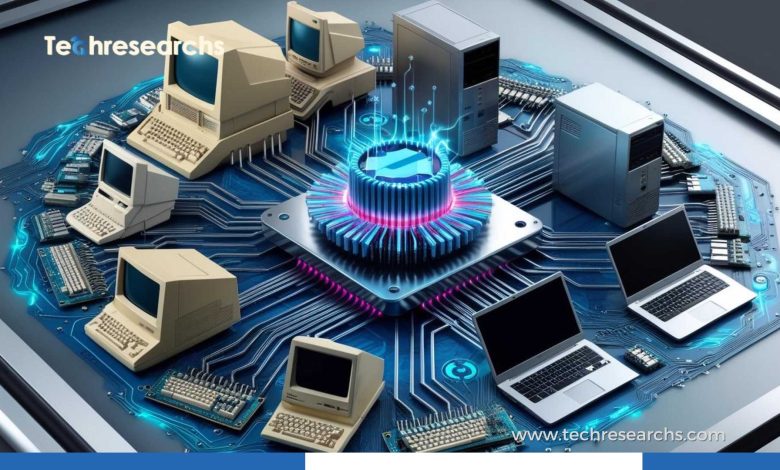
The defining development was the microprocessor. A microprocessor integrates the functions of a central processing unit (CPU) into a single integrated circuit.
Before this development, computers depended on larger collections of electronic components. Putting CPU functions onto a chip made computers considerably more compact and opened the door to personal computing.
The introduction of the Intel 4004 in 1971 is widely regarded as an important milestone in the development of microprocessor-based computing.
Why Was the 4th Generation So Important?
The fourth generation was revolutionary because it changed not only how computers were built but also who could use them.
Computing gradually shifted from being a specialized activity carried out by trained professionals to something ordinary people could interact with directly.
Several developments made this possible.
1. The Microprocessor Changed Everything
The microprocessor was the heart of the fourth-generation revolution.
Instead of using a large collection of separate components to perform processing tasks, manufacturers could integrate CPU functions into a compact chip.
This reduced hardware complexity and created new possibilities for designing smaller and more affordable computers.
As semiconductor technology improved, processors also became faster and more capable.
2. Computers Became Much Smaller
Size was one of the most noticeable changes.
First-generation computers could occupy an entire room. By the fourth generation, computer systems could be designed for desks and smaller workspaces.
This miniaturization was crucial because it made computers practical for organizations that did not have the space, budget, or infrastructure required by earlier machines.
Eventually, this trend helped lead to laptops, mobile devices, embedded computers, and many other forms of modern computing.
3. Personal Computing Took Off
Perhaps the biggest social impact of the fourth generation was the rise of the personal computer.
Companies such as Apple, IBM, Commodore, and others helped bring personal computers into homes, offices, classrooms, and hobbyist communities.
The computer was no longer simply a machine operated by specialists in a dedicated computing center. Individuals could use computers for writing, calculations, programming, education, games, and business tasks.
This was a major shift in the history of technology.
4. Computers Became More Affordable
Earlier computers could cost enormous amounts of money. Improvements in semiconductor manufacturing helped reduce the cost of computing hardware.
As production scaled up, computers became increasingly accessible to smaller businesses, schools, professionals, and consumers.
Lower prices also encouraged the software industry to grow because a larger population of computer users created demand for new applications.
The Role of VLSI Technology
Microprocessors were not the only major innovation of the period.
Very Large Scale Integration (VLSI) allowed manufacturers to place increasingly large numbers of transistors and other electronic components onto a single chip.
This was important because computer performance could increase without requiring a proportional increase in physical size.
The continuing improvement of semiconductor manufacturing became one of the foundations of the computing industry.
Modern processors contain vastly more transistors than the chips of the 1970s, but the underlying principle remains familiar: integrate more computing capability into increasingly sophisticated semiconductor devices.
A Major Improvement in Reliability
Fourth-generation computers were generally more reliable than earlier systems because integrated circuits reduced the need for large numbers of separate electronic components and connections.
Fewer components meant fewer potential failure points.
This mattered for businesses and other organizations because reliable computers could be used for longer periods with less maintenance.
The result was a gradual transition toward computing systems that people could depend on as everyday tools rather than treating them as fragile experimental machines.
Software Became More Important
Better hardware also created opportunities for software development.
As personal computers became more common, programmers created operating systems, productivity applications, programming languages, games, databases, and other software for a growing user base.
Graphical user interfaces later made computers easier for nontechnical users to operate.
This relationship between hardware and software became central to the computer industry. More capable hardware encouraged better software, while useful software increased demand for more capable computers.
How the 4th Generation Changed Business
Businesses were among the major beneficiaries of fourth-generation computing.
Computers increasingly became tools for:
- Word processing
- Accounting
- Payroll
- Inventory management
- Data storage
- Business reporting
- Spreadsheet calculations
- Database management
- Communication
- Office administration
The spread of desktop computers changed how employees handled information. Tasks that once required paper records or specialized computing departments could increasingly be performed directly at an employee’s desk.
How It Changed Education
The impact also reached classrooms.
As personal computers became more affordable, schools and educational institutions began introducing students to programming, computer literacy, educational software, and digital research.
This helped create a generation that was more comfortable interacting with computers.
The importance of that shift is easy to underestimate today. For many people, learning to use a computer became a basic educational and workplace skill.
From Personal Computers to Today’s Devices
One of the most interesting aspects of fourth-generation computing is how far its influence extends.
Today’s smartphones, smart appliances, vehicles, industrial machines, networking equipment, and IoT devices contain processors that are far more powerful than early microprocessors.
The hardware has evolved enormously, but the basic idea introduced during the microprocessor era remains:
Put more computing capability into smaller, more efficient, and increasingly affordable hardware.
Modern systems now combine powerful processors with cloud computing, artificial intelligence, high-speed networks, specialized accelerators, and advanced semiconductor designs.
In that sense, the fourth generation was not simply a historical chapter. It helped establish the path toward today’s computing ecosystem.
Key Features of 4th Generation Computers
The main characteristics of fourth-generation computers included:
- Microprocessor-based processing
- Increasing use of VLSI technology
- Smaller physical size
- Improved processing speed
- Greater reliability
- Lower hardware costs
- Reduced power requirements compared with earlier technologies
- Growth of personal computers
- Rapid expansion of computer software
- Increasing use in homes, schools, and businesses
Advantages of the 4th Generation
The fourth generation offered several important benefits.
Smaller Hardware
Computers became dramatically smaller and easier to install.
Better Performance
Improved microprocessors provided significantly more processing capability than earlier systems.
Lower Costs
Mass production and semiconductor advances helped make computers more affordable.
Improved Reliability
Integrated circuits reduced hardware complexity and helped improve system reliability.
Wider Accessibility
Personal computers allowed individuals and smaller organizations to use computing technology directly.
Expanding Software Ecosystem
A growing installed base of computers encouraged developers to create more applications and services.
What Were Its Limitations?
The fourth generation was revolutionary, but early systems were still primitive compared with today’s machines.
Memory and storage capacities were limited. Processing power was modest, and many early computers required users to learn technical commands or programming concepts.
Networking was also far less developed than it is today.
Modern users are accustomed to instant internet access, cloud storage, powerful graphics, voice interfaces, and AI-powered applications. Those capabilities were far beyond what early fourth-generation personal computers could provide.
Still, those limitations were gradually addressed as semiconductor technology and software continued to advance.
4th Generation vs. Previous Computer Generations
| Generation | Approximate Period | Major Technology | Main Impact |
|---|---|---|---|
| First | 1940s–1950s | Vacuum tubes | Electronic computing became practical |
| Second | 1950s–1960s | Transistors | Computers became smaller and more reliable |
| Third | 1960s–1970s | Integrated circuits | Performance and efficiency improved |
| Fourth | 1970s onward | Microprocessors and VLSI | Personal computing became possible |
| Fifth | Modern era/conceptual | AI and advanced computing | Greater emphasis on intelligent and specialized computing |
The boundaries between generations are not absolute, and different historical sources use slightly different dates. However, the microprocessor remains the defining technological development associated with fourth-generation computing.
Why the 4th Generation Still Matters Today
It is easy to look at a modern smartphone or AI computer and forget how significant the microprocessor revolution was.
The fourth generation established an important pattern in technology: computing power could become smaller, cheaper, faster, and more widely available at the same time.
That pattern helped drive decades of innovation.
From desktop PCs and laptops to smartphones, embedded processors, cloud infrastructure, and AI hardware, modern technology continues to build on advances in semiconductor engineering that began accelerating during the fourth generation.
Final Thoughts
The 4th generation of computers was revolutionary because it transformed computing from a specialized technology into an increasingly accessible everyday tool.
The microprocessor and VLSI technology made computers smaller, more affordable, more reliable, and capable of supporting a rapidly growing software industry. Most importantly, these advances helped create the personal computer era.
The computers of the 1970s and 1980s may look extremely limited compared with today’s devices, but their importance is difficult to overstate. They helped establish the foundation for the connected, software-driven, and increasingly intelligent computing world we use today.
The fourth generation did not simply make computers better – it made computing available to far more people.
Frequently Asked Questions
1. What defined the 4th generation of computers?
The 4th generation was mainly defined by microprocessors and VLSI technology, which made computers smaller, faster, more reliable, and more affordable.
2. When did the 4th generation of computers begin?
The 4th generation is generally considered to have begun in the 1970s, with the development and adoption of microprocessor-based computers.
3. Why was the microprocessor revolutionary?
The microprocessor integrated key CPU functions onto a single chip. This helped reduce computer size and cost while improving performance and making personal computing more practical.
4. How did the 4th generation influence modern computers?
It helped establish personal computing and accelerated the development of smaller and more affordable digital devices. Its semiconductor advances continue to influence modern PCs, smartphones, embedded systems, and other computing technologies.