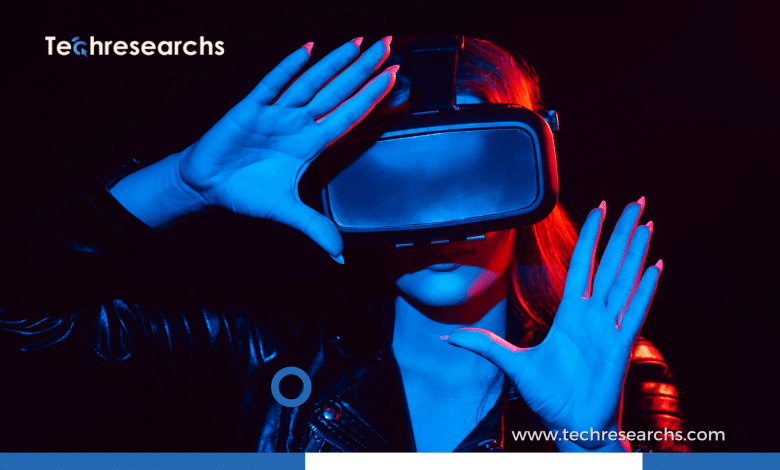
Augmented Reality (AR) is rapidly changing how people interact with technology by blending digital information with the physical world. Unlike Virtual Reality, which creates a completely virtual environment, AR adds computer-generated elements such as images, 3D objects, instructions, and information to the real world.
With improvements in artificial intelligence, smartphones, wearable devices, cameras, and spatial computing, AR is moving beyond entertainment and becoming an important technology for businesses, education, healthcare, retail, manufacturing, and everyday life.
What Is Augmented Reality?
Augmented Reality is a technology that overlays digital content onto a user’s view of the physical environment. This can happen through smartphones, tablets, smart glasses, headsets, or other connected devices.
For example, an AR application can allow a customer to see how a piece of furniture would look inside their home before purchasing it. Similarly, a technician could use AR glasses to see step-by-step repair instructions while working on machinery.
The combination of real-world surroundings and digital information makes AR useful for interactive and practical applications.
How Augmented Reality Works
AR systems typically rely on several technologies working together:
- Cameras and sensors: Capture information about the user’s surroundings.
- Computer vision: Helps identify objects, surfaces, and environmental features.
- Artificial intelligence: Interprets visual information and supports intelligent interactions.
- Motion tracking: Tracks the user’s position and movements.
- Spatial mapping: Creates an understanding of the surrounding physical environment.
- Display technology: Places digital content within the user’s field of view.
These technologies allow AR applications to position digital objects more naturally within real-world spaces.
AR in Healthcare
Healthcare is one of the industries where AR could provide significant benefits. Medical professionals can use augmented visualizations to understand anatomy, support procedures, and improve training.
Medical students can study interactive 3D models instead of relying only on traditional diagrams. Surgeons may also use digital information during procedures to support precision and decision-making.
AR can also assist patients through rehabilitation programs, guided exercises, and educational experiences.
AR in Education
Augmented Reality can make learning more interactive and engaging. Instead of simply reading about historical events, students could explore virtual historical environments through an AR-enabled device.
Science students can interact with three-dimensional models of molecules, organs, planets, or engineering systems. This approach can help explain complex concepts that are difficult to visualize through traditional teaching methods.
As AR hardware becomes more accessible, interactive learning experiences could become increasingly common in classrooms and online education.
AR in Retail and E-Commerce
Retailers are already exploring AR to improve the shopping experience. Customers can use AR applications to visualize products before making purchasing decisions.
Common examples include:
- Trying virtual makeup and accessories
- Previewing furniture in a room
- Visualizing clothing and products
- Exploring product information through a smartphone camera
- Interacting with 3D product models
This can help customers make more informed decisions while giving brands new ways to engage shoppers.
AR in Manufacturing
Manufacturing companies can use AR to support workers throughout production and maintenance processes.
AR systems can display assembly instructions, equipment information, safety warnings, and maintenance procedures directly within a worker’s field of view.
This can reduce the need to constantly consult paper manuals or separate screens. AR may also support employee training by allowing workers to practice procedures in realistic environments.
AR and Gaming
Gaming remains one of the most recognizable applications of AR. Instead of completely replacing the physical environment, AR games incorporate digital characters and objects into real-world surroundings.
Future AR gaming could become more immersive through advanced spatial mapping, wearable devices, artificial intelligence, and multiplayer experiences. Players may be able to interact with digital environments that respond dynamically to physical locations.
AR and Artificial Intelligence
The combination of AR and AI could be one of the most important developments in the future of immersive technology.
AI can help AR systems recognize objects, understand environments, interpret voice commands, translate text, and provide personalized information.
For example, an AI-powered AR assistant could recognize a machine and display maintenance information automatically. In another situation, AR glasses could identify signs in another language and provide real-time translations.
This combination could transform AR from a visual overlay into a more intelligent and context-aware computing platform.
The Future of AR Wearable Devices
Smartphones are currently one of the easiest ways to access AR, but wearable devices could play a larger role in the future.
AR glasses and headsets could provide hands-free access to navigation, communication, work instructions, notifications, and digital information.
Future devices may become lighter, more comfortable, and more energy efficient. Improvements in displays, sensors, processors, batteries, and wireless connectivity could make wearable AR more practical for everyday use.
Benefits of Augmented Reality
AR offers several potential advantages:
- Improved learning: Makes complex subjects easier to visualize.
- Better productivity: Provides information directly where it is needed.
- Enhanced customer experiences: Allows consumers to interact with products virtually.
- Hands-free assistance: Wearable AR can provide information without requiring a phone or computer.
- Better training: Creates interactive and realistic learning environments.
- Remote collaboration: Helps teams share visual information across different locations.
Challenges Facing Augmented Reality
Despite its potential, AR still faces several challenges. Hardware costs, battery life, limited field of view, device comfort, and software compatibility can affect adoption.
Privacy is another important concern. AR devices may use cameras and sensors to continuously analyze surrounding environments. This creates questions about how visual data is collected, stored, and protected.
Developers also need to consider cybersecurity, accessibility, user safety, and responsible data management as AR becomes more widespread.
What Does the Future of AR Look Like?
The future of Augmented Reality is likely to involve closer integration with AI, cloud computing, edge computing, 5G networks, spatial computing, and wearable technology.
AR could eventually become less about launching a separate application and more about accessing digital information naturally within the surrounding environment. Navigation, shopping, education, workplace assistance, entertainment, and communication could all become more interactive.
As the technology matures, successful AR products will likely focus not only on impressive visuals but also on solving practical problems for users and businesses.
Conclusion
Augmented Reality is becoming an important part of the next generation of technology. By connecting digital information with the physical world, AR can create new opportunities across industries ranging from healthcare and education to retail, manufacturing, and entertainment.
Although challenges such as privacy, cost, hardware limitations, and security remain, continued advances in AI, connectivity, sensors, and wearable devices could accelerate AR adoption.
The future of AR will depend on how effectively businesses and developers turn this technology into useful, secure, and accessible experiences. As these innovations continue, augmented reality could become an increasingly natural part of everyday digital life.
Frequently Asked Questions
1. What is Augmented Reality?
Augmented Reality (AR) is a technology that overlays digital content, such as images, 3D objects, information, and animations, onto the real-world environment.
2. How is Augmented Reality different from Virtual Reality?
AR adds digital elements to the real world, while Virtual Reality (VR) creates a completely simulated digital environment that users can interact with.
3. Where is Augmented Reality used?
AR is used in healthcare, education, retail, gaming, manufacturing, tourism, marketing, navigation, and workplace training.
4. How can AR benefit businesses?
Businesses can use AR to improve customer experiences, demonstrate products, support employees, provide interactive training, and create new marketing experiences.