The Internet of Things has changed the way we interact with technology. Smart cameras, connected appliances, industrial sensors, medical devices, vehicles, and wearable gadgets now communicate with networks and cloud platforms every day. While this connectivity makes devices more useful, it also creates more opportunities for cyberattacks.
A compromised IoT device may seem like a small problem, but attackers can use it as an entry point into a larger network. Weak passwords, outdated firmware, insecure APIs, and poor device authentication are among the common weaknesses that make IoT environments attractive targets.
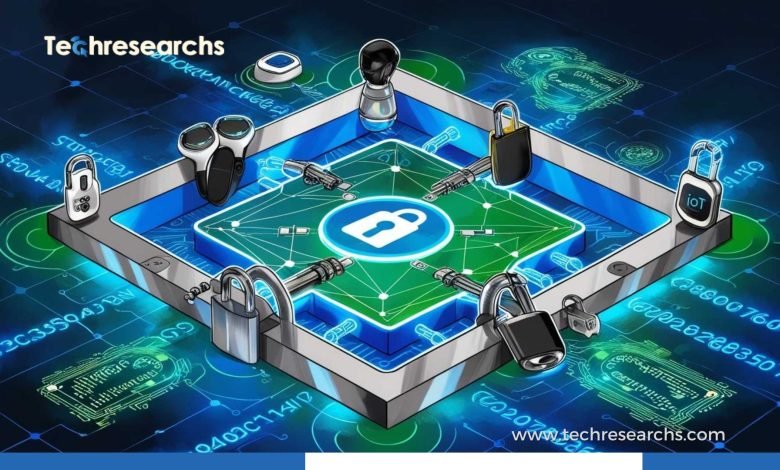
Blockchain offers another way to strengthen IoT security. Originally associated with cryptocurrencies, blockchain can also provide a decentralized and tamper-resistant method for recording device activity, verifying identities, and maintaining trust between connected devices.
But is blockchain really the answer to IoT security? Not by itself. Its real value comes from combining blockchain-based trust mechanisms with established cybersecurity practices.
Why IoT Security Needs a New Approach
Traditional IoT environments often depend on centralized servers to authenticate devices and manage data. This model can work effectively, but it creates a central point that attackers may try to compromise.
IoT ecosystems also have some unique security challenges:
- Thousands or millions of devices may need to be authenticated.
- Many devices have limited processing and storage capabilities.
- Some connected products remain in use for years.
- Firmware updates may not happen regularly.
- Devices from different manufacturers must communicate with one another.
- A single compromised device can potentially affect an entire network.
For organizations deploying large IoT environments, security cannot be treated as an afterthought. Device identity, data integrity, access control, and monitoring need to be built into the architecture from the beginning.
How Blockchain Can Strengthen IoT Security
Blockchain is essentially a distributed ledger that allows participating systems to maintain a shared record of transactions or events. Once information is properly recorded, altering historical records becomes significantly more difficult because changes would need to be reconciled across the network.
In an IoT environment, this concept can be useful in several ways.
1. Stronger Device Authentication
Every IoT device needs a reliable identity. Blockchain can support decentralized identity models in which devices are associated with cryptographic credentials.
Instead of relying entirely on a single authentication server, participating devices or network components can verify identity information through a distributed trust mechanism.
This can make unauthorized device access harder and provide organizations with better visibility into which devices are communicating with their systems.
2. Tamper-Resistant Activity Records
IoT devices generate enormous amounts of information. Security teams may need to know when a device connected, what system it communicated with, or whether its configuration changed.
Blockchain can create an auditable record of selected security events.
For example, an industrial organization could record important device-management events on a blockchain-based ledger. If someone attempts to manipulate those records later, the inconsistency can become easier to detect.
3. Secure Device-to-Device Communication
IoT ecosystems often contain devices that need to communicate without constantly depending on a central intermediary.
Blockchain can help establish trust between participating devices or systems. Smart contracts can also be used to define conditions under which certain interactions are permitted.
For example, a sensor could be authorized to send information to a specific gateway only when predefined conditions are satisfied.
4. Improved Software and Firmware Tracking
Outdated firmware is a major concern for connected devices.
Blockchain can be used to maintain records associated with approved firmware versions. When a device requests an update, the system can verify whether the software package matches an authorized version before installation.
This does not replace secure update mechanisms, digital signatures, or vulnerability management. Instead, blockchain can provide an additional layer of verification and traceability.
Blockchain and Smart Contracts in IoT
Smart contracts are programs that automatically execute predefined rules when specified conditions are met.
In IoT security, they could help automate access decisions.
Imagine a smart building containing thousands of connected devices. A smart contract could define which devices are allowed to communicate with particular systems and under what circumstances.
If a device no longer meets the required security conditions, its permissions could be restricted according to the organization’s rules.
This approach can reduce dependence on manual security administration, particularly in large-scale environments.
However, smart contracts must themselves be carefully designed and audited. A vulnerable contract can introduce a new security problem rather than solve one.
Blockchain for IoT Data Integrity
Data integrity is particularly important when IoT information influences real-world decisions.
Consider sensors used in:
- Manufacturing
- Healthcare
- Energy infrastructure
- Agriculture
- Transportation
- Supply chains
If sensor information is modified without authorization, the consequences could extend beyond the digital environment.
Blockchain can help organizations establish a verifiable history for important IoT data. Rather than storing every piece of sensor data directly on-chain, organizations can store critical records, hashes, or references while keeping large datasets in appropriate databases or cloud storage.
This hybrid approach is often more practical than putting all IoT data directly onto a blockchain.
Blockchain Is Not a Complete IoT Security Solution
Blockchain has potential, but it should not be treated as a magic security layer.
There are several limitations organizations need to consider.
Performance and Scalability
IoT networks can generate huge numbers of events. A blockchain architecture must be designed carefully so that transaction processing does not become a bottleneck.
Resource Constraints
Many IoT devices have limited CPU power, memory, storage, and battery capacity. Running blockchain-related processes directly on every device may not be practical.
A better architecture may place blockchain functions on gateways, edge servers, or other capable infrastructure.
Privacy Concerns
A permanent ledger can create privacy challenges if sensitive information is recorded incorrectly.
Organizations should carefully determine what information belongs on-chain and what should remain off-chain.
Implementation Complexity
Blockchain introduces another technology layer that requires appropriate expertise, governance, monitoring, and maintenance.
Organizations should first identify a real security problem and then determine whether blockchain is an appropriate solution.
A Better Architecture: IoT, Edge Computing, and Blockchain
One of the more practical approaches is to combine IoT devices with edge computing and blockchain.
IoT devices collect information.
Edge systems process and filter that information closer to where it is generated.
Blockchain can then be used selectively for identity management, authorization, audit records, or data verification.
This reduces the amount of information that needs to interact with the blockchain while keeping security functions closer to the devices.
For example:
IoT Device → Edge Gateway → Security Verification → Blockchain Record → Cloud/Application
This architecture can improve efficiency while avoiding the need for resource-constrained devices to perform heavy blockchain operations.
Real-World Applications
Blockchain-based IoT security can be useful across several industries.
Smart Manufacturing
Factories can use connected sensors and machines to monitor production. Blockchain can help maintain trusted records of device activity, maintenance events, and selected operational changes.
Supply Chain Management
Connected tracking devices can provide information about shipments, storage conditions, and product movement. Blockchain can create a shared record that different parties can verify.
Smart Cities
Connected infrastructure such as traffic systems, environmental sensors, and public utilities can generate large volumes of data. Blockchain may help establish trust among participating systems.
Healthcare IoT
Medical devices and connected monitoring systems require strong authentication and data integrity. Blockchain-based identity and audit mechanisms can potentially support secure information exchange.
Because healthcare information is highly sensitive, privacy and regulatory requirements must be considered carefully.
Connected Vehicles
Modern vehicles contain numerous connected components. Blockchain could support trusted communication between vehicles, infrastructure, service providers, and other systems in selected use cases.
How Businesses Can Adopt Blockchain for IoT Security
Organizations do not need to move their entire IoT infrastructure onto a blockchain.
A practical adoption strategy starts with a specific security problem.
Step 1: Identify Critical IoT Assets
Create an inventory of connected devices, gateways, applications, and communication paths.
Step 2: Identify Security Weaknesses
Look for problems involving authentication, unauthorized access, firmware management, data integrity, or device visibility.
Step 3: Choose a Suitable Blockchain Model
A permissioned blockchain may be more appropriate for enterprise environments where participating organizations and devices need controlled access.
Step 4: Keep Sensitive Data Off-Chain
Use blockchain primarily for verification, identity, timestamps, hashes, and audit information when appropriate.
Step 5: Combine Blockchain With Existing Security
Blockchain should work alongside encryption, network segmentation, secure boot, access controls, vulnerability management, digital signatures, and continuous monitoring.
Step 6: Test Before Scaling
Start with a limited deployment. Measure performance, security improvements, costs, and operational complexity before expanding the system.
The Future of Blockchain-Powered IoT Security
The future of IoT security is unlikely to depend on a single technology. Instead, organizations will increasingly combine multiple security layers.
Blockchain can contribute to this ecosystem by providing decentralized trust, verifiable records, and stronger mechanisms for managing interactions between connected systems.
At the same time, technologies such as edge computing, artificial intelligence, zero-trust security, hardware-based protection, and automated threat detection can address areas where blockchain is less effective.
The most successful IoT security strategies will focus on using each technology where it provides the greatest practical benefit.
Final Thoughts
IoT has created an enormous connected ecosystem, but greater connectivity also means greater responsibility for security. Devices need trustworthy identities, communications need protection, and critical data needs to remain reliable.
Blockchain offers an interesting approach by introducing decentralized verification and tamper-resistant records into IoT environments. However, it works best as one component of a broader security architecture, not as a replacement for traditional cybersecurity controls.
For businesses planning their next IoT deployment, the goal should not simply be to add blockchain. The better question is: Where can blockchain solve a genuine trust, authentication, or data-integrity problem?
When used selectively alongside edge computing, encryption, zero-trust principles, secure device management, and continuous monitoring, blockchain could become a valuable part of the next generation of IoT cybersecurity.
Frequently Asked Questions
How does blockchain improve IoT security?
Blockchain can improve IoT security by providing decentralized device authentication, tamper-resistant records, and verifiable communication between connected systems.
Can blockchain prevent all IoT cyberattacks?
No. Blockchain is not a complete cybersecurity solution. It should be combined with encryption, access controls, secure firmware, network segmentation, and continuous monitoring.
Is blockchain suitable for every IoT device?
Not necessarily. Many IoT devices have limited processing power, memory, and battery capacity. Blockchain functions may be better handled by gateways or edge systems.
What is the future of blockchain in IoT cybersecurity?
Blockchain is likely to remain useful for device identity, data verification, audit trails, and trusted communication while working alongside edge computing, AI, and zero-trust security.