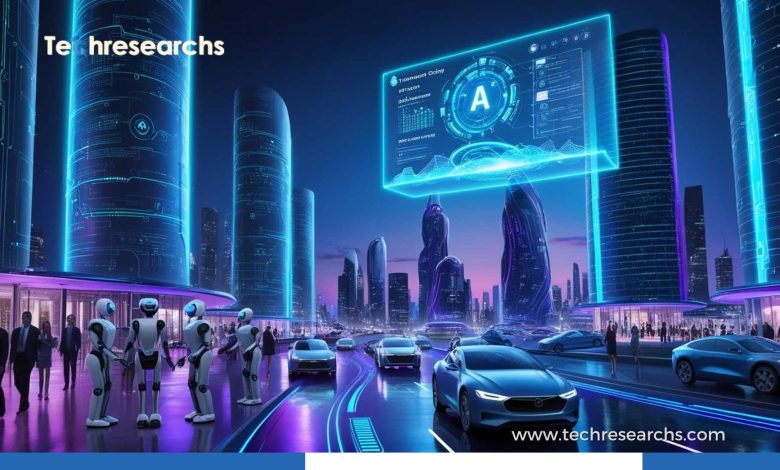
Artificial intelligence has already changed the way we work, communicate, shop, learn, and solve everyday problems. But what we are seeing today is only the beginning. The next generation of AI is expected to become more capable, more independent, and more closely connected to the physical world.
From intelligent robots and AI-powered healthcare to autonomous vehicles and personalized digital assistants, future AI technologies could influence almost every part of our lives.
The exciting part is that AI is no longer limited to answering questions or generating content. Researchers and technology companies are working toward systems that can understand situations, make decisions, learn from experience, and take action.
Let’s explore some of the AI technologies that could have a major impact on the future.
1. Agentic AI
One of the biggest developments in artificial intelligence is the move toward AI agents.
Today’s AI usually responds after a person gives it an instruction. Agentic AI is designed to take things a step further. An AI agent can understand a goal, divide it into smaller tasks, use digital tools, and work through a problem with less human involvement.
For example, instead of asking an AI assistant to find information about a business trip, a future AI agent could potentially organize the research, compare options, prepare a schedule, and keep everything updated.
Businesses could use these systems to automate customer service, research, administration, software development, and many repetitive tasks.
The important difference is that future AI may not simply answer questions—it may actually help complete the work.
2. Humanoid and Intelligent Robots
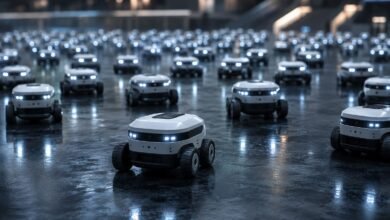
Robots have existed for years, particularly in manufacturing. However, the next generation of robots is expected to be much more intelligent.
AI-powered robots could eventually understand objects, recognize people, navigate unfamiliar environments, and respond to changing situations.
Humanoid robots are particularly interesting because their human-like shape allows them to operate in environments already designed for people.
In the future, robots could assist in warehouses, factories, hospitals, farms, hotels, and potentially homes.
They may handle physically demanding or repetitive jobs while people focus on tasks requiring creativity, judgment, and communication.
3. World Models
For an AI system to work effectively in the real world, simply understanding language isn’t enough. It needs some understanding of how the world behaves.
This is where world models come into the picture.
A world model helps an AI system build an internal understanding of its surroundings. It can help predict what might happen when an object moves, when an action is taken, or when the environment changes.
For example, a household robot needs to understand that pushing a glass too hard could knock it over. It also needs to know where objects are and how to move around furniture.
Better world models could therefore become an important building block for advanced robotics, autonomous vehicles, drones, and other physical AI systems.
4. Multimodal AI
Humans naturally process different types of information together. We can see something, hear a sound, read words, and understand the situation at the same time.
AI is moving in a similar direction.
Multimodal AI can work with multiple forms of information, including text, images, audio, video, and sensor data.
This could make AI interactions feel much more natural.
For instance, a student could show an AI a difficult diagram and ask a spoken question about it. A doctor could use AI to examine medical images alongside other patient information. A technician could point a camera at a machine and receive assistance based on what the AI sees.
The ability to combine different types of information could make AI useful in situations where text-only systems are not enough.
5. AI-Powered Scientific Discovery
Science generates enormous amounts of information. Researchers often spend significant time analyzing data, testing possibilities, and searching for patterns.
AI could help speed up some of this work.
Future AI systems may assist scientists with generating research ideas, analyzing experiments, simulating possibilities, and identifying promising materials or compounds.
This could benefit areas such as:
- Drug discovery
- Biotechnology
- Chemistry
- Materials science
- Climate research
- Energy
- Astronomy
AI won’t replace scientific expertise. Instead, it could give researchers another powerful tool for exploring ideas and reducing the amount of time spent on repetitive analysis.
6. AI in Healthcare
Healthcare is one of the areas where AI could make a meaningful difference.
AI systems can already assist with medical imaging, research, documentation, and data analysis. Future systems could become more capable of combining different sources of medical information to support healthcare professionals.
Potential applications include early detection of certain diseases, personalized treatment planning, drug development, patient monitoring, and clinical research.
Imagine a system that can help a doctor review a patient’s history, test results, scans, and other relevant information in a short period of time.
However, healthcare is also an area where mistakes can have serious consequences. AI will need extensive testing, strong privacy protections, and appropriate human supervision before being trusted with critical decisions.
7. Autonomous Vehicles
Self-driving technology is another field where AI could dramatically change everyday transportation.
Future autonomous vehicles may become better at recognizing road conditions, predicting the behavior of other vehicles, identifying pedestrians, and responding to unexpected events.
AI-powered transportation could eventually make mobility more accessible while potentially improving traffic management and reducing some forms of human error.
Autonomous technology isn’t limited to cars. Similar systems could be used in delivery vehicles, drones, agricultural equipment, and industrial machines.
8. AI-Powered Cybersecurity
As organizations become more dependent on digital systems, cybersecurity becomes increasingly important.
AI could help security teams monitor large amounts of data and identify unusual activity much faster than traditional manual processes.
Future AI security systems could potentially detect suspicious behavior, prioritize threats, investigate incidents, and support automated responses.
But there is another side to the story.
Cybercriminals can also use AI to create more convincing scams and automate certain attacks. This means cybersecurity will become an ongoing competition between increasingly intelligent attackers and defenders.
Organizations will need strong security practices alongside AI-powered protection.
9. AI and Smart Energy Systems
The future of energy could also benefit from artificial intelligence.
Modern electricity networks are becoming more complicated as renewable energy, battery storage, electric vehicles, and distributed power generation become more common.
AI could help predict energy demand, manage electricity distribution, detect unusual activity, and coordinate different energy sources.
Smart buildings could also use AI to adjust heating, cooling, lighting, and energy consumption based on actual usage.
When combined with renewable energy and energy storage, intelligent systems could help make power networks more efficient and responsive.
10. Personal AI Assistants
Personal AI assistants could become much more useful than today’s basic digital assistants.
Instead of simply setting alarms or answering simple questions, future assistants could help organize information, summarize documents, manage schedules, support learning, and assist with everyday digital tasks.
A personal AI might understand the context of a user’s request instead of treating every question as a separate conversation.
For example, you might say, “Help me prepare for tomorrow’s meeting,” and the assistant could identify relevant documents, summarize previous discussions, organize key points, and prepare a simple briefing.
However, greater personalization also means greater responsibility around privacy and data protection.
11. Brain-Computer Interfaces
Brain-computer interfaces, commonly known as BCIs, could eventually create a completely different way for people to interact with technology.
The basic idea is to interpret certain brain signals and translate them into commands for a computer or other device.
This technology could be particularly valuable for people who have difficulty using conventional communication or control methods.
Over time, advances in neuroscience and AI may make these systems more accurate and practical.
The field is still developing, though, and questions about privacy, safety, ethics, and long-term effects will need careful attention.
12. AI That Runs on Devices
AI does not always need to depend on a remote cloud server.
As chips become more powerful, more AI processing can happen directly on smartphones, computers, vehicles, cameras, and other devices.
This approach is often called edge AI.
Running AI locally can provide benefits such as faster responses, reduced dependence on internet connectivity, and better control over certain types of data.
For example, a smartphone could perform some AI tasks directly on the device rather than sending everything to a cloud service.
This could make advanced AI more practical in places where internet connectivity is limited.
How Future AI Could Change Everyday Life
The biggest impact may come from combining several AI technologies rather than relying on one breakthrough.
Imagine an AI agent planning a task, a multimodal system understanding the environment, a world model predicting what could happen, and a robot carrying out the physical work.
That combination could create entirely new ways of working.
In businesses, AI could handle repetitive processes and help employees make decisions faster. In healthcare, it could support doctors and researchers. In homes, intelligent assistants and robots could take care of everyday tasks.
AI may gradually become less like a separate technology and more like an invisible layer built into the products and services we already use.
Challenges of Future AI
The future of AI is exciting, but it isn’t without risks.
Privacy
More intelligent AI systems may require access to large amounts of information. Protecting personal data will therefore become increasingly important.
Security
AI systems must be protected from misuse, manipulation, and cyberattacks.
Employment
Automation may change many existing jobs. Learning new skills and adapting to AI-supported workplaces will become increasingly important.
Bias
AI can produce unfair results if it learns from poor-quality or biased information. Developers will need to continuously test and improve these systems.
Human Control
Some decisions should not be handed completely to machines. Human oversight will remain important, particularly in healthcare, transportation, finance, and public safety.
What Will the Future of AI Look Like?
Nobody can predict exactly which AI technologies will become mainstream or how quickly they will develop.
Some ideas may become practical within a few years, while others could take much longer. Some technologies may even evolve in ways that we cannot currently anticipate.
What seems clear is that AI is moving beyond simple automation.
The future is likely to involve systems that can understand information, reason about problems, interact with the physical world, and work alongside people.
That could change how we learn, work, travel, conduct research, manage businesses, and interact with technology.
Final Thoughts
The next era of artificial intelligence could be much bigger than today’s generation of chatbots and content-generation tools.
Agentic AI, intelligent robots, world models, multimodal systems, autonomous vehicles, AI-powered healthcare, scientific discovery, smart energy, and personal AI assistants all have the potential to reshape different parts of society.
But technological progress alone isn’t enough.
The most valuable future will be one where AI becomes more capable while remaining secure, transparent, responsible, and useful to people.
AI may revolutionize the world, but how that revolution affects society will ultimately depend on how humans choose to build, control, and use it.
Frequently Asked Questions
What are future AI technologies?
Future AI technologies include agentic AI, intelligent robots, multimodal AI, autonomous systems, AI-powered healthcare, world models, and other advanced technologies designed to make machines more capable and useful.
How will AI change the future?
AI could transform industries such as healthcare, transportation, education, cybersecurity, energy, and manufacturing by improving automation, decision-making, research, and productivity.
Will AI replace humans in the future?
AI is more likely to change many jobs and work alongside people rather than completely replace humans. Human creativity, judgment, communication, and decision-making will remain important in many areas.
What are the biggest challenges of future AI?
Major challenges include privacy, cybersecurity, bias, job displacement, reliability, responsible development, and maintaining appropriate human control over advanced AI systems.