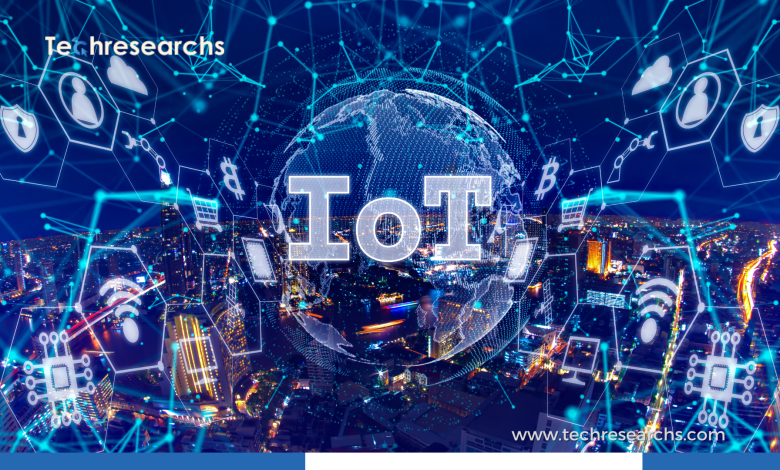
The Internet of Things (IoT) is transforming the way cities operate, communicate, and serve their residents. By connecting sensors, devices, vehicles, buildings, and public infrastructure to digital networks, cities can collect real-time data and use it to make smarter decisions.
As urban populations continue to grow, IoT-powered smart cities can help address challenges such as traffic congestion, energy consumption, waste management, public safety, and environmental sustainability. Understanding how IoT works and where it is heading is essential for anyone interested in the future of urban technology.
What Is a Smart City?
A smart city uses digital technologies and connected systems to improve urban services and quality of life. Instead of relying only on traditional infrastructure and manual processes, smart cities use data and automation to monitor conditions and respond more efficiently.
IoT is one of the key technologies behind this transformation. Sensors installed across roads, buildings, utilities, transportation systems, and public spaces can continuously collect information. This data can then be analyzed to identify patterns, detect problems, and support better decision-making.
How IoT Powers Smart Cities
IoT devices communicate with each other and with centralized platforms through networks. For example, a traffic sensor can detect congestion and send information to a city management system. The system can analyze the data and adjust traffic signals or provide updates to drivers.
A typical smart-city IoT ecosystem includes:
- Sensors: Collect information about traffic, temperature, pollution, energy use, and other conditions.
- Connectivity: Transfers data between connected devices and platforms.
- Cloud and edge computing: Processes and stores large volumes of data.
- Artificial intelligence: Identifies patterns and supports automated decisions.
- Data platforms: Help city authorities visualize and manage information.
- Actuators: Allow systems to respond automatically to changing conditions.
Major Applications of IoT in Smart Cities
1. Smart Traffic Management
Traffic congestion is one of the biggest problems in growing cities. IoT-enabled traffic lights, cameras, parking sensors, and connected vehicles can provide real-time information about road conditions.
Cities can use this information to optimize traffic signals, identify accidents, manage parking, and improve transportation planning.
2. Smart Public Transportation
IoT can make public transportation more efficient and convenient. Connected buses and trains can provide real-time location information, monitor vehicle conditions, and help transportation authorities understand passenger demand.
Predictive maintenance can also identify potential vehicle problems before they result in major breakdowns.
3. Smart Waste Management
Traditional waste collection can result in unnecessary fuel consumption because collection vehicles may visit containers that are not full.
Smart waste bins equipped with sensors can measure their fill levels and notify collection services when they need to be emptied. This can help reduce unnecessary trips, operating costs, and emissions.
4. Smart Energy Management
IoT can help cities monitor and optimize electricity consumption. Smart meters and connected energy systems provide information about how energy is being used.
Buildings can automatically adjust lighting, heating, cooling, and other systems based on occupancy and environmental conditions. This can improve energy efficiency while reducing operating costs.
5. Environmental Monitoring
Connected sensors can monitor air quality, noise levels, temperature, water quality, and other environmental conditions.
Real-time monitoring allows authorities to identify pollution hotspots and respond more quickly to environmental problems. This information can also help cities develop long-term sustainability strategies.
6. Smart Water Management
Water systems can use IoT sensors to detect leaks, monitor pressure, measure consumption, and identify unusual patterns.
Early leak detection can reduce water loss and help utility providers maintain infrastructure more efficiently.
7. Public Safety
IoT technologies can support public safety through connected cameras, emergency sensors, smart streetlights, and communication systems.
For example, smart lighting can automatically adjust brightness based on activity or environmental conditions. Emergency sensors can also send alerts when abnormal conditions are detected.
Benefits of IoT-Powered Smart Cities
IoT can provide several benefits when implemented responsibly.
Improved efficiency: Real-time data helps city authorities use resources more effectively.
Lower operating costs: Automation and predictive maintenance can reduce unnecessary expenses.
Better transportation: Connected systems can help reduce congestion and improve public transit.
Energy savings: Smart systems can identify and reduce unnecessary energy consumption.
Environmental sustainability: Data-driven management can help reduce waste, emissions, and resource consumption.
Better citizen services: Residents can receive faster information and more responsive public services.
Data-driven decision-making: Authorities can use real-time information instead of relying entirely on historical estimates.
Challenges of Building IoT Smart Cities
Despite its potential, IoT implementation comes with significant challenges.
Cybersecurity Risks
Connecting thousands or millions of devices increases the potential attack surface. Weak device security can allow attackers to access networks or manipulate connected systems.
Cities therefore need strong authentication, encryption, software updates, network segmentation, and continuous security monitoring.
Data Privacy
Smart-city systems can collect large amounts of information. Some data may reveal sensitive details about individuals’ movements, behaviors, or activities.
Cities need clear data governance policies, appropriate privacy protections, transparency, and responsible data-use practices.
High Implementation Costs
Deploying sensors, communication networks, cloud platforms, security systems, and data infrastructure requires significant investment.
Cities may need to prioritize projects that provide measurable benefits and use scalable architectures to control long-term costs.
Interoperability
Different IoT devices and platforms may use different technologies and standards. If these systems cannot communicate effectively, cities may end up with disconnected technology platforms.
Open standards and interoperable systems can help address this problem.
Maintenance and Scalability
IoT infrastructure requires continuous maintenance. Sensors can fail, batteries need replacement, software requires updates, and networks must scale as more devices are added.
Long-term planning is therefore just as important as the initial deployment.
The Role of AI and IoT in Future Cities
The combination of artificial intelligence and IoT could make smart cities increasingly autonomous.
IoT devices can collect real-time information, while AI can analyze that information and identify patterns. Together, these technologies can support predictive and automated systems.
For example, AI could analyze traffic data to predict congestion before it occurs. Similarly, predictive algorithms could identify infrastructure that is likely to fail and allow maintenance teams to intervene earlier.
This shift from reactive management to predictive management could become one of the most important developments in future smart cities.
The Future of IoT in Smart Cities
Future smart cities are likely to use more connected infrastructure, edge computing, AI, 5G and other advanced communication technologies.
Some emerging areas include:
- Autonomous and connected transportation
- Intelligent buildings
- Smart electric grids
- AI-powered traffic management
- Digital twins of urban infrastructure
- Automated waste collection
- Connected healthcare services
- Smart agriculture around urban areas
- Real-time environmental monitoring
- More personalized citizen services
The development of digital twins could be particularly valuable. A digital twin can create a digital representation of physical infrastructure, allowing city planners to simulate changes and evaluate potential outcomes before implementing them in the real world.
How Cities Can Successfully Adopt IoT
Successful smart-city development requires more than installing connected devices. Cities should begin with clearly defined problems and measurable objectives.
A practical approach includes:
- Identify specific urban challenges.
- Select IoT solutions that address those challenges.
- Establish strong cybersecurity and privacy policies.
- Choose interoperable technologies.
- Start with pilot projects.
- Measure results and citizen outcomes.
- Scale successful solutions gradually.
- Continuously maintain and improve the infrastructure.
Citizen participation should also be part of the process. Technology should improve people’s everyday experiences rather than simply increase the amount of data collected.
Conclusion
IoT is becoming an important foundation for the future of smart cities. From traffic management and waste collection to energy efficiency and environmental monitoring, connected technologies can help cities become more efficient, sustainable, and responsive.
However, smart-city development must balance innovation with cybersecurity, privacy, affordability, interoperability, and long-term maintenance. The most successful cities will not simply connect more devices; they will use technology strategically to solve real urban problems and create better experiences for residents.
As IoT continues to evolve alongside AI, edge computing, advanced connectivity, and automation, its role in shaping the cities of the future is likely to become even more significant.
Frequently Asked Questions
1. What is IoT in smart cities?
IoT in smart cities refers to connected sensors, devices, vehicles, and infrastructure that collect and exchange data to improve urban services and decision-making.
2. How does IoT improve smart cities?
IoT helps cities monitor traffic, energy consumption, waste, water systems, air quality, and public infrastructure in real time, enabling faster and more efficient responses.
3. What are some examples of IoT in smart cities?
Examples include smart traffic lights, connected public transportation, smart parking systems, intelligent streetlights, smart meters, connected waste bins, and environmental sensors.
4. What are the benefits of IoT for smart cities?
Key benefits include improved efficiency, reduced operating costs, better public services, lower energy consumption, improved transportation, and greater environmental sustainability.