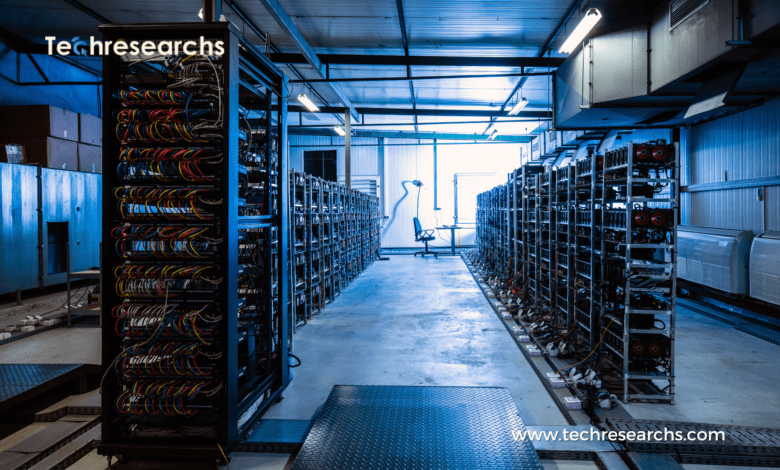
Cryptocurrency mining has evolved significantly from the days when individuals could mine digital assets using an ordinary home computer. Today, profitable mining often requires specialized hardware, efficient power management, reliable infrastructure, and careful financial planning.
While cryptocurrency mining can generate recurring income, it is not completely passive. Miners must monitor hardware, electricity consumption, network difficulty, mining rewards, maintenance costs, and cryptocurrency prices.
In 2026, the smarter approach is to treat mining as a technology-based business rather than a guaranteed source of passive income.
1. What Is Cryptocurrency Mining?
Cryptocurrency mining is the process of using computing resources to help secure and validate transactions on certain blockchain networks.
In Proof-of-Work (PoW) cryptocurrencies, miners compete to solve computational problems. A successful miner can receive rewards according to the rules of the network.
Mining generally involves:
- Specialized mining hardware
- Mining software
- Electricity
- Internet connectivity
- A compatible cryptocurrency network
- A cryptocurrency wallet
- Mining pools or suitable infrastructure
However, not every cryptocurrency can be mined. Networks using Proof-of-Stake (PoS), for example, generally rely on validators who stake cryptocurrency rather than miners performing computational work.
2. Is Cryptocurrency Mining Really Passive Income?
Cryptocurrency mining can become semi-passive income, but calling it completely passive can be misleading.
After setting up a mining operation, hardware can operate automatically and generate rewards. However, miners still need to:
- Monitor hardware performance
- Manage electricity consumption
- Check temperatures
- Maintain equipment
- Monitor mining profitability
- Update software when necessary
- Manage wallets and payouts
- Respond to hardware failures
- Consider cryptocurrency price fluctuations
Therefore, mining is better described as automated recurring income with ongoing operational responsibilities.
3. Choose the Right Cryptocurrency to Mine
One of the most important decisions is selecting a cryptocurrency that uses a mining-friendly Proof-of-Work mechanism.
Bitcoin is the best-known example, but its mining ecosystem is highly competitive and dominated by specialized ASIC hardware and large-scale mining operations.
Before selecting a cryptocurrency, evaluate:
- Mining algorithm
- Hardware requirements
- Current network difficulty
- Block rewards
- Transaction-fee contribution
- Market liquidity
- Electricity requirements
- Hardware availability
- Community and developer activity
- Long-term network prospects
Avoid selecting a coin simply because its current price appears attractive.
4. Select Appropriate Mining Hardware
Hardware selection has a major impact on mining profitability.
ASIC Miners
Application-Specific Integrated Circuit (ASIC) miners are specialized machines designed for particular mining algorithms.
Advantages:
- High computational efficiency
- Designed specifically for mining
- Suitable for large-scale operations
Disadvantages:
- Expensive upfront investment
- Limited flexibility
- High power consumption for some models
- Can become less competitive as network difficulty changes
GPU Mining
Graphics Processing Units (GPUs) were historically popular for mining various cryptocurrencies.
Their advantage is flexibility because GPUs can potentially be used for different computational workloads. However, profitability varies significantly depending on the cryptocurrency and market conditions.
Before purchasing hardware, calculate expected revenue against electricity, cooling, maintenance, pool fees, and hardware depreciation.
5. Calculate Electricity Costs Before Mining
Electricity is often one of the biggest operating expenses.
A simple calculation can help determine whether a mining setup makes financial sense:
Daily Electricity Cost = Power Consumption (kW) × 24 × Electricity Rate
For example, if a machine consumes 3 kW and electricity costs ₹8 per kWh:
3 × 24 × ₹8 = ₹576 per day
That is approximately ₹17,280 per 30-day month, before considering hardware costs, cooling, maintenance, pool fees, and other expenses.
This is why miners with access to relatively inexpensive electricity can have a major cost advantage.
6. Consider Joining a Mining Pool
Mining independently can be difficult because individual miners may have a relatively low probability of finding blocks.
A mining pool combines the computing power of many miners.
When the pool earns rewards, the rewards are distributed according to the pool’s payout model and the miner’s contributed work.
Benefits of Mining Pools
- More consistent payouts
- Reduced reward variability
- Easier participation for smaller miners
- Automated reward distribution
However, mining pools normally charge fees, so miners should compare payout structures and fees before joining.
7. Set Up a Secure Cryptocurrency Wallet
Mining rewards need somewhere to be received and stored.
A cryptocurrency wallet allows users to manage their digital assets. Wallet security should be treated as a critical part of the mining setup.
Good security practices include:
- Use strong, unique credentials
- Enable multi-factor authentication where available
- Keep recovery information private
- Consider hardware wallets for long-term storage
- Never share private keys or seed phrases
- Verify wallet addresses before transferring funds
Mining income is only valuable if the resulting assets can be securely controlled.
8. Monitor Mining Profitability
Mining profitability can change quickly.
Important variables include:
- Cryptocurrency price
- Network difficulty
- Block reward
- Mining hardware efficiency
- Electricity price
- Pool fees
- Hardware downtime
- Cooling costs
- Maintenance expenses
A mining profitability calculator can provide an estimate, but the result should not be treated as guaranteed income.
For a more realistic calculation, consider:
Net Mining Income = Mining Revenue − Electricity − Pool Fees − Maintenance − Cooling − Other Operating Costs
Also account for the original hardware purchase when calculating the actual return on investment.
9. Understand Bitcoin Mining Economics
Bitcoin remains one of the most prominent Proof-of-Work networks.
However, Bitcoin mining has become increasingly industrialized. Modern Bitcoin mining generally requires specialized ASIC hardware and efficient infrastructure.
Bitcoin’s protocol also periodically reduces the block subsidy through its halving mechanism. The most recent Bitcoin halving occurred in April 2024, reducing the block subsidy from 6.25 BTC to 3.125 BTC.
This means miners need to pay close attention to hardware efficiency, electricity prices, network competition, and Bitcoin’s market conditions.
10. Explore Renewable Energy for Mining
Energy costs and environmental concerns have encouraged some mining operations to explore renewable power.
Potential sources include:
- Solar energy
- Hydroelectric power
- Wind energy
- Geothermal energy
- Other low-cost renewable sources
For individuals, installing a dedicated renewable-energy system solely for mining may require substantial upfront investment.
The economics should therefore be evaluated carefully rather than assuming renewable energy automatically makes mining profitable.
11. Cloud Mining: Convenient but Risky
Cloud mining allows users to purchase or rent mining capacity from a provider instead of operating physical mining hardware themselves.
It can appear attractive because users do not have to:
- Purchase ASICs
- Manage cooling
- Maintain mining equipment
- Operate a mining facility
However, cloud mining carries additional risks.
Before using a provider, investigate:
- Company history
- Contract terms
- Fees
- Withdrawal policies
- Mining location
- Transparency about hardware
- Reputation
- Regulatory information
- Realistic profitability claims
Be particularly cautious about platforms promising guaranteed daily returns or unusually high profits.
12. Beware of Cryptocurrency Mining Scams
The popularity of cryptocurrency mining has created opportunities for fraudulent schemes.
Warning signs include:
- Guaranteed returns
- “Risk-free” mining income
- Unrealistically high daily profits
- Pressure to deposit money quickly
- Referral-based compensation presented as mining income
- Anonymous operators
- Lack of information about mining hardware
- Withdrawal restrictions
- Requests for private keys or seed phrases
A legitimate mining operation cannot guarantee a fixed cryptocurrency return because market conditions and mining economics continuously change.
13. Manage Mining Hardware Efficiently
Mining equipment operates continuously, so maintenance matters.
Regularly monitor:
- Temperature
- Hash rate
- Fan performance
- Power consumption
- Hardware errors
- Internet connectivity
- Unexpected shutdowns
Dust accumulation can reduce cooling efficiency. Proper ventilation and temperature management can help extend hardware life.
Automated monitoring systems can make the operation more hands-off, but they do not eliminate the need for periodic maintenance.
14. Understand Taxes and Regulations
Cryptocurrency mining may have tax and regulatory implications depending on your country and circumstances.
If you are mining in India, for example, you should check the latest guidance from the Income Tax Department and consult a qualified tax professional regarding how mining rewards, cryptocurrency transactions, expenses, and subsequent sales may be treated.
Do not assume that mining income is automatically tax-free simply because the cryptocurrency was earned rather than purchased.
15. Build a Risk Management Strategy
Mining involves several types of risk.
Market Risk
Cryptocurrency prices can fall significantly, reducing the value of mining rewards.
Operational Risk
Hardware can fail, overheat, or become obsolete.
Energy Risk
Electricity prices can increase and significantly reduce margins.
Network Risk
Increasing mining difficulty can reduce the amount of cryptocurrency earned by the same hardware.
Regulatory Risk
Government policies and taxation rules can change.
A sensible mining strategy should account for all of these risks.
16. How to Make Mining More Automated
If your goal is to create a more passive operation, automation can reduce daily manual work.
You can automate:
- Mining software startup
- Performance monitoring
- Temperature alerts
- Hash-rate monitoring
- Automatic restarts
- Payout tracking
- Electricity monitoring
However, automation should be viewed as a way to reduce operational workload, not eliminate risk.
17. Example of a Mining Profitability Calculation
Suppose a hypothetical mining machine generates:
- Monthly mining revenue: ₹30,000
- Electricity cost: ₹18,000
- Pool fees: ₹1,000
- Maintenance and cooling: ₹2,000
Estimated operating profit:
₹30,000 − ₹18,000 − ₹1,000 − ₹2,000 = ₹9,000 per month
But this does not automatically mean the machine is profitable overall.
If the hardware costs ₹3,00,000, the miner must also consider the time required to recover the initial investment.
If cryptocurrency prices fall or mining difficulty rises, the ₹9,000 estimate could decrease substantially.
18. How to Start Cryptocurrency Mining in 2026
A practical approach is:
Step 1: Research Mining
Understand Proof-of-Work, mining algorithms, block rewards, difficulty, and hash rate.
Step 2: Calculate Electricity Costs
Determine your exact electricity price before purchasing equipment.
Step 3: Compare Hardware
Compare machines based on hash rate, power consumption, efficiency, price, and expected lifespan.
Step 4: Select a Cryptocurrency
Research suitable Proof-of-Work networks rather than automatically choosing the most famous cryptocurrency.
Step 5: Choose a Mining Pool
Compare pool fees, payout methods, reliability, and reputation.
Step 6: Configure a Wallet
Create a secure wallet for receiving mining rewards.
Step 7: Install Mining Software
Use reputable software compatible with your hardware and chosen network.
Step 8: Monitor Performance
Track hash rate, power consumption, temperatures, downtime, and earnings.
Step 9: Review Profitability
Recalculate profitability regularly instead of relying on your original estimate.
Step 10: Keep Financial Records
Maintain records of hardware costs, electricity expenses, rewards, transactions, and other relevant costs for accounting and tax purposes.
19. Advantages of Cryptocurrency Mining
Cryptocurrency mining can provide several potential benefits:
- Automated reward generation
- Participation in blockchain networks
- Potential long-term cryptocurrency exposure
- Opportunity to use specialized computing infrastructure
- Possibility of scaling operations
- Potentially recurring rewards
However, these benefits come with significant financial and operational risks.
20. Disadvantages of Cryptocurrency Mining
Mining also has important challenges:
- High hardware costs
- Electricity expenses
- Hardware depreciation
- Cryptocurrency price volatility
- Increasing mining difficulty
- Cooling requirements
- Maintenance
- Regulatory uncertainty
- Potentially long ROI periods
For these reasons, mining should not be considered guaranteed passive income.
21. Is Crypto Mining Worth It in 2026?
The answer depends on your individual economics.
Mining may make sense when you have:
- Competitive electricity rates
- Efficient mining hardware
- Reliable infrastructure
- Low operating costs
- Adequate technical knowledge
- A realistic understanding of cryptocurrency risk
It may be less attractive when electricity is expensive or when the hardware must be financed at a high cost.
The most important metric is net profitability, not the amount of cryptocurrency mined.
Conclusion
Cryptocurrency mining can potentially generate recurring income in 2026, but it is not a guaranteed or completely passive investment strategy. Successful miners focus on efficiency, electricity costs, hardware performance, network conditions, security, and risk management.
Before investing, calculate your expected revenue and all operating expenses. Start with a manageable setup, avoid guaranteed-profit schemes, protect your wallet, and regularly reassess whether your mining operation remains economically viable.
Ultimately, the goal should not simply be to mine more cryptocurrency—it should be to operate an efficient, secure, and financially sustainable mining setup.
FAQs
1. Can cryptocurrency mining generate passive income?
Yes, mining can generate recurring cryptocurrency rewards, but it requires ongoing monitoring, maintenance, electricity, and financial management. It is better described as semi-passive income.
2. Is crypto mining profitable in 2026?
Profitability depends on cryptocurrency prices, electricity rates, hardware efficiency, network difficulty, mining rewards, and operating expenses. There is no universal profit guarantee.
3. How much money do I need to start mining?
The investment varies significantly depending on the cryptocurrency, hardware, electricity infrastructure, cooling requirements, and whether you mine independently or through a pool.
4. Is Bitcoin mining still profitable?
Bitcoin mining can be profitable for efficient operations with competitive electricity costs and appropriate hardware, but individual profitability varies significantly.