Biotechnology is entering a new phase in 2026, driven by advances in artificial intelligence, gene editing, genomics, synthetic biology, cell therapies, and precision medicine. Instead of relying only on traditional laboratory experimentation, researchers can increasingly combine biological data with computational models to design, test, and improve new therapies and biological systems.
These developments are creating opportunities across healthcare, pharmaceuticals, agriculture, industrial biotechnology, and environmental science. At the same time, researchers and policymakers are paying greater attention to safety, ethics, data quality, affordability, and responsible use.
What Is Biotechnology?
Biotechnology involves using living organisms, cells, genes, or biological processes to develop useful products and technologies. Applications range from vaccines and medicines to engineered microorganisms, sustainable materials, agricultural products, and diagnostic technologies.
Modern biotechnology increasingly combines biology with fields such as artificial intelligence, computer science, engineering, and data analytics. This convergence is helping researchers understand biological systems at greater scale and design new biological solutions.
Major Biotechnology Advancements in 2026
1. Artificial Intelligence in Biotechnology
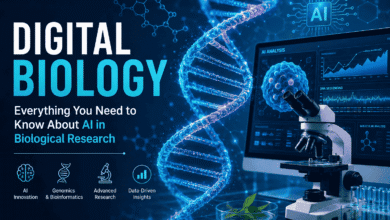
AI is becoming an important tool throughout the biotechnology research process. Machine learning models can analyze large biological datasets, identify patterns, predict molecular behavior, and help researchers prioritize promising candidates.
AI-assisted drug discovery is particularly significant. Researchers are using computational systems to support target identification, molecular design, lead optimization, drug repurposing, and other stages of research. Recent research describes AI as increasingly useful across the drug-development pipeline, although high-quality data, validation, regulation, and biological complexity remain important challenges.
AI is also being combined with synthetic biology to design biological components and gene circuits that could eventually support more precise therapies and drug-delivery systems.
2. Advances in Gene Editing
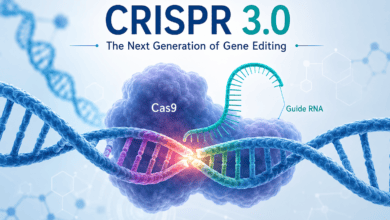
Gene editing continues to be one of the most important areas of biotechnology. Technologies such as CRISPR have opened new possibilities for modifying DNA with increasing precision.
Researchers are investigating gene-editing approaches for inherited diseases, cancer, rare disorders, and other medical conditions. Newer editing strategies aim to improve accuracy and reduce unwanted genetic changes.
However, gene editing is still a complex field. Researchers must carefully evaluate effectiveness, safety, delivery methods, long-term effects, and ethical considerations before treatments can become widely available.
3. Precision and Personalized Medicine
Precision medicine aims to make healthcare more specific to an individual’s biological characteristics rather than relying entirely on a one-size-fits-all approach.
Genomic sequencing, AI, biomarkers, and advanced diagnostics are helping researchers understand why patients can respond differently to the same treatment.
India is also investing in genomics and AI-enabled biotechnology. In 2026, India’s Department of Biotechnology highlighted AI-driven genomic sequencing as an important component of the country’s move toward personalized and predictive medicine.
This could eventually support earlier disease detection, more targeted therapies, and improved treatment decisions.
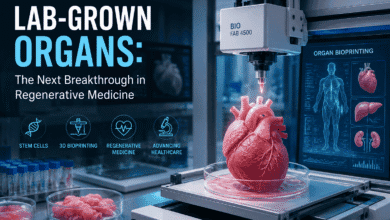
4. Cell and Gene Therapies
Cell and gene therapies are another major biotechnology area in 2026. Instead of simply treating symptoms, some of these approaches aim to modify cells or genetic material involved in disease.
Researchers are exploring applications in cancer, inherited disorders, immune-system conditions, and other diseases.
The broader biopharmaceutical industry continues to view cell, gene, and RNA-based therapies as important areas for future growth.
Despite their potential, these treatments can be technically complex and expensive. Manufacturing, patient selection, delivery, safety monitoring, and regulatory approval remain major considerations.
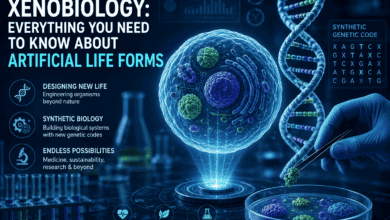
5. Synthetic Biology
Synthetic biology applies engineering principles to biological systems. Scientists can design genetic circuits, modify microorganisms, and develop biological systems for specific purposes.
In 2026, synthetic biology is increasingly intersecting with AI. Researchers are exploring ways to use computational models to design biological components before testing them experimentally.
One emerging area involves engineered human or bacterial cells that could potentially act as living drug-delivery systems. Researchers are studying how AI can help design receptors, regulatory elements, and genetic circuits for these applications.
Synthetic biology also has potential applications in sustainable manufacturing, food production, agriculture, materials, and environmental technologies.
6. Virtual Cells and Computational Biology
One of the more ambitious developments is the attempt to create increasingly sophisticated virtual representations of biological systems.
Researchers are working toward AI-based models that could connect information about DNA, proteins, cells, tissues, and biological outcomes. The long-term goal is to allow scientists to simulate biological changes before conducting some experiments in the laboratory.
Recent work on virtual-cell concepts describes them as a type of biological “flight simulator” that could help researchers evaluate drug candidates and genetic changes computationally. However, these systems still face challenges involving incomplete data, biological variability, model accuracy, and real-world validation.
7. Advanced Genomics and Single-Cell Analysis
Genomics is becoming increasingly detailed and data-driven. Modern sequencing technologies allow scientists to investigate biological information at increasingly fine levels.
Single-cell and spatial approaches can help researchers understand differences between individual cells and identify biological patterns that may be hidden in traditional bulk measurements.
These technologies could improve research into cancer, immune responses, developmental biology, and precision medicine.
8. Biomanufacturing
Biotechnology is also transforming manufacturing.
Biomanufacturing uses biological systems such as cells or microorganisms to produce medicines, chemicals, materials, food ingredients, and other products.
India has identified biomanufacturing as an important part of its biotechnology strategy. Government initiatives in 2026 have highlighted the potential of biotechnology and biomanufacturing to contribute to a new phase of industrial development.
Advances in synthetic biology, automation, and computational design could make biological production more scalable and efficient.
Biotechnology Beyond Healthcare
Although healthcare receives much of the attention, biotechnology has applications across many industries.
Agriculture
Biotechnology can support crop improvement, disease resistance, biological fertilizers, pest management, and climate-resilient agriculture.
Food Technology
Researchers are exploring fermentation, alternative proteins, cultivated foods, and microbial production systems that could provide new approaches to food manufacturing.
Environmental Biotechnology
Engineered microorganisms and biological processes may help with waste treatment, pollution management, carbon-related applications, and resource recovery.
Sustainable Materials
Biological systems can be used to develop alternatives to petroleum-based materials, including biodegradable polymers and bio-based chemicals.
Key Benefits of Biotechnology Advancements
The rapid development of biotechnology could provide several benefits:
- Faster scientific discovery
- More targeted medical treatments
- Earlier disease detection
- Better understanding of genetic diseases
- More efficient drug development
- New approaches to rare diseases
- More sustainable manufacturing
- Improved agricultural technologies
- New environmentally friendly materials
- Greater use of biological systems in industrial production
However, these benefits depend on successful research, clinical validation, responsible regulation, and practical implementation.
Challenges and Risks
Biotechnology advancement also brings important challenges.
Data Quality
AI-based biotechnology depends heavily on high-quality biological data. Incomplete or biased datasets can affect model performance and scientific conclusions.
Safety
Gene editing, synthetic biology, and engineered biological systems require careful testing and monitoring to reduce unintended consequences.
Cost and Accessibility
Advanced therapies and technologies can be expensive to develop and manufacture. Ensuring that successful innovations reach patients and communities at reasonable cost remains an important challenge.
Ethical Questions
Technologies that can modify genes or engineer biological systems raise questions about consent, responsible research, privacy, and appropriate limits.
Regulation
Biotechnology is evolving quickly, while regulatory systems must continually adapt to new types of therapies, AI-assisted research, and engineered biological products.
Responsible AI-Biology Development
The combination of AI and biotechnology creates both opportunities and risks. Recent discussions have highlighted the importance of safeguards as AI becomes more capable in biological research. Responsible development therefore requires strong oversight, secure research practices, transparent evaluation, and collaboration between scientists, policymakers, and technology experts.
What Is the Future of Biotechnology?
The future of biotechnology is likely to be increasingly connected to AI, automation, advanced computing, and engineering.
Instead of using computers only to analyze experimental results, researchers are moving toward systems that can help design biological experiments and predict possible outcomes before laboratory testing.
This could lead to a more integrated design-build-test-learn approach in which computational models and automated laboratories work together.
The long-term vision includes more personalized treatments, faster drug discovery, programmable biological systems, advanced cell therapies, sustainable biomanufacturing, and increasingly sophisticated biological simulations.
However, biotechnology will not become fully automated or predictable overnight. Biological systems are extremely complex, and computational predictions still need to be tested against real-world experimental evidence.
Conclusion
2026 biotechnology advancements are bringing biology, AI, engineering, and data science closer together than ever before. From gene editing and precision medicine to synthetic biology, virtual cells, AI-powered drug discovery, and biomanufacturing, these technologies are changing how researchers approach biological problems.
The most important development may not be a single breakthrough but the growing convergence of multiple technologies. As AI becomes more capable and biological data becomes richer, researchers may be able to design and test new biological solutions faster and more systematically.
For businesses, researchers, healthcare professionals, and technology professionals, understanding these developments will be increasingly important. The biotechnology innovations of 2026 could become the foundation for major advances in medicine, manufacturing, agriculture, and environmental sustainability in the years ahead.
Frequently Asked Questions
1. What are the major biotechnology advancements in 2026?
Major advancements include AI-powered drug discovery, gene editing, precision medicine, cell and gene therapies, synthetic biology, advanced genomics, virtual-cell models, and biomanufacturing.
2. How is AI changing biotechnology?
AI can analyze large biological datasets, identify patterns, predict molecular behavior, support drug discovery, and help researchers design biological systems more efficiently.
3. What role does CRISPR play in biotechnology?
CRISPR is a powerful gene-editing technology that allows researchers to make targeted changes to DNA. It is being studied for applications including genetic diseases, cancer, and other medical conditions.
4. What is precision medicine?
Precision medicine uses information such as genetics, biomarkers, and other biological characteristics to help develop treatments and healthcare strategies tailored to individual patients.