Exploring Augmented Reality Games: A New Era in Gaming Innovation

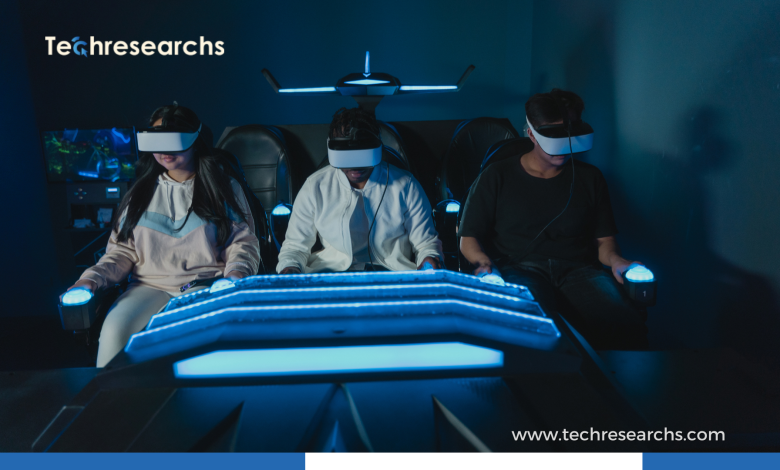
Augmented reality (AR) games are changing the way people experience digital entertainment by bringing virtual elements into the real world. Unlike traditional video games that keep players inside a completely digital environment, AR games combine digital content with physical surroundings, creating a more interactive and immersive experience.
With improvements in smartphones, wearable devices, cameras, sensors, artificial intelligence, and spatial computing, augmented reality gaming is becoming an increasingly important part of the gaming industry. From location-based adventures to multiplayer experiences and educational games, AR technology is opening new possibilities for players and game developers.
What Are Augmented Reality Games?
Augmented reality games are interactive games that place digital objects, characters, effects, or information within the player’s physical environment. The game uses technologies such as cameras, GPS, motion sensors, computer vision, and spatial mapping to understand the player’s surroundings.
For example, an AR game might allow a player to see a virtual character standing on their desk through a smartphone camera. The player can then interact with that character while still seeing the real environment around them.
This makes AR gaming different from virtual reality (VR). VR generally replaces the user’s surroundings with a fully digital environment, while AR adds digital elements to the real world.
How Augmented Reality Gaming Works
AR games rely on several technologies working together to create an interactive experience.
1. Cameras and Computer Vision
A device’s camera captures the surrounding environment. Computer vision software analyzes surfaces, objects, movement, and spatial information to determine where digital elements should appear.
2. GPS and Location Data
Location-based AR games can use GPS to connect gameplay with real-world locations. Players may need to physically move between different locations to discover challenges, characters, rewards, or missions.
3. Motion Sensors
Accelerometers and gyroscopes help detect how a player moves or rotates their device. This allows virtual objects to remain positioned correctly as the player moves around.
4. Spatial Mapping
Modern AR systems can understand surfaces and physical spaces. This enables developers to place virtual objects on floors, tables, walls, or other real-world surfaces.
5. Artificial Intelligence
AI can improve AR gaming by helping games recognize objects, understand environments, generate content, personalize challenges, and create more responsive virtual characters.
The Growth of Augmented Reality Games
The popularity of mobile gaming has played a major role in the development of AR gaming. Smartphones already contain many of the technologies required for basic AR experiences, making AR more accessible than hardware-intensive gaming platforms.
One of the most widely recognized examples is Pokémon GO, which demonstrated how location-based AR could encourage players to explore their surroundings while interacting with digital characters.
The success of such games showed developers that gaming does not necessarily have to remain inside a television, computer monitor, or traditional console. The physical world itself can become part of the game.
Key Features of Modern AR Games
Modern augmented reality games can offer several features that make gameplay more engaging.
Real-World Interaction
Players interact with digital content while viewing their actual surroundings. This can make even familiar environments feel different.
Location-Based Gameplay
Some AR games use real-world locations as part of their gameplay. Parks, streets, landmarks, and other locations can become digital game spaces.
Social and Multiplayer Experiences
AR can support multiplayer gaming where multiple players interact with digital objects within shared physical environments.
Interactive Characters
Virtual characters can appear to respond to the player’s movements and surroundings, creating more dynamic gameplay.
Gamification of Everyday Activities
AR can encourage users to walk, explore, learn, exercise, or complete real-world tasks through game mechanics.
Augmented Reality Games vs. Traditional Games
Traditional games usually provide players with a controlled digital environment. AR games add another layer by connecting the virtual experience to the player’s physical surroundings.
The difference can be seen in several areas:
| Feature | Traditional Games | AR Games |
|---|---|---|
| Environment | Primarily digital | Digital + physical |
| Device interaction | Controller, keyboard, touchscreen | Camera, sensors, touchscreen, wearables |
| Movement | Often optional | Can be part of gameplay |
| Location | Usually irrelevant | Can influence gameplay |
| Immersion | Digital immersion | Real-world augmented immersion |
| Social interaction | Online or local | Online, local, and location-based |
Neither approach is necessarily better. Traditional gaming remains ideal for many genres, while AR creates new possibilities that depend on physical interaction and real-world environments.
Benefits of Augmented Reality Gaming
More Immersive Experiences
AR games can make digital content feel more connected to the player’s environment. Seeing virtual elements appear in familiar surroundings can create a unique sense of immersion.
Encourages Physical Activity
Some location-based AR games encourage players to walk and explore. This can make physical movement part of the entertainment experience.
Social Engagement
AR games can encourage players to meet, collaborate, compete, and participate in shared activities.
Educational Opportunities
AR gaming can make learning more interactive. Students could explore historical locations, manipulate virtual scientific objects, or complete educational challenges using AR technology.
New Opportunities for Developers
AR provides developers with a different design environment. Instead of creating only virtual levels, developers can design experiences that interact with real-world spaces.
Challenges Facing AR Gaming
Despite its potential, augmented reality gaming still has several challenges.
Battery Consumption
AR applications often use cameras, GPS, sensors, graphics processing, and network connectivity simultaneously. This can consume significant battery power.
Privacy Concerns
Because AR applications may use cameras, location data, and environmental information, privacy and data protection are important considerations.
Hardware Limitations
Not every smartphone or wearable device supports advanced AR features. Developers must often design experiences that work across different hardware capabilities.
Safety Issues
Players focused on a game may become distracted while walking or moving through public spaces. Developers and users need to consider their physical surroundings.
Development Complexity
Creating high-quality AR experiences requires knowledge of 3D graphics, mobile development, spatial computing, computer vision, and user experience design.
The Role of AI in AR Gaming
Artificial intelligence is expected to play an increasingly important role in the development of AR games.
AI can help games understand environments and respond to players in real time. For example, an AI-powered AR game could recognize a particular object in a room and use it as part of the gameplay.
Generative AI could also help developers create characters, dialogue, missions, environments, and other game assets more efficiently.
The combination of AI and AR could eventually lead to games that adapt continuously to the player’s behavior and surroundings.
AR Gaming and Spatial Computing
Spatial computing is another technology influencing the future of AR games. Instead of treating digital content as something that exists only on a flat screen, spatial computing allows digital objects to be positioned within three-dimensional environments.
This could enable games where virtual objects remain anchored to specific locations and respond naturally to physical spaces.
As spatial computing devices become more capable, AR gaming could move beyond smartphones toward glasses, headsets, and other wearable technologies.
The Future of Augmented Reality Games
The future of AR gaming is likely to involve greater realism, better environmental understanding, improved multiplayer interaction, and more intelligent game systems.
Future AR games may offer:
- More accurate spatial tracking
- AI-powered characters and game worlds
- Persistent digital objects tied to physical locations
- Shared AR experiences for multiple players
- Improved AR glasses and wearable devices
- More realistic virtual objects
- Personalized gameplay
- Integration with fitness and education
- Cross-platform experiences between mobile devices and wearables
AR could also become increasingly connected with other emerging technologies, including artificial intelligence, 5G connectivity, cloud computing, and spatial computing.
AR Games Beyond Entertainment
The influence of AR gaming may extend beyond traditional entertainment.
Education
Educational AR games can transform classrooms into interactive environments. Students could explore planets, historical events, biological structures, or engineering concepts through game-based learning.
Tourism
AR games could turn cities and historical sites into interactive experiences. Visitors could complete missions, discover digital characters, or learn historical information while exploring real locations.
Fitness
AR games can combine entertainment with physical movement. Players may complete challenges by walking, running, or performing real-world activities.
Retail and Marketing
Brands can use AR gaming experiences to create interactive campaigns, product demonstrations, and customer engagement activities.
How Developers Can Build Better AR Games
Developers looking to create successful AR games should focus on more than visual effects. Gameplay remains the most important factor.
A strong AR game should:
- Provide a clear and enjoyable gameplay objective.
- Use AR features because they improve the experience rather than simply adding visual effects.
- Consider player safety and accessibility.
- Optimize battery and device performance.
- Protect user location and camera data.
- Provide intuitive controls.
- Work effectively across supported devices.
- Offer meaningful progression and rewards.
- Test experiences in different physical environments.
- Balance virtual content with the player’s real surroundings.
Are AR Games the Future of Gaming?
AR is unlikely to completely replace traditional gaming. Instead, it is creating another category of interactive entertainment.
Traditional games provide controlled digital environments that are ideal for genres such as role-playing games, strategy games, simulations, and competitive gaming. AR games offer something different by connecting digital gameplay to physical spaces.
As AR hardware and software improve, the boundary between digital and physical gaming may become less noticeable. Players could eventually interact with persistent virtual worlds that exist alongside their everyday environments.
Conclusion
Augmented reality games represent an important development in gaming innovation. By combining digital content with the physical world, AR creates experiences that can encourage exploration, movement, social interaction, and discovery.
The future of AR gaming will depend on advances in AI, spatial computing, mobile hardware, wearable devices, connectivity, and developer creativity. Although challenges such as privacy, safety, battery consumption, and hardware accessibility remain, the technology has significant potential.
As these technologies mature, augmented reality games could become an increasingly common part of how people play, learn, exercise, and interact with digital entertainment.
Frequently Asked Questions About Augmented Reality Games
What are augmented reality games?
Augmented reality games are games that combine digital characters, objects, and interactive elements with the real-world environment using technologies such as cameras, GPS, sensors, and computer vision.
What is the difference between AR and VR games?
AR games add digital content to the real world, while VR games create a fully virtual environment that users experience through a virtual reality headset.
Do augmented reality games require special equipment?
Many AR games can be played using compatible smartphones or tablets. More advanced AR experiences may require AR glasses, headsets, or other specialized devices.
What is the future of augmented reality gaming?
The future of AR gaming may include AI-powered characters, improved spatial computing, AR glasses, realistic virtual objects, multiplayer experiences, and more interactive real-world environments.