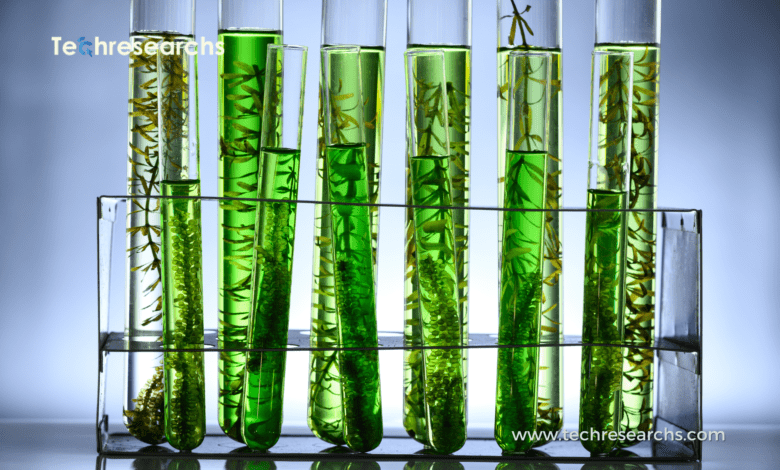
How to Leverage Industrial Biotechnology for Sustainable Production Industries worldwide are under increasing pressure to produce more while using fewer resources. Rising energy costs, resource constraints, waste generation, and environmental concerns are forcing manufacturers to rethink traditional production models.
Industrial biotechnology offers one of the most promising approaches to this challenge. By using microorganisms, enzymes, cells, fermentation, synthetic biology, and other biological systems, businesses can develop products and processes that use renewable resources more efficiently and, in suitable applications, reduce environmental impact.
From bio-based chemicals and sustainable materials to precision fermentation and waste valorization, industrial biotechnology is moving from specialized research into practical commercial applications.
But adopting biotechnology is not simply about replacing a chemical process with a biological one. Businesses need to evaluate economics, scalability, feedstocks, energy consumption, lifecycle impacts, and regulatory requirements before investing.
This guide explains how organizations can leverage industrial biotechnology to build more sustainable and efficient production systems.
What Is Industrial Biotechnology?
Industrial biotechnology is the use of biological organisms, cells, enzymes, and biological processes to manufacture products or improve industrial processes.
It is sometimes called white biotechnology because of its focus on industrial manufacturing rather than healthcare or agriculture.
Traditional manufacturing often depends heavily on fossil-derived raw materials and energy-intensive chemical reactions. Industrial biotechnology provides alternative approaches by using biological systems to perform specific transformations.
Common applications include:
- Bio-based chemicals
- Renewable fuels
- Enzymes
- Sustainable materials
- Food ingredients
- Agricultural products
- Pharmaceutical intermediates
- Biodegradable polymers
- Waste-derived products
The goal is not always to completely replace conventional manufacturing. In many cases, biotechnology can be integrated into existing production systems to improve efficiency, reduce waste, or create products that were previously difficult to manufacture.
Why Industrial Biotechnology Is Important for Sustainability
Sustainable production requires more than reducing emissions. Companies must also consider raw materials, energy, water, waste, supply chains, and the complete lifecycle of their products.
Industrial biotechnology can contribute to these goals in several ways.
Reduced Dependence on Fossil-Based Feedstocks
Many conventional chemicals and materials are produced using petroleum or natural-gas-derived inputs.
Biological production can use alternative feedstocks, including renewable biomass, agricultural residues, organic waste, and other carbon sources, depending on the process.
This can help diversify raw-material supply and create opportunities for bio-based manufacturing.
More Efficient Chemical Processes
Enzymes and microorganisms can perform highly specific reactions.
In appropriate applications, biological processes can operate under milder conditions than some conventional chemical processes, potentially reducing energy requirements and unwanted by-products.
However, the actual environmental benefit depends on the complete production system.
Better Waste Utilization
Industrial biotechnology can turn certain waste streams into useful resources.
For example, organic residues can potentially be converted into chemicals, fuels, materials, or other valuable products through fermentation and related biological processes.
This supports the principles of the circular economy, where resources are kept in productive use rather than discarded.
Development of Bio-Based Products
Biotechnology can help companies develop alternatives to petroleum-derived products.
Examples include:
- Bio-based polymers
- Fermentation-derived ingredients
- Bio-based solvents
- Sustainable chemicals
- Enzyme-based products
- Alternative proteins
- Biological agricultural inputs
The sustainability of each product must still be evaluated through lifecycle analysis rather than assumed from its biological origin.
Key Technologies Transforming Industrial Biotechnology
The industrial biotechnology sector is advancing because several technologies are developing together.
Synthetic Biology
Synthetic biology enables researchers to design and modify biological systems for specific purposes.
Scientists can engineer microorganisms to produce compounds that may otherwise require complex chemical manufacturing processes.
This technology is being investigated across chemicals, materials, food, agriculture, and other industries.
Metabolic Engineering
Microorganisms naturally produce many different compounds. Metabolic engineering modifies their biological pathways to encourage production of a specific target molecule.
For manufacturers, the objective is generally to improve factors such as:
- Yield
- Productivity
- Product consistency
- Feedstock utilization
- Process efficiency
Better biological pathway design can make fermentation-based production more commercially attractive.
Precision Fermentation
Precision fermentation has become an important area of industrial biotechnology.
Instead of using microorganisms simply to produce traditional fermented foods, companies can engineer microorganisms to produce specific proteins, enzymes, fats, flavors, and other compounds.
Potential applications include food ingredients, specialty chemicals, materials, and other high-value products.
Enzyme Engineering
Enzymes are biological catalysts capable of accelerating specific chemical reactions.
Through enzyme engineering and related techniques, researchers can develop enzymes with properties better suited to industrial environments.
These improvements can include greater stability, higher activity, or improved selectivity.
AI and Machine Learning
Artificial intelligence is increasingly being integrated into biotechnology research and manufacturing.
AI can help analyze biological datasets, identify promising candidates, predict biological behavior, optimize experiments, and detect patterns in production data.
When combined with laboratory automation and high-throughput experimentation, AI can potentially accelerate the development of biological production processes.
Advanced Fermentation and Bioprocessing
Producing a biological product in a laboratory is very different from manufacturing it commercially.
Industrial-scale bioprocessing requires careful management of:
- Temperature
- pH
- Oxygen
- Nutrient supply
- Mixing
- Contamination
- Fermentation time
- Product recovery
Modern sensors, automation, process analytics, and digital monitoring can improve control over these variables.
How Companies Can Leverage Industrial Biotechnology
Companies interested in adopting industrial biotechnology should follow a structured approach.
1. Identify the Right Production Problem
The first step is not choosing a biotechnology. It is identifying a manufacturing challenge.
A company might be dealing with:
- High energy consumption
- Expensive raw materials
- Excessive waste
- Supply-chain dependency
- Difficult chemical synthesis
- Low process efficiency
- High environmental impact
Biotechnology should then be evaluated as a potential solution.
2. Select the Appropriate Biological Platform
Different products require different biological systems.
Depending on the application, companies may use:
- Bacteria
- Yeast
- Fungi
- Enzymes
- Mammalian cells
- Plant-based systems
- Cell-free biological systems
The right platform depends on the desired product, feedstock, production conditions, cost, and scale.
3. Test the Process at Small Scale
Before investing in large manufacturing infrastructure, companies should validate the process through laboratory and pilot-scale testing.
Important performance indicators include:
- Product yield
- Production rate
- Feedstock conversion
- Energy consumption
- Water requirements
- Waste generation
- Product quality
- Operating cost
Pilot testing can reveal challenges that may not be visible during laboratory experiments.
4. Develop a Scalable Feedstock Strategy
Feedstock is one of the most important considerations in biological manufacturing.
A sustainable feedstock should ideally be available consistently and at an economically viable cost.
Companies should evaluate:
- Availability
- Transportation requirements
- Seasonal variation
- Processing requirements
- Competing uses
- Environmental impact
- Long-term supply
For example, using agricultural waste may appear attractive, but collecting and transporting large quantities can introduce additional costs and emissions.
5. Integrate Digital Technologies
Digitalization can make biological production more measurable and controllable.
Sensors can collect real-time information about production conditions, while analytics platforms can identify changes in process performance.
AI-based systems can potentially help predict process deviations and identify opportunities for optimization.
This creates a data-driven biomanufacturing model in which biological processes are continuously monitored and improved.
6. Evaluate the Full Lifecycle
A bio-based product is not automatically sustainable.
Companies should assess the complete lifecycle, including:
Raw materials → Production → Transportation → Product use → End of life
Lifecycle assessment can help identify whether a proposed biological process genuinely improves environmental performance.
This is particularly important when comparing bio-based products with conventional alternatives.
Major Applications of Industrial Biotechnology
Industrial biotechnology is being applied across a wide range of industries.
Sustainable Chemicals
Microorganisms and engineered biological pathways can produce chemical building blocks and specialty chemicals.
This creates opportunities to develop alternative manufacturing routes that use renewable or alternative carbon sources.
Biofuels
Biotechnology has long been used in the production of fuels such as ethanol and biogas.
Newer research focuses on improving microorganisms, feedstock conversion, and production efficiency while expanding the types of raw materials that can be processed.
Sustainable Food Ingredients
Precision fermentation can produce specific proteins, enzymes, flavors, and other ingredients.
This provides manufacturers with additional production platforms and may reduce dependence on certain conventional supply chains.
Agricultural Biotechnology
Industrial biotechnology can support the development of microbial products, biological fertilizers, enzymes, and other agricultural inputs.
These technologies may complement conventional agricultural practices and contribute to more resource-efficient production.
Sustainable Materials
Biological systems can be used to develop certain polymers, fibers, coatings, and other materials.
The growing interest in bio-based materials is driven partly by the need to reduce reliance on fossil-derived raw materials.
Waste Valorization
Waste streams can become potential sources of valuable carbon.
Instead of treating certain organic waste as an end product, biotechnology can help convert it into useful chemicals, fuels, or materials.
This approach can connect waste management with manufacturing and create new opportunities within circular production systems.
Challenges of Industrial Biotechnology
Despite its potential, industrial biotechnology has several challenges.
High Research and Development Costs
Developing an efficient biological production process can require significant investment in research, engineering, testing, and infrastructure.
Scaling From Laboratory to Factory
A process that works well in a small laboratory vessel may behave differently at industrial scale.
Large-scale fermentation introduces challenges involving mixing, oxygen transfer, heat management, contamination, and product recovery.
Feedstock Uncertainty
The availability and quality of biological feedstocks can vary.
Companies need reliable supply chains before committing to large-scale production.
Downstream Processing
Producing the desired compound is only one part of manufacturing.
The product must often be separated, purified, concentrated, and prepared for commercial use. In some processes, downstream processing can represent a significant portion of total production costs.
Regulatory Considerations
Products derived through biotechnology may be subject to different regulatory requirements depending on their application and market.
Organizations should incorporate regulatory planning into the development process from the beginning.
Measuring Real Sustainability
Businesses should avoid assuming that every bio-based process is environmentally superior.
A process can have renewable inputs while still requiring significant energy, water, transportation, or land.
For this reason, measurable environmental indicators and lifecycle assessments are essential.
Industrial Biotechnology and the Circular Economy
One of the most significant opportunities for industrial biotechnology is its connection with the circular economy.
The traditional linear model is:
Take → Make → Use → Dispose
A circular model attempts to keep resources in use for longer.
Biotechnology can contribute by converting biological residues and waste streams into new products.
For example:
Agricultural residue → Biological processing → Chemical/material → New product
This approach can reduce waste while creating additional economic value from resources that might otherwise be discarded.
The Future of Industrial Biotechnology
Industrial biotechnology is moving toward greater integration with AI, automation, synthetic biology, advanced fermentation, and data analytics.
Future production systems may use biological organisms specifically designed for particular manufacturing tasks while automated systems continuously monitor and optimize production.
AI could also help researchers explore biological pathways faster and identify promising candidates before moving them into laboratory testing.
Another important trend is the development of biomanufacturing platforms that can be adapted to produce multiple products rather than relying on a single manufacturing pathway.
As these technologies mature, the competitive advantage may come from combining biological innovation with strong engineering, supply-chain management, and data capabilities.
Best Practices for Sustainable Biotech Adoption
Businesses considering industrial biotechnology should keep several principles in mind:
- Start with a clearly defined manufacturing problem.
- Evaluate both technical and commercial feasibility.
- Choose feedstocks carefully.
- Use pilot-scale testing before full commercialization.
- Monitor energy and water consumption.
- Measure waste and emissions throughout the process.
- Use lifecycle assessment to support sustainability claims.
- Integrate automation and data analytics where appropriate.
- Plan regulatory requirements early.
- Scale only when the economics and sustainability metrics support it.
Conclusion
Industrial biotechnology is changing the way businesses think about manufacturing. By combining biological systems with engineering, automation, AI, and advanced processing, companies can explore new ways to produce chemicals, materials, fuels, ingredients, and other products.
Its greatest value is not simply replacing traditional production with biological alternatives. The larger opportunity is to redesign production around renewable resources, efficient biological processes, waste reduction, and circular resource use.
However, sustainable industrial biotechnology requires careful evaluation. Companies must consider scalability, cost, feedstock availability, energy and water requirements, regulatory conditions, and lifecycle impacts before commercializing a process.
As synthetic biology, precision fermentation, enzyme engineering, AI, and bioprocessing continue to mature, industrial biotechnology is likely to play an increasingly important role in the transition toward more efficient, resilient, and sustainable production systems.
Frequently Asked Questions (FAQs)
1. What is industrial biotechnology?
Industrial biotechnology uses microorganisms, enzymes, cells, and biological processes to manufacture products or improve industrial processes. It can be applied to chemicals, fuels, food ingredients, materials, agriculture, and waste management.
2. How does industrial biotechnology support sustainable production?
It can support sustainability by using renewable or alternative feedstocks, improving resource efficiency, reducing certain types of waste, and enabling bio-based production methods. The actual environmental benefit depends on the complete lifecycle of the process.
3. What are the main applications of industrial biotechnology?
Major applications include bio-based chemicals, renewable fuels, sustainable materials, precision fermentation, enzymes, agricultural products, food ingredients, pharmaceutical intermediates, and waste valorization.
4. What is precision fermentation?
Precision fermentation uses microorganisms that are optimized or engineered to produce specific compounds such as proteins, enzymes, fats, flavors, and other ingredients under controlled conditions.