AR Medical Training: Merging Technology and Medicine for Better Outcomes

Medical training has always depended on a mix of classroom learning, textbooks, demonstrations, and hands-on practice. But as technology continues to change healthcare, the way medical professionals learn is changing too.
One technology getting increasing attention is Augmented Reality (AR).
AR can bring digital information into the real world. Instead of studying a flat image of the human heart or watching a recorded surgical procedure, students can interact with three-dimensional medical models and explore them from different angles.
This makes AR medical training more than just another technology trend. It has the potential to make complicated medical concepts easier to understand, provide safer ways to practice, and help healthcare professionals prepare for real-world situations.
What Is AR Medical Training?
AR medical training uses augmented reality devices and software to add digital information to what a learner sees in the physical world.
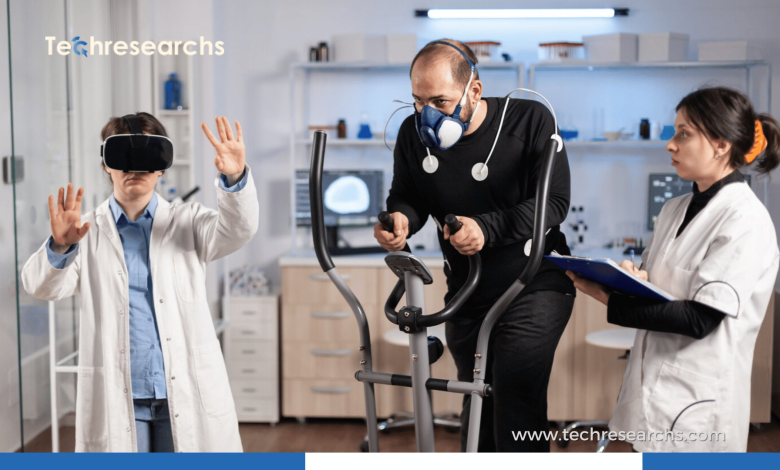
Depending on the application, students may use a smartphone, tablet, AR headset, or smart glasses. The technology can display 3D anatomy, procedure instructions, simulations, labels, and other educational material.
Think about learning the human circulatory system. Looking at a textbook diagram can explain where the heart and blood vessels are located, but a 3D AR model can make the relationship between those structures much easier to visualize.
Students can rotate the model, zoom in, examine individual structures, and explore the anatomy at their own pace.
That hands-on experience is one of the biggest reasons AR is attracting interest in medical education.
Why Is AR Becoming Important in Medical Training?
Medicine involves an enormous amount of information. Students need to understand anatomy, procedures, diseases, medications, equipment, and clinical decision-making.
Memorizing all of this information is only one part of becoming a healthcare professional. Students also need to understand how different concepts connect in the real world.
This is where immersive technologies can help.
AR can turn abstract information into something visual and interactive. Instead of simply reading about an organ, a learner can examine a digital model. Instead of only watching a demonstration, a trainee can work through a simulated procedure.
The result is a learning experience that feels more active and practical.
How AR Is Being Used in Medical Education
AR can support several areas of healthcare education.
1. Learning Human Anatomy
Anatomy is one of the first major challenges for many medical students.
There are hundreds of structures to understand, and many of them are located close together. A two-dimensional picture doesn’t always make those relationships obvious.
AR can provide a different approach.
A student could examine a 3D model of the human body and gradually explore its muscles, bones, organs, nerves, and blood vessels. Structures can be isolated or viewed together to understand how they relate to one another.
This type of learning can make anatomy less about memorizing labels and more about understanding spatial relationships.
2. Practicing Medical Procedures
Medical procedures require more than theoretical knowledge. Healthcare professionals need practice before performing many procedures in real clinical environments.
AR can provide simulated training experiences where learners can follow a procedure step by step.
For example, an AR training application could guide a student through a simulated clinical task by displaying instructions in the learner’s field of view.
The student can repeat the exercise, identify where they went wrong, and try again.
This doesn’t replace supervised clinical training, but it can provide another opportunity to build familiarity and confidence.
3. Supporting Surgical Education
Surgery is another area where visualization matters enormously.
Trainees need to understand anatomy, procedural sequences, instruments, and potential complications. AR can help connect these concepts through interactive visualization.
In some applications, digital anatomical information can be displayed alongside a physical environment. This may help learners understand complex structures and surgical workflows more intuitively.
However, surgical AR systems require careful testing. A digital overlay must be accurate and reliable before it can be trusted for important clinical applications.
4. Emergency Response Training
Healthcare workers may face situations where there is very little time to think.
Emergency training allows professionals to practice responding to these situations before they encounter them in real life.
AR can create simulated scenarios involving emergencies, allowing learners to work through a situation while receiving digital prompts or information.
For example, a training exercise could simulate a patient experiencing a medical emergency. The trainee might need to assess the situation, identify priorities, communicate with other team members, and follow the appropriate procedure.
Because the scenario is simulated, learners can make mistakes without putting an actual patient at risk.
Benefits of AR Medical Training
The appeal of AR isn’t simply that it looks impressive. Its value comes from how it can change the learning experience.
Makes Difficult Concepts Easier to Visualize
Some medical concepts are difficult to understand through text alone.
A 3D model can make complicated structures much easier to explore. Learners can see how parts fit together instead of trying to imagine the relationship from a static diagram.
Encourages Active Learning
Traditional learning can sometimes become passive. Students read, listen, take notes, and memorize information.
AR encourages interaction.
Learners can move around a model, examine individual structures, follow instructions, and actively participate in the lesson.
Allows Repeated Practice
Students don’t understand every procedure perfectly on their first attempt.
AR-based simulations can give them the opportunity to practice repeatedly. They can go through the same scenario several times until the process becomes more familiar.
Creates a Safer Training Environment
Medical mistakes can have serious consequences when they happen with real patients.
Simulation technologies provide an environment where learners can practice certain skills without exposing patients to unnecessary risks.
AR doesn’t eliminate the need for real clinical experience, but it can provide an additional layer of preparation.
Can Make Learning More Engaging
Let’s be honest—medical education can involve a huge amount of information.
Interactive technology can make certain lessons more engaging by allowing students to explore concepts instead of simply reading about them.
That engagement may help learners stay focused and develop a stronger understanding of the subject.
AR and the Future of Surgical Training
The relationship between AR and surgical education could become particularly interesting as the technology develops.
Future training systems may combine AR with artificial intelligence, computer vision, 3D imaging, and patient-specific models.
Imagine a trainee studying a digital representation of a patient’s anatomy before a procedure. Instead of looking at separate images, the learner could potentially explore the anatomy as a three-dimensional model.
AI could also provide personalized feedback during training, while AR could display relevant information within the learner’s visual field.
These technologies are still developing, and their usefulness will depend heavily on accuracy, safety, usability, and clinical validation.
Challenges That Healthcare Organizations Need to Consider
AR has plenty of potential, but it isn’t a magic solution.
Hardware Can Be Expensive
High-quality AR equipment and specialized medical software can require a significant investment. Healthcare institutions and educational organizations need to consider whether the technology provides enough value for its cost.
Accuracy Is Extremely Important
A small mistake in a medical learning application can create confusion or lead to incorrect understanding.
AR content therefore needs to be carefully developed, reviewed, and maintained.
Healthcare Data Must Be Protected
Some AR applications may work with patient information or medical imaging.
That creates important privacy and security responsibilities. Organizations need appropriate safeguards for collecting, storing, processing, and accessing healthcare data.
Not Everyone Learns the Same Way
AR may work extremely well for some learners but not for everyone.
Medical institutions should treat AR as one part of a broader training strategy rather than assuming that immersive technology is automatically better than traditional teaching.
Clinical Experience Still Matters
This is perhaps the most important point.
AR can help someone learn a procedure, but it cannot completely reproduce the complexity of working with a real patient.
Doctors, nurses, surgeons, and other healthcare professionals still need supervised clinical experience and hands-on training.
AR Combined With AI Could Take Medical Training Further
The combination of AR and artificial intelligence could create even more personalized training experiences.
For example, an AI-powered training platform could monitor how a learner performs during a simulation and identify areas that need improvement.
The AR system could then adjust the next exercise based on the learner’s performance.
A beginner might receive more guidance, while an experienced trainee could receive a more challenging scenario.
This type of adaptive learning could make training more personalized and efficient.
What Could AR Medical Training Look Like in the Future?
As AR hardware becomes lighter and software becomes more capable, the technology could become easier to use in classrooms, simulation centers, hospitals, and professional training programs.
We may see greater use of:
- Interactive 3D anatomy lessons
- AR-assisted clinical simulations
- Virtual patient scenarios
- AI-powered training feedback
- Collaborative medical training
- Patient-specific 3D visualization
- AR-supported surgical preparation
- Remote medical education
The important thing is not simply adding AR to medical education because the technology is new.
The real goal should be to use it where it genuinely improves understanding, practice, or decision-making.
Final Thoughts
AR medical training is bringing a more interactive approach to healthcare education.
From anatomy lessons to surgical simulations and emergency response exercises, augmented reality can give learners new ways to see and practice medical concepts.
It won’t replace professors, doctors, nurses, clinical training, or real patient experience. Instead, its greatest value may come from working alongside those traditional methods.
As AR continues to develop, healthcare organizations and educational institutions will have more opportunities to use immersive technology in meaningful ways.
The future of medical education may not be about choosing between technology and traditional learning. It may be about combining the best parts of both to help healthcare professionals become better prepared, more confident, and ultimately more effective in the real world.
Frequently Asked Questions
What is AR medical training?
AR medical training uses augmented reality to place digital medical information, 3D models, simulations, or instructions into a learner’s real-world environment. It can be used for anatomy, medical procedures, emergency training, and other areas of healthcare education.
How does AR help medical students?
AR can make complex medical subjects easier to visualize and interact with. Students can explore 3D anatomy, practice simulated tasks, and repeat learning exercises at their own pace.
Can AR replace hands-on medical training?
No. AR should complement traditional medical education rather than replace it. Students still need supervised clinical experience, practical training, instructors, and real-world patient interaction.
What are the main challenges of AR medical training?
The main challenges include equipment costs, technical limitations, data privacy, content accuracy, user training, and the need for proper clinical and educational validation.