Technology is moving faster than ever. What seemed experimental a few years ago can quickly become part of everyday business, healthcare, transportation, or communication.
In 2026, that change is becoming even more noticeable. Artificial intelligence is no longer limited to chatbots and content generation. AI is increasingly being combined with robotics, software automation, healthcare, energy systems, and physical devices.
At the same time, other technologies such as quantum computing, advanced batteries, smart sensors, biotechnology, and next-generation energy systems are continuing to mature.
So, which technologies are worth watching in 2026?
Let’s explore some of the most promising developments and why they could matter in the years ahead.
1. AI Agents
AI agents are one of the biggest technology developments to watch in 2026.
Unlike traditional AI tools that mainly respond to individual requests, AI agents are designed to handle multi-step tasks. They can understand a goal, plan a sequence of actions, work with different software tools, and adjust their approach based on what happens.
For businesses, this could mean automating more than simple repetitive tasks.
An AI agent could potentially help manage customer requests, analyze information, coordinate workflows, assist developers, or monitor business processes.
IEEE’s 2026 technology predictions identify AI agents as a major shift in business environments, with the potential to reduce routine work and change how people interact with software.
The challenge is making these systems reliable. Businesses will need strong security, monitoring, human oversight, and clear rules before giving agents access to important systems.
2. Physical AI and Advanced Robotics
AI is beginning to move beyond screens.
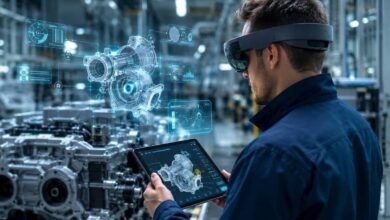
Physical AI combines artificial intelligence with machines that can sense and interact with the real world. This includes robots, autonomous vehicles, industrial machines, drones, and other intelligent devices.
Imagine a robot that can understand its surroundings, recognize objects, learn from experience, and adjust its actions without being programmed for every possible situation.
That could change manufacturing, logistics, healthcare, agriculture, warehouses, and even homes.
Robotics is becoming more interesting because improvements in AI, computer vision, sensors, batteries, and edge computing are coming together.
In other words, robots are not simply becoming stronger or faster. They are becoming better at understanding what is happening around them.
3. Quantum Computing
Quantum computing has been discussed for years, but 2026 is another important year for tracking its progress.
Traditional computers process information using bits. Quantum computers use quantum bits, or qubits, to approach certain types of problems in fundamentally different ways.
The technology is still difficult to build and operate at scale. However, researchers and technology companies continue to explore its potential in areas such as materials science, optimization, chemistry, cryptography, and drug discovery.
One particularly interesting direction is the combination of quantum computing, high-performance computing, and AI. IEEE lists this convergence among the longer-term technology areas worth watching.
Quantum computers are not expected to replace ordinary computers anytime soon. Instead, their value may come from solving specialized problems that are extremely difficult for conventional systems.
4. AI-Powered Healthcare
Healthcare is another area where AI is moving from experimentation toward more practical applications.
AI can help researchers analyze medical information, identify patterns, support diagnosis, and accelerate the search for potential treatments.
The next stage is likely to involve more personalized and adaptive healthcare systems.
For example, AI systems could combine information from medical records, wearable devices, imaging systems, and other sources to provide more context for healthcare professionals.
IEEE’s 2026 predictions also highlight adaptive bio-AI interfaces that can continuously interpret biological signals and potentially help adjust therapies in real time.
This technology comes with an important responsibility. Healthcare AI must be accurate, secure, transparent, and carefully validated before it is trusted in sensitive situations.
5. AI-Powered Drug Discovery
Developing a new medicine can take years and require enormous amounts of research.
AI could help shorten parts of that process by analyzing biological data, identifying potential drug candidates, predicting molecular behavior, and helping researchers explore possibilities more quickly.
This does not mean AI will replace scientists.
Instead, AI can act as a powerful research assistant, helping scientists work through huge amounts of information that would be difficult to analyze manually.
As AI models become better at understanding biological systems, the connection between artificial intelligence and biotechnology could become one of the most important areas of innovation.
6. Next-Generation Energy Technologies
The rapid growth of AI and data centers is increasing demand for electricity. At the same time, countries and businesses are looking for cleaner and more reliable energy sources.
This is creating pressure for innovation across the entire energy system.
One area receiving attention is the development of more intelligent power grids. IEEE predicts that future power grids will become increasingly AI-driven, predictive, and autonomous.
Other areas worth watching include advanced batteries, fusion energy, renewable energy systems, energy storage, and technologies that improve how electricity is produced and distributed.
The future energy system will likely not depend on one technology. Instead, different sources and technologies will need to work together.
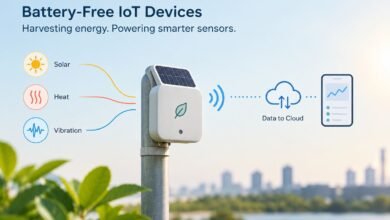
7. Smart and Autonomous Sensors
Sensors are everywhere.
Cars use them. Phones use them. Factories use them. Healthcare devices use them. Smart buildings use them.
The next step is making sensors smarter and more autonomous.
Instead of simply collecting information and sending it somewhere else, advanced sensors can increasingly process information locally and respond to changes.
This can be useful in industrial monitoring, healthcare, environmental protection, agriculture, transportation, and security.
For example, a smart sensor in a factory could detect unusual equipment behavior before a machine fails.
That could help businesses move from reacting to problems toward preventing them.
8. Brain-Computer Interfaces
Brain-computer interfaces, often called BCIs, aim to create a direct communication pathway between brain activity and external technology.
This technology has attracted significant interest because of its potential to help people with certain disabilities interact with computers or assistive devices.
Researchers are also exploring broader applications, although many of these possibilities remain experimental.
The technology raises important questions about privacy, safety, data ownership, and ethics.
If brain signals can be interpreted by computers, protecting that information could become just as important as protecting other sensitive personal data.
9. Advanced Materials
Materials science may not receive as much attention as AI, but it plays an important role in almost every major technology sector.
Better materials can lead to lighter vehicles, more efficient batteries, stronger infrastructure, improved electronics, and more sustainable products.
AI is also changing how researchers discover and test materials.
Instead of relying entirely on traditional trial-and-error approaches, researchers can use computational models to identify materials that may have desirable properties and then test the most promising candidates.
This combination of AI and materials science could accelerate innovation in energy, electronics, manufacturing, transportation, and construction.
10. Space-Based Connectivity
Space technology is becoming increasingly connected to everyday communication.
Satellite systems are being developed to provide connectivity in areas where traditional infrastructure is limited or unavailable.
IEEE’s 2026 technology predictions specifically highlight satellite direct-to-device communications as an area that could improve coverage and reliability for phones and other connected devices.
The potential impact is significant for remote communities, emergency communication, transportation, and global connectivity.
As satellite technology becomes more capable and affordable, the distinction between terrestrial and space-based communication networks could become less noticeable.
Why These Technologies Matter
The most interesting thing about technology in 2026 is that many innovations are no longer developing independently.
AI is being combined with robotics.
AI is being used in drug discovery.
Sensors are becoming part of healthcare systems.
Quantum computing is being explored alongside AI and high-performance computing.
Energy systems are becoming more intelligent.
This convergence could be more important than any individual technology.
A breakthrough in one field can help accelerate progress in another. That’s why businesses and technology professionals need to look beyond individual trends and understand how different technologies are beginning to connect.
How Businesses Can Prepare for These Changes
Businesses don’t need to invest in every emerging technology.
Instead, they should start by asking a simple question:
Could this technology solve a real problem for our business?
If the answer is yes, the next step could be a small pilot project.
Companies can experiment with AI agents, intelligent automation, predictive analytics, smart sensors, or other technologies without immediately transforming their entire operation.
At the same time, businesses should pay attention to cybersecurity, data protection, governance, and employee training.
Technology adoption is not only about buying new tools. It is also about preparing people and processes to use those tools effectively.
Challenges to Keep in Mind
Emerging technology comes with plenty of opportunities, but it also brings risks.
AI systems can make mistakes. Autonomous systems can behave unexpectedly. New healthcare technologies require careful testing. Quantum technologies could eventually affect existing security systems.
There are also questions around privacy, employment, regulation, energy consumption, and digital trust.
That means responsible development will be just as important as technical progress.
The companies that succeed with emerging technology will not necessarily be the ones that automate everything first. They may be the ones that understand where automation makes sense and where human judgment still matters.
What Does the Future Look Like?
It is impossible to predict exactly which technologies will dominate the next decade.
Some technologies will grow faster than expected. Others will take longer to reach the market. A few may even disappear completely.
But the direction is becoming clearer.
Technology is becoming more autonomous, connected, intelligent, and adaptive.
AI is moving from answering questions toward taking action. Robots are becoming more capable of understanding physical environments. Healthcare is becoming more data-driven and personalized. Energy systems are becoming smarter.
The World Economic Forum’s 2026 emerging technology report also emphasizes that several technologies are moving from research toward real-world deployment across areas including energy, materials, health, and computing.
Conclusion
The most promising emerging technologies in 2026 are not limited to one industry.
AI agents, physical AI, quantum computing, intelligent healthcare, advanced robotics, smart sensors, next-generation energy systems, brain-computer interfaces, advanced materials, and space-based connectivity are all worth watching.
Some are already being used in practical settings, while others still need significant research and development.
The important thing is not to chase every new trend.
Instead, businesses and individuals should understand how these technologies work, where they can create real value, and what challenges they bring.
The future of technology will not be defined by one breakthrough. It will be shaped by how different technologies come together to solve real-world problems.
Frequently Asked Questions
What are the most promising emerging technologies in 2026?
Some of the most promising technologies in 2026 include AI agents, physical AI, advanced robotics, quantum computing, AI-powered healthcare, smart sensors, next-generation energy systems, brain-computer interfaces, and advanced materials.
How will AI agents change businesses in 2026?
AI agents can help businesses handle multi-step tasks, automate workflows, analyze information, support customer service, and assist with software development. They can reduce repetitive work while allowing employees to focus on tasks that require creativity and human judgment.
Is quantum computing ready for everyday use in 2026?
Quantum computing is still developing and is not expected to replace traditional computers for everyday tasks. However, researchers are exploring its potential for specialized problems involving drug discovery, materials science, optimization, cryptography, and complex simulations.
How can businesses prepare for emerging technologies in 2026?
Businesses can prepare by identifying technologies that solve real business problems, testing small pilot projects, training employees, improving their digital infrastructure, and establishing strong cybersecurity and data-governance practices.