Cloud computing has transformed the way businesses build, deploy, and manage digital services. What began primarily as a way to rent computing infrastructure has evolved into a foundation for artificial intelligence, data analytics, automation, cybersecurity, edge computing, and modern application development.
In 2026, cloud computing is entering another important phase. The next milestone is being driven by the convergence of AI infrastructure, cloud-native applications, edge computing, specialized processors, automation, cybersecurity, and sustainable data centers.
Rather than simply providing scalable storage and computing power, modern cloud platforms are increasingly becoming intelligent environments capable of supporting complex workloads and adapting to changing business requirements.
What Is Changing in Cloud Computing in 2026?
Cloud technology is moving from basic infrastructure-as-a-service toward more intelligent and workload-specific platforms.
Businesses are increasingly looking for cloud environments that can:
- Run demanding AI and machine learning workloads
- Support real-time applications
- Process information closer to users and devices
- Automate infrastructure operations
- Improve security and compliance
- Control growing cloud costs
- Support hybrid and multicloud environments
- Deliver specialized computing resources
This shift is changing how organizations evaluate cloud providers and design their technology infrastructure.
1. Artificial Intelligence Is Reshaping Cloud Infrastructure
AI is one of the most significant forces influencing cloud computing.
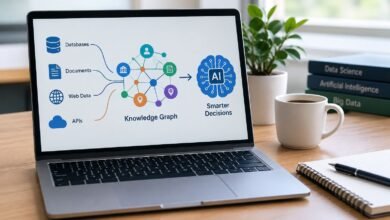
Generative AI, machine learning, AI agents, and large-scale inference require substantial computing resources. As adoption increases, cloud providers are expanding access to GPUs, AI accelerators, high-speed networking, and optimized storage.
AI workloads also have different requirements from traditional enterprise applications. Organizations may need infrastructure capable of handling:
- AI model training
- Model inference
- Vector databases
- Retrieval-augmented generation (RAG)
- AI agents
- Multimodal applications
- Real-time data processing
As a result, businesses are increasingly choosing cloud infrastructure based on workload requirements instead of relying exclusively on conventional CPU-based computing.
2. AI Agents Are Creating New Cloud Requirements
AI agents represent another emerging development in cloud computing.
Traditional software generally follows predefined instructions. AI agents can interpret information, use tools, retrieve data, make decisions, and execute multi-step workflows.
This creates new requirements for cloud infrastructure, including:
- Persistent context and memory
- Secure access to business tools
- Real-time model inference
- Workflow orchestration
- Identity management
- Data storage
- Monitoring and observability
As agentic applications become more common, cloud platforms will increasingly need to support AI models and autonomous software processes alongside traditional applications.
3. Edge Computing Is Extending the Cloud
Cloud computing is also becoming increasingly distributed.
Instead of sending every piece of information to a centralized data center, edge computing allows organizations to process data closer to where it is generated.
This can be useful for applications such as:
- Industrial IoT
- Connected vehicles
- Smart infrastructure
- Healthcare devices
- Retail systems
- Telecommunications
- Real-time video analytics
A modern architecture may therefore combine devices, edge locations, and centralized cloud infrastructure.
Device → Edge → Cloud
This approach can reduce latency and improve responsiveness for applications that require near-real-time processing.
4. Serverless Computing Continues to Expand
Serverless technology allows developers to run applications without directly managing the underlying servers.
Cloud platforms automatically provision and scale infrastructure according to application demand.
Serverless architectures are particularly useful for:
- Event-driven applications
- APIs
- Background tasks
- Automated workflows
- Variable workloads
- Certain AI inference applications
However, businesses should consider factors such as pricing, application portability, cold starts, observability, and vendor dependency before adopting serverless architectures at scale.
5. Confidential Computing Is Strengthening Cloud Security
As organizations move sensitive workloads to cloud platforms, protecting information while it is being processed is becoming increasingly important.
Confidential computing uses hardware-based security technologies to help protect data during computation.
This can be particularly relevant to industries handling sensitive information, including financial services, healthcare, government, and enterprise applications.
Cloud security is therefore expanding beyond protecting data at rest and in transit toward stronger protection for data while it is actively being processed.
6. Hybrid and Multicloud Strategies Are Evolving
Many organizations are no longer relying entirely on a single computing environment.
A business may combine:
- Public cloud
- Private cloud
- On-premises infrastructure
- Edge computing
- Multiple cloud providers
This approach can provide flexibility and help organizations address requirements involving compliance, resilience, performance, and specialized services.
However, multicloud environments also increase operational complexity.
Businesses must manage different:
- Security policies
- APIs
- Identity systems
- Networking architectures
- Monitoring platforms
- Compliance requirements
- Pricing structures
Therefore, organizations should develop a clear strategy rather than adopting multiple cloud platforms without a specific business reason.
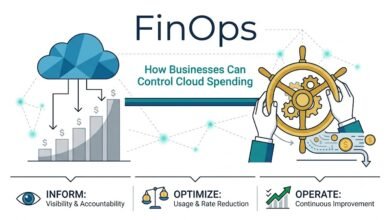
7. FinOps Is Becoming Critical for Cloud Management
Cloud flexibility can also create unexpected expenses.
The growth of AI workloads makes cloud cost management even more important because GPUs, accelerators, storage, and high-performance infrastructure can become significant sources of expenditure.
FinOps helps organizations connect technology usage with financial decision-making.
Cloud cost optimization can include:
- Rightsizing resources
- Removing unused infrastructure
- Monitoring GPU utilization
- Optimizing storage
- Selecting appropriate compute instances
- Using suitable pricing models
- Tracking costs by application or department
Effective cloud management is therefore becoming a combination of technical performance and financial discipline.
8. Sustainability Is Influencing Cloud Architecture
The expansion of AI and high-performance computing is increasing demand for electricity and cooling in data centers.
As sustainability becomes a greater business priority, cloud infrastructure is increasingly being evaluated from an energy-efficiency perspective.
Cloud providers and enterprises are exploring:
- More efficient processors
- Specialized computing hardware
- Renewable energy
- Improved cooling technologies
- Workload optimization
- More efficient data-center designs
Future cloud architecture will therefore need to balance performance, cost, and environmental efficiency.
9. Kubernetes and Cloud-Native Development Remain Important
Cloud-native development continues to influence modern application architecture.
Kubernetes provides a platform for managing containerized workloads and can support applications running across cloud, on-premises, and edge environments.
Organizations use cloud-native technologies for:
- Microservices
- Containerized applications
- Distributed systems
- Automated scaling
- Hybrid cloud environments
- AI workloads
However, Kubernetes can introduce operational complexity. Businesses should adopt it when its capabilities provide clear value rather than using it simply because it is widely adopted.
10. Cloud Security Is Becoming More Proactive
As cloud environments become increasingly distributed, organizations need security approaches that can operate across applications, identities, APIs, workloads, and infrastructure.
Modern cloud security increasingly emphasizes:
- Zero-trust principles
- Least-privilege access
- Identity-based security
- Continuous monitoring
- API protection
- Automated threat detection
- Workload security
- Software supply-chain protection
AI can also assist security teams by identifying unusual activity and analyzing large amounts of security information.
At the same time, organizations must secure AI applications themselves, including models, prompts, data sources, APIs, and agent permissions.
11. Specialized Cloud Infrastructure Is Growing
General-purpose virtual machines are no longer sufficient for every modern workload.
Cloud providers are offering specialized infrastructure for specific requirements, including:
- GPUs
- AI accelerators
- High-memory systems
- High-performance computing
- High-speed networking
- Specialized storage
This allows businesses to select infrastructure according to application requirements.
For AI applications in particular, selecting the right combination of compute, memory, networking, and storage can have a major effect on both performance and operating costs.
12. Automation Is Changing Cloud Operations
Cloud management is becoming increasingly automated.
Infrastructure-as-code, automated deployment pipelines, observability platforms, policy automation, and AI-assisted operations can reduce the amount of manual infrastructure management required.
Automation can help organizations:
- Detect infrastructure problems
- Scale resources
- Deploy applications
- Apply security policies
- Monitor performance
- Optimize resources
- Respond to operational events
The combination of cloud and intelligent automation could eventually make infrastructure more adaptive and self-managing.
What Will the Next Cloud Milestone Look Like?
The next major milestone in cloud computing will probably not be defined by a single technology.
Instead, it will emerge from the combination of:
AI + Cloud + Edge + Automation + Security + Specialized Computing
Cloud environments are becoming more distributed and increasingly optimized around specific workloads.
A future application may use AI accelerators in a cloud data center, process latency-sensitive information at the edge, store data across multiple environments, and automatically scale resources according to demand.
This represents a fundamental change from the earlier cloud model.
The cloud is evolving from a place where organizations simply run applications into an intelligent computing foundation for modern digital operations.
How Businesses Can Prepare for the Next Stage
Organizations preparing for the next phase of cloud computing should focus on practical improvements.
Evaluate Existing Infrastructure
Review workloads, applications, storage, networking, security, and resource utilization to identify inefficiencies.
Prepare for AI
Determine whether future applications will require GPUs, AI accelerators, model APIs, vector databases, or specialized infrastructure.
Improve Security
Strengthen identity management, encryption, access controls, monitoring, and zero-trust security practices.
Establish Cloud Cost Controls
Monitor infrastructure usage and create clear ownership for cloud spending across teams and applications.
Consider Hybrid and Edge Architectures
Evaluate whether certain workloads would benefit from on-premises infrastructure, multiple cloud providers, or edge processing.
Invest in Automation
Infrastructure-as-code, automated deployments, observability, and policy-based management can improve operational efficiency.
Conclusion
Cloud computing is approaching a significant new milestone as organizations move beyond traditional cloud infrastructure toward AI-powered, distributed, automated, and workload-optimized computing environments.
The defining change is not simply that cloud platforms are becoming larger. They are becoming more intelligent and specialized. AI is driving demand for powerful computing infrastructure, edge computing is bringing processing closer to users, confidential computing is strengthening data protection, and automation is changing how cloud environments are managed.
At the same time, businesses must address practical challenges such as rising infrastructure costs, cybersecurity risks, compliance requirements, vendor dependency, and energy consumption.
The organizations that benefit most from the next generation of cloud computing will be those that combine innovation with disciplined architecture and governance. Instead of adopting every emerging technology, businesses should select cloud services based on their workloads, security requirements, performance goals, budget, and long-term strategy.
Frequently Asked Questions
1. What is the next major milestone in cloud computing?
The next major milestone is the evolution toward AI-powered, automated, distributed, and workload-optimized cloud infrastructure. Cloud platforms are increasingly supporting AI, edge computing, specialized processors, and intelligent automation.
2. How is AI changing cloud computing?
AI is increasing demand for GPUs, AI accelerators, high-speed networking, scalable storage, and optimized infrastructure. Cloud providers are also adding AI services that make it easier for businesses to build and deploy intelligent applications.
3. Why is edge computing important for the future of cloud computing?
Edge computing processes data closer to users and connected devices. This can reduce latency and improve performance for applications such as IoT, autonomous systems, smart infrastructure, and real-time analytics.
4. How can businesses prepare for the future of cloud computing?
Businesses should review their existing infrastructure, strengthen cloud security, manage costs, evaluate AI and edge workloads, adopt automation where appropriate, and develop a clear hybrid or multicloud strategy based on their business requirements.