Data has become one of the most valuable assets for modern businesses. Companies store customer details, financial information, employee records, business documents, and countless other types of sensitive data online. As this information grows, so does the risk of cyberattacks, data leaks, and unauthorized access.
This is where blockchain technology is attracting attention.
Blockchain is no longer associated only with cryptocurrencies. In 2026, businesses are exploring blockchain applications for identity management, secure data sharing, fraud prevention, supply chains, healthcare, financial services, and connected devices.
What makes blockchain interesting for security is its ability to create records that are difficult to alter without detection. Instead of putting all the responsibility on one central database, blockchain can distribute verification across a network.
But is blockchain really changing data security? In many areas, the answer is yes.
What Is Blockchain Data Security?
Blockchain data security refers to using blockchain technology and cryptographic methods to help protect information from unauthorized changes, manipulation, and misuse.
In a traditional system, important information is often stored in a centralized database. If that database is compromised, attackers may gain access to a large amount of information.
Blockchain takes a different approach. Information can be recorded across a distributed network, where transactions or records are verified before being added to the ledger.
This creates a history that is much harder to secretly change.
It is important to remember that blockchain does not automatically make data secure. It works alongside technologies such as encryption, authentication, access controls, monitoring, and secure cloud infrastructure.
Why Blockchain Matters for Data Security in 2026
Cybersecurity threats are becoming more sophisticated. Businesses now have to protect information across cloud platforms, mobile applications, IoT devices, AI systems, and remote work environments.
A centralized security model can struggle when information is shared between multiple organizations and systems.
Blockchain offers a way to create a trusted record between parties that may not completely trust one another.
For example, several companies working on the same supply chain could use a blockchain-based system to verify important events without relying entirely on one organization’s database.
This can improve visibility while making unauthorized changes easier to identify.
1. Protecting Digital Identities
Identity theft continues to be a major concern in the digital world.
Most online services require users to provide some form of personal information. The problem is that organizations often collect and store more information than they actually need.
Blockchain-based identity solutions can give users greater control over their digital credentials.
Instead of repeatedly sharing personal documents, a person could use a verified digital credential to prove something about themselves.
For businesses, this can make identity verification easier while reducing unnecessary exposure of sensitive information.
2. Making Data More Difficult to Manipulate
One of blockchain’s biggest advantages is its ability to create a tamper-evident record.
Once information is properly recorded and verified, changing that information without leaving evidence can be extremely difficult.
This can be useful when organizations need reliable records of:
- Financial transactions
- Product shipments
- Digital certificates
- Data access
- Business agreements
- Device activity
- Important system events
For industries where accurate records matter, blockchain can provide an additional layer of trust.
3. Improving Privacy With Zero-Knowledge Proofs
Privacy is becoming just as important as security.
Imagine that a website needs to verify whether you are old enough to use a particular service. You may not want to provide your complete identity document just to prove your age.
Zero-knowledge proofs offer a different approach.
They allow a person to prove that a particular statement is true without revealing all of the information behind that statement.
This technology could become increasingly useful for:
- Online identity verification
- Banking
- Healthcare
- Digital payments
- Compliance
- Private transactions
The goal is simple: prove what is necessary without exposing what is not.
4. Securing IoT Devices
Smart devices are everywhere in 2026.
Factories use connected machines. Hospitals use smart equipment. Vehicles communicate with digital systems. Homes contain connected appliances and security devices.
But every connected device can potentially become a security risk.
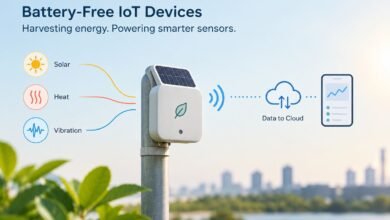
Blockchain can help organizations manage device identities and maintain trusted records of device activity.
For example, a connected machine could have a verifiable digital identity. Important actions performed by that machine could also be recorded for later verification.
This can make it easier to identify suspicious activity and determine what happened when something goes wrong.
5. Protecting Healthcare Information
Healthcare data is extremely sensitive.
Medical records contain personal information that patients expect organizations to protect carefully. At the same time, doctors, hospitals, laboratories, and other healthcare providers often need to share information.
Blockchain can help create a trusted record of data access and verification without necessarily storing the complete medical record directly on the blockchain.
For example, sensitive information could remain in a secure database while the blockchain stores verification information or a cryptographic reference.
This approach can provide better traceability without unnecessarily exposing private medical information.
6. Reducing Financial Fraud
Financial organizations are constantly looking for better ways to detect fraud and protect transactions.
Blockchain can help create transparent and verifiable transaction records.
Depending on how the system is designed, blockchain applications can support:
- Transaction tracking
- Digital identity verification
- Fraud detection
- Asset management
- Audit records
- Automated compliance processes
The benefit is particularly useful when several organizations need to verify the same information.
Instead of repeatedly comparing separate databases, participants can work from a shared and verifiable record.
7. Strengthening Supply Chain Security
Supply chains involve many different organizations.
A product might move from a manufacturer to a distributor, then to a logistics company and finally to a retailer. Every step creates information that needs to be tracked.
Blockchain can provide a shared record of important events throughout this journey.
Businesses can potentially use it to verify:
- Where a product came from
- When it was shipped
- Who handled it
- Whether certifications are valid
- When ownership changed
- When the product was delivered
This can make it harder for someone to secretly manipulate important supply-chain records.
It can also help businesses investigate problems more quickly.
8. Supporting Secure AI Systems
Artificial intelligence is becoming part of almost every industry, but AI systems depend heavily on data.
If the data used by an AI system has been manipulated, the results may also become unreliable.
Blockchain can help organizations maintain records related to data sources, permissions, model versions, and important AI-related activities.
For example, a business could maintain a verifiable history showing where specific datasets came from or which version of an AI model produced a particular result.
Blockchain does not guarantee that AI data is accurate. However, it can make the history of that data easier to track and verify.
9. Smart Contracts Can Automate Security Rules
Smart contracts are programs that automatically execute predefined rules on a blockchain network.
They can be useful when organizations want certain actions to happen automatically after specific conditions are met.
For example, a smart contract could be designed to verify whether a user has the required credential before allowing a particular transaction.
This can reduce manual processes and create a record of important actions.
However, smart contracts must be developed and tested carefully. A coding error can create a security problem instead of solving one.
10. Creating Better Digital Audit Trails
Security teams often need to answer an important question after an incident:
What exactly happened?
Blockchain can help organizations maintain a traceable history of selected events.
Instead of relying entirely on logs stored in one location, organizations can use blockchain-based records to verify important transactions or system events.
This can be useful for audits, compliance investigations, fraud investigations, and security monitoring.
The result is greater visibility into how information moved through a system.
Key Benefits of Blockchain for Data Security
Blockchain is not perfect, but it offers several useful security advantages.
Better Data Integrity
Blockchain can make unauthorized changes easier to detect.
Greater Transparency
Authorized participants can verify records without depending entirely on one central authority.
Improved Traceability
Important transactions and events can be tracked through a verifiable history.
Stronger Identity Management
Blockchain-based credentials can support more flexible digital identity systems.
Privacy-Friendly Verification
Technologies such as zero-knowledge proofs can reduce unnecessary data sharing.
Automated Processes
Smart contracts can automatically enforce predefined rules.
What Are the Challenges?
Blockchain also comes with limitations.
It is not a magic solution for every cybersecurity problem.
Scalability
Large systems can generate huge numbers of transactions. Blockchain networks need to handle this activity efficiently.
Privacy Concerns
Putting sensitive information permanently on a blockchain can create privacy problems.
Smart Contract Bugs
A poorly written smart contract can introduce serious vulnerabilities.
Private Key Security
Users must protect their cryptographic keys. If a private key is stolen, an attacker may gain access to the associated account or assets.
Integration Problems
Connecting blockchain systems with existing databases, cloud platforms, and business applications can be complicated.
Regulatory Issues
Organizations still need to comply with privacy and data-protection laws when implementing blockchain solutions.
So, blockchain should be treated as one part of a larger security strategy, not a replacement for cybersecurity.
What Does the Future Hold?
The future of blockchain data security will likely be about combining technologies rather than using blockchain on its own.
Businesses may increasingly combine:
- Blockchain + AI for data and model verification
- Blockchain + Zero-Knowledge Proofs for private authentication
- Blockchain + IoT for trusted device identities
- Blockchain + Cloud Security for distributed verification
- Blockchain + Digital Identity for safer credential management
- Blockchain + Smart Contracts for automated security processes
This combination could make digital systems more transparent, verifiable, and privacy-conscious.
The biggest opportunity is not simply putting information on a blockchain. It is using blockchain where organizations genuinely need a trusted and tamper-resistant record.
Final Thoughts
Blockchain apps are changing the conversation around data security in 2026.
From protecting digital identities to tracking products, securing connected devices, improving financial transparency, and supporting trustworthy AI systems, blockchain has applications far beyond cryptocurrency.
At the same time, businesses should not adopt blockchain simply because it is a trending technology. A successful implementation starts by identifying a real security or trust problem and then determining whether blockchain is the right tool to solve it.
When blockchain is combined with encryption, strong authentication, privacy technologies, secure infrastructure, and responsible cybersecurity practices, it can become a valuable part of modern data protection.
The future of data security will not depend on one technology. It will depend on how effectively different technologies work together to keep digital information private, accurate, verifiable, and trustworthy.
Frequently Asked Questions
How does blockchain improve data security?
Blockchain creates tamper-evident records and uses cryptographic verification to make unauthorized data changes easier to detect.
Can blockchain protect personal data?
Yes. Blockchain can support secure identity and verification systems, while sensitive information can remain in protected storage.
How does blockchain help prevent data manipulation?
Blockchain records are linked and verified across a network, making unauthorized changes more difficult to hide.
Is blockchain a replacement for cybersecurity?
No. Blockchain works alongside encryption, authentication, access controls, monitoring, and other cybersecurity technologies.