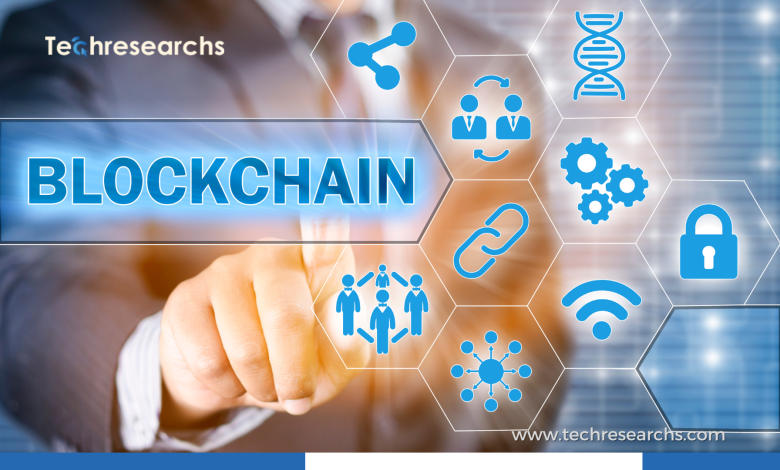
When most people hear the word blockchain, they immediately think of Bitcoin, Ethereum, or other cryptocurrencies. While blockchain technology played a major role in the development of digital currencies, its potential goes far beyond crypto.
Blockchain is a decentralized system for recording and sharing information in a way that makes data difficult to alter without detection. Because it can provide transparency, traceability, and secure data sharing, organizations across industries are exploring blockchain for applications ranging from supply chains and healthcare to finance, identity management, and digital contracts.
What Is Blockchain Technology?
Blockchain is a type of distributed ledger technology (DLT) that stores information across a network of computers rather than relying on a single central database.
Information is grouped into blocks. Once a block is validated and added to the chain, it becomes part of a chronological record. Depending on the blockchain design, cryptographic techniques and network consensus mechanisms help protect the integrity of the record.
Unlike a traditional database controlled by one organization, a decentralized blockchain can allow multiple participants to maintain and verify a shared record.
How Does Blockchain Work?
Although different blockchains use different architectures, the basic process generally includes several stages:
1. A Transaction or Record Is Created
A participant initiates a transaction or submits information to the blockchain network. This could represent a payment, a supply-chain update, a digital agreement, or another type of record.
2. The Network Validates the Information
Network participants use a consensus mechanism to determine whether the proposed transaction follows the network’s rules.
Different blockchain networks can use different approaches, including Proof of Work, Proof of Stake, and other consensus models.
3. Transactions Are Grouped Into Blocks
Validated transactions or records are organized into blocks. Each block contains information that connects it to previous blocks, creating a chronological chain.
4. The Block Is Added to the Ledger
After the required validation process is completed, the block is added to the blockchain. Copies of the ledger may then be maintained across participating computers.
5. The Record Becomes Difficult to Change
Changing an earlier record generally requires overcoming the blockchain’s cryptographic and consensus protections. This can make unauthorized alteration considerably more difficult than modifying information in a conventional centralized system.
Blockchain vs. Cryptocurrency
Blockchain and cryptocurrency are related, but they are not the same thing.
Cryptocurrency is a digital asset or form of digital money that can use blockchain networks to record ownership and transactions.
Blockchain is the underlying technology that can be used for many other purposes.
For example, blockchain can potentially be used to track products, verify credentials, automate agreements, share records between organizations, and establish traceable digital ownership.
In simple terms:
Cryptocurrency is one application of blockchain technology, not its entire purpose.
Applications of Blockchain Beyond Crypto
The broader value of blockchain comes from its ability to create shared, traceable records between multiple participants.
1. Supply Chain Management
Companies can use blockchain to create a traceable record of products as they move through a supply chain.
For example, information about manufacturing, shipping, storage, and delivery could be recorded at different stages. This may improve visibility and help organizations identify where problems occur.
Blockchain does not automatically guarantee that the original information is accurate, however. Businesses still need reliable systems and processes for entering data.
2. Healthcare
Healthcare organizations handle sensitive information across hospitals, laboratories, insurers, pharmacies, and other stakeholders.
Blockchain-based systems could help coordinate certain records or verify data exchanges between organizations while maintaining controlled access.
Privacy and regulatory requirements remain major considerations, so blockchain is not necessarily appropriate for storing every type of medical information directly.
3. Digital Identity
Blockchain can support new approaches to digital identity in which individuals have greater control over verifiable credentials.
Potential applications include education certificates, professional qualifications, identity verification, and access credentials.
The goal is not necessarily to put personal information publicly on a blockchain. Instead, blockchain-based systems can be designed to help verify claims while limiting unnecessary disclosure.
4. Smart Contracts
Smart contracts are programs that execute predefined actions when specified conditions are met.
For example, a smart contract could automatically release a digital payment after a particular condition is verified.
Smart contracts can reduce the need for certain manual processes, but they are still software and can contain vulnerabilities. Their reliability depends on the quality of their code and the information they receive.
5. Financial Services
Beyond cryptocurrencies, blockchain is being explored for applications such as settlement, tokenization, trade finance, and cross-organizational recordkeeping.
Financial institutions may be able to use shared ledgers to simplify certain processes involving multiple parties.
However, blockchain adoption in finance must account for regulations, privacy, interoperability, scalability, and operational risks.
6. Intellectual Property and Digital Ownership
Blockchain can create timestamped records associated with digital assets and transactions.
This could support applications involving intellectual property, digital collectibles, licensing, and ownership records.
However, a blockchain record by itself does not automatically prove that someone legally owns the underlying intellectual property. Legal rights still depend on applicable laws and agreements.
7. Government and Public Services
Governments can explore blockchain for recordkeeping, credential verification, procurement tracking, and other administrative processes.
A shared and auditable ledger may improve transparency in certain scenarios, particularly when several organizations need access to consistent records.
Key Benefits of Blockchain
Blockchain can offer several potential advantages.
Transparency
Depending on the network’s design, participants can have access to a shared history of transactions or records. This can make certain processes easier to audit.
Traceability
Blockchain can provide a chronological record that helps organizations track the movement or history of digital or physical assets.
Data Integrity
Cryptographic techniques and consensus mechanisms can make unauthorized changes more difficult to hide.
Reduced Dependence on Intermediaries
Some blockchain applications can allow participants to interact directly or automate specific processes through smart contracts.
Shared Recordkeeping
Instead of maintaining separate databases that must constantly be reconciled, organizations can potentially use a shared ledger for specific use cases.
Challenges and Limitations
Blockchain is not a solution for every business problem.
Scalability
Some blockchain networks can face limitations related to transaction throughput, processing time, or network capacity.
Energy Consumption
Certain consensus mechanisms, particularly Proof of Work, can require substantial computing resources. Other approaches, such as Proof of Stake, have different resource requirements.
Regulatory Uncertainty
Blockchain applications may interact with financial, privacy, consumer protection, data retention, and other regulations.
Privacy
A transparent ledger can create privacy challenges if sensitive information is permanently recorded. Developers must carefully consider what information should be stored on-chain.
Integration
Organizations often need blockchain systems to work with existing databases, enterprise software, identity systems, and payment infrastructure. Interoperability can be challenging.
Data Quality
Blockchain can protect the integrity of recorded information, but it cannot guarantee that the information was correct when it entered the system.
This is sometimes summarized as “garbage in, garbage out.”
Is Blockchain Secure?
Blockchain can provide strong security properties, but it is not automatically secure simply because it uses blockchain.
Security depends on several factors, including:
- The consensus mechanism
- Network design
- Cryptographic implementation
- Smart-contract code
- Wallet and key management
- Access controls
- Software infrastructure
- Governance mechanisms
For businesses, securing private keys, applications, APIs, and user access can be just as important as the blockchain itself.
Public vs. Private Blockchains
Blockchain networks can have different access models.
Public blockchains generally allow broad participation and are designed to operate without a single controlling organization.
Private or permissioned blockchains restrict participation to approved organizations or users.
The best architecture depends on the problem being solved. A company does not necessarily need a public blockchain simply because blockchain technology is being considered.
The Future of Blockchain Technology
The future of blockchain is likely to focus less on the idea of cryptocurrency alone and more on practical digital infrastructure.
Potential growth areas include:
- Asset tokenization
- Digital identity
- Supply-chain traceability
- Cross-border payments
- Smart contracts
- Decentralized applications
- Verifiable credentials
- Digital ownership
- Enterprise data sharing
At the same time, blockchain projects will need to demonstrate clear business value rather than adopting the technology simply because it is innovative.
Final Thoughts
Blockchain technology is much broader than cryptocurrency. Its fundamental concept—a shared, cryptographically protected record maintained across a network – can support many types of applications.
From supply chains and digital identity to financial infrastructure and smart contracts, blockchain may help organizations improve transparency, traceability, and coordination in situations involving multiple participants.
However, blockchain is not a universal replacement for traditional databases. Its benefits must be weighed against factors such as scalability, privacy, regulation, integration, cost, and governance.
The most important question is therefore not “How can we use blockchain?” but rather “Does blockchain solve this particular problem better than the alternatives?”
As the technology continues to mature, that practical approach will likely determine where blockchain creates lasting value beyond crypto.
FAQ
1. What is blockchain technology?
Blockchain is a distributed digital ledger that records information across a network of computers. It uses cryptography and consensus mechanisms to help maintain the integrity of recorded data.
2. Is blockchain only used for cryptocurrency?
No. Cryptocurrency is just one application of blockchain. Blockchain can also be used for supply-chain management, digital identity, healthcare, smart contracts, financial services, and digital ownership.
3. How does blockchain work?
Blockchain transactions or records are validated by a network, grouped into blocks, and added to a chronological chain. Cryptographic techniques connect the blocks and help make unauthorized changes difficult.
4. What are the main benefits of blockchain?
Key benefits include transparency, traceability, data integrity, shared recordkeeping, and the potential to automate certain processes through smart contracts.