Creating digital content used to involve a long list of tasks. You had to write a script, find a suitable voice artist, record the audio, edit mistakes, and then match the voice with your video or presentation. Today, AI voice generators are changing that process.
With just a written script, you can create a realistic voiceover in minutes. This has made AI voice technology especially useful for content creators, marketers, educators, businesses, and anyone who regularly works with audio or video.
But AI voice generators are about more than simply turning text into speech. They are changing how people think about producing and distributing digital content.
What Are AI Voice Generators?
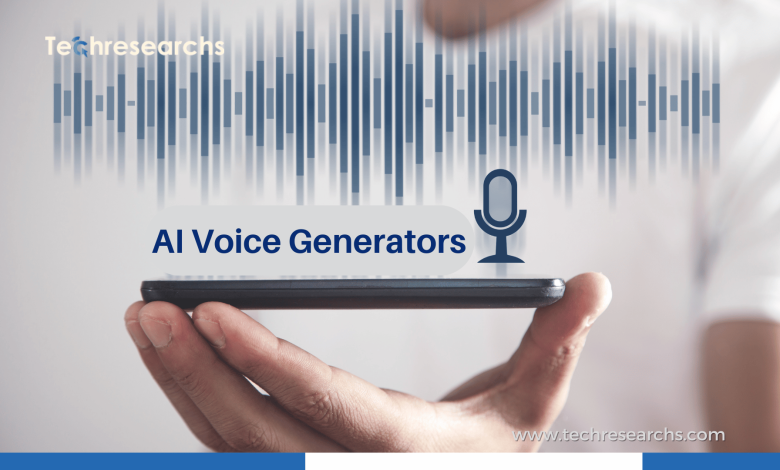
AI voice generators are tools that use artificial intelligence to convert written text into spoken audio. You provide a script, select a voice, and the software generates the narration.
Older text-to-speech systems often sounded robotic and unnatural. Modern AI voice technology is much more advanced. Depending on the platform, voices can include natural pauses, changes in emphasis, different speaking speeds, and variations in tone.
This makes AI-generated speech suitable for everything from short social media videos to online courses and product demonstrations.
How Do AI Voice Generators Work?
The process is surprisingly simple from a user’s perspective.
First, you provide the text you want the system to read. The AI analyzes the words, sentence structure, punctuation, and pronunciation. It then uses a trained voice model to determine how those words should sound when spoken.
The system generates the speech and processes the audio to make it clearer and more natural.
From the user’s point of view, the workflow can be as simple as:
Write → Choose a voice → Generate → Review → Publish
That simplicity is one of the main reasons AI voice tools have become popular.
Why Are AI Voice Generators Becoming So Popular?
One of the biggest reasons is convenience.
Recording a voiceover traditionally takes time. Even a short video can require several takes before the final recording sounds right. AI voice generators allow creators to make changes to a script and generate a new version without starting a recording session from scratch.
They can also be useful when content needs to be produced regularly.
For example, imagine a business publishing several educational videos every week. Instead of arranging a recording session for every video, the team can prepare scripts and generate voiceovers as part of its existing content workflow.
That can save both time and effort.
AI Voice Generators for Content Creators
For individual creators, AI voice technology can remove some of the barriers involved in producing professional-looking content.
You don’t necessarily need a studio, expensive recording equipment, or a professional narrator for every project.
A YouTube creator, for example, could use an AI voice for a tutorial, explainer video, or educational short. A blogger could turn an article into an audio version. A social media marketer could create voiceovers for promotional clips.
This doesn’t mean every creator should replace their own voice. In many cases, a real human voice is still more personal and engaging.
The real advantage is having another option.
AI Voice Generators in Marketing
Marketing teams are constantly creating new content. Product videos, advertisements, social media posts, tutorials, presentations, and explainer videos may all require narration.
AI voice generators can make this process faster.
Suppose a company creates a product video and later changes one feature. With traditional recording, the team may need to contact the voice artist and record the changed section again.
With an AI-generated voice, the updated sentence can usually be regenerated quickly.
This flexibility can be particularly helpful for businesses managing large content libraries.
Turning Blog Posts Into Audio
One interesting use of AI voice technology is converting written content into audio.
A company that publishes blog articles can potentially create audio versions of those articles. This gives readers another way to consume the same information.
Some people prefer listening while commuting, exercising, or doing household tasks. Offering an audio option can therefore make content more convenient to consume.
For publishers, it also creates another format from content they have already produced.
AI Voice Technology in E-Learning
Education is another area where AI-generated speech can be useful.
Online courses often contain hundreds of slides, lessons, tutorials, and instructional materials. Creating narration for all of that content manually can take considerable time.
AI voice tools can help educators create narration more efficiently.
They can also make educational materials available in different languages, depending on the capabilities of the platform.
However, educators should still review generated audio carefully. Incorrect pronunciation or an unnatural delivery can distract learners and reduce the quality of the experience.
AI Voice Generators and Video Creation
Video content has exploded across platforms, and narration is an important part of many videos.
AI voice generators can be used for:
- Tutorials
- Explainer videos
- Product demonstrations
- Educational videos
- Social media videos
- Presentations
- Documentary-style content
- Internal training videos
For creators who produce content frequently, the ability to generate narration quickly can make the overall production process easier.
Can AI Voices Replace Human Voice Actors?
This is one of the most common questions surrounding the technology.
The simple answer is: not completely.
AI voices are excellent for many types of straightforward narration, but human performers bring something different to the table.
A human voice actor can understand a character, react emotionally to a scene, improvise, and deliver subtle changes that may be difficult for an AI system to reproduce perfectly.
For example, an emotional advertisement or dramatic audiobook may benefit greatly from a real performer.
On the other hand, a technical tutorial or routine instructional video may not require that level of performance.
The best choice depends on the type of content.
The Benefits of AI Voice Generators
AI voice technology offers several practical advantages.
1. Faster Production
A voiceover that might take hours to record and edit can often be generated much faster.
2. Easy Editing
If a sentence changes, you can update the script and generate the revised audio instead of arranging another recording session.
3. Multiple Languages
Many AI voice platforms offer a variety of languages and accents, helping businesses reach audiences in different markets.
4. Consistent Narration
Using the same AI voice can help maintain a consistent sound across a series of videos, lessons, or other content.
5. Lower Production Requirements
Creators may not need access to a recording studio or professional audio equipment for every project.
What Are the Limitations?
AI voice generators are impressive, but they aren’t perfect.
Sometimes the voice may pronounce a word incorrectly or place emphasis on the wrong part of a sentence. Certain emotional expressions can also feel less natural than a human performance.
There is another issue that deserves even more attention: voice cloning.
Modern AI can potentially reproduce characteristics of a person’s voice. Without proper safeguards, this technology could be misused for impersonation, deception, or fraud.
That is why consent and responsible use are extremely important.
Ethical Use of AI-Generated Voices
As AI voices become more realistic, businesses and creators need to think carefully about how they use them.
If a real person’s voice is being cloned, appropriate permission should be obtained. Organizations should also be transparent about how synthetic voices are being used when disclosure is appropriate.
Creators should avoid using AI-generated voices to mislead audiences or make people believe that a real person said something they did not say.
The technology itself isn’t necessarily good or bad. Much depends on how people choose to use it.
What Does the Future Look Like?
AI voice technology is still developing quickly.
Future systems are likely to become better at understanding context, emotion, pronunciation, accents, and conversational patterns. We may also see AI voices become more deeply integrated into websites, applications, games, virtual assistants, learning platforms, and customer service systems.
Real-time AI conversations are another area worth watching.
Instead of simply generating a prerecorded voiceover, AI systems can increasingly respond to users dynamically. This could make digital assistants and interactive applications feel much more natural.
At the same time, regulations and industry standards around voice cloning, consent, identity, and synthetic media are likely to become increasingly important.
Final Thoughts
AI voice generators are making audio production more accessible.
You no longer need a full recording setup to turn a written idea into a narrated video or audio experience. For creators and businesses producing content at scale, that can be a major advantage.
Still, AI should be viewed as a tool rather than a complete replacement for human creativity.
A great piece of content still needs a good idea, a well-written script, the right tone, and a clear understanding of its audience. AI can help with the production side, but human judgment remains important.
As we move further into 2026, AI voice generators are likely to become a normal part of digital content creation. The creators who use them thoughtfully – while maintaining authenticity and respecting consent—will be in the best position to benefit from the technology.
Frequently Asked Questions
What is an AI voice generator?
An AI voice generator is a technology that uses artificial intelligence to convert written text into natural-sounding speech. It is commonly used for videos, podcasts, presentations, e-learning, and digital marketing content.
How do AI voice generators work?
AI voice generators analyze written text and use advanced speech synthesis models to create spoken audio. Modern systems can produce natural pronunciation, pauses, pacing, and different speaking styles.
What are AI voice generators used for?
AI voice generators are used for video narration, YouTube content, podcasts, advertisements, online courses, product demonstrations, social media videos, and other digital content that requires voiceovers.
Can AI voice generators replace human voice actors?
AI voice generators can handle many types of narration, but they do not completely replace human voice actors. Human voices can provide unique emotion, personality, character, and creative expression that may be difficult for AI to reproduce.