Cybersecurity is no longer something businesses can treat as an IT department issue. Almost every part of modern business depends on digital systems—from customer information and online payments to cloud applications, employee devices, and internal communication.
At the same time, cyber threats are becoming harder to spot. Attackers are using automation, artificial intelligence, stolen credentials, social engineering, and software vulnerabilities to find weaknesses faster than ever.
That is where advanced cybersecurity technologies come into play.
These technologies help organizations detect suspicious activity, protect sensitive information, control access, and respond to attacks before they turn into major incidents. But with so many security solutions available today, it can be difficult to understand what each technology actually does.
This guide breaks down the most important advanced cybersecurity technologies in simple, practical terms.
What Are Advanced Cybersecurity Technologies?
Advanced cybersecurity technologies are security tools and approaches designed to protect digital systems against increasingly sophisticated threats.
Unlike older security solutions that may focus mainly on known malware or predefined rules, modern technologies can analyze behavior, identify unusual activity, automate responses, and continuously evaluate risk.
They can help protect:
- Business networks
- Cloud infrastructure
- Applications
- Employee devices
- Customer data
- Digital identities
- IoT devices
- Critical business systems
The important thing to remember is that no single technology can provide complete protection. Effective cybersecurity usually comes from combining several layers of defense.
1. Artificial Intelligence and Machine Learning
Artificial intelligence has quickly become one of the most talked-about technologies in cybersecurity.
Security teams deal with enormous amounts of data every day. Manually reviewing every login, network connection, file change, and security alert simply isn’t practical.
AI and machine learning can help by examining large datasets and looking for unusual patterns.
For example, an AI-powered system might notice that:
- An employee suddenly logs in from an unusual location.
- A device begins contacting unfamiliar servers.
- An account starts downloading an unusual amount of data.
- A normally quiet application suddenly generates hundreds of requests.
None of these events automatically proves that an attack is happening. However, together they may indicate that something deserves investigation.
Why AI Matters in Cybersecurity
AI can help security teams detect threats earlier, prioritize alerts, and reduce the amount of repetitive analysis.
It can also help identify patterns that would be difficult to notice manually.
However, AI is not a magic solution. Security teams still need human judgment to investigate incidents, validate alerts, and make important decisions.
2. Zero Trust Security
The old idea of protecting a company by building a strong perimeter around its network is becoming less effective.
Employees now work from different locations. Businesses use cloud applications. Contractors and partners may need access to internal resources. Personal and corporate devices can also connect from many different networks.
Zero Trust takes a different approach.
Instead of automatically trusting someone because they are inside a corporate network, Zero Trust requires access to be continuously evaluated.
A Zero Trust strategy may consider:
- Who the user is
- Which device they are using
- What application they want to access
- What resource they are requesting
- Whether the device meets security requirements
- Whether the activity appears normal
The idea is simple: trust should be earned and continuously verified, not automatically assumed.
3. Extended Detection and Response (XDR)
Security teams often use several different security products. The problem is that these products can generate separate alerts, making it difficult to understand what is actually happening.
Extended Detection and Response, or XDR, addresses this problem by bringing security signals from different areas together.
An XDR platform can correlate information from sources such as:
- Endpoints
- Networks
- Cloud environments
- Applications
- Identity systems
Imagine an employee receives a suspicious email, clicks a link, downloads a file, and then unknowingly provides an attacker with access to their account.
Looking at each event separately may not reveal the complete story.
XDR can connect these events and help security teams understand the broader attack chain.
4. Endpoint Detection and Response
Laptops, desktops, and servers remain popular targets for attackers.
Endpoint Detection and Response, commonly called EDR, focuses on monitoring these devices for suspicious behavior.
Instead of simply asking whether a file is known malware, EDR can look at what programs are doing on a device.
It may detect activity such as:
- Suspicious processes
- Unexpected file changes
- Unusual command execution
- Strange network connections
- Attempts to disable security software
- Potential ransomware behavior
If a device appears compromised, security teams may be able to isolate it from the network while investigating the incident.
This can help stop a problem on one machine from spreading throughout an organization.
5. Security Information and Event Management
Security Information and Event Management, or SIEM, is designed to bring security information from multiple systems into one place.
A SIEM can collect logs from:
- Servers
- Firewalls
- Applications
- Cloud services
- Endpoints
- Authentication systems
- Network devices
Security teams can then search and analyze this information to identify suspicious activity.
For example, a single failed login may not seem important. But hundreds of failed login attempts followed by a successful login could be a much stronger warning sign.
Modern SIEM platforms increasingly use analytics and automation to help teams process security information more efficiently.
6. Security Orchestration, Automation and Response
Security teams spend a surprising amount of time on repetitive tasks.
When an alert appears, an analyst may need to collect information from several systems, check threat intelligence, investigate the affected account, and document the incident.
Security Orchestration, Automation and Response—usually called SOAR—can automate parts of this process.
For example, a security workflow could automatically:
- Collect information about a suspicious IP address.
- Check available threat intelligence.
- Identify affected users or devices.
- Enrich the alert with additional information.
- Notify the security team.
- Trigger an approved containment action.
Automation can save valuable time, especially for organizations handling large numbers of security alerts.
7. User and Entity Behavior Analytics
Sometimes an attacker doesn’t immediately trigger a traditional security alert.
Instead, their activity may simply look unusual.
User and Entity Behavior Analytics, or UEBA, is designed to identify these changes in behavior.
For instance, an employee may normally access a few applications during working hours. If that account suddenly accesses sensitive databases and downloads a large amount of information at an unusual time, UEBA can flag the behavior for investigation.
This can be useful for detecting:
- Compromised accounts
- Insider threats
- Stolen credentials
- Unauthorized access
- Unusual data movement
The strength of behavioral analytics comes from understanding what is normal before deciding what looks suspicious.
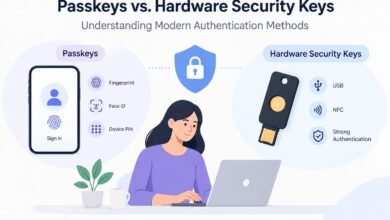
8. Advanced Identity and Access Management
Passwords alone are no longer enough to protect important digital resources.
Identity and Access Management, or IAM, helps organizations control who can access applications, systems, and information.
Modern IAM solutions can include:
- Multi-factor authentication
- Single sign-on
- Role-based access
- Adaptive authentication
- Passwordless authentication
- Identity monitoring
For example, a user may be required to provide an additional verification method when accessing a sensitive system from an unfamiliar device.
Strong identity security is especially important because stolen credentials are frequently used in cyberattacks.
9. Privileged Access Management
Not every user needs administrative access.
Accounts with elevated privileges can make major changes to systems, databases, applications, and security settings. If attackers compromise these accounts, the consequences can be severe.
Privileged Access Management, or PAM, helps organizations control administrative access.
A PAM strategy can involve:
- Limiting administrator privileges
- Storing privileged credentials securely
- Providing temporary access
- Monitoring administrative sessions
- Recording privileged activity
- Requiring approval for sensitive actions
The goal is to reduce unnecessary access and make privileged activity easier to monitor.
10. Cloud Security Technologies
Cloud computing has changed the way organizations build and operate their technology environments.
Instead of keeping everything inside company-owned data centers, businesses may use multiple cloud providers, SaaS applications, containers, virtual machines, and cloud storage services.
This creates new security challenges.
Cloud security technologies can help organizations identify:
- Misconfigured resources
- Excessive permissions
- Exposed storage
- Vulnerable workloads
- Unsafe APIs
- Suspicious cloud activity
Cloud Security Posture Management, for example, can help identify configuration problems that could expose cloud resources.
The important lesson is that moving to the cloud does not remove security responsibilities. It changes where and how those responsibilities must be managed.
11. Post-Quantum Cryptography
Quantum computing is still developing, but cybersecurity professionals are already thinking about its possible impact.
Some cryptographic methods used today could eventually become vulnerable to sufficiently powerful quantum computers.
Post-quantum cryptography focuses on developing cryptographic algorithms designed to resist attacks from both traditional and future quantum computers.
This is particularly important for organizations that need to protect sensitive information for many years.
The transition will not happen overnight. Organizations need to understand which cryptographic systems they currently use and begin planning for future requirements.
12. Deception Technology
Sometimes the best way to identify an attacker is to give them something they should never normally touch.
Deception technology uses decoys such as fake systems, credentials, files, or network resources.
A legitimate employee typically has no reason to interact with these resources.
If an attacker discovers and attempts to use one, the activity can create a strong security signal.
Deception technology can therefore provide another layer of detection, particularly when attackers have already gained access to part of an environment.
13. IoT Security
The number of connected devices continues to grow.
Smart sensors, industrial equipment, cameras, medical devices, smart appliances, and other IoT systems can create additional entry points for attackers.
IoT security focuses on protecting these devices and the networks they connect to.
Important measures include:
- Strong device authentication
- Secure configurations
- Firmware updates
- Network segmentation
- Vulnerability monitoring
- Device behavior monitoring
Organizations should also maintain an accurate inventory of connected devices. It is difficult to protect something if you don’t know that it exists.
14. Threat Intelligence Platforms
Security teams cannot investigate every threat from scratch.
Threat intelligence platforms provide information about known and emerging threats, helping organizations understand whether suspicious activity may be connected to a broader campaign.
Threat intelligence can include information about:
- Malicious domains
- Suspicious IP addresses
- Malware
- Vulnerabilities
- Attack techniques
- Indicators of compromise
When combined with other security technologies, threat intelligence can make alerts more meaningful and help analysts prioritize investigations.
15. Secure Access Service Edge
Secure Access Service Edge, or SASE, brings networking and security capabilities together through cloud-based services.
It is particularly useful for organizations with:
- Remote employees
- Multiple offices
- Cloud applications
- Mobile users
- Distributed infrastructure
SASE can combine capabilities such as secure web access, Zero Trust access, network security, and policy enforcement.
Rather than forcing every user and application through a traditional corporate network, security policies can be applied closer to the user and resource.
Why a Layered Security Strategy Is Important
One of the biggest mistakes organizations can make is expecting a single cybersecurity product to solve every problem.
Consider a simple example.
An employee’s credentials are stolen through phishing.
IAM and MFA can make the stolen credentials less useful.
If the attacker still gets access, Zero Trust can limit what they can reach.
If suspicious activity begins on the employee’s device, EDR can detect it.
If the activity spreads across multiple systems, XDR and SIEM can help connect the signals.
If the organization needs to respond quickly, SOAR can automate parts of the process.
This is the advantage of layered security: when one control fails, another can help reduce the damage.
What Makes a Cybersecurity Technology Effective?
The most advanced technology is not automatically the best choice for every organization.
Before investing in a cybersecurity platform, businesses should consider:
Visibility
Can the technology actually see the systems, users, devices, and applications that need protection?
Integration
Can it work with the organization’s existing security tools?
Automation
Can it reduce repetitive work without creating unnecessary risks?
Accuracy
Does it provide useful alerts, or will the security team be overwhelmed with false positives?
Scalability
Can the technology support the organization’s growth?
Usability
Can the security team realistically operate and maintain it?
A technically powerful product that nobody knows how to use effectively may provide less value than a simpler solution that is properly configured and monitored.
The Future of Advanced Cybersecurity
Cybersecurity will continue to evolve as attackers adopt new technologies.
Artificial intelligence will likely become more deeply integrated into security operations. Identity will remain a major security boundary as organizations continue moving toward cloud-based environments.
Automation will also become increasingly important as security teams deal with growing volumes of alerts.
At the same time, technologies such as post-quantum cryptography, confidential computing, advanced behavioral analytics, and privacy-focused security solutions may become more important.
But technology will only be one part of the equation.
Security awareness, strong policies, employee training, vulnerability management, regular testing, reliable backups, and effective incident response will continue to matter just as much.
Final Thoughts
Advanced cybersecurity technologies are changing the way organizations protect their digital environments.
AI can help identify unusual patterns. XDR can connect security events. Zero Trust can strengthen access controls. EDR can protect endpoints. SIEM can bring security data together. SOAR can automate repetitive response tasks, while IAM and PAM can help protect critical identities and privileges.
The real goal isn’t to collect as many cybersecurity tools as possible.
It is to build a security strategy where technology, people, and processes work together.
As cyber threats become more sophisticated, organizations that continuously monitor their environments, limit unnecessary access, prepare for emerging risks, and invest in the right security technologies will be in a much stronger position to defend their digital assets.
Frequently Asked Questions
1. What are advanced cybersecurity technologies?
Advanced cybersecurity technologies are modern tools and security approaches that help organizations detect, prevent, and respond to sophisticated cyber threats. Examples include AI-powered security, Zero Trust, XDR, EDR, SIEM, and behavioral analytics.
2. How does AI improve cybersecurity?
AI can analyze large amounts of security data, identify unusual patterns, prioritize alerts, and help security teams detect potential threats faster. It can also automate repetitive security tasks while supporting human analysts.
3. What is Zero Trust cybersecurity?
Zero Trust is a security approach that does not automatically trust users, devices, or applications. Access is continuously verified based on factors such as identity, device security, location, and the sensitivity of the requested resource.
4. Which cybersecurity technologies should businesses use?
There is no single solution that works for every organization. Businesses should choose technologies based on their risks and infrastructure. Common security layers include MFA, IAM, EDR, Zero Trust, SIEM, XDR, vulnerability management, and automated incident response.