Augmented Reality for Real Estate: Bringing Properties to Life in New Ways

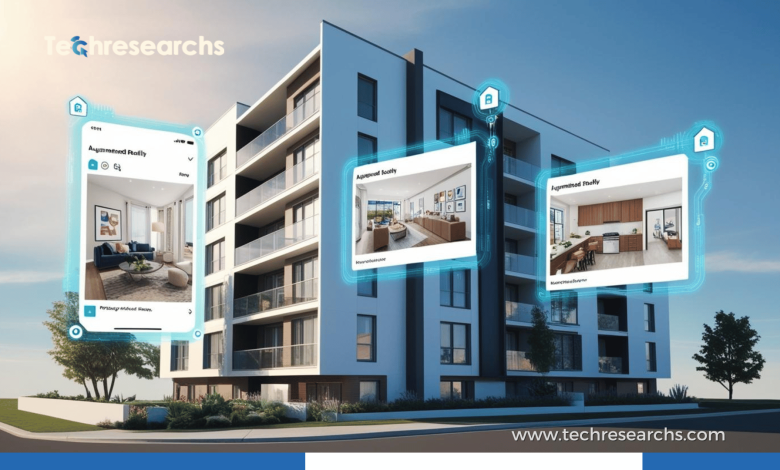
Buying a property is a major decision, and for many people, it starts with a simple question: “Can I actually imagine myself living or working here?”
Traditional property listings give buyers plenty of information through photographs, videos, floor plans, and descriptions. But even with all these resources, it can still be difficult to understand how a space will look, feel, and function in everyday life.
This is where Augmented Reality (AR) is creating a new opportunity for the real estate industry.
Instead of asking customers to imagine a finished property from a collection of images, AR can place digital objects, information, and visual experiences directly into their physical surroundings. A buyer can potentially see furniture inside an empty room, preview a different interior design, explore a property that is still under construction, or understand a floor plan in a much more interactive way.
As real estate becomes increasingly digital, AR is moving from an interesting technology concept toward a practical tool for property marketing, sales, design, and customer engagement.
What Is Augmented Reality in Real Estate?
Augmented Reality is a technology that adds computer-generated content to the user’s view of the real world.
Unlike Virtual Reality, which generally places users inside a completely digital environment, AR keeps the physical environment visible and adds digital elements on top of it.
In real estate, this can mean using a smartphone, tablet, AR headset, or another compatible device to interact with a property digitally.
For example, imagine walking into an empty apartment. Instead of seeing four empty walls, you open an AR application and point your phone around the room. A digital sofa appears in front of you. You add a dining table, change the flooring, adjust the wall color, and experiment with different layouts.
The physical room remains the same, but the digital layer gives you a better idea of what it could become.
That ability to visualize possibilities instead of simply looking at specifications is one of the biggest reasons AR is attracting attention in real estate.
Why Real Estate Needs Better Visualization
Real estate is naturally visual, but traditional property marketing still has limitations.
A photograph captures a property from one particular angle. A video provides movement but still follows a predetermined perspective. A floor plan provides dimensions but may be difficult for someone without architectural experience to interpret.
Even a professional property description cannot fully communicate how a space feels.
This creates a gap between what the seller shows and what the buyer imagines.
AR can help reduce that gap.
Instead of expecting customers to mentally convert measurements, photographs, and floor plans into a complete picture, AR can provide an interactive representation of the property.
This can be particularly valuable for:
- Newly constructed properties
- Empty homes and apartments
- Commercial buildings
- Interior design projects
- Property developments under construction
- Renovation projects
- Vacation properties
- Retail and office spaces
The technology essentially gives customers another way to understand the same property.
How Augmented Reality Is Transforming Property Viewings
Property viewings are one of the areas where AR can have a noticeable impact.
A traditional viewing requires the customer to physically visit a property and walk through the available space. While this remains important, AR can add digital information and visualization tools to the experience.
1. Visualizing Furniture in Empty Properties
An empty room can look larger or smaller depending on the viewer’s perspective.
Without furniture, it can also be difficult to understand how much usable space is actually available.
AR furniture placement can help solve this problem.
Potential buyers can digitally place sofas, beds, tables, wardrobes, televisions, and other objects inside rooms. They can move the objects around and experiment with different arrangements.
This allows buyers to answer practical questions such as:
- Will my existing sofa fit?
- Is there enough space for a dining table?
- Where could I place a bed?
- Would a larger wardrobe block the walkway?
- How could I arrange the living room?
Instead of relying completely on imagination, buyers can use visual experimentation.
2. Previewing Interior Design Ideas
People often have very different tastes.
One buyer may prefer a minimalist interior, while another may want a traditional or colorful design.
AR can allow multiple design possibilities to be displayed within the same physical space.
A user could potentially switch between different:
- Wall colors
- Flooring styles
- Furniture arrangements
- Kitchen finishes
- Lighting options
- Bathroom designs
- Decorative elements
This can be especially useful for new developments where customers need to choose finishes or upgrades before construction is completed.
3. Exploring Properties Before Construction Is Finished
One of the biggest challenges for property developers is selling something that does not physically exist yet.
A development may be marketed while it is still at the planning or construction stage. Buyers may receive architectural drawings, computer-generated images, brochures, and floor plans, but these materials can still require a lot of imagination.
AR provides another option.
Developers can create digital representations of apartments, houses, commercial spaces, and shared facilities.
Potential customers could use an AR experience to explore the proposed property and get a stronger sense of its layout.
This can make pre-construction marketing more engaging and easier to understand.
4. Bringing Floor Plans to Life
Floor plans contain valuable information, but not everyone finds them easy to read.
A two-dimensional drawing may show walls, doors, windows, rooms, and measurements, but understanding the actual spatial relationship can take some practice.
AR can transform a traditional floor plan into a more interactive experience.
For example, a customer could use a mobile device to explore a 3D representation of the layout. Rooms could be viewed from different angles, while additional information could be displayed for specific areas.
This can help customers understand the property before they physically visit it.
5. Supporting Remote Property Exploration
Not every buyer can immediately visit a property.
People may be searching for homes in another city, investors may be located in another country, and busy professionals may have limited time for physical viewings.
AR does not completely replace physical inspections, but it can provide an additional layer of property exploration.
A buyer could use digital property experiences to narrow down their choices before arranging an in-person visit.
This can make the overall buying journey more efficient.
AR for Real Estate Agents
Real estate agents are often responsible for explaining property features, answering questions, arranging viewings, and helping customers compare options.
AR can become another tool in that process.
Instead of only showing photographs, an agent could use interactive visualization to explain how a property might be used.
For example, an agent selling an empty office could demonstrate possible workspace arrangements. An agent marketing a residential property could show furniture layouts or renovation possibilities.
The technology does not replace the agent’s role. Instead, it can give the agent a more engaging way to communicate.
AR for Property Developers
Developers can potentially use AR throughout the marketing and sales process.
Before construction, AR can help communicate the proposed design.
During sales, it can help buyers explore different apartment layouts or finishing options.
After construction, AR can continue to support marketing by providing interactive experiences for prospective customers.
For large developments, this can be especially useful because buyers may want to compare multiple units.
Instead of relying solely on brochures, developers can create experiences that allow customers to explore differences between properties.
AR and Commercial Real Estate
The potential applications of AR extend beyond residential properties.
Commercial real estate can also benefit from interactive visualization.
Office Spaces
Businesses looking for new offices can visualize:
- Desk arrangements
- Meeting rooms
- Reception areas
- Collaboration zones
- Storage spaces
- Employee workstations
This can make it easier for companies to evaluate whether a property fits their operational needs.
Retail Properties
Retailers can visualize store layouts before moving into a space.
AR could help demonstrate where product displays, checkout counters, signage, shelves, and customer pathways could be positioned.
Hospitality
Hotels and resorts can use AR to provide additional information about rooms, facilities, restaurants, event spaces, and other areas.
This can make the booking experience more interactive.
AR and Home Renovation
Real estate does not end when someone buys a property.
Homeowners frequently renovate their properties after purchase, and AR can help them plan these changes.
Imagine wanting to replace the kitchen cabinets but being unsure about the final appearance.
Instead of looking at a product catalogue and trying to imagine the result, homeowners can potentially view the proposed cabinets within their actual kitchen.
The same concept can apply to:
- Flooring
- Paint
- Lighting
- Furniture
- Wall designs
- Bathroom fixtures
- Kitchen layouts
- Decorative features
This can reduce uncertainty before spending money on a renovation.
Personalizing the Property Experience
One of the most interesting aspects of AR is personalization.
A property looks different depending on who is viewing it.
A family with children may think about storage and bedrooms. A young professional may focus on workspace and entertainment areas. A business may care more about employee capacity and meeting rooms.
AR can allow users to explore properties based on their own requirements.
This creates a more customer-focused property experience.
Rather than showing every buyer exactly the same presentation, real estate companies can potentially give customers more control over what they see.
The Role of 3D Models in AR Real Estate
High-quality AR experiences depend heavily on accurate digital models.
A real estate company may need 3D representations of rooms, buildings, furniture, fixtures, landscaping, and other elements.
These models can then be used to create interactive experiences.
The quality of the underlying data matters.
If a room is incorrectly measured or an object is displayed at the wrong scale, the AR experience can create unrealistic expectations.
For this reason, successful AR adoption requires more than simply installing an application. Accurate property data and high-quality digital assets are equally important.
Benefits of Augmented Reality for Buyers
From a buyer’s perspective, AR can make the property search process more understandable and interactive.
Better Understanding of Space
Buyers can get a stronger sense of room layouts and proportions.
More Confidence
Seeing different possibilities can reduce some of the uncertainty involved in property decisions.
Easier Comparison
Interactive experiences can make it easier to compare different properties, layouts, or design options.
Greater Engagement
Instead of passively scrolling through images, users can actively explore the property.
More Informed Decisions
The more clearly customers understand a property, the easier it becomes to determine whether it matches their needs.
Benefits for Sellers and Real Estate Businesses
The advantages are not limited to buyers.
Real estate businesses can potentially benefit through:
Stronger property marketing: Interactive experiences can make listings more memorable.
Improved customer engagement: AR can encourage users to spend more time exploring a property.
Better communication: Agents can explain property features visually.
More effective pre-construction marketing: Developers can demonstrate proposed spaces before completion.
Differentiation: Companies using AR strategically may stand out in competitive property markets.
However, AR should support a clear business objective. Technology alone does not guarantee more sales.
Challenges of Using AR in Real Estate
Despite its potential, AR adoption comes with challenges.
Development Costs
Creating accurate 3D models and high-quality AR applications can require significant investment.
Smaller agencies may find it difficult to build custom platforms from scratch.
Device Compatibility
Not every customer will have the same smartphone, tablet, or AR hardware.
An AR experience should therefore be designed to work across as many compatible devices as practical.
User Adoption
Some customers may not want to download a separate application or learn a complicated interface.
The easier the experience is to access, the more likely people are to use it.
Accuracy
AR visualizations should accurately represent dimensions, layouts, and design choices.
If the digital experience differs significantly from the real property, customer trust can suffer.
Data and Privacy
Applications may collect information about users, devices, locations, or interactions.
Real estate companies need to handle such data responsibly and provide appropriate privacy protections.
AR Should Complement, Not Replace, Physical Viewings
One important point should not be overlooked: AR is not a substitute for seeing a property in person.
A digital experience can show how a room might look, but it cannot fully communicate everything about a property.
Buyers still need to consider factors such as:
- Natural lighting
- Noise levels
- Neighborhood conditions
- Building quality
- Traffic
- Surrounding infrastructure
- Ventilation
- Actual room dimensions
- Construction quality
AR works best as an additional tool rather than a replacement for real-world evaluation.
Augmented Reality vs. Virtual Reality in Real Estate
AR and VR are often discussed together, but they provide different experiences.
Augmented Reality adds digital content to the real environment. This makes it particularly useful when users want to visualize furniture, renovations, or property information within an existing physical space.
Virtual Reality creates a completely digital environment. It can be useful for immersive property tours, especially when a physical property is unavailable or difficult to access.
Both technologies can play a role in real estate, but AR has an important advantage: users can interact with digital content while remaining connected to their physical surroundings.
How AR Could Change Property Marketing
Real estate marketing has already moved significantly toward digital platforms.
Customers can now discover properties through websites, social media, property marketplaces, video platforms, and mobile applications.
AR could be the next step in this evolution.
A future property listing might not simply contain photographs and specifications. It could offer an interactive experience where users can:
- Explore the floor plan.
- View furniture in different rooms.
- Change interior finishes.
- Examine room dimensions.
- Compare design options.
- Preview renovation ideas.
- Explore nearby features through location-based AR.
This would make property listings more interactive and potentially more useful.
The Future of AR in Real Estate
The future of AR in real estate will likely depend on improvements in smartphones, spatial computing, 3D modeling, artificial intelligence, and connected property platforms.
As these technologies mature, AR experiences could become easier to create and use.
Artificial Intelligence may also make AR property experiences more personalized.
For example, an intelligent system could learn what a customer is looking for and automatically suggest furniture arrangements, layouts, or properties that match those preferences.
Imagine telling an AR application:
“Show me how this living room would look as a home office.”
The system could potentially rearrange the digital environment automatically.
Similarly, a buyer could request:
“Show me a family-friendly layout.”
The AR system could provide a visualization designed around that requirement.
These types of experiences could make property exploration more conversational and personalized.
AR and Smart Buildings
As buildings become more connected, AR could also become useful after the purchase.
Smart buildings generate information about systems, equipment, energy usage, maintenance, and other operations.
AR could provide a visual interface for accessing some of that information.
For example, a building manager could point an AR-enabled device toward equipment and receive relevant maintenance information.
Homeowners could potentially use AR to identify smart home controls, appliances, electrical systems, or maintenance points.
This could extend AR’s role from selling properties to managing them.
AR Could Make Real Estate More Interactive
The biggest change AR brings to real estate is not simply better graphics.
It changes the relationship between the customer and the property.
Traditional property marketing asks customers to look.
AR encourages them to interact.
That difference can make the experience more engaging.
A customer is no longer limited to asking, “What does this room look like?”
They can begin asking:
- “What would my furniture look like here?”
- “Could I turn this room into an office?”
- “How would the kitchen look after renovation?”
- “Which layout works best for my family?”
- “What will this development look like when completed?”
These are much more personal questions, and AR can help customers explore them visually.
What Real Estate Companies Should Consider Before Adopting AR
Companies interested in AR should start with the customer problem rather than the technology.
Before investing in an AR solution, businesses should consider:
Identify the Use Case
Determine exactly what AR is expected to accomplish.
Understand the Audience
A luxury property developer may have different requirements from a small residential agency.
Prioritize Simplicity
Customers should be able to use the experience without complicated instructions.
Invest in Accurate Digital Content
High-quality 3D models and property information are essential.
Measure Results
Businesses should track whether AR improves engagement, inquiries, appointments, conversions, or customer satisfaction.
Keep Improving
Technology changes quickly, so AR experiences should be updated as customer expectations evolve.
Final Thoughts
Augmented Reality is opening a new chapter for real estate by making properties easier to visualize, explore, and personalize.
From placing virtual furniture inside an empty apartment to exploring developments before construction is finished, AR can turn static property information into interactive experiences.
For buyers, the technology can make it easier to understand spaces and imagine how they might use them. For agents and developers, it creates new opportunities to present properties and communicate ideas.
At the same time, AR is not a replacement for accurate property information or physical inspections. Its real value comes from combining digital visualization with real-world property experiences.
As AR, 3D modeling, artificial intelligence, and spatial technologies continue to develop, the real estate industry could become increasingly interactive.
The future property experience may be less about simply looking at a home online and more about experiencing what that home could become.
Frequently Asked Questions
How is AR used in real estate?
AR helps buyers visualize properties through virtual furniture, interactive floor plans, renovation previews, and digital property tours.
Can AR help sell properties faster?
AR can make property listings more engaging and help potential buyers understand spaces, which may support faster and more confident decisions.
Can buyers visualize furniture with AR?
Yes. AR can place virtual furniture inside real rooms, allowing buyers to test different layouts and see how items may fit within a space.
Will AR replace physical property visits?
No. AR can improve visualization, but physical visits remain important for checking the property’s actual condition, surroundings, lighting, and space.