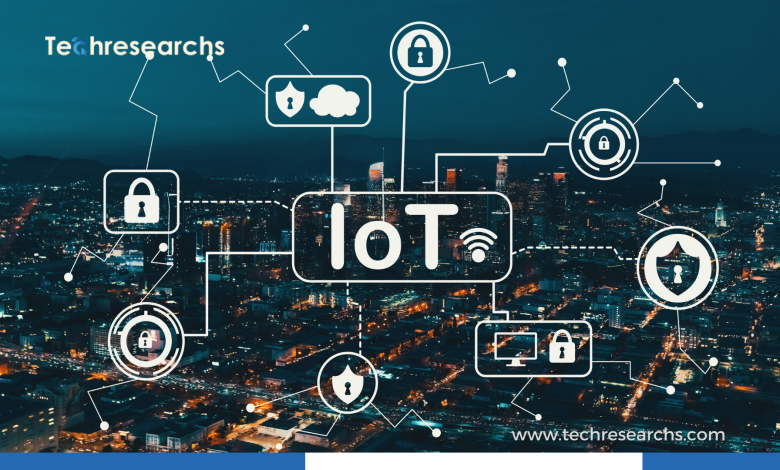
The way industries operate is changing. Machines are no longer expected to simply perform a task and wait for the next instruction. With the Internet of Things (IoT), equipment can collect information about its own condition, communicate with other systems, and help teams understand what is happening in real time.
This shift is becoming particularly important in manufacturing, logistics, energy, healthcare, agriculture, and other asset-heavy industries. Companies are looking for practical ways to reduce downtime, control costs, improve productivity, and respond more quickly to operational problems.
That is where industrial IoT solutions come into the picture.
IoT does not create business value simply because a company has connected devices. The real value appears when the data from those devices helps people make better decisions or allows systems to respond automatically.
In 2026, that distinction is becoming even more important. Industrial organizations are increasingly combining IoT with artificial intelligence, edge computing, analytics, automation, and digital twins. Recent industry research shows that AI is moving beyond experimentation into real industrial operations, including predictive maintenance, quality inspection, logistics, and energy forecasting.
What Are IoT Solutions for Industries?
Industrial IoT, often called IIoT, refers to connected technologies used to monitor, manage, and improve industrial operations.
A typical solution may bring together sensors, machines, gateways, connectivity, cloud or edge computing, analytics software, and business applications.
Consider a production machine as an example.
Traditionally, an operator might inspect the machine at scheduled intervals. With IoT, sensors can continuously collect information such as vibration, temperature, pressure, energy consumption, or operating speed.
That information can then be analyzed to determine whether the machine is operating normally.
If something unusual is detected, the system can alert the maintenance team.
The difference may sound simple, but at an industrial scale, having this visibility across hundreds or thousands of assets can fundamentally change how a company manages its operations.
Why Are Industries Investing in IoT?
For many organizations, the motivation is straightforward: they want to know more about their operations and act on that information sooner.
A factory manager, for example, does not want to discover a production problem at the end of a shift. A logistics company does not want to find out that a shipment has been delayed after the customer calls. An energy operator does not want to wait until the monthly bill arrives to discover excessive consumption.
IoT helps move organizations toward continuous monitoring.
The most important benefits include:
- Better visibility into operations
- Faster identification of problems
- Improved equipment utilization
- More informed maintenance decisions
- Better resource management
- Increased automation
- Improved operational planning
The exact return depends on the industry and implementation, but the underlying principle remains the same: turn operational data into useful action.
1. IoT Is Making Manufacturing More Intelligent
Manufacturing is one of the clearest examples of where IoT can make a practical difference.
Modern factories may contain hundreds of machines, sensors, robots, conveyors, cameras, and control systems. Without a connected data layer, information from these assets can remain scattered across different systems.
IoT brings that information together.
A manufacturer can use connected equipment to monitor production speed, machine health, energy consumption, product quality, and other operational indicators.
Instead of relying entirely on periodic reports, teams can see what is happening while production is underway.
This can help identify problems such as:
- Unexpected machine slowdowns
- Production bottlenecks
- Abnormal equipment behavior
- Excessive energy consumption
- Quality issues
- Idle equipment
The goal is not to remove people from the manufacturing process. Rather, IoT gives employees better information so they can spend less time searching for problems and more time solving them.
2. Predictive Maintenance Can Reduce Unnecessary Downtime
Equipment failure is one of the most expensive problems for industrial businesses.
A failed motor, pump, compressor, conveyor, or production machine can stop an entire process. Emergency repairs may also require additional labor and replacement parts.
IoT offers a different approach.
Sensors can continuously observe equipment conditions and create a history of how machines behave over time. AI and machine-learning systems can then examine that information for unusual patterns.
For example, a gradual increase in vibration might indicate that a component is beginning to wear out.
The maintenance team can investigate the issue before it becomes a serious failure.
This is the basic idea behind predictive maintenance.
Research published in 2026 continues to highlight AI-driven predictive maintenance as an important Industrial IoT application because of its potential to improve equipment reliability and reduce unplanned downtime.
Predictive maintenance does not mean that every failure can be predicted perfectly. Machines operate in complex environments, and predictions depend on the quality of the available data.
However, even better visibility into equipment health can make maintenance planning more effective.
3. IoT Is Changing Supply Chain Management
A product does not become a successful delivery simply because it leaves the factory.
It may pass through warehouses, distribution centers, transportation networks, and multiple handling points before reaching the customer.
IoT can provide visibility across these stages.
GPS trackers, RFID systems, environmental sensors, and connected warehouse equipment can help organizations understand where products are and what is happening to them.
For temperature-sensitive products, sensors can monitor environmental conditions during transportation.
For warehouses, connected systems can help track inventory movement and equipment utilization.
This can make supply chains easier to monitor and help companies respond more quickly when something goes wrong.
4. Energy Management Is Becoming More Data-Driven
Energy is a major operating expense for many industrial organizations.
The challenge is that energy consumption is not always easy to understand. A facility may use electricity across hundreds of machines, lighting systems, cooling equipment, compressors, and other assets.
IoT sensors and smart meters can provide a much clearer picture.
Instead of seeing only the total energy bill, businesses can examine consumption by machine, production line, building, or time period.
That information can reveal patterns that would otherwise remain hidden.
For example, a company might discover that a particular machine continues consuming significant power during periods when production is stopped.
Once the problem is visible, management can decide whether to change operating procedures, upgrade equipment, or automate the process.
This is one reason IoT is increasingly connected with sustainability and energy-efficiency programs.
5. Healthcare Is Building More Connected Environments
IoT is also becoming useful beyond traditional industrial settings.
Hospitals and healthcare organizations can use connected devices for equipment tracking, environmental monitoring, facility management, and remote patient monitoring.
A simple example is medical equipment.
In a large hospital, staff may spend considerable time locating equipment when it is needed. Connected tracking systems can provide information about where assets are located and how they are being used.
Other connected systems can monitor temperatures in storage areas or help manage hospital infrastructure.
Healthcare IoT requires particularly strong privacy and security controls because connected systems may handle sensitive information. The technology therefore needs to be designed around reliability, security, and appropriate access controls rather than connectivity alone.
6. Agriculture Is Becoming More Precise
IoT is also changing the way agricultural operations use information.
Farmers can deploy sensors to monitor soil moisture, temperature, humidity, weather conditions, and other environmental factors.
Instead of applying water or other resources according to a fixed schedule, farmers can make decisions based on current conditions.
This can be especially useful in precision agriculture, where the goal is to use resources more carefully while maintaining productivity.
IoT applications in agriculture include:
- Smart irrigation
- Soil monitoring
- Greenhouse monitoring
- Livestock tracking
- Weather monitoring
- Equipment monitoring
The technology is not intended to replace agricultural expertise. It provides additional information that can help farmers make more informed decisions.
IoT and AI: From Monitoring to Intelligence
There is an important difference between a connected system and an intelligent system.
A basic IoT solution might tell you that a machine’s temperature has increased.
An AI-powered IoT solution can potentially analyze that temperature change alongside vibration, operating speed, historical data, and other signals to determine whether the change is unusual.
This is where AIoT, or Artificial Intelligence of Things, becomes important.
IoT provides the data.
AI helps interpret the data.
Automation can then act on the result.
That creates a more complete cycle:
Sense → Analyze → Decide → Act
This model is becoming increasingly relevant in industrial environments. In 2026, industry research is showing growing adoption of AI in live operational environments, while networking, cybersecurity, and IT/OT integration remain important barriers to wider deployment.
Why Edge Computing Matters
Sending every piece of IoT data to a distant cloud server is not always the best solution.
Some industrial applications require decisions within milliseconds.
Imagine a quality-control camera inspecting products moving quickly along a production line. If a defect needs to be detected immediately, waiting for data to travel to a remote cloud environment and return may introduce unnecessary delay.
Edge computing addresses this problem by processing information closer to where it is generated.
This approach can help with:
- Faster responses
- Lower latency
- Reduced bandwidth requirements
- Local decision-making
- More resilient operations when connectivity is limited
Cloud computing and edge computing are therefore not necessarily competing choices. Many modern industrial environments use both.
What Role Does 5G Play in Industrial IoT?
5G is another technology that can support connected industrial environments.
Its potential applications include connected robots, remote monitoring, smart warehouses, industrial cameras, and other systems where reliable connectivity and low latency are important.
But businesses should avoid choosing 5G simply because it is a newer technology.
The right connectivity option depends on the application, environment, coverage requirements, security needs, latency expectations, and cost.
In some situations, Wi-Fi or wired industrial networks may be more appropriate. In others, private 5G can provide advantages.
The important question is not “Do we need 5G?”
It is “What type of connectivity does this application actually require?”
Cybersecurity Cannot Be an Afterthought
Connecting industrial equipment also creates new security responsibilities.
Every connected device represents another system that needs to be identified, configured, monitored, updated, and protected.
This is particularly important because industrial environments connect information technology with operational technology. A cybersecurity incident can potentially affect physical processes rather than simply causing a temporary IT inconvenience.
Organizations should consider:
- Strong authentication
- Device identity management
- Network segmentation
- Secure communications
- Regular software and firmware updates
- Access controls
- Vulnerability monitoring
- Security testing
- Device lifecycle management
NIST’s IoT cybersecurity guidance emphasizes addressing cybersecurity throughout the product lifecycle rather than treating security as something that is added only after deployment.
For industrial organizations, security should therefore be part of the architecture from the beginning.
The Biggest IoT Challenges for Businesses
IoT sounds straightforward until an organization tries to implement it across a real industrial environment.
One of the first challenges is legacy equipment.
Many factories still depend on machines that were installed years or even decades ago. These machines may not have modern networking capabilities.
Another challenge is data quality.
A company can install thousands of sensors and still fail to create value if the resulting data is inaccurate, inconsistent, or difficult to interpret.
There is also the issue of integration.
IoT platforms may need to work with existing ERP, MES, SCADA, CMMS, CRM, or other business systems.
Then there is the skills gap.
A successful IoT program can require expertise in industrial engineering, networking, cloud platforms, cybersecurity, data analytics, and AI.
For these reasons, organizations should avoid treating IoT as a simple hardware installation project.
How Businesses Should Start an IoT Project
The most sensible approach is usually to start small.
First, identify a real business problem.
For example:
Problem: A factory experiences unexpected equipment failures.
Potential IoT solution: Install sensors on critical equipment and monitor operating conditions.
Measurement: Compare downtime and maintenance performance before and after deployment.
This approach is much stronger than starting with a vague objective such as “We need an IoT strategy.”
A practical implementation process looks like this:
Step 1: Identify the Business Problem
Start with a measurable operational challenge.
Step 2: Choose the Right Assets
Do not connect everything immediately. Focus on equipment or processes where better information could create meaningful value.
Step 3: Run a Pilot
Test the technology on a limited scale.
Step 4: Measure the Outcome
Track metrics such as downtime, productivity, maintenance costs, energy usage, or quality.
Step 5: Improve the Solution
Use the pilot results to address technical and operational problems.
Step 6: Scale Gradually
Expand to additional machines, production lines, facilities, or locations only after the initial solution demonstrates value.
What Does the Future of Industrial IoT Look Like?
Industrial IoT is moving toward a much more intelligent model.
The future is unlikely to be defined by sensors alone. Instead, connected devices will increasingly work alongside AI, robotics, edge computing, digital twins, computer vision, and automation.
Digital twins can provide virtual representations of physical equipment or processes. AI can analyze operational data and identify patterns. Edge systems can make decisions closer to the source. Automation can then turn those decisions into actions.
This creates a more continuous relationship between the physical and digital worlds.
Recent industrial research reflects this direction, with organizations increasingly using AI for predictive maintenance, automated inspection, logistics, and energy-related applications.
The important shift is that industrial systems are moving from simply reporting what happened toward helping organizations understand what is happening, what may happen next, and what they should do about it.
Final Thoughts
IoT solutions are giving industries a new way to understand and manage their operations.
The technology can help manufacturers monitor equipment, logistics companies track assets, hospitals manage connected infrastructure, energy companies understand consumption, and farmers make more informed resource decisions.
But successful IoT adoption is not about connecting the greatest number of devices.
It is about solving the right problem.
A company that connects 10,000 devices without a clear purpose may gain very little. Another company that connects 50 critical machines and uses the resulting data to prevent failures, improve maintenance, and reduce waste may create far more value.
That is why the future of industrial IoT is not simply about more connected devices. It is about better data, smarter analysis, stronger security, and decisions that lead to measurable business results.
As IoT continues to converge with AI, edge computing, automation, and advanced connectivity, businesses that approach the technology strategically will be better positioned to improve efficiency and build more resilient operations.
Frequently Asked Questions About IoT Solutions for Industries
What are IoT solutions for industries?
IoT solutions for industries use connected sensors, machines, software, networks, and analytics to monitor operations, collect real-time data, improve efficiency, reduce downtime, and support better business decisions.
How does IoT help industries reduce costs?
IoT can help reduce costs by monitoring equipment performance, identifying potential failures, improving energy efficiency, reducing unnecessary downtime, and helping businesses use resources more effectively.
What industries can benefit from IoT technology?
Manufacturing, healthcare, logistics, agriculture, energy, transportation, retail, and other industries can use IoT to monitor assets, automate processes, improve productivity, and make data-driven decisions.
Is IoT secure for industrial environments?
IoT can be secure when organizations implement appropriate measures such as strong authentication, network segmentation, encryption, access controls, device monitoring, and regular software and firmware updates. Security should be considered throughout the IoT device lifecycle.