Quantum Deep Learning: The Next Evolution of AI Technology

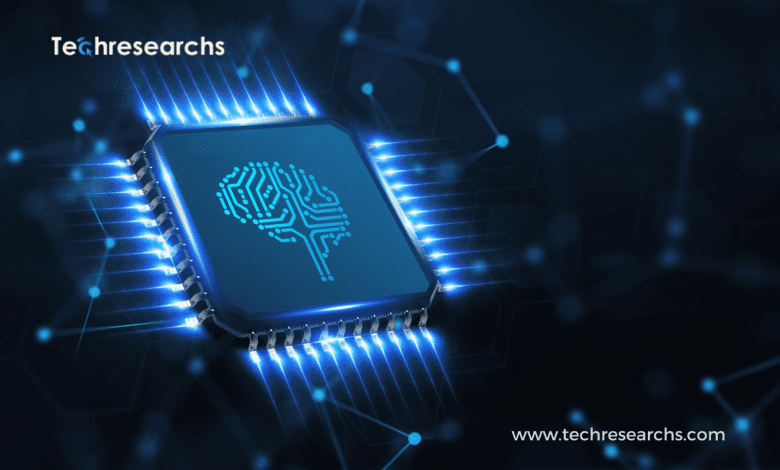
Quantum computing and artificial intelligence are two of the most rapidly developing areas of technology. While traditional deep learning relies on classical computers and GPUs, researchers are exploring whether quantum computing can introduce new approaches to processing complex data and training machine-learning models.
This emerging field, often called quantum deep learning (QDL), combines concepts from quantum computing, machine learning, and neural networks. Although it is still in the research and experimentation stage, advances in quantum hardware, quantum algorithms, and hybrid computing are making the subject increasingly important.
This updated guide explains what quantum deep learning is, how it works, where it could be useful, its current limitations, and what the future may hold.
What Is Quantum Deep Learning?
Quantum deep learning refers to the use of quantum computing techniques within deep-learning workflows.
Traditional deep-learning models process information using classical bits, which represent either 0 or 1. Quantum computers use qubits, which can represent quantum states and can be manipulated through quantum operations.
Quantum machine-learning approaches may use these properties to develop new methods for:
- Data representation
- Feature mapping
- Model optimization
- Pattern recognition
- Classification
- Generative modeling
- Complex mathematical optimization
However, quantum deep learning does not simply mean replacing a GPU with a quantum computer. Most practical approaches today are hybrid, combining classical processors with quantum circuits.
How Does Quantum Deep Learning Work?
A typical quantum deep-learning workflow can involve several stages.
1. Classical Data Preparation
Data is initially collected and prepared using conventional computing infrastructure.
For example, an organization may have:
- Customer records
- Financial data
- Sensor measurements
- Scientific datasets
- Images
- Text
- Genomic information
The data may then need to be normalized, compressed, or transformed before being used by a quantum model.
2. Quantum Data Encoding
Classical information must be represented in a form that a quantum computer can process.
Common approaches include:
- Amplitude encoding
- Angle encoding
- Basis encoding
- Feature-map-based encoding
Choosing the appropriate encoding method is important because encoding large classical datasets into quantum states can itself become computationally expensive.
3. Quantum Circuits
A quantum circuit applies a sequence of quantum gates to qubits.
Parameterized quantum circuits are particularly relevant to machine learning because their parameters can be optimized during training.
A simplified workflow looks like:
Classical Data → Feature Encoding → Quantum Circuit → Measurement → Classical Optimization
4. Measurement
After quantum operations are performed, the quantum state is measured.
The resulting measurements provide information that can be passed back to the classical part of the system.
5. Model Optimization
A classical optimizer can adjust the parameters of the quantum circuit and repeat the process.
This creates a feedback loop:
Prediction → Error Calculation → Parameter Update → Quantum Circuit → New Prediction
This hybrid structure is one of the most practical approaches to quantum machine learning today.
Quantum Deep Learning vs Traditional Deep Learning
Quantum deep learning and conventional deep learning approach computational problems differently.
| Feature | Traditional Deep Learning | Quantum Deep Learning |
|---|---|---|
| Computing unit | Classical bits | Qubits |
| Main hardware | CPUs, GPUs, TPUs | Quantum processors + classical systems |
| Model execution | Classical operations | Quantum circuits and classical operations |
| Current maturity | Highly mature | Experimental |
| Large-scale deployment | Widely available | Limited |
| Training ecosystem | Extensive | Rapidly developing |
| Hardware accessibility | High | Limited |
| Potential advantage | Proven performance | Potential advantage for specific problems |
The important point is that quantum deep learning is not currently a universal replacement for classical AI.
Why Is Quantum Deep Learning Important?
Deep-learning models are becoming increasingly complex. Large models require substantial computing resources, memory, energy, and training time.
Quantum computing could eventually provide new computational approaches for certain mathematical and optimization problems.
Potential advantages being investigated include:
Faster Optimization
Training machine-learning models involves optimizing large numbers of parameters. Quantum optimization techniques may eventually help address certain complex optimization problems.
High-Dimensional Data Processing
Quantum states can represent information in high-dimensional mathematical spaces. Researchers are exploring whether this can provide useful representations for particular machine-learning tasks.
Advanced Pattern Recognition
Quantum circuits may offer new approaches to identifying patterns in complex datasets.
Scientific Computing
Quantum-enhanced machine learning could become particularly relevant to scientific applications involving chemistry, materials, physics, and other computationally intensive fields.
Applications of Quantum Deep Learning
Quantum deep learning remains an emerging technology, but several potential application areas are being actively researched.
1. Drug Discovery
Drug discovery involves analyzing complex molecular structures and interactions.
Quantum computing is naturally relevant to molecular simulation, while machine learning can help identify promising compounds.
A future hybrid system could combine quantum simulation with machine-learning models to improve parts of the drug-discovery workflow.
2. Financial Modeling
Financial institutions use machine learning for:
- Risk assessment
- Portfolio optimization
- Fraud detection
- Market analysis
- Credit scoring
Quantum optimization and quantum machine-learning methods could potentially support some of these workloads.
However, real-world financial deployment requires demonstrating clear advantages over highly optimized classical systems.
3. Cybersecurity
AI is increasingly used to detect unusual behavior and identify potential security threats.
Quantum machine learning could eventually contribute to advanced anomaly-detection systems, although practical cybersecurity applications remain an active research area.
4. Healthcare
Healthcare generates large amounts of complex data, including medical images, clinical information, and biological datasets.
Quantum-enhanced machine learning could potentially support:
- Medical image analysis
- Disease classification
- Drug research
- Personalized treatment modeling
- Biomedical data analysis
5. Manufacturing
Manufacturing companies frequently need to optimize scheduling, logistics, supply chains, and production processes.
Quantum optimization combined with AI could eventually help address some of these complex problems.
6. Climate and Scientific Research
Climate modeling and scientific simulations involve highly complex systems.
Quantum computing could eventually contribute to selected computational tasks, while deep learning could help interpret and model the resulting data.
Quantum Neural Networks
One of the important concepts in quantum deep learning is the quantum neural network (QNN).
A QNN uses quantum circuits as part of a machine-learning architecture. Instead of relying entirely on conventional neural-network layers, it uses parameterized quantum operations.
A simplified architecture might look like:
Input → Quantum Encoding → Parameterized Quantum Circuit → Measurement → Output
QNNs can be used for tasks such as classification and regression in experimental settings.
Researchers are also investigating hybrid quantum-classical neural networks, where conventional neural-network components work together with quantum circuits.
Hybrid Quantum-Classical AI
Hybrid systems are particularly important because today’s quantum computers have significant limitations.
Instead of asking a quantum processor to perform an entire AI workload, developers can divide the workload between classical and quantum hardware.
For example:
Classical Computer
- Data preparation
- Data storage
- Neural-network processing
- Optimization
↓
Quantum Processor
- Quantum feature transformation
- Quantum circuit execution
- Quantum measurement
↓
Classical Computer
- Result analysis
- Loss calculation
- Parameter optimization
This approach allows researchers to experiment with quantum algorithms without requiring fully fault-tolerant quantum computers.
Current Challenges
Despite its potential, quantum deep learning faces significant technical challenges.
Hardware Limitations
Modern quantum processors are still affected by noise, limited qubit counts, and errors.
Quantum states can be fragile, making reliable computation difficult.
Data Encoding
Converting large classical datasets into quantum states can be expensive.
A theoretical quantum speedup may not translate into a practical advantage if data preparation becomes the bottleneck.
Limited Quantum Resources
Many machine-learning models require substantial computational resources. Current quantum hardware cannot yet handle the scale of workloads processed by modern GPU clusters.
Training Difficulties
Variational quantum models can experience optimization problems such as barren plateaus, where gradients become extremely small and training becomes difficult.
Lack of Clear Quantum Advantage
A major research question remains:
Can quantum machine learning consistently outperform the best classical algorithms on useful real-world problems?
For many applications, that advantage has not yet been demonstrated at production scale.
Talent and Infrastructure
Quantum AI requires knowledge across multiple disciplines, including:
- Machine learning
- Linear algebra
- Quantum mechanics
- Quantum algorithms
- Software engineering
- Optimization
This creates a relatively high barrier to entry.
Is Quantum Deep Learning Ready for Production?
For most organizations, not yet.
Traditional AI remains the practical choice for applications requiring reliable, scalable, and cost-effective machine learning.
Quantum deep learning is better viewed today as an emerging research and experimentation area.
Organizations interested in the technology can begin by:
- Learning quantum-computing fundamentals.
- Experimenting with quantum machine-learning frameworks.
- Identifying optimization-heavy use cases.
- Comparing quantum approaches with strong classical baselines.
- Testing hybrid quantum-classical workflows.
- Tracking improvements in quantum hardware.
- Evaluating whether a genuine business advantage exists.
This approach avoids adopting quantum technology simply because it is technologically interesting.
The Role of AI in the Quantum Computing Era
The relationship between AI and quantum computing is likely to work in both directions.
Quantum computing may eventually help solve selected problems relevant to AI.
At the same time, AI can help improve quantum computing itself.
Machine learning is being explored for areas such as:
- Quantum error mitigation
- Hardware calibration
- Circuit optimization
- Quantum-system control
- Algorithm discovery
- Quantum experiment analysis
This creates an interesting feedback loop:
AI improves quantum technology → Quantum technology supports new AI methods → New AI capabilities improve quantum systems
What Could the Future Look Like?
The future of quantum deep learning will depend heavily on advances in quantum hardware and algorithms.
Several developments will be important:
Fault-Tolerant Quantum Computing
Reliable error-corrected quantum computers would significantly expand the types of algorithms researchers can run.
Better Quantum Algorithms
Researchers need algorithms that demonstrate meaningful advantages over classical alternatives.
Improved Quantum Software
Better development tools, compilers, simulators, and libraries will make quantum machine learning easier to experiment with.
Quantum-Classical Infrastructure
Future AI infrastructure could include GPUs, CPUs, specialized accelerators, and quantum processors working together.
Industry-Specific Applications
Rather than replacing all AI systems, quantum computing may first become valuable in specialized areas where computational complexity is particularly high.
Quantum Deep Learning in 2026 and Beyond
In 2026, quantum deep learning should be approached with realistic expectations.
The technology has moved beyond purely theoretical discussions, with researchers and technology companies actively developing quantum hardware, algorithms, software platforms, and hybrid workflows. However, practical quantum advantage for mainstream deep-learning workloads remains an open research question.
The next major milestone will not simply be building more qubits. What matters is achieving higher-quality qubits, lower error rates, better connectivity, useful algorithms, and measurable performance improvements on real problems.
As quantum systems mature, the most successful applications are likely to emerge where quantum computing provides a demonstrable advantage rather than where it is used simply as an alternative form of computing.
Conclusion
Quantum deep learning represents a promising intersection of artificial intelligence and quantum computing. It introduces new possibilities for data representation, optimization, pattern recognition, and scientific computation.
However, it is important to distinguish potential from proven capability. Today’s deep-learning workloads are still overwhelmingly handled by classical computing infrastructure, while quantum deep learning remains an active area of research.
The future may not be about choosing between classical AI and quantum AI. Instead, the most practical direction could be hybrid intelligence infrastructure, where classical processors and quantum computers each handle the tasks for which they are best suited.
As quantum hardware becomes more reliable and quantum algorithms improve, quantum deep learning could evolve from an experimental research field into a specialized component of next-generation AI systems.
Frequently Asked Questions
1. What is quantum deep learning?
Quantum deep learning combines quantum computing techniques with deep-learning and machine-learning methods. It uses quantum circuits and classical computing together to explore new approaches to AI.
2. Is quantum deep learning better than traditional deep learning?
Not generally today. Traditional deep learning is much more mature and scalable. Quantum deep learning is still being researched, and practical advantages have only been demonstrated for specific experimental problems.
3. What is a quantum neural network?
A quantum neural network uses parameterized quantum circuits as part of a machine-learning model. Quantum measurements can produce outputs that are used for tasks such as classification or regression.
4. What are the main applications of quantum deep learning?
Potential applications include drug discovery, financial optimization, cybersecurity, healthcare, manufacturing, scientific research, and complex optimization.