As blockchain technology continues to evolve, the demand for scalable, fast, and affordable networks has never been greater. While Ethereum remains the leading smart contract platform, it still faces challenges such as network congestion and high transaction fees during periods of heavy activity. This is where Polygon (POL) has established itself as one of the most important blockchain ecosystems in 2026.
Originally launched as Matic Network, Polygon has evolved far beyond a Layer-2 scaling solution. Today, it offers a complete suite of blockchain infrastructure including zkEVM, AggLayer, Polygon PoS, and the upgraded POL token, enabling developers to build scalable decentralized applications (dApps), enterprise blockchain solutions, gaming ecosystems, and tokenized real-world assets.
In this updated guide, we’ll explore what makes Polygon unique, its latest features, and why it continues to be one of the most widely adopted blockchain ecosystems.
What is Polygon?
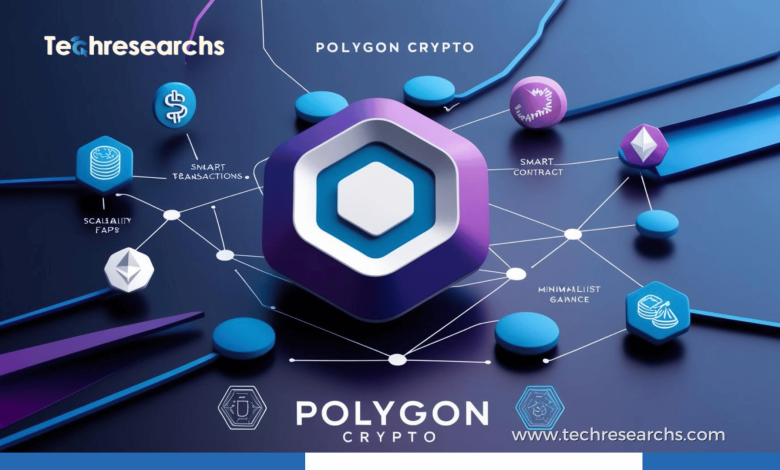
Polygon is a blockchain ecosystem designed to improve Ethereum’s scalability while maintaining compatibility with Ethereum’s security and developer tools.
Instead of replacing Ethereum, Polygon works alongside it by offering faster transactions, significantly lower fees, and multiple scaling technologies that allow developers to build high-performance decentralized applications.
Today, Polygon supports thousands of decentralized applications across industries including:
- DeFi
- NFTs
- Gaming
- Enterprise blockchain
- AI-powered Web3 applications
- Real World Asset (RWA) tokenization
Why Polygon Remains Important in 2026
The blockchain industry has shifted from simple cryptocurrency transactions to supporting real-world applications.
Polygon continues to lead because it offers:
- Low transaction fees
- High transaction throughput
- Ethereum compatibility
- Strong developer ecosystem
- Zero-Knowledge (ZK) technology
- Enterprise partnerships
- Cross-chain interoperability
These advantages make Polygon one of the preferred ecosystems for developers and businesses.
Key Features That Make Polygon Unique
1. Multiple Scaling Solutions
Unlike many blockchain networks that rely on a single scaling method, Polygon provides several options including:
- Polygon PoS
- Polygon zkEVM
- AggLayer
- CDK (Chain Development Kit)
Developers can choose the solution that best fits their project requirements.
2. Very Low Transaction Costs
Ethereum gas fees can fluctuate significantly during peak demand.
Polygon transactions typically cost only a fraction of a cent, making it ideal for:
- NFT marketplaces
- Gaming
- Micropayments
- Social applications
- Daily blockchain transactions
3. Fast Transaction Finality
Polygon processes transactions much faster than Ethereum’s main network.
Benefits include:
- Better user experience
- Faster DeFi trading
- Instant NFT transfers
- Efficient gaming interactions
4. Ethereum Compatibility
Polygon is fully compatible with Ethereum’s ecosystem.
Developers can continue using familiar tools such as:
- Solidity
- MetaMask
- Hardhat
- Remix
- Truffle
This reduces migration complexity for Ethereum projects.
5. Zero-Knowledge Technology
One of Polygon’s biggest advancements is its investment in Zero-Knowledge Proofs (ZK Proofs).
Polygon zkEVM offers:
- Improved scalability
- Lower transaction costs
- Ethereum-equivalent execution
- Better privacy capabilities
- Increased security
ZK technology is expected to become one of the core infrastructures powering Web3 over the coming years.
6. POL Token Upgrade
Polygon has transitioned from the original MATIC token toward the upgraded POL token.
POL introduces enhanced functionality including:
- Multi-chain staking
- Improved validator incentives
- Better ecosystem governance
- Support for Polygon’s expanding network architecture
This upgrade supports Polygon’s long-term roadmap toward a unified blockchain ecosystem.
7. AggLayer
AggLayer is one of Polygon’s latest innovations.
Its goal is to connect multiple blockchain networks into a seamless ecosystem where users experience unified liquidity and interoperability without sacrificing security.
Benefits include:
- Better cross-chain communication
- Shared liquidity
- Simplified user experience
- Scalable blockchain infrastructure
Major Use Cases of Polygon
Decentralized Finance (DeFi)
Polygon powers many DeFi applications including:
- Lending
- Borrowing
- Decentralized exchanges
- Yield farming
- Stablecoin transfers
Low fees make DeFi accessible to more users.
NFT Ecosystem
Many NFT creators choose Polygon because minting costs remain affordable.
Popular NFT applications include:
- Digital art
- Music NFTs
- Gaming collectibles
- Membership passes
- Event tickets
Blockchain Gaming
Gaming requires thousands of low-cost transactions.
Polygon enables:
- In-game assets
- NFT characters
- Play-to-earn rewards
- Virtual economies
- Fast gameplay transactions
Enterprise Blockchain
Large organizations continue adopting Polygon for:
- Supply chain tracking
- Identity verification
- Loyalty programs
- Digital certificates
- Asset tokenization
Real World Asset (RWA) Tokenization
One of the fastest-growing blockchain sectors is tokenizing physical assets.
Polygon supports:
- Real estate
- Bonds
- Commodities
- Investment funds
- Digital securities
AI and Web3 Applications
The rise of AI-powered decentralized applications has increased demand for scalable blockchain infrastructure.
Polygon provides the speed and affordability needed for AI agents, decentralized data platforms, and machine-driven smart contracts.
Advantages of Polygon
- Extremely low gas fees
- Fast transaction processing
- Strong Ethereum compatibility
- Large developer community
- Advanced Zero-Knowledge technology
- Growing institutional adoption
- Sustainable network architecture
- Continuous innovation
Challenges to Consider
Although Polygon has many strengths, users should also understand its challenges.
These include:
- Increasing competition from other Layer-2 networks
- Complex ecosystem for beginners
- Regulatory uncertainty around digital assets
- Dependence on Ethereum’s broader ecosystem
Despite these factors, Polygon continues expanding through innovation and partnerships.
The Future of Polygon
Polygon’s roadmap focuses on creating an interconnected blockchain ecosystem powered by Zero-Knowledge technology and AggLayer.
Future developments are expected to include:
- Expanded enterprise adoption
- Greater cross-chain interoperability
- More AI-powered decentralized applications
- Growth in tokenized real-world assets
- Improved developer tools
- Broader adoption of the POL token
As blockchain technology becomes increasingly mainstream, Polygon is positioning itself as a foundational infrastructure layer for Web3.
Conclusion
Polygon has evolved from a simple Ethereum scaling solution into a comprehensive blockchain ecosystem. With its low fees, fast transactions, Zero-Knowledge innovations, AggLayer architecture, and the transition to the POL token, it continues to play a significant role in the future of decentralized technology.
Whether you’re a developer building decentralized applications, an investor exploring blockchain ecosystems, or a business adopting Web3 solutions, Polygon provides scalable infrastructure designed for long-term growth. As adoption continues to expand across DeFi, NFTs, gaming, AI, and enterprise applications, Polygon remains one of the most influential blockchain networks to watch in 2026.
FAQs
1. What is Polygon crypto used for?
Polygon is used for DeFi, NFTs, blockchain gaming, enterprise applications, AI-powered Web3 projects, and tokenized real-world assets.
2. Is Polygon still relevant in 2026?
Yes. Polygon continues to expand with innovations such as zkEVM, AggLayer, and the POL token, making it one of the leading blockchain ecosystems.
3. What makes Polygon different from Ethereum?
Polygon complements Ethereum by providing faster transaction speeds and much lower fees while remaining fully compatible with Ethereum applications.
4. What is the POL token?
POL is Polygon’s upgraded native token that supports multi-chain staking, governance, and ecosystem security.